
Commercial UPS System Sizing for Business Continuity
Commercial UPS system sizing for real business continuity
When a business depends on power to keep doors open, servers talking, and life safety systems awake, the Commercial UPS system sizing has to be right the first time. Kord Electric helps commercial and industrial facilities and major property buildings plan backup power so they do not gamble with runtime, voltage, or battery life. In this guide, the team explains how sizing works in plain terms, why common mistakes cost real money, and how continuity plans should match the building’s electrical reality. And yes, we promise: this will feel less like a textbook and more like a calm walkthrough by experts who actually do the work.
What a UPS must protect, and how load shape changes everything
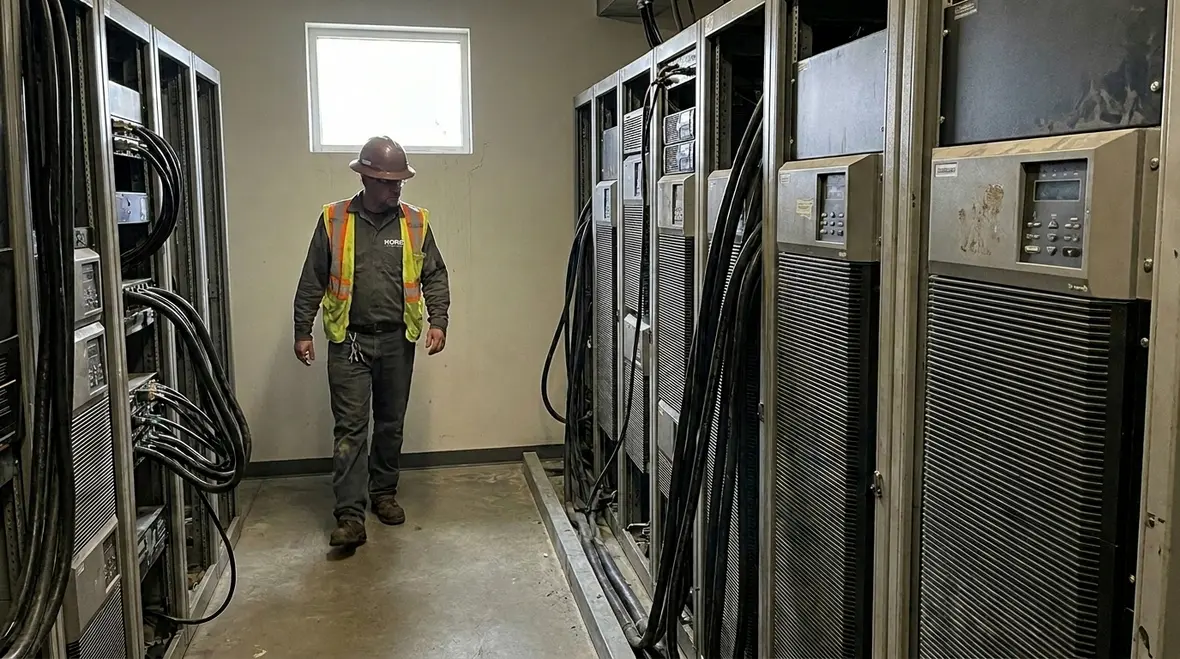
Third person, first principle. A UPS does not “cover the building.” It covers specific critical loads while normal power slips, rides through a transfer, or stabilizes after a disturbance. Therefore, the sizing process must start with what the UPS will actually feed, not what someone hopes it will feed later.
Next, the load type matters. A UPS for commercial control systems can behave very differently than one for data, refrigeration, or industrial drives. The team at Kord Electric typically breaks load into groups such as IT and comms, life safety, process controls, HVAC controls, and network equipment. Then they check load shape: some loads draw steady power, while others surge at startup or cycle during operation.
At this point, others often assume the “nameplate watts” are enough. However, nameplate power is like a movie trailer; it gives a vibe, not the full story. Motors and power supplies create inrush and harmonics. Meanwhile, variable loads can swing during normal use. As a result, a proper sizing study uses real electrical data where possible, and it applies load factors based on typical operation.
How Kord Electric technicians calculate connected load and demand
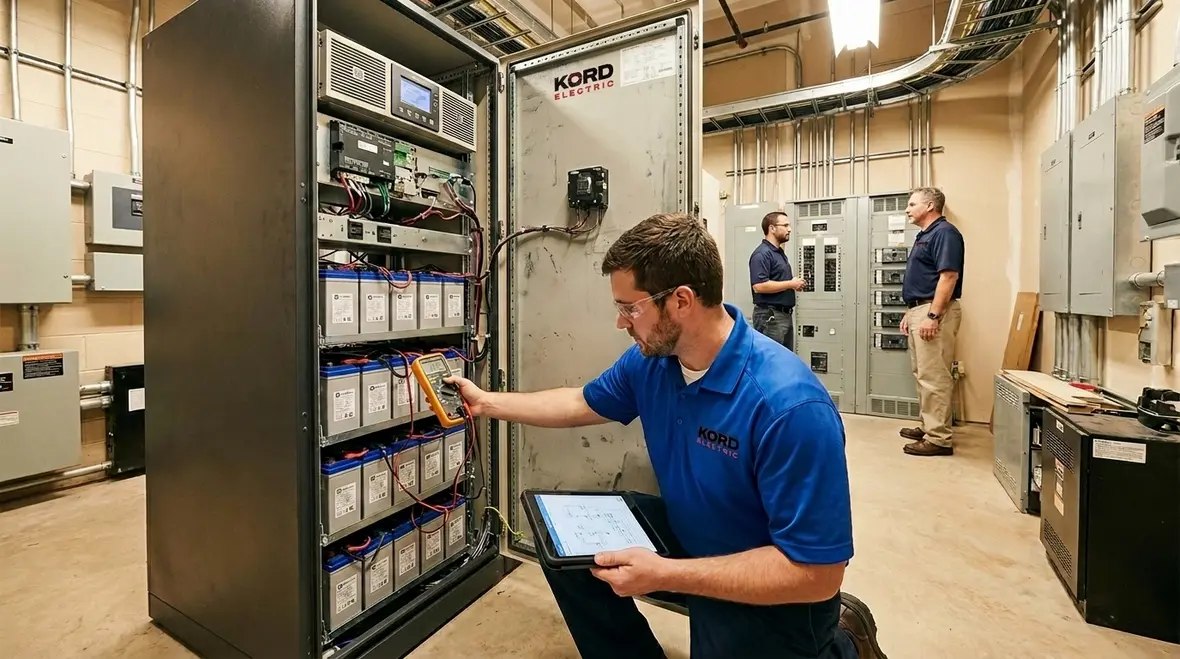
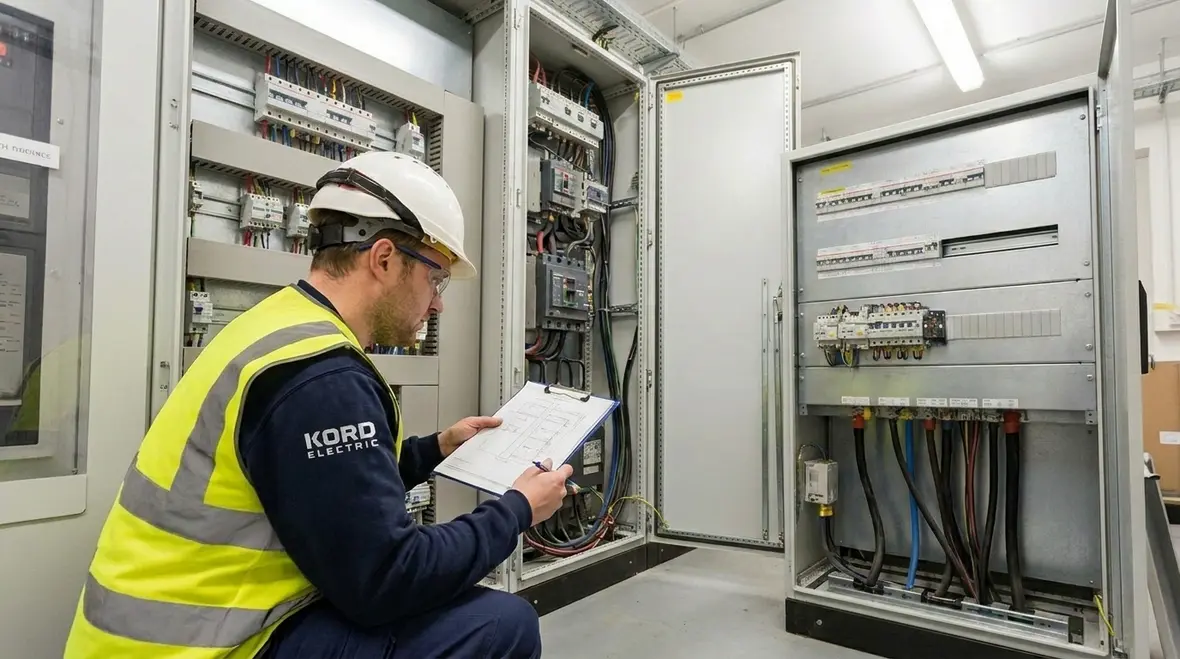
Kord Electric technicians use a step method so the answers hold up under scrutiny. First, they gather data from the electrical one-lines, panel schedules, and equipment submittals. Then, they map circuits to the UPS output, including step-down transformers and distribution panels where needed.
After that, they estimate demand using practical rules. They apply diversity where loads do not start at once, yet they include realistic startup events when they do. For example, if multiple pumps or fans can run on schedule, the analysis treats their starting conditions with care. If only one motor starts at a time, the study reflects that. This is where the calming part shows up: a clear plan reduces surprises when the site goes live.
In addition, technicians verify power factor and efficiency. UPS systems convert between AC and DC in a controlled way, and losses matter. The team reviews whether the loads run at different power factors depending on operating mode. Consequently, sizing supports not just runtime, but correct UPS operation and heat load.
Understanding runtime: backup minutes, battery capacity, and replacement realities
Once load is understood, runtime drives battery sizing. People love round numbers, like “we want 30 minutes.” Yet runtime is not a magic spell; it is a requirement that depends on the actual kW or kVA at that moment, plus the transfer behavior of the system.
Therefore, Kord Electric approaches runtime with clarity. They determine what time the UPS must sustain the critical loads while either utility power returns or a generator starts and stabilizes. If a generator takes longer, the UPS must cover more time. If the site uses a fast transfer scheme, the UPS can be smaller for the same loads.
Battery sizing also depends on battery type and expected aging. As batteries age, capacity drops and discharge curves change. In other words, today’s “full” is not tomorrow’s “full.” So our expert service staff accounts for end of life performance, temperature effects, and recharge time, based on the site environment.
Also, they confirm how the UPS will be used in normal operation. Frequent short transfers can still drain batteries if the system cycles often. If that happens, a runtime requirement needs to reflect the real duty cycle, not the worst case only.
We size by efficiency and heat, not by hope and guesswork
Commercial and industrial buildings rarely run in a perfect world. They run with heat, varying air flow, and maintenance windows. That is why Kord Electric does not stop at electrical numbers. They consider losses, thermal management, and cabinet design so the UPS can perform safely.
First, they evaluate UPS operating efficiency at the expected load range. A UPS that operates far below its efficient zone can burn more energy than expected and increase heat in rooms with limited cooling. Next, they confirm the electrical room’s ventilation and temperature limits so battery life stays healthy.
Then they review how the system integrates with switchgear and transfer devices. If a manual bypass or maintenance bypass exists, the design must support safe isolation and service. Thus, the UPS sizing connects to the building’s maintenance plan, not just to power at t zero.
Here is where the occasional joke belongs. A UPS that runs too close to its limits behaves like a treadmill set to “surprise incline.” It will work, until the day it does not. Kord Electric aims for a balanced operating range, so reliability stays boring in the best way.
Integrating generator transfer, selective coordination, and service access
A UPS does not live alone. In many major property buildings, a generator provides the longer duration backup, while the UPS covers the gap. Therefore, the design must align the UPS transfer timing with the generator starting sequence. If coordination fails, the UPS may cover extra seconds, then batteries end sooner than expected. That is an expensive plot twist.
Kord Electric’s expert service staff also checks selective coordination and protective device behavior. They confirm upstream breakers and downstream fuses respond properly to faults and inrush. They review harmonics impacts as well, especially when the building includes rectifiers, variable speed drives, or other non linear loads.
Finally, they plan service access. For commercial UPS system sizing to stay useful, the installation must allow inspection, battery replacement, and safe maintenance without turning the building into a “close for renovations” meme. That means layout decisions, bypass arrangements, and clear labeling so technicians can work efficiently.
Equipment, standards, and documentation that keep uptime from becoming a rumor
Even when sizing looks correct on paper, documentation decides how smoothly a building runs. Kord Electric helps commercial and industrial facilities and major property buildings build a complete record: load basis, assumptions, single line updates, and commissioning steps.
To support uptime, the team also references the electrical requirements that drive continuity planning. If a site needs data center uptime principles, Kord Electric’s data center electrical requirements for uptime article adds useful context. The key idea remains consistent: redundancy, proper power distribution, and disciplined coordination reduce downtime. For UPS planning, that means selecting system ratings that match the real distribution strategy, not a simplified model.
In practice, we verify that the UPS supports the facility’s architecture. That includes how critical loads receive power, how distribution panels isolate branches, and how monitoring points capture alarms. Consequently, operators can act early, not react late.
FAQ: Commercial UPS system sizing quick answers
Call Kord Electric for UPS sizing that holds up in the real world
Here is the calm truth: dependable continuity comes from accurate Commercial UPS system sizing tied to actual critical loads, transfer timing, and service reality. Kord Electric supports commercial and industrial facilities and major property buildings with field-ready analysis, expert technician guidance, and clear documentation that keeps decisions grounded. If you want a UPS plan that stays reliable through startups, aging, and maintenance, contact Kord Electric. Let our team size it right, then build the uptime story you can trust.
If your facility is already thinking about broader reliability and outage planning beyond the UPS, you can also explore Kord Electric’s Los Angeles County electrical services to see how emergency response, upgrades, and maintenance support the same continuity goals across your entire electrical system.
For organizations that want their UPS and power continuity strategy to connect directly to structured preventive programs, Kord Electric’s dedicated electrical preventive maintenance services help keep switchgear, distribution, and backup systems tested, documented, and ready when they are needed most.
When you combine careful Commercial UPS system sizing with disciplined maintenance, selective coordination, and real-world operating assumptions, business continuity stops being a buzzword and becomes something your facility can quietly deliver day after day.
If you are ready to align your UPS design, runtime expectations, and electrical maintenance plans, the Kord Electric team is prepared to help you build a clear path from initial sizing through long-term uptime.


