Smart Lighting Automation ROI for Warehouses
Smart lighting automation ROI: the real math for warehouse returns
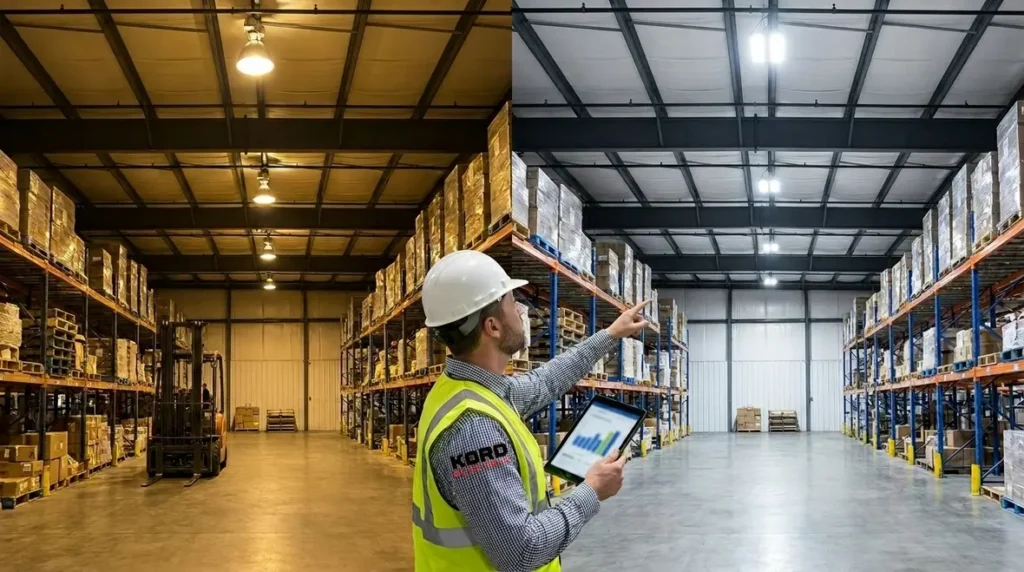
When a warehouse upgrades lighting, the best question is not “Will it look better?” The real win comes from the Smart lighting automation ROI we help our customers measure, piece by piece, until the numbers feel calm and clear. In the first year, many facilities see savings from lower energy use, fewer lamp replacements, and smarter control that actually matches how people and forklifts move through the space. And yes, the payoff can be faster than a film franchise sequel, because electricity bills do not take long to land in the inbox.
In this guide, a third person voice will show how we and our team at Kord Electric evaluate ROI for commercial and industrial warehouses and major property buildings, with practical steps, realistic assumptions, and service details explained by our technicians in plain language.
Step 1: establish baseline energy use before changes

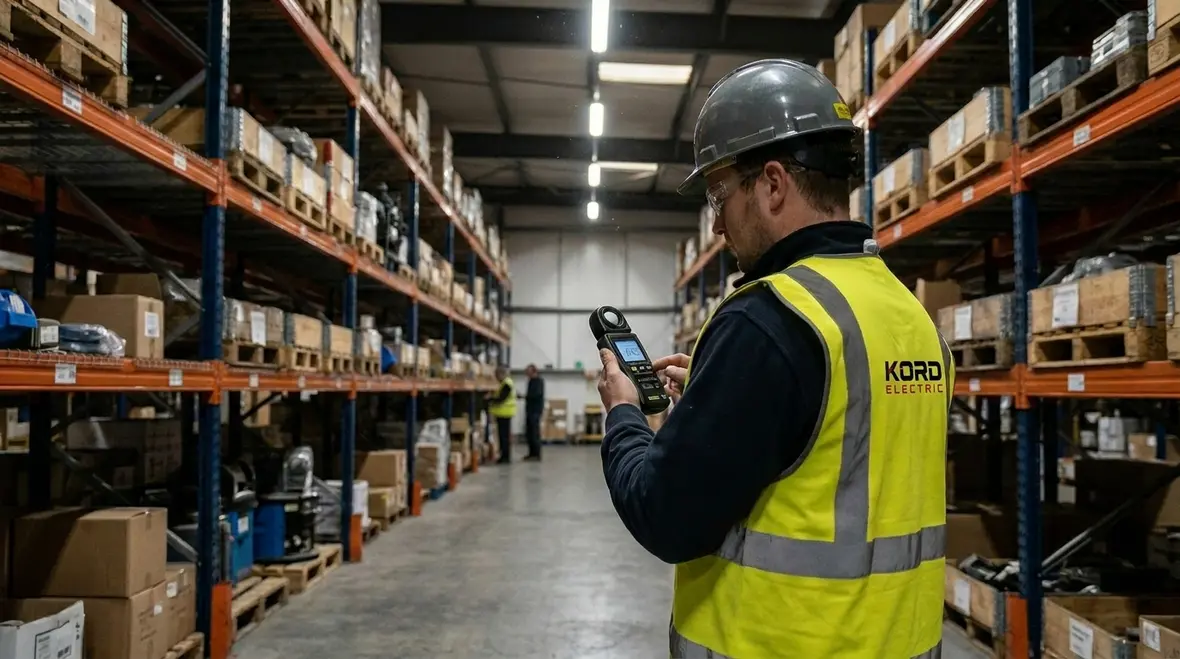
First, the team at Kord Electric starts by measuring what the warehouse consumes today. However, “it feels like it is too bright” is not enough. We pull data from utility bills, fixture wattage, operating hours, and zone control patterns. Then we confirm it with site observations, because warehouses often run lighting longer than anyone admits, especially during shift overlap.
Next, we calculate baseline lighting load. This includes installed lumens strategy, fixture type, and how many fixtures serve each area such as receiving docks, aisles, cold storage access zones, staging bays, offices, and parking-adjacent loading areas. After that, we map schedules and occupancy behavior. Then, we estimate how much of the building actually uses light at full output and how much could dim safely without harming safety or productivity.
To keep the process clean, our expert service staff explains every assumption to the client. If a warehouse uses lights 16 hours a day in some zones, we do not hide that detail. In fact, we use it, because ROI depends on reality, not wishful thinking.
Step 2: model savings from dimming, scheduling, and occupancy control
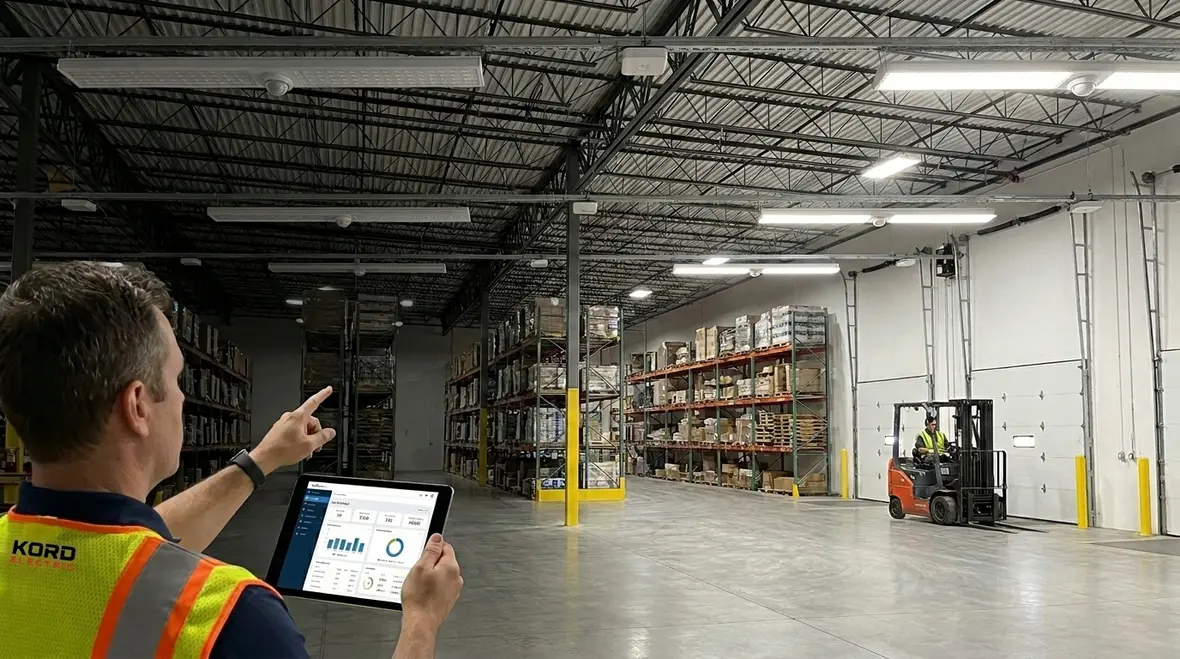
Once baseline usage is set, we move to Smart lighting automation ROI drivers that reduce energy without reducing function. Smart lighting automation ROI typically comes from three levers. First, fixtures dim during low activity. Second, controls schedule lighting so areas do not run at full brightness when the floor is empty. Third, occupancy and daylight sensing prevent wasted light near loading windows and skylights.
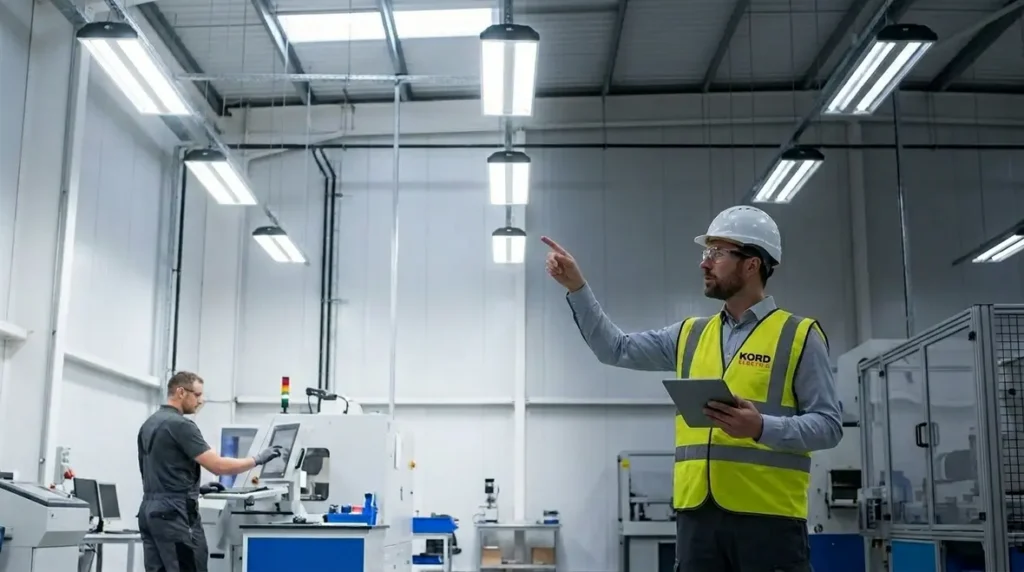
For warehouses, the control strategy needs to match the work pattern. For example, one aisle might have constant foot traffic during a shift, while another aisle clears out between picking waves. Therefore, the system should use zoning and intelligent control rather than one-size-fits-all timers.
At this point, our technicians often show a simple rule on site: controls should respond to activity, not to the building’s “memory” of last week. And if someone asks, “Can it just turn off when nobody is here?” the answer is yes for many zones, but our team evaluates safety requirements and code needs first. We do not turn the lights off like it is a prank. We turn them down or off where allowed, then we verify.
Step 3: include maintenance savings and equipment life gains
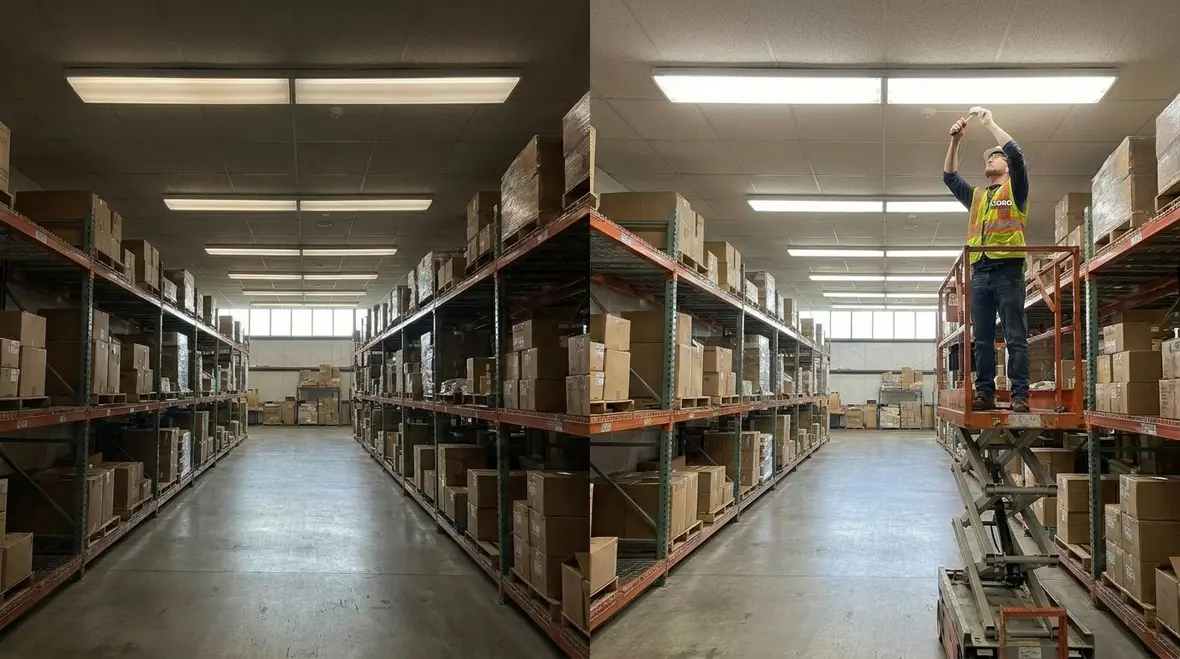
Lighting ROI is not only about electricity. It also includes maintenance cost reduction, which matters a lot for commercial and industrial facilities. When controls extend operating hours at lower output, many fixtures run cooler and last longer. This can reduce labor and downtime for lamp or driver replacements, especially in high-ceiling spaces.
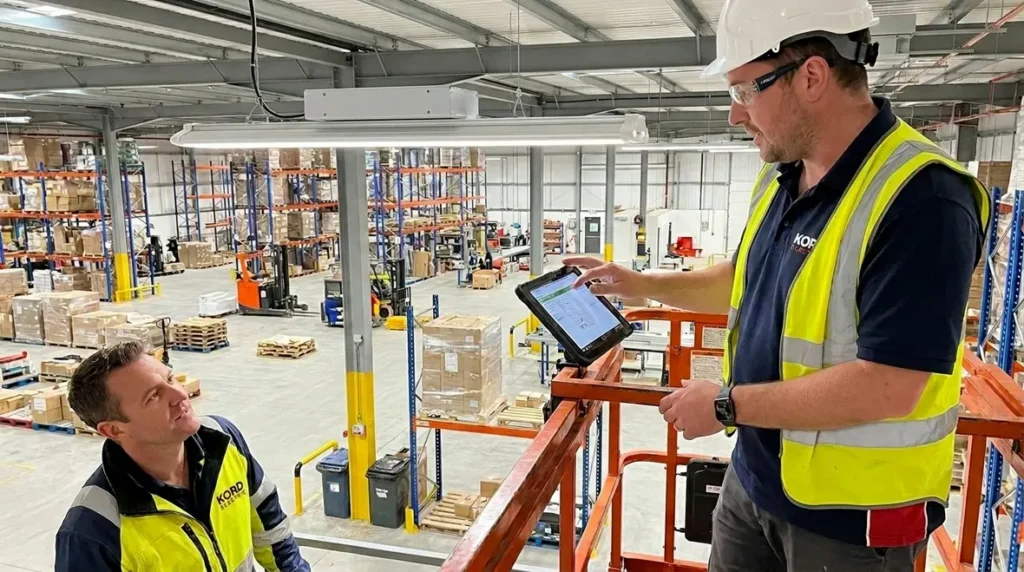
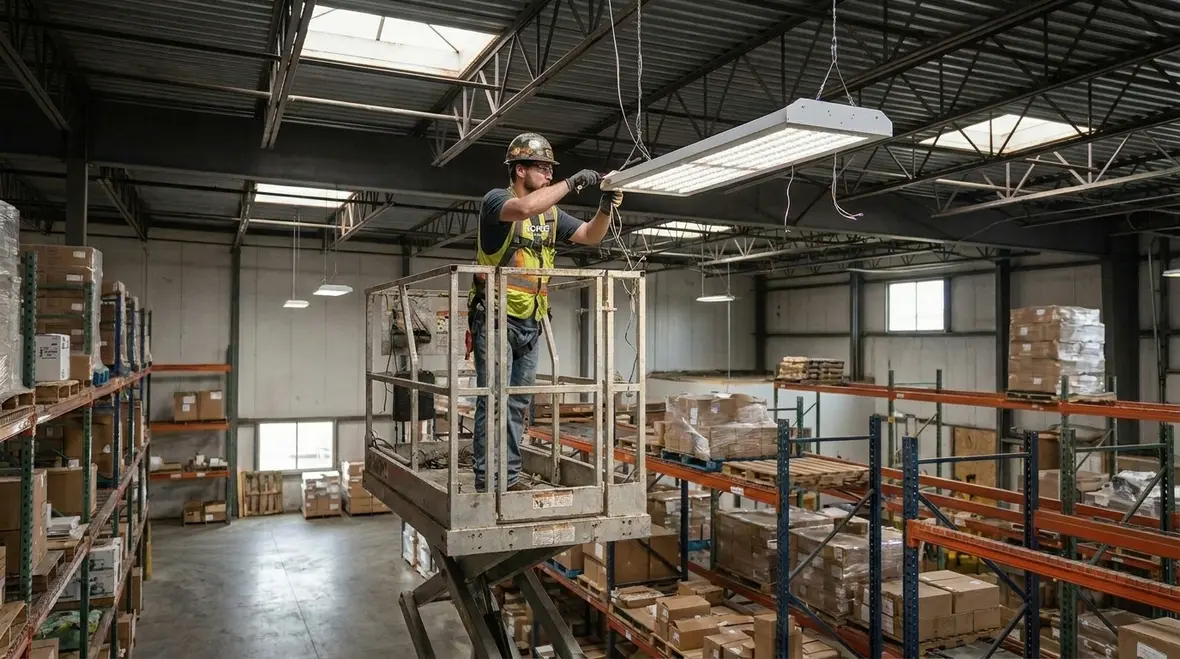
However, the ROI model should not guess. Kord Electric builds maintenance savings from current work orders, average replacement intervals, and access difficulty. If technicians need lifts, outages, or traffic control to change fixtures, then the cost per replacement rises. Consequently, smart controls can produce a bigger return.
Also, the team checks whether the smart system supports monitoring. When facilities can see fault alerts early, they avoid “find it after it fails” situations. In other words, they stop treating lighting like a surprise birthday party, except nobody gets cake.
Step 4: account for installation, integration, and electrical distribution reliability
ROI models can fail when clients ignore integration and power quality. Kord Electric considers the entire path, from controls and drivers to electrical distribution design, because reliability drives uptime and reduces rework costs. In our approach, we borrow principles from distribution work that supports reliability and planning, such as careful load assessment, thoughtful feeder setup, and dependable panel design for stable service. For a deeper dive into reliability planning, facility teams can explore Kord Electric’s guide on data center electrical distribution design for reliability, which shares many of the same design habits that keep warehouse lighting projects running smoothly.
If a warehouse already has aging breakers, inconsistent voltage, or outdated panels, then the smart lighting system may still work, but the project cost and timeline can change. Therefore, we review the electrical environment and identify any upgrades that prevent nuisance trips or poor dimming performance. That is where our knowledge from distribution design comes in, including how a facility can avoid the “it worked during testing” trap.
In a major property building, for example, the team evaluates where controls connect, how zones map to distribution, and whether communication wiring needs routing changes. Then we coordinate with site stakeholders so operations stay stable. After all, a warehouse cannot pause like a TV show for “one quick upgrade.”
Step 5: build a simple ROI calculator with real inputs
Now we put numbers together. A reliable Smart lighting automation ROI plan uses the same logic every time, and it does not require an advanced degree to understand. Kord Electric typically builds a short model with a few core inputs.
Inputs we validate with the client
- Current fixture watts and the number of fixtures by zone
- Operating hours and schedules by shift, including overtime patterns
- Expected dimming levels during low activity
- Occupancy and daylight impact in each major area
- Electric rate from recent bills
- Maintenance labor and replacement frequency today
- Project cost including controls, installation, commissioning, and any electrical upgrades
Outputs we compute
- Annual energy cost savings
- Annual maintenance savings
- Total annual benefit and simple payback period
- ROI over 5 years or another planning horizon
To keep the meeting calm, our expert service staff walks through each line item in plain language. If a client wants a more conservative model, we adjust dimming assumptions. If they want a faster payoff story, we do not “sprinkle fairy dust” into the math. We only use assumptions they can defend operationally.
Step 6: plan a rollout that protects productivity and safety
Many warehouses worry that upgrades will disrupt picking, loading, and safety checks. So, Kord Electric plans installation by area to reduce downtime. First, we identify the sequence that keeps dock areas and active aisles functioning. Then we test controls in each zone before moving to the next.
In addition, the team sets commissioning targets such as correct occupancy behavior, safe transition times for dimming, and reliable daylight response. As a result, the system performs as designed, not as “close enough.”
Also, we confirm the control plan supports business needs. Some companies need steady light in staging areas. Others want dimming in remote storage where motion stays low. Therefore, we configure the system with site rules in mind and explain those rules clearly to facility managers and safety leads.
And yes, once the system runs smoothly, the building feels different. Not in a sci-fi way. More like the lighting finally acts like a professional employee, showing up when needed and not burning energy when nobody asked.
For warehouses and major property portfolios that want to connect smart lighting upgrades with broader electrical reliability, Kord Electric also supports structured maintenance programs and reliability reviews. Facility leaders in the region can coordinate ROI-driven projects alongside core services such as Los Angeles County commercial and industrial electrical services, so lighting improvements fit into a larger, long term electrical plan instead of living as a one-off upgrade.
FAQ
Final word: let our team calculate the ROI with your real warehouse data
Kord Electric helps commercial and industrial warehouses and major property buildings estimate their Smart lighting automation ROI using real usage, real energy rates, and practical control assumptions. Our technicians and expert service staff explain every input, check electrical distribution reliability, and build a model that facility leaders can trust. If you want a calm, clear business case before you invest, reach out to Kord Electric. We will review your zones, outline expected savings, and plan a rollout that protects uptime and safety.
If your facility team also wants to coordinate lighting ROI with broader power reliability work, Kord Electric can align smart lighting automation projects with distribution design, maintenance planning, and emergency response support. That way, the same people who help you optimize Smart lighting automation ROI can also help you prevent the “it worked during testing” surprise when production is at full speed.