EV Charging for Workplaces Smart Planning Guide
At Kord Electric, we install EV charging for workplaces in commercial and industrial facilities, and we do it with the kind of calm focus you want when your parking lot is one bad decision away from becoming a very expensive story. Our planning process helps major property buildings add charging without surprises, downtime, or safety issues. And yes, we understand that nobody wakes up excited to think about load calculations. Still, if we want EV charging that works every day, we must start before the first cable gets pulled.
To guide you, we map the electrical path, the site reality, and the future growth. Then our technicians and expert service staff walk you through what we find, how we protect your operation, and how the system fits your workflow. Let’s plan it right, the first time.
EV charging for workplaces starts with a smart plan
Workplace site survey: what we check before we design

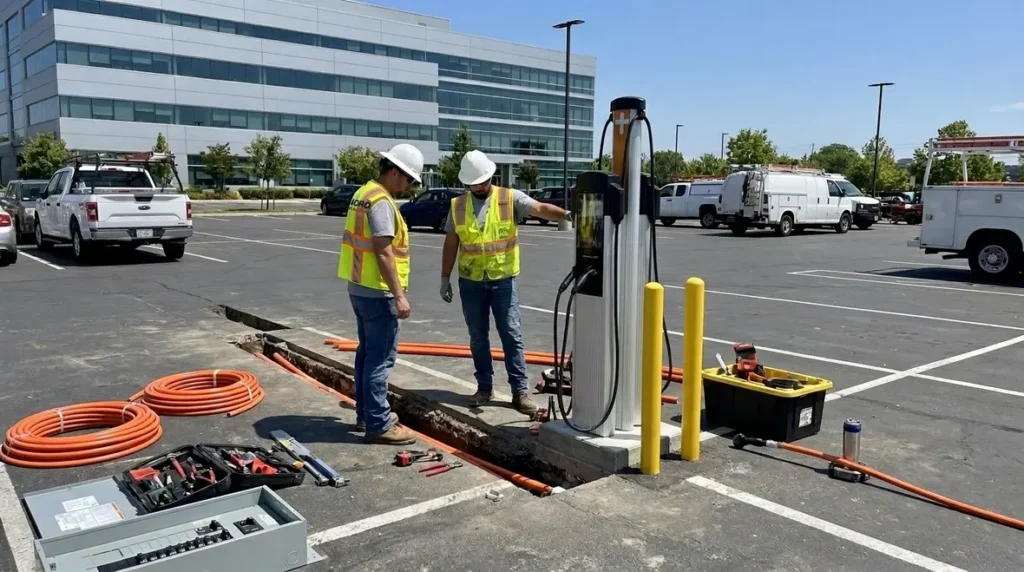
First, we walk the property like we will live there during construction. We review the utility service, the main switchgear, and the panel locations that can support chargers. Then we look at parking layout, cable routing options, and where vehicles will actually park. After all, a charger placed “by the map” can still fail in the real world, the way a pop quiz fails when you studied the wrong chapter.
Next, we check access and constraints. We look for safe routing zones, protection methods for vehicle contact, and whether trenching or surface conduit makes sense for your building schedule. We also confirm how your team moves during the day, so the installation plan does not disrupt operations more than necessary.
At this stage, our technicians and expert service staff also explain findings clearly. They translate electrical terms into practical decisions, so facilities managers and ownership teams understand the “why,” not just the “what.”
Power planning for commercial and industrial loads
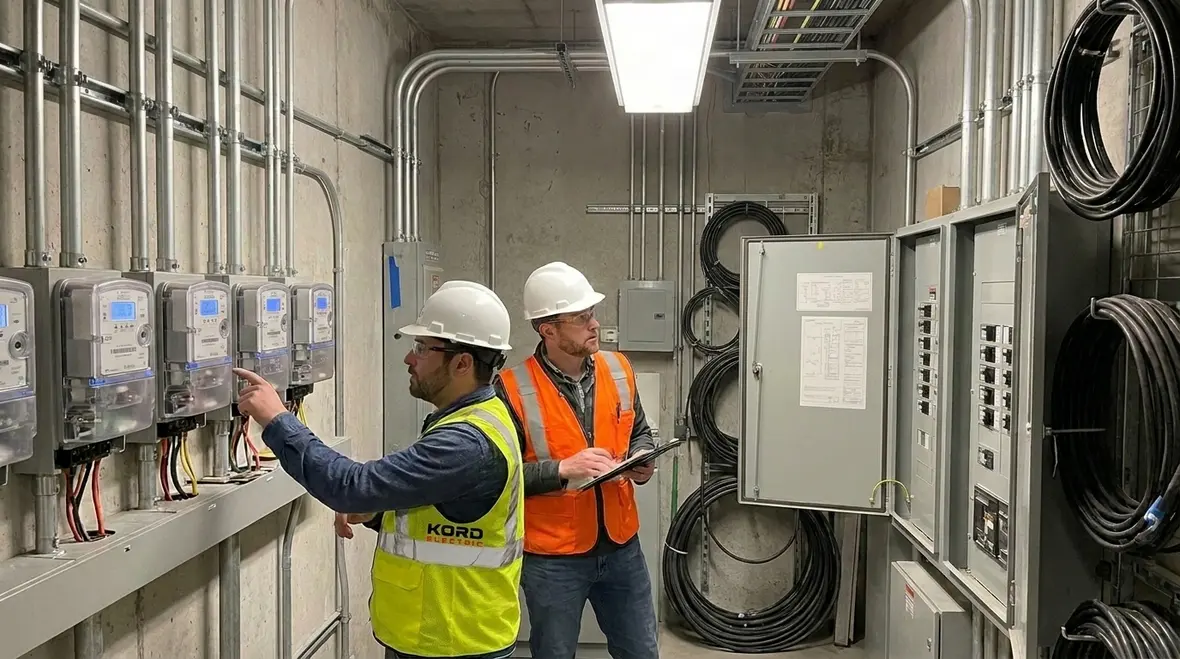
Now we get to the part that keeps every site manager up at night: available power. We analyze demand and load profiles, including HVAC cycles, lighting schedules, elevators, and any other major loads that show up at peak times. Then we compare that against what EV charging will add as usage grows.
In many cases, we recommend load management strategies so chargers share power intelligently. This helps maintain stable service and reduces the chance of triggering overloads or nuisance shutdowns. Even if you plan for “only a few vehicles today,” we still design for realistic growth, because EV adoption does not politely wait for your budget cycle.
We also coordinate with your electrical infrastructure and utility requirements. If your service needs upgrades, we plan the order of work and the commissioning steps. We do not leave that to guessing, because the cost of an avoidable rework can sting like stepping on a LEGO in slow motion.
Hidden electrical risks in commercial buildings and how we prevent them
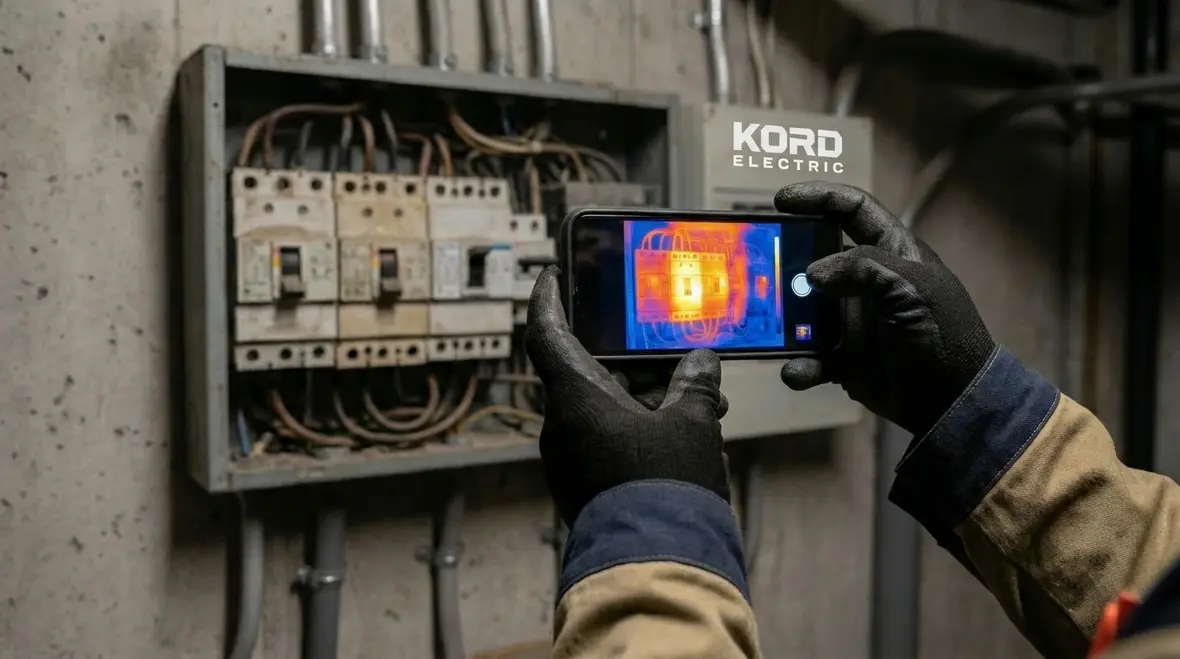
When we plan EV charging for workplaces, we pay special attention to the kinds of electrical issues that do not announce themselves until something goes wrong. If a system already operates close to its limits, EV charging can push it past the safe margin. That is why we reference our own risk guidance from commercial settings, including common hidden hazards such as overheated connections, aging components, and inappropriate overcurrent protection. You can see more detail in our article on hidden electrical risks in commercial buildings, which shows how those issues behave behind the scenes.
From our perspective, these risks tend to show up in patterns, not random events. For example, loose terminations can create heat over time, and heat damages insulation. In addition, shared neutrals, undersized conductors, or outdated breakers can create weak points that only become visible once higher loads begin.
So we address these before the charger ever energizes. We inspect critical connections, verify conductor sizing, and confirm that protective devices match the expected load and installation method. If we find components that look questionable, we explain what we see and why we recommend action. Our expert service staff prefers prevention over surprise, because downtime for a property building is not a “minor inconvenience.” It is a business problem.
And just to keep it honest, some risks hide in plain sight. People stop noticing them because the building has always “kind of worked.” EV charging forces a clearer look, which is exactly what we want.
Safety and code readiness for charging equipment
Safety comes next, and we treat it like a non negotiable requirement, not a checkbox. We follow applicable electrical standards and site best practices for commercial and industrial installations. We plan for weather exposure, corrosion resistance, physical protection, and safe cable routing around foot traffic and vehicle movements.
We also think about how people interact with the chargers. That means clear signage, proper mounting heights, secure enclosures, and conduit methods that reduce the chance of damage. If you run a fleet yard or a busy facility, we also consider how maintenance crews reach the equipment without putting themselves in harm’s way.
Additionally, we confirm that grounding and bonding meet the installation requirements. We verify labeling and documentation so your facility can maintain the system with confidence. Our technicians do not just install and walk away. Instead, they commission the charging system and confirm safe operation before turning it over to your site team.
Charging layout, user flow, and operational impact
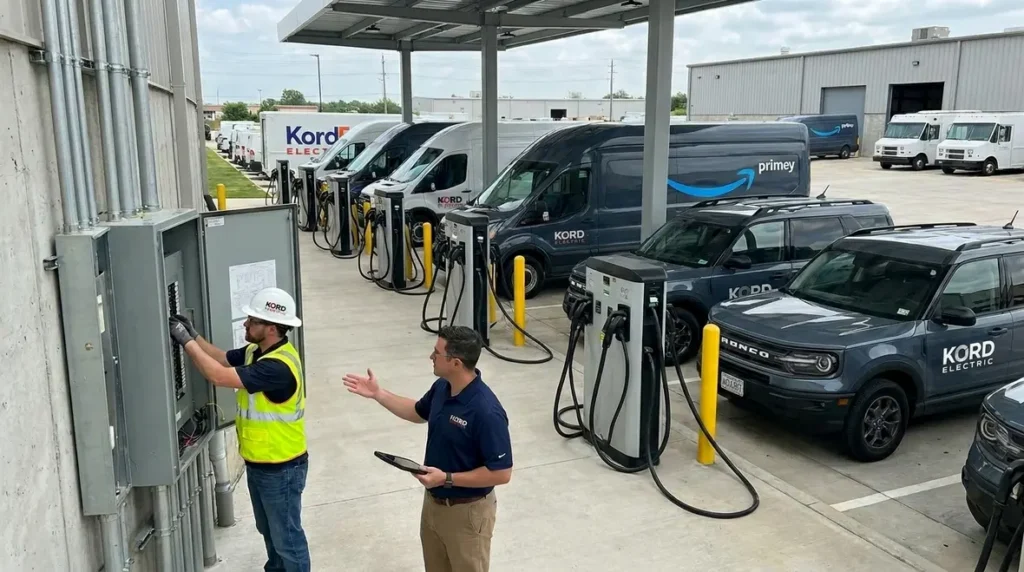
Next, we design the layout around people and processes. We place chargers so drivers can access them quickly without blocking entrances, loading zones, or pedestrian routes. Then we plan the cable paths so they do not create trip hazards or create repair headaches for your staff.
We also think about how charging fits your daily schedule. For example, employee charging needs different considerations than fleet charging. Employees may arrive at different times, while fleet vehicles may follow tighter schedules. If you manage a shared property with multiple departments, we also help you organize charging areas so usage does not spill into areas reserved for other tasks.
To keep things simple, our expert service staff explains your options in plain language. They talk through recommended placement, cable lengths, and mounting choices. And if you need a practical setup for a busy facility, we help you avoid the “install it now, fix it later” trap that many commercial teams fall into. That trap is popular, but it is not profitable.
Smart controls, monitoring, and future upgrades
EV charging systems should not feel like a one-time project. They should behave like part of your electrical strategy. That is why we plan for monitoring and smart control options where they match your needs. Load management, usage reporting, and remote status checks can help you keep uptime high and maintenance predictable.
We also design for upgrades. If your company expands fleet size or leasing demands change, you should not rebuild the site from scratch. We plan spare capacity, consider conduit pathways for future runs, and account for how adding ports will impact the electrical design.
Our technicians also support your operational goals. They help you understand how the system performs under different usage patterns, and they explain what the monitoring data can tell your team. If you want the system to support business decisions, you need visibility, not guesswork.
For facilities that are already thinking ahead about scaling, our team also shares guidance on broader planning in resources like the EV charging infrastructure scalability guide for commercial sites, which pairs well with a structured workplace charging strategy.
Common planning mistakes we help facilities avoid
Even careful teams make mistakes, especially when time pressure hits. We see a few patterns often, and we help you avoid them early.
- Designing for today only and ignoring tomorrow’s growth leads to rushed upgrades later.
- Skipping site constraints such as conduit paths, access for technicians, or parking flow creates installation delays.
- Underestimating existing electrical stress can turn EV charging into an unplanned safety review.
- Choosing equipment without service support leaves your staff stuck when something needs attention.
- Not planning documentation makes maintenance slower and increases risk during future work.
Instead, we use a structured planning process that connects electrical capacity, equipment placement, and safe installation steps. Then our expert service staff stays involved through commissioning, because a system only “works” when it performs reliably and safely.
Dual column: planning checklist and what we handle
Facility planning items
- Parking layout and user flow
- Expected charging behavior and growth
- Operational schedules and access needs
- Desired monitoring and reporting
- Documentation for maintenance teams
Kord Electric technical work
- Electrical load and infrastructure review
- Safe conduit and cable routing design
- Protective device verification and checks
- Commissioning and performance confirmation
- Future upgrade planning and readiness
If you want help budgeting these pieces, you can also reference their broader planning ideas in the commercial EV charging installation cost guide, which pairs real-world costs with the planning decisions that shape them.
FAQ
Conclusion and call to action
If your commercial or industrial facility wants EV charging for workplaces that performs safely and grows with your needs, we are ready to help. At Kord Electric, we plan the electrical path, protect your building from hidden risks, and install charging with clear explanations from our technicians and expert service staff. Reach out today to schedule a site consultation, and we will map the best path forward for your parking areas and your power system. Because in business, “later” usually costs more.
For facilities across Southern California that want to connect EV charging with broader electrical upgrades, our dedicated Los Angeles County electrical services team can coordinate panel work, preventive maintenance, and charger installation under one plan instead of scattered projects.
And when you are ready to move from research to action, our EV charger installation services are built specifically for commercial and industrial properties, with a process that takes you from assessment to commissioning without the usual surprises.