Commercial Building Lighting Code California Requirements Compliance
In commercial spaces, lighting rules never sleep, and that is exactly why our team at Kord Electric treats the Commercial Building Lighting Code: California Requirements & Compliance as a practical job, not a vague checklist. In the first place, California sets performance expectations for energy use, controls, and efficient fixtures. Then, those requirements show up in plan review, inspections, and operating costs. At Kord Electric, we guide owners and facility managers through this process with clear explanations, and our technicians and expert service staff slow things down when other people want to rush. Because yes, lighting code can feel like a long movie with plot twists you did not ask for, but we make it understandable. And if you think the code is written for robots, trust us, we have heard that joke too. We still help you pass the review anyway.
What California requires for commercial lighting performance
California commercial lighting rules focus on outcomes, not just fixture choices. First, the state drives buildings toward lower energy use through limits on connected lighting load and by requiring efficient technologies. Next, it expects controls that reduce waste when spaces sit empty. Even when a facility looks bright, wasted lighting can still waste money, and that is where compliance matters.
From our experience working on commercial and industrial facilities and major property buildings, we see the same pattern. Projects often start with “we need enough light,” and then the code conversation comes later, usually after a design decision has already been made. As a result, teams scramble. At Kord Electric, our technicians explain how the code measures performance, so you can choose lighting that meets the requirement without sacrificing day to day function. We also help you align lighting levels with the actual use of the space, because offices, warehouses, and parking areas do not want the same behavior from their lights.
In plain terms, the code pushes three big ideas. Efficient fixtures matter. Proper zoning and controls matter. And the way the building turns lights on and off matters. That may sound obvious, but we have watched teams ignore one of those ideas and then pay for it later. Nobody likes paying twice. It is like ordering the same burger twice, except one of them comes from the wrong restaurant and still costs extra.
Where compliance shows up in real plan sets and field work
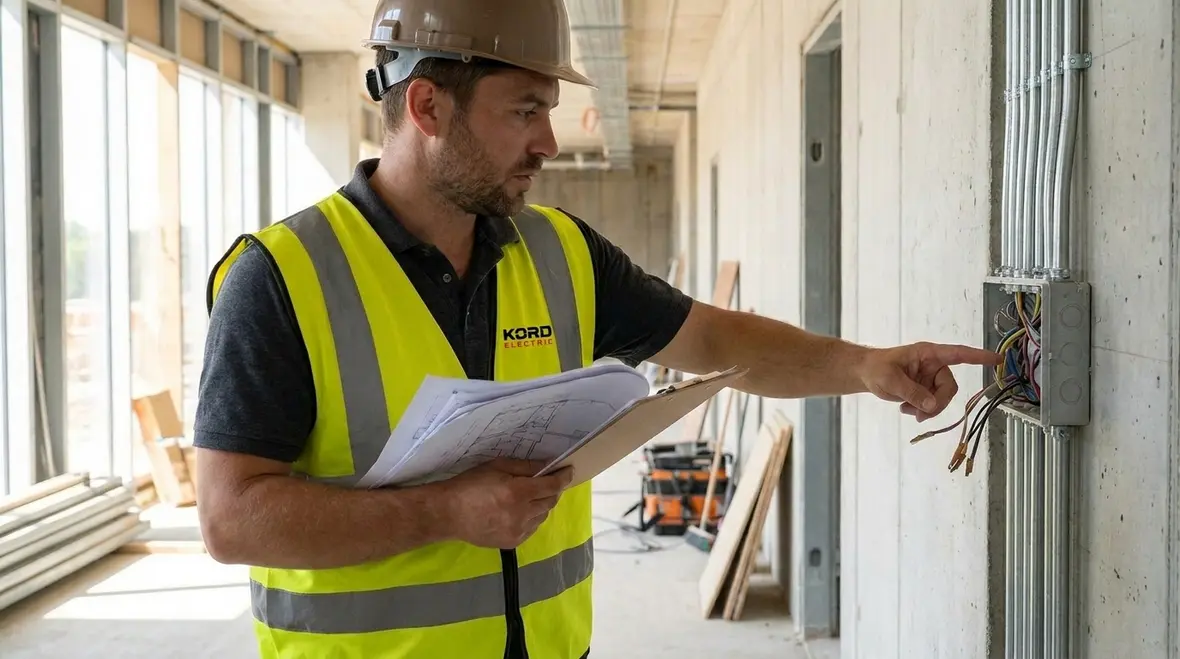
Compliance shows up in documents and in details. To begin with, your lighting design needs to follow the standards used by California reviews. That means layouts, schedules, control notes, and documentation should match the installed result. Then the field work must support those plans. If the drawings say certain control behavior, and the wiring or programming creates different behavior, inspections can get difficult.
Our expert service staff at Kord Electric looks at the project from both angles. We review what others submit and we help ensure the electrical work supports it. For example, control logic for offices needs to respond to occupancy and time based behavior. Meanwhile, outdoor and parking lighting needs proper switching and time control to reduce unnecessary operation. Similarly, industrial sites often use task lighting and high bay lighting strategies that must still align with control expectations.
Additionally, we help teams avoid mismatches between fixture schedules and actual equipment. That mismatch happens more than people admit. Maybe the chosen luminaire gets replaced due to lead times. Maybe a contractor “simplifies” something during installation. If that change affects controls, wattage, or zoning, you can end up off code. Kord Electric builds a process that keeps your project aligned from submittal to final punch list.
Controls, sensors, and dimming: the part that saves energy
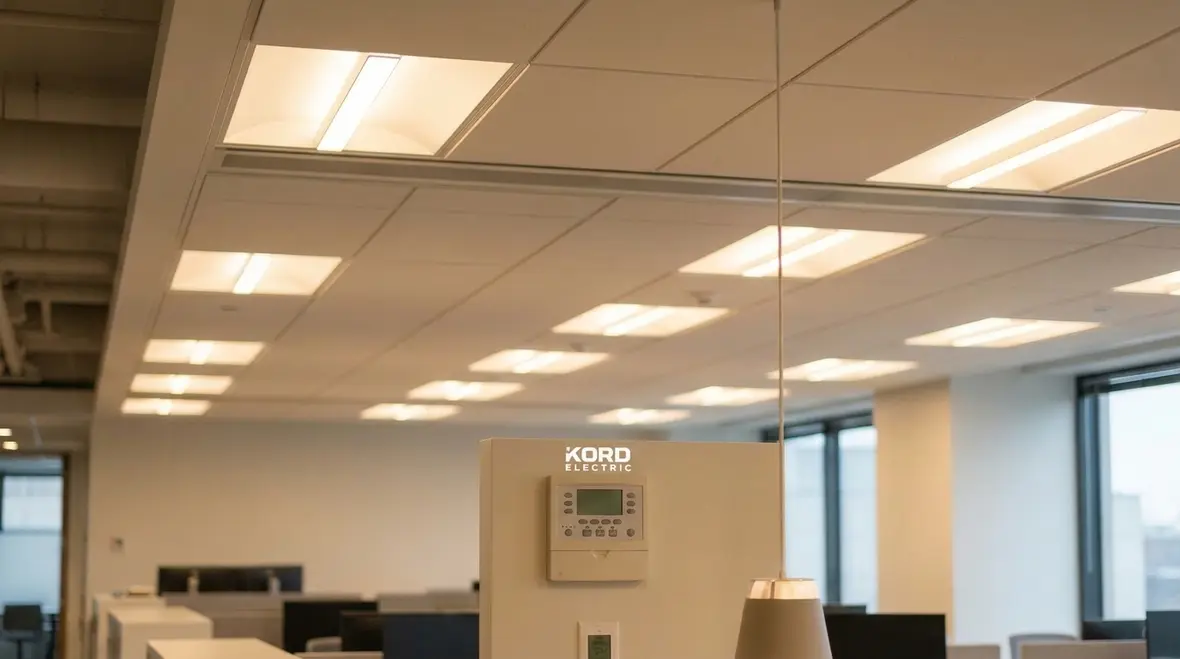
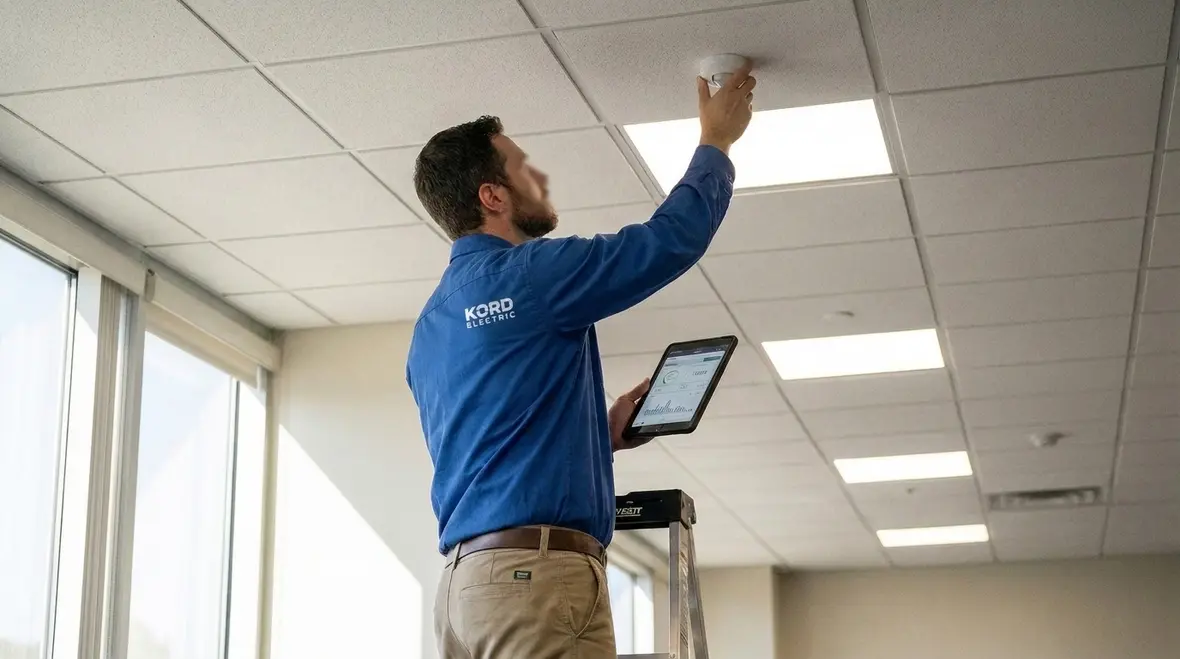
Lighting controls are where a lot of compliance success lives. First, controls reduce operating hours and prevent lights from staying on when spaces are empty. Second, dimming and multi level control can match light output to need, which cuts energy use without making people feel like the lights are “going dim on them.” And yes, some folks fear dimming will feel like a horror movie. That is not the goal, and we set the behavior so it stays steady and practical.
In commercial buildings, occupancy sensors, vacancy sensors, time schedules, and switching strategies work together. However, the code does not only say “use a sensor.” It expects a specific level of performance through how zones respond. For instance, a shared corridor behaves differently from a private office. Therefore, the zoning needs to match the space layout and usage. When Kord Electric installs, our technicians explain the control sequence in human terms, so building staff know what to expect during normal operation.
On industrial sites, the control mindset still applies, even if the fixtures look different. High bay systems, area lighting, and task lighting need strategies that prevent full output when only part of the space needs it. As a result, organizations lower costs while keeping safety and visibility where workers need it.
We also help with commissioning style checks. You want the controls to behave in the way your documentation claims. If you skip that, you can get a building that technically passes on paper but behaves poorly in real life. Nobody wants to find out after move in that lights do not follow the schedule. That is like discovering your parking ticket was for the wrong zone. It is annoying, and it is avoidable.
Efficient fixtures and lamp choices that align with the standard
Efficient lighting starts with the right fixture selection. Then it continues with the details: lumen output, efficacy, distribution, wattage, and compatibility with controls. In commercial and industrial spaces, we often see teams pick fixtures based on brightness alone. Yet the code cares about performance and energy use. So brightness without efficiency can still fail compliance goals.
At Kord Electric, we treat fixture selection as part of the system, not as a single product decision. For example, a space designed with the right distribution but without the expected dimming capability can limit how well controls work. Likewise, a plan that uses one wattage class but installs a higher watt fixture can affect connected lighting load. That is where our technicians earn their keep. They explain how fixture properties connect to code requirements so your design stays coherent.
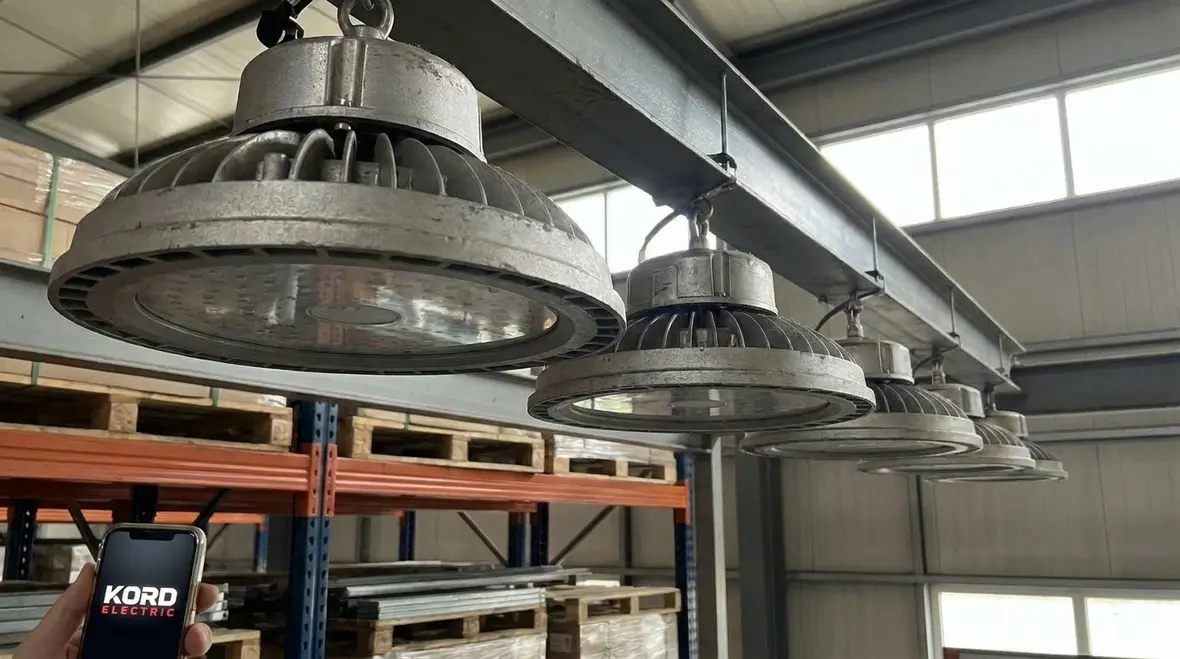
Additionally, we help coordinate LED drivers, optical requirements, and mounting approaches. Industrial and major property buildings often have unique constraints like structural layouts, mounting heights, and vibration concerns. Even then, the code still expects efficient operation and appropriate control behavior. Our service staff supports these projects by focusing on what actually gets installed and how it operates after commissioning.
When you work with experienced electricians, you reduce surprises. And if you have ever watched a project slide because of one “small” substitution, you already understand why that matters.
How inspections and maintenance interact with lighting code
Passing inspection is not the end of the story. The way lighting systems maintain function affects ongoing compliance and safety. Over time, fixtures can fail, controls can lose programming accuracy, and sensors can get blocked by new storage or signage. Therefore, owners and facility managers should treat lighting compliance as a lifecycle task.
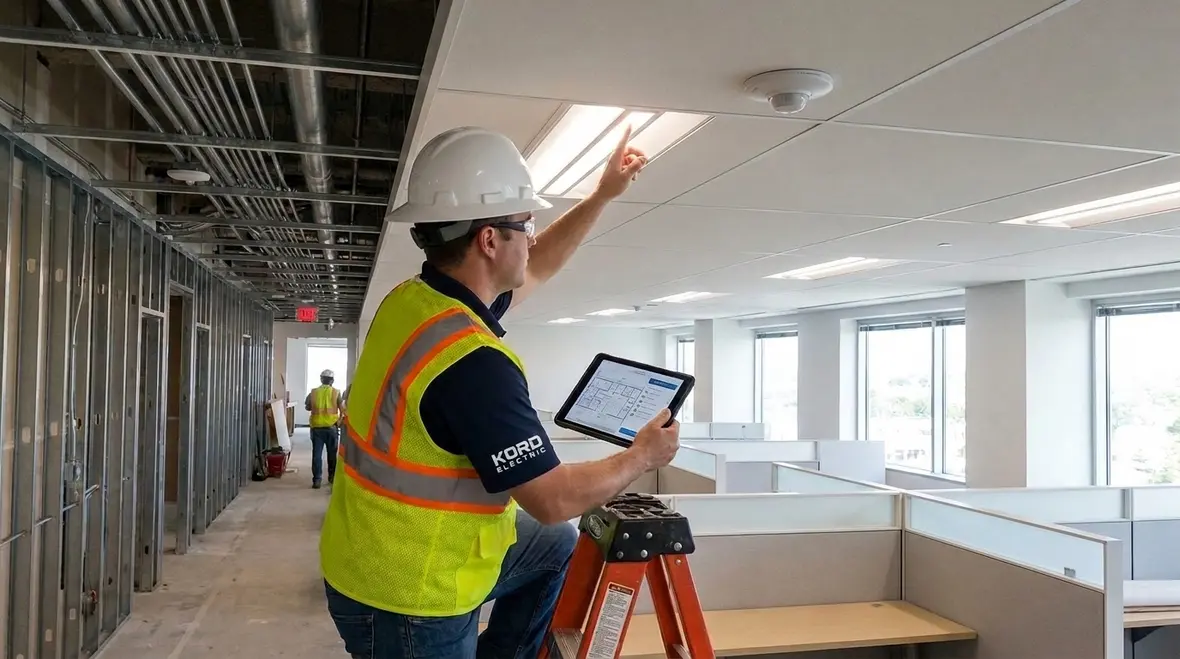
During installation, Kord Electric technicians document what they set up. That documentation supports future troubleshooting and prevents guesswork. Then our expert service staff can help with maintenance planning that keeps controls functioning as intended. For instance, we can verify sensor coverage, check time schedules, and confirm dimming responses after changes in occupancy patterns.
Also, code related requirements often involve how lighting behaves across different areas and time periods. If facility operations change, you may need to adjust control settings to keep the building operating as originally designed. We help with that adjustment because we serve commercial and industrial facilities and major property buildings, where operational changes are common and cost of downtime is high.
Dual check process we use
Design side
- We align fixture schedules, zoning, and control intent with the Commercial Building Lighting Code: California Requirements & Compliance expectations.
- We support submittal details so what gets reviewed matches what gets built.
Field side
- We confirm wiring, addressing, and programming match the documentation.
- We help ensure control behavior supports energy saving during real occupied and unoccupied conditions.
Connecting inspections to broader California lighting code guidance
If you want a deeper dive into statewide expectations beyond a single project, Kord Electric’s California Commercial Lighting Code Guide for 2026 walks through how Title 24, controls, and lighting power limits all connect across different property types. Many owners review that guide alongside their inspection punch lists so they understand not just what is required today, but what will matter for future upgrades as well.
Common mistakes that cost time, money, and goodwill
Most compliance issues come from predictable mistakes. First, teams underestimate how much control layout matters. They assume “general switching” will cover it. Then inspections push back when the control behavior does not meet expectations for zones. Second, teams swap fixtures late in the process. Sometimes it is a supply problem, sometimes it is a value engineering decision, and sometimes it is just optimism. Either way, changes can affect connected load and system performance.
Third, facilities do not plan for how occupants will use the space. Lighting controls need to match real patterns. If a sensor zone covers areas with frequent motion, lights will turn on more often. If the zone misses a work area, people will override controls or complain. At Kord Electric, we help stakeholders understand these cause and effect relationships so you do not end up tuning controls during the busiest week of the quarter.
Fourth, some projects treat commissioning like an optional add on. In reality, it is a guardrail. When our technicians verify control scenes, sensor response, and schedules, the building functions as designed. That means fewer call backs, fewer “why is this happening” phone calls, and fewer late night adjustments that feel like a prank from the universe.
Tying lighting code to broader electrical reliability
Because lighting does not exist in isolation from the rest of your power system, many property managers pair lighting code work with broader electrical troubleshooting or preventive maintenance. If your facility is in Southern California, Kord Electric’s experience with Los Angeles County electrical services means we can look at how panels, feeders, and existing loads interact with your lighting upgrades, so you are not fixing one problem while creating another.
FAQ: Commercial lighting code and California compliance
Ready to align your project with code based lighting outcomes
If you manage a commercial or industrial facility, you deserve a lighting plan that passes review and operates the way it should after the ribbon cutting. Kord Electric helps you move from code intent to real field performance, with technicians and expert service staff who explain every decision in plain language. If you want fewer surprises and smoother inspections, contact us for a consult and get your next lighting project aligned with the Commercial Building Lighting Code: California Requirements & Compliance before the schedule starts getting spicy.
Take the next step toward code ready lighting
Whether you are planning a new build, a major retrofit, or a targeted controls upgrade, working with a contractor who treats code as part of the design from day one makes the process smoother. Kord Electric’s commercial and industrial lighting teams handle everything from layout and controls to inspections and lifecycle maintenance, so your building meets California requirements without turning every decision into a debate.
If your facility is in Southern California and you need help beyond lighting alone, explore Kord Electric’s full range of Los Angeles County electrical services to see how code conscious electrical upgrades, emergency support, and preventive maintenance can work alongside lighting improvements for a stronger, more reliable power story.
When you are ready to move from reading about requirements to putting them to work in your building, our team is ready to help.