

Commercial Building Load Balancing for Efficiency
In every busy facility, energy never really “turns off.” Lights, HVAC, elevators, kitchens, compressors, chargers, and even specialty equipment keep drawing power around the clock. That is why commercial building load balancing matters, because it helps us keep demand steady and distribution fair across phases and feeders. When we balance the load the right way, the whole electrical system works with less stress, less waste, and fewer surprises that show up after hours like an uninvited party guest.
At Kord Electric, our expert service staff explains the plan in clear, plain language, so building owners and facility managers can make confident decisions. And yes, we also admit when something is more complicated than it looks, because electricity loves details the way a sitcom loves a slow reveal.
Why phase balance directly improves facility energy efficiency
Commercial building load balancing improves facility efficiency because it reduces how hard the system has to work to deliver the same results. When loads land unevenly across phases, one phase carries more current. Then heat builds in conductors and panels, and efficiency drops. In practical terms, you may still “see” normal operations, but the system runs less smoothly, and energy losses rise as electrical stress increases.
Moreover, unbalanced loads can lead to voltage dips and flicker in sensitive areas like break rooms, office floors, or production zones where equipment hates unstable power. In addition, imbalanced current can cause neutral overheating where wiring or design details do not match actual usage. And once that heat accumulates, it shortens equipment life. So even if your utility bill looks only modestly higher, you can still pay later in repairs, replacements, and downtime.
Our technicians at Kord Electric regularly confirm phase balance through load studies, panel inspection, and real measurements at the right points, not just estimates. Then we map findings to the way the facility actually operates, because load profiles in a modern building are not “average” and never behave like a textbook.

Balanced loading also supports voltage stability and helps prevent many of the voltage fluctuation issues that lead to nuisance trips and sensitive equipment misbehavior. For facilities that have already wrestled with unexplained flicker or unstable circuits, pairing commercial building load balancing with targeted voltage diagnostics creates a more resilient foundation for long term performance.
If your building is already dealing with unstable voltage or recurring power quality issues, it may be time to connect load balancing planning with a dedicated voltage stability review, so both the distribution and the incoming supply work together instead of pulling in opposite directions.
How our technicians approach load studies in modern commercial buildings
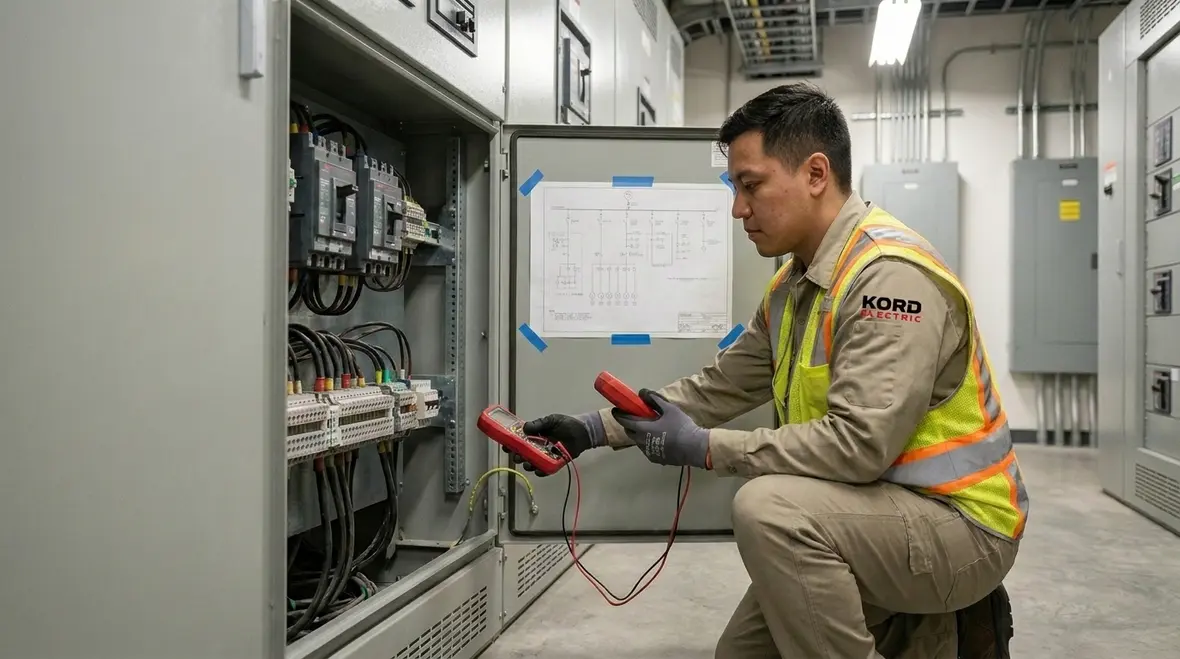
To balance power intelligently, we start by observing reality, not assumptions. First, our expert service staff reviews the building electrical one line diagram and how distribution works across switchgear, distribution boards, transformers, and motor control centers. Then we study the facility’s operating pattern, including peak hours, seasonal loads, and equipment schedules.
Next, we measure current and power factor across phases, and we watch how the values change through the day. This matters because load balancing is not a one time checkbox. A restaurant that adds seasonal prep equipment, a data room that ramps server loads, or a manufacturing line that cycles differently can shift balance in weeks. In other words, the building keeps evolving, and so should the electrical strategy.
After we collect data, we propose adjustments that fit your operational goals. That might mean redistributing panel circuits, correcting misrouted loads, and coordinating with BAS schedules so HVAC cycles match the electrical design. And when needed, we recommend upgrades that improve distribution capacity without forcing a full facility shutdown. We do this with planning that respects tenant schedules, production needs, and the simple fact that nobody wants their building to go dark because we were “carefree” in the field.
In many larger facilities, these load studies connect directly to broader commercial and industrial electrical maintenance plans. When load balancing lives inside a structured preventive maintenance program, facilities gain historical data, trend visibility, and a clear roadmap for upgrades instead of reacting to surprise failures.
Smart distribution design and the role of load balancing controls
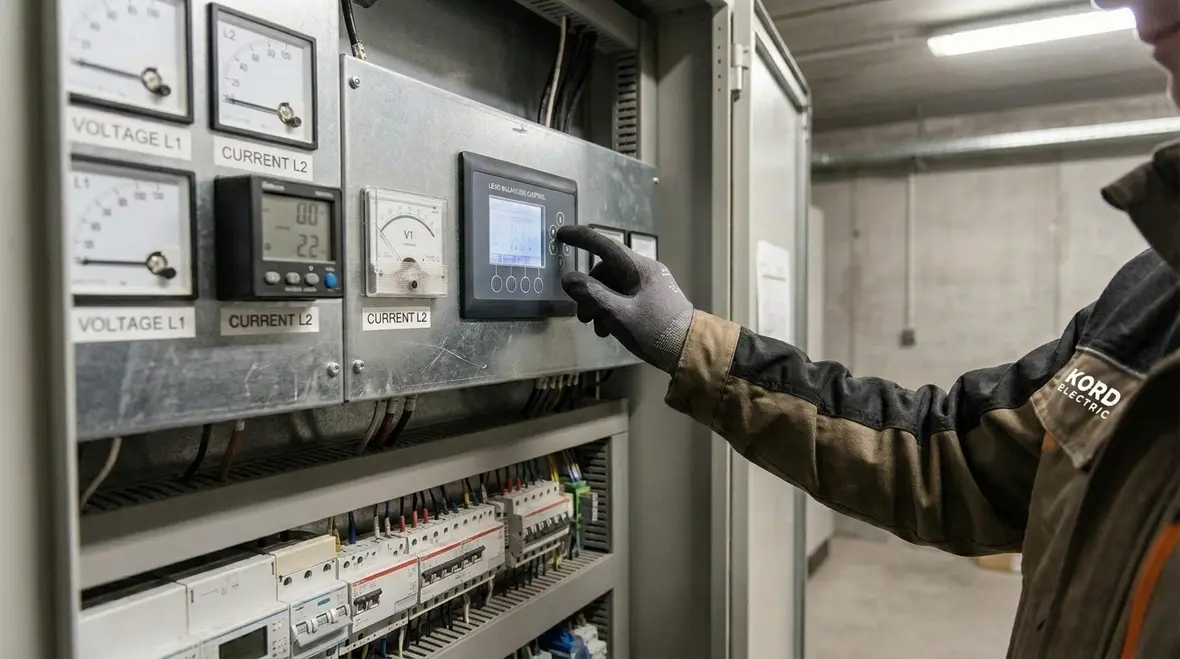
Many building owners think efficiency improvements only come from replacing equipment. That is not wrong, but it is incomplete. Distribution design influences how safely and efficiently power travels. If the electrical system feeds circuits in a way that keeps phases close to equal, the bus bars stay cooler and equipment performs with less strain. In addition, good coordination reduces nuisance alarms and protects sensitive loads from voltage swings.
Furthermore, in some modern installations, controls and monitoring make balancing practical over time. For example, we may incorporate metering and submetering that shows which panels carry which loads during real operating conditions. Then facility teams can schedule demand response, manage staggered start for large loads, and avoid stacking peaks on the same feeder. This does not just cut energy waste. It can also reduce demand charges, which often hurt budgets more than the kWh rate does.
When we install or tune solutions, we keep it geared toward commercial, industrial, and major property buildings. We do not treat small residential setups like the center of the universe, because our expertise and service scope follow the buildings where electrical reliability truly matters.
In many projects, commercial building load balancing also sits alongside more advanced commercial electrical systems planning. From integrating backup power to coordinating with smart building infrastructure, our teams treat load balance as one of the core design levers, not an afterthought.
Where efficiency gains show up on your bills and in equipment health

Energy efficiency is not only a utility meter story. It shows up in multiple places across your facility. First, balanced loading reduces losses in conductors and transformers. As a result, the system wastes less energy as heat. Second, balanced currents lower the risk of hotspots in panels and switchgear. That protects bus bars, breakers, and terminations, which are common pain points over time.
Third, proper load distribution can improve power factor performance. While power factor correction depends on your specific equipment and control strategy, a more stable electrical environment helps reactive loads behave better. Then you may see improvements in how your system handles motor loads, VFDs, and intermittent equipment cycles.
We also watch for harmonics and stray loads, especially in facilities with variable frequency drives, LED lighting drivers, and modern power electronics. If harmonics push the waveform into a more distorted pattern, the impact is not always visible on day one, but it can increase heating and stress. So we address the full picture, not just the current reading.
In our experience, the best results come when facility teams track both performance and comfort. Balanced power supports stable operation for HVAC and production equipment, which means fewer slowdowns and fewer “mystery” faults. And if you have ever chased a fault at 2 a.m., you already know why prevention feels better than fixing.
Balancing by reassigning circuits, coordinating schedules, and planning upgrades
When we execute load balancing, we choose methods that match the facility’s constraints. Sometimes the solution is straightforward: we reassign circuits so single phase loads distribute evenly across phases. In other cases, we coordinate with controls teams so large equipment starts in a staggered pattern. That helps prevent the same feeder from taking the full hit at the same time.
For commercial and industrial buildings, we also consider how equipment maintenance and operational changes affect balance. A lift replacing one motor, a compressor retrofit, or a panel expansion can alter current paths and shift loads. Therefore, we plan balancing updates alongside normal electrical service cycles, so you do not repeat work or leave new issues behind.
However, if the facility has aging switchboards, undersized feeders, or poorly planned distribution, balancing alone cannot carry the load safely. In those cases, we recommend upgrades that bring the system closer to modern requirements. Then we balance the updated distribution so it stays efficient under the way the building actually runs today.
|
What we check
|
What we deliver
|
That is where our technicians earn their stripes: we keep the changes practical, and we explain the “why” behind each step, so teams do not feel like they bought a mystery box.
Common challenges in large buildings and how we solve them
Large commercial and industrial buildings bring special challenges. First, loads often spread across many panels, and historical changes over the years can introduce uneven wiring or “temporary” additions that never became permanent. Second, tenants and operational schedules shift frequently. A new process line can change demand patterns in a way that no one predicted at design time.
Third, balancing conflicts can appear between comfort goals and electrical limits. For example, a building may prioritize consistent HVAC temperatures, but the start cycle and sequencing could stack loads during peak times. So we coordinate between electrical distribution and controls sequences. Then we find a path that supports stable comfort without letting the electrical system take unnecessary punishment.
Lastly, measurement can be tricky. If readings occur during unusual downtime or outside real operating peaks, decisions can miss the real imbalance. That is why we plan measurement windows and verify results across multiple time blocks.
And if you ever hear someone say, “It looks fine from our last reading,” we gently ask, “When was that, and what changed since then?” Electricity does not care about last quarter’s story. It cares about what is happening right now.
For facilities already building out long term electrical maintenance strategies, weaving commercial building load balancing into those maintenance plans helps keep everything aligned: safety, uptime, and energy efficiency all moving in the same direction.
Commercial building load balancing FAQ
Conclusion: let us balance your power before it balances your budget
When electrical load sits unevenly, the building pays in wasted energy, higher heat, and more frequent maintenance surprises. Our technicians at Kord Electric use real measurements, clear explanations, and practical adjustments to improve performance in commercial and industrial facilities and major property buildings. If you want steadier operation and fewer costly shocks, contact Kord Electric today for a load study and a plan you can act on. We will keep it calm, clear, and professional, so your system runs like it means it.
Commercial building load balancing also fits naturally into broader electrical preventive maintenance and upgrade planning. Whether you are exploring full system rewiring, planning commercial lighting upgrades, or bringing a kitchen or production space up to modern code, balancing the load is one of the smartest ways to protect that investment and keep your electrical system running at its full potential.
If your facility is ready to tighten up power quality, improve reliability, and get ahead of the next round of electrical demands, our team can align commercial building load balancing with a tailored electrical preventive maintenance program or targeted corrective services. The goal is simple: less stress on your system, more predictable performance for your operation.
Whether you manage a high rise, a distribution center, a manufacturing plant, or a mixed use property, a structured approach to load balancing and maintenance keeps surprises out of your electrical rooms and off your balance sheet. When you are ready to turn that plan into action, Kord Electric is here with commercial and industrial electrical services built specifically for demanding facilities.


