
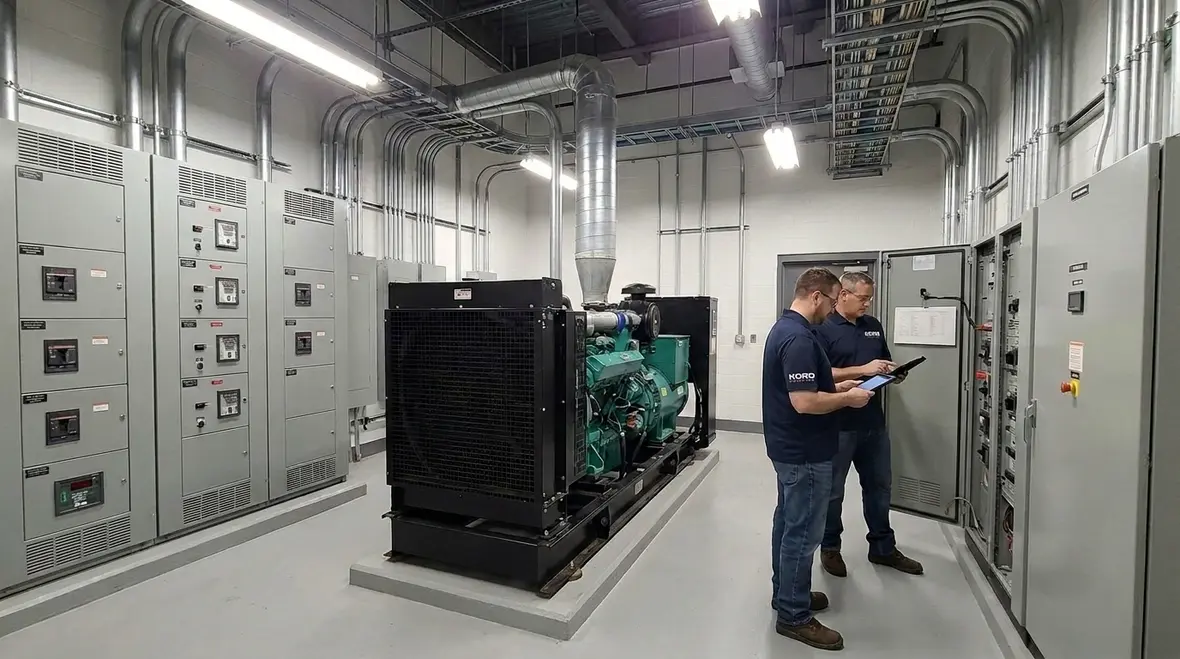
Commercial Business Continuity Power Solutions
Kord Electric helps commercial teams protect their operations with commercial business continuity power planning built for the real world, not a perfect one. We design and support essential commercial power redundancy solutions so buildings stay online when the grid stutters, storms roll in, or equipment decides to retire early. Others may say, “We’ll handle it when it happens.” We plan for it before it happens, because we have to. Our technicians and expert service staff walk clients through choices in plain language, step by step, so your team can make decisions with confidence. And yes, we will still explain things even if the meeting runs long. We have seen every kind of downtime. We know what it costs. Let’s get your power strategy ready.
What “business continuity” means for commercial buildings
When power fails in a commercial or industrial facility, the impact moves fast. First, lights go out. Then HVAC control shifts. After that, production slows or stops. Meanwhile, systems like fire safety, access control, networking, and process equipment do not care about office hours. They care about energy.
In our experience, commercial leaders need continuity that is practical. So, we help define the goal clearly: keep critical loads running within a set time and tolerance. For example, a medical-adjacent facility needs different priorities than a warehouse. Therefore, we start with a structured review of your building functions, electrical distribution, and the loads that cannot wait.
We also remind our clients of a simple truth: power problems rarely arrive as a single clean failure. They show up as voltage dips, harmonic issues, partial outages, and equipment faults that repeat until someone fixes the system properly. So we plan for more than the “lights out” scenario.

In large facilities, that practical continuity focus connects directly to how the electrical backbone is planned and maintained. If you are responsible for a property with significant IT or process loads, it can help to see how redundancy and reliability show up in specialized environments like data centers as well, as explored in Kord Electric’s data center electrical distribution design guidance.
Essential commercial power redundancy: levels that actually work
Redundancy sounds fancy, but it boils down to how a facility keeps critical loads supplied when the primary path fails. We commonly see three practical levels, and we align them to what your operation truly needs.
Tier A: Backup for short interruptions
This approach supports ride through and quick transfer for brief disturbances. It often uses batteries or fast switching devices where the goal is to keep sensitive controls stable. Then the system returns to normal power with minimal impact.
Tier B: Full backup for outage duration
Here, backup generation carries essential loads for longer events. We plan the transfer sequence, load prioritization, and controls so the building does not stumble during switching.
Tier C: High availability for mission critical operations
For facilities where continuity cannot tolerate downtime, the design moves toward higher reliability using advanced power conditioning and redundant paths. Other companies may market “always on.” We focus on always supported, meaning the design includes maintenance access, testing plans, and operational logic that prevents surprise failures.
Our technicians explain the tradeoffs in plain terms. For example, if a site has frequent planned maintenance, we schedule that work without sacrificing continuity. Because if a backup system only works on paper, it does not protect anyone. (Also, paper does not run motors. Humans try, and it ends badly.)
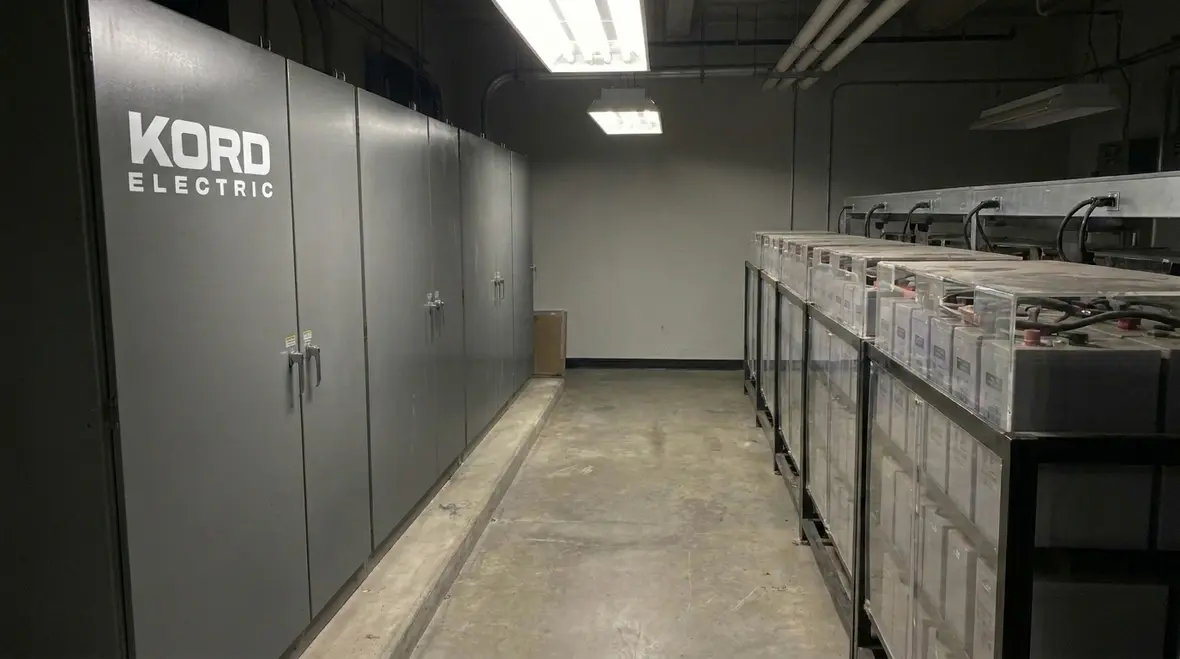
For properties that already rely on dense server rooms or production controls, those tiers often overlap with the same design thinking used in robust data center electrical infrastructure. When continuity planning and distribution design reinforce one another, your commercial business continuity power strategy becomes far more than a single backup generator.
How we plan commercial backup without guessing
We treat continuity planning like engineering, not like wishful thinking. First, our expert service staff gathers site details that affect real performance: utility history, load profiles, equipment voltage sensitivity, and existing switchgear condition. Then we map your loads into categories such as critical, important, and nonessential.
Next, we determine what the system must do, in sequence and within time limits. For instance, you might need fire and life safety systems immediate, while process systems can tolerate short delays. Therefore, the transfer scheme and controls must match the operational reality.
Then we validate the plan. We review how the facility behaves during switching events, including inrush current, motor starting, and power quality. If we find gaps, we address them in the distribution design, not after an outage occurs.
We also build a testing rhythm. After all, standby systems must prove they work under conditions that resemble real events. So we include commissioning steps and ongoing checks so your commercial business continuity power plan stays trustworthy instead of hopeful.

That same discipline applies when continuity plans interact with local and national code requirements. Backup systems, transfer gear, and emergency circuits must align with current standards, especially when you upgrade or expand a building’s distribution. Treating business continuity and compliance as a single conversation keeps both uptime and safety where they belong.
Redundant power components: what to choose and why
Redundancy fails when components are mismatched, incorrectly sized, or neglected. So we guide facilities through the major categories, focusing on the details that matter for commercial and industrial buildings.
Switchgear and transfer equipment
We evaluate existing gear and determine whether it supports planned transfer times and fault behavior. In addition, we ensure the system isolates issues without cascading failures. A transfer device is only “redundant” if it transfers correctly under load.
Generation and fuel strategies
If a site uses generators, we plan the engine performance, runtime expectations, and fuel supply. Then we address ventilation, sound considerations, and compliance needs. We also discuss what happens if a generator sits unused. That is not a “might happen” scenario. It is a “when we test, we find it” scenario.
Power conditioning and monitoring
Many continuity problems come from power quality, not complete shutdown. Therefore, we consider conditioning and protection approaches where needed. We also implement monitoring so facility teams can see trends before they become failures.
Automation and control logic
The control system coordinates startup, transfer, load sequencing, and safety interlocks. Our team designs this logic so it behaves predictably. And yes, we keep it understandable. Complex systems help nobody if the operation team cannot interpret what they see.
Throughout this process, our technicians and expert service staff explain each decision and how it affects downtime, risk, and maintenance effort. We do not hide behind jargon. If a client cannot explain it back to their stakeholders, it needs clarification.

In some facilities, those component choices extend all the way into specialized spaces such as commercial kitchens or process areas where refrigeration, cooking, or manufacturing loads must stay online. In those cases, continuity planning and equipment selection go hand in hand, so that local circuits, panels, and redundancy strategies all support the same uptime goals.
Testing, maintenance, and training that keeps continuity real
A commercial business continuity power strategy is only as strong as its lifecycle. So we plan for maintenance and training from the start, not as an afterthought.
Routine maintenance
We help clients build schedules for critical systems including generators, transfer equipment, batteries, and protective devices. We also address component wear based on actual load operation, not generic time intervals.
Operational testing
We recommend load testing and functional testing tied to your continuity goals. Then we document results so your team can track performance over time.
Training for the facility team
In many buildings, the people responding to an outage do not own the electrical design. Therefore, we train them on practical steps: what alarms mean, what to verify first, and who to notify. Our expert service staff explains things in a way that reduces panic. Panic is expensive. Calm is cheaper.
We also encourage tabletop exercises. When teams rehearse scenarios, they make faster decisions during real events. That is how redundancy turns into continuity, instead of a confusing set of switches in the moment.
And if your team jokes that the first outage will be the “test,” we simply smile politely. Then we build a plan that prevents it from becoming a comedy show with real consequences.
Building a continuity plan for your site today
To move forward, we help clients take a practical sequence of steps that fits commercial and industrial priorities. First, we identify critical loads and define acceptable outage durations. Then we review electrical one-line diagrams and equipment condition, including switchgear and protection settings.
After that, we develop the redundancy design options and explain the differences clearly. We also coordinate with facility leadership so the plan fits operational constraints like maintenance windows and staffing levels.
Finally, we document the plan and schedule commissioning. This matters because a continuity system must behave correctly during transfer events and under test conditions. When the plan is built and validated, your team gains confidence that commercial power redundancy solutions will protect operations, not just impress vendors.
If you want to keep it simple, we focus on measurable outcomes: fewer unexpected trips, faster recovery, and continuous support for life safety and critical operations.
For multi-site operators or organizations with heavy data and process loads, pairing this planning process with a broader reliability review across your portfolio can pay off quickly. A structured look at distribution paths, backup strategies, and maintenance history in each facility helps you prioritize where commercial business continuity power upgrades will have the biggest impact.
FAQ
Dual perspective: what leadership asks and what our technicians verify
What business leaders want to know
How quickly can we restore critical operations, what will it cost, and what risks do we reduce?
They also ask how the plan fits staffing, maintenance windows, and compliance needs.
What our technicians verify on site
Equipment condition, transfer logic behavior, load sequencing, and power quality during switching.
They also validate protection settings and the testing plan so continuity stays real.
When those perspectives align, your continuity plan becomes a clear business tool instead of a mysterious technical document. Executives see the impact on risk and uptime. Operations teams see how to run and maintain the system. Together, they can make grounded decisions about future upgrades, expansions, and how commercial business continuity power supports growth.
If your organization operates across Los Angeles County, that alignment becomes even more important. Consistent standards for redundancy, testing, and maintenance across multiple sites help avoid surprises when one location faces an outage while others carry extra load. A county-wide electrical strategy that includes continuity planning is often the difference between a controlled response and a scramble.
Los Angeles County electrical services from Kord Electric can integrate continuity planning directly into broader upgrades, maintenance programs, and new projects. That way, each property’s backup strategy supports the wider portfolio’s resilience and long-term commercial business continuity power usage goals.
Ready to protect your facility’s uptime?
Ready to protect your facility’s uptime? If you operate a commercial or industrial building where downtime costs real money, Kord Electric can help you plan and build essential commercial power redundancy solutions that match your loads and your timelines. Our expert service staff explains every step and supports commissioning, testing, and maintenance so your commercial business continuity power strategy stays dependable. Contact us for a site assessment and a clear continuity roadmap your team can trust.
Whether you manage a single high-value facility or a portfolio of commercial properties, the next step is simple: put your continuity plan on paper, verify it in the field, and keep it current. We are ready to help you do exactly that.
From the first walk-through to final testing, our technicians and expert service staff stay focused on what matters most: practical reliability, clear communication, and continuity plans that hold up when the grid, the weather, or aging equipment decide to make life interesting.
When you are ready to turn “we hope the power stays on” into “we know how our systems will respond,” it is time to upgrade your continuity strategy.


