Commercial Electrical Troubleshooting Signs Guide
Commercial and industrial buildings run on power, and when that power starts acting strange, the costs can climb fast. In the first few moments, some commercial electrical troubleshooting signs usually show up: lights flicker like they are auditioning for a horror movie, breakers trip more often, outlets feel warm, you smell a sharp burning odor, or equipment suddenly underperforms. At Kord Electric, we see these patterns every week, and we do not guess. We send our technicians and expert service staff to find the root cause, then we explain what they find in clear, practical terms.
Now, to be fair, electricity can be dramatic, but it does not need to be. Let us walk through the warning signs we watch for in major commercial and industrial facilities, and how professional troubleshooting protects the business.
Early flicker and dimming signals an electrical issue
In many major property buildings, lights should stay steady. However, when commercial electrical troubleshooting signs show up as flickering, dimming, or uneven brightness across floors, others notice it quickly, then they ignore it. That is the problem. Flicker often points to voltage instability, loose connections, failing drivers, or load imbalance.
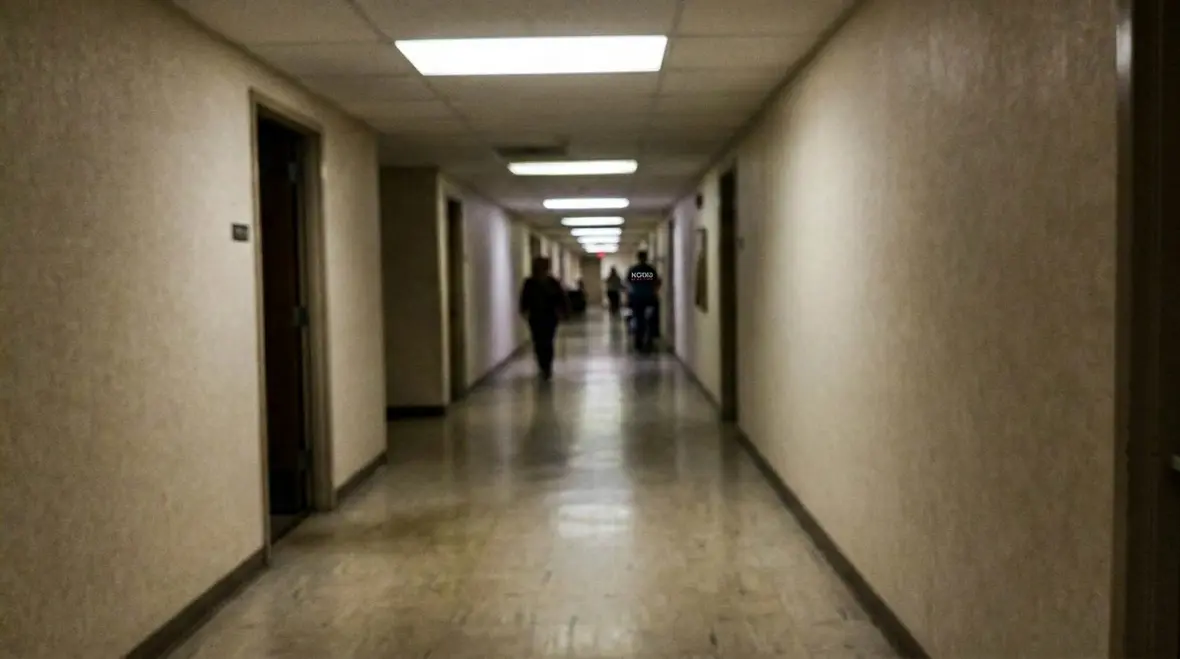
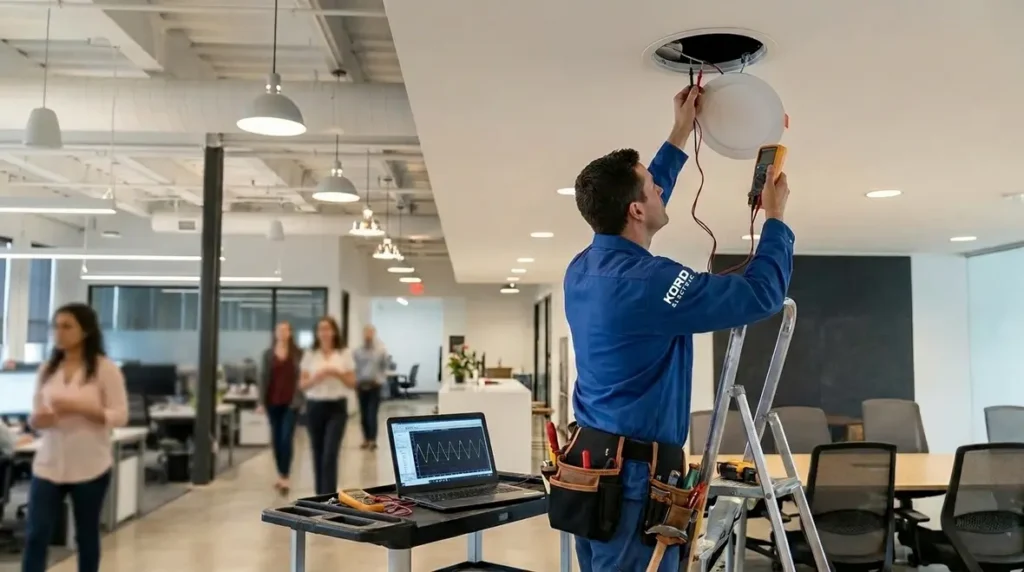
First, we check how the problem behaves. Does it happen when elevators start, HVAC cycles, or large machinery turns on? If yes, the electrical system may struggle under peak demand or the distribution may have a connection that is getting worse under load. Next, our technicians verify incoming voltage and measure voltage drop along the affected circuit. Then we inspect terminations at panels, disconnects, and junction points. Loose connections create heat, heat creates resistance, and resistance creates more heat. It is a chain reaction, like a TV show where every episode makes the plot darker.
We also explain what we find. For example, a contractor might say the lighting “needs an update,” while we show that the wiring or protective device coordination actually caused the instability. Our expert service staff focuses on cause, not just symptoms. For facility managers who want a deeper dive into voltage stability, pairing these inspections with resources like the Voltage Fluctuations in Commercial & Industrial Facilities guide can help clarify how even small swings affect real equipment performance.
Breakers that trip repeatedly disrupt operations and raise risk
Another of the clearest warning signs appears in your panel. When breakers trip more often, it can stop processes, reboot controls, or force staff to reset systems after hours. And while people sometimes treat it like a nuisance, breaker trips usually mean the system is protecting itself from something real.
There are different reasons breakers trip, and each needs a different approach. We often see overload conditions from aging equipment, short circuits, ground faults, or insulation breakdown in feeders. Sometimes the breaker itself fails or the trip curve does not match the load. Therefore, we do not simply replace a breaker and hope for the best. We troubleshoot the circuit, identify the load that triggers the trip, and inspect the wiring path for damage.
To move quickly without skipping steps, we verify the trip history, inspect for water intrusion or contamination at enclosures, and measure current draw under normal and high load conditions. Then we check for proper grounding and bonding. Finally, we confirm the protective device settings align with the equipment’s requirements. In other words, we do not “spin the wheel” on safety. We solve it.
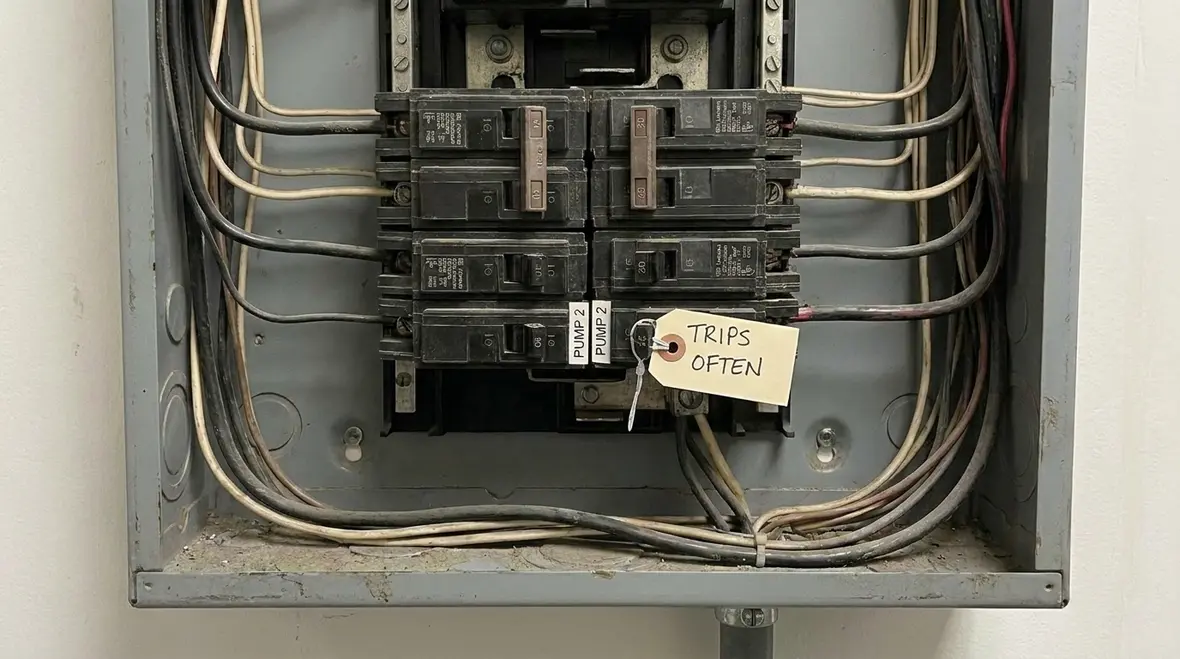
When breaker activity starts to feel like a daily ritual, it often connects to broader reliability issues across the building. That is why many facility leaders combine root-cause troubleshooting with structured programs like commercial and industrial electrical maintenance plans, so those “mystery trips” turn into documented findings instead of recurring surprises.
Warm outlets, panels, or switches indicate heat where it should not exist
If staff members mention that an outlet, switch, or panel feels warm, that deserves attention right away. Heat is not normal in a healthy distribution system. It often comes from loose terminations, worn contacts, damaged wiring insulation, or overloaded circuits that run near their limit all day, every day.
In commercial and industrial facilities, warmth can start small. Then it grows. Over time, a loose connection increases resistance, and resistance turns electrical energy into heat. Once heat becomes frequent, you raise the chance of arcing and insulation failure. That is where “unplanned downtime” becomes the main character, and nobody asked for that plot twist.
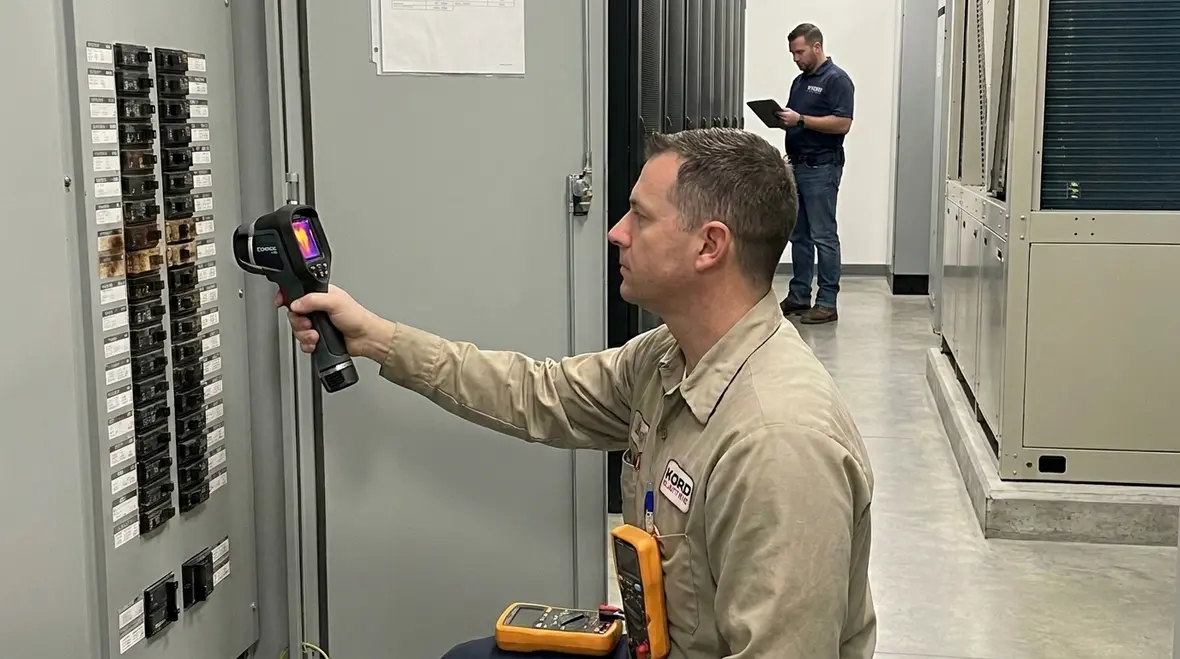
Our technicians use careful inspection methods. First, we perform targeted visual checks at panels and device boxes, looking for discoloration, oxidation, and signs of past overheating. Next, we verify loads and confirm whether circuits carry more than expected. When needed, we use thermal imaging or other diagnostic tools to locate hotspots without damaging equipment. Then we tighten or repair terminations to correct the cause. After the fix, we recheck performance and confirm safe operating temperatures.
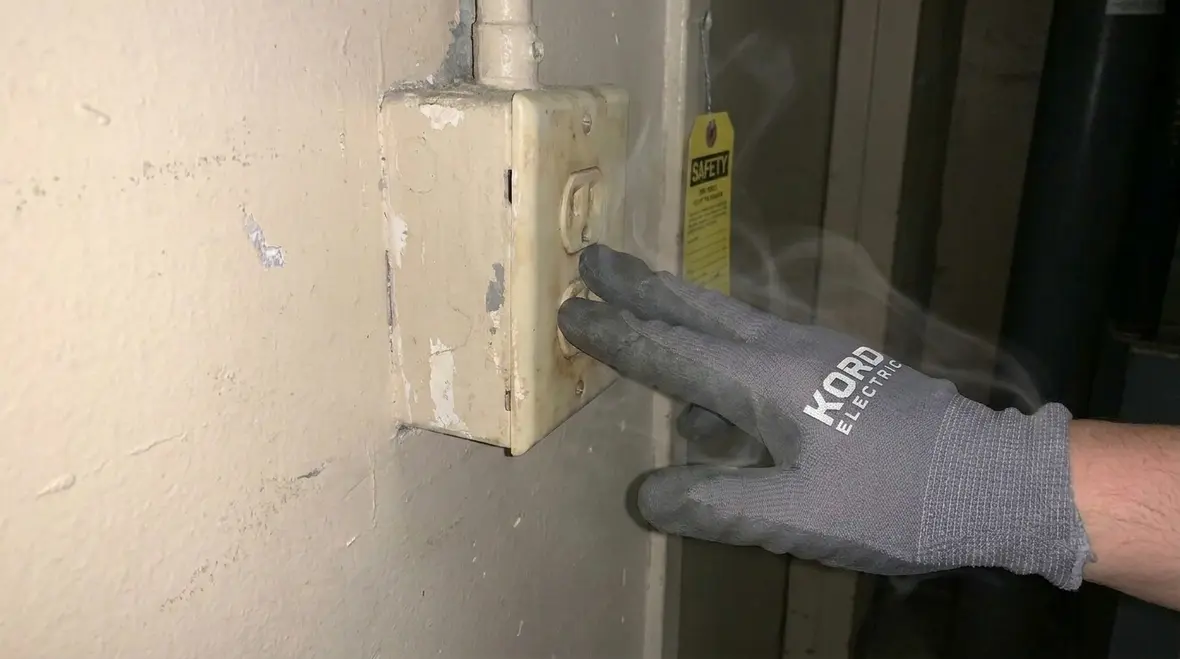
And because we work with major property buildings, we keep communication clear. We tell others what we found, what it means for the building, and what the next steps are, so decisions stay grounded in facts. For many teams, addressing these hot spots is also the right moment to review other risk areas outlined in resources like the Hidden Electrical Risks in Commercial Buildings guide, which highlights how quiet issues behind the scenes can turn into loud failures if they are ignored.
Burning odors, buzzing, or sparking should trigger an immediate response
Now we move to the serious stuff. A burning odor, a persistent buzzing sound, or any visible sparking is not “wait and see” territory. These cues often suggest arcing, failing components, or a connection that is breaking down. In industrial settings, small electrical faults can escalate quickly when loads are high and equipment runs continuously.
Here is how professionals manage this. We treat the situation as a safety priority, and we assess the area carefully. We confirm which panel or circuit relates to the smell or sound, then we inspect for signs of electrical tracking, overloaded conductors, or compromised bus connections. If something shows active risk, we help coordinate safe shutdown steps based on building operations.
We also consider the full environment. Dust, moisture, and corrosive conditions in industrial facilities can damage electrical components faster than people expect. Therefore, our expert service staff checks enclosure seals, verifies ventilation, and examines cable entry points. We then test relevant components and verify the protective devices respond correctly.
We explain the findings in plain language, because the goal is safety and clarity, not mystery theater. If you want sparks, go to a light show. If you want safe power, call us. And if you are dealing with active or recurring emergencies, it is worth pairing that call with dedicated support like Kord Electric’s emergency electrical services, so you have a structured, 24/7 path to stabilize and restore power safely.
Equipment performance drops as hidden power quality problems grow
Sometimes the warning is not a dramatic smell or a breaker trip. Instead, people notice that equipment runs slower, control systems act “weird,” motors overheat, or production becomes inconsistent. These symptoms can point to power quality problems like voltage sag, harmonic distortion, or poor grounding. Over time, the power system may struggle to deliver stable voltage and clean current to sensitive equipment.
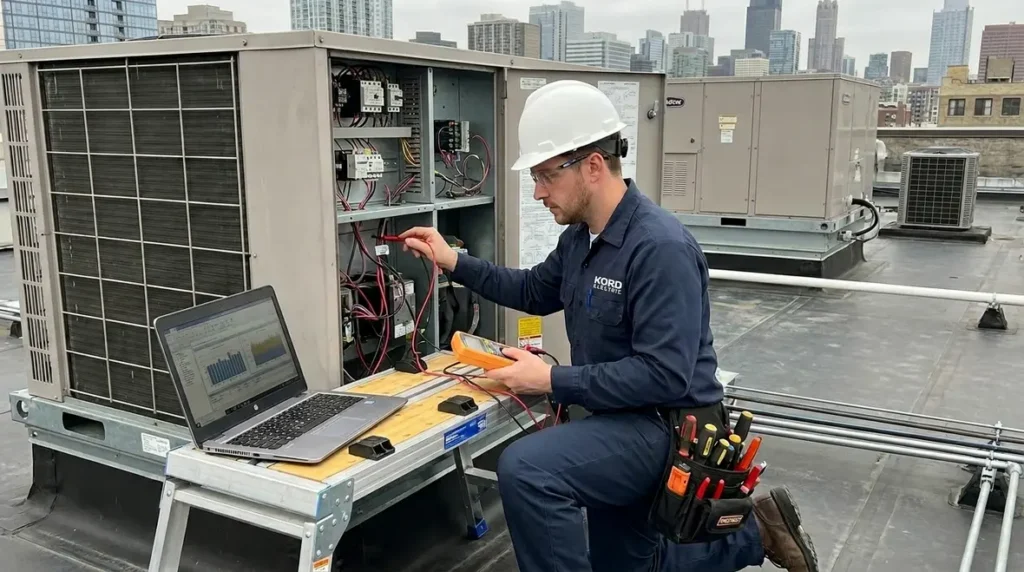
To troubleshoot properly, we measure power quality at the source and at key distribution points. We then compare patterns to equipment schedules. For instance, if machinery struggles during certain production cycles, we check for voltage dips when large motors start or when refrigeration and HVAC pull heavy loads. Additionally, harmonics can overheat neutral conductors, cause nuisance trips, and shorten equipment life.

Because major property buildings often involve multiple tenants and shared systems, we also coordinate with facility managers. That helps us confirm whether the issue comes from a single load or from the way loads spread across panels. Then our technicians recommend solutions that fit the facility, such as load balancing, circuit adjustments, grounding improvements, or protective device upgrades.
When we finish, we do not just hand over numbers. We explain what the measurements mean for uptime, safety, and maintenance planning. For factory and production environments, pairing this data-driven troubleshooting with checklists like the Electrical System Troubleshooting for Factories Checklist helps teams move from reacting to every glitch to planning around known risks and priorities.
How Kord Electric handles commercial electrical troubleshooting from start to finish
When others call us, the biggest question often sounds like this: “What will you actually do?” We keep the process structured, because commercial and industrial facilities cannot afford guesswork.
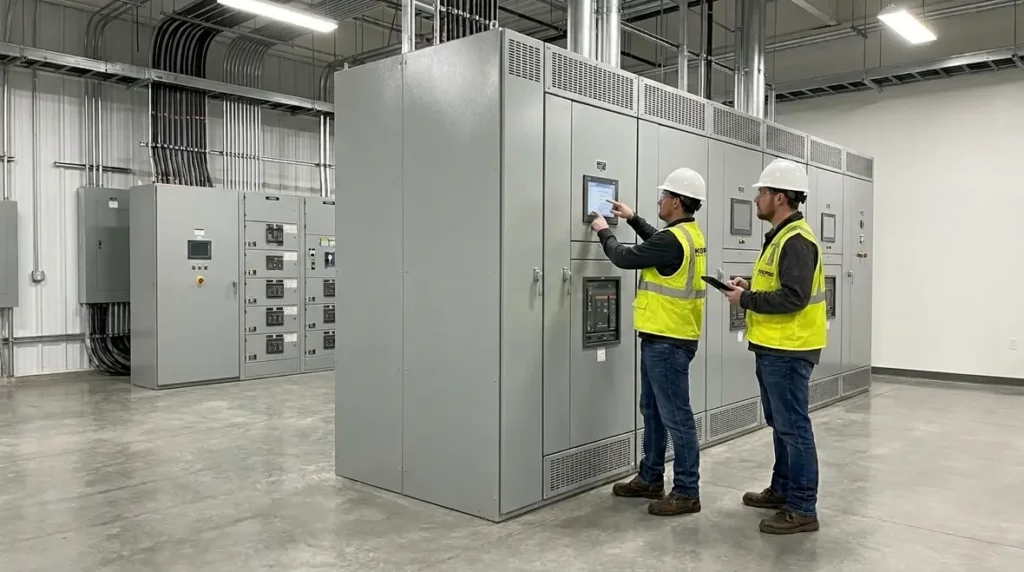
First, our expert service staff listens to the symptoms. We document when issues appear, which floors or areas are affected, and what loads seem to trigger changes. Next, we inspect the physical system, including panels, feeders, disconnects, and terminations. Then we measure key electrical values under real operating conditions.
After that, we isolate likely causes and verify them with testing, not assumptions. Once we confirm the root issue, we repair or replace components as needed and retest to ensure the system operates within safe limits. Finally, we explain the results. We share what changed, why it matters, and how to prevent recurrence.
This approach matters because electrical failures rarely happen for one reason. They happen because multiple small issues stack up, like overdue maintenance meeting bad luck at the same time. We help break that cycle. For many properties, that includes coordinating with broader offerings such as Los Angeles County electrical services that understand regional codes, utility behavior, and the realities of tight production schedules.
We focus on
Physical inspections, electrical measurements, and cause based repairs in commercial and industrial systems.
We explain
What the findings mean, what risks exist, and what steps reduce downtime and repeat failures.
If your facility sits in or around Los Angeles County and you want a partner who can move from diagnosis to repair and ongoing support, explore Kord Electric’s regional offering for Los Angeles County electrical services. That dedicated service model connects commercial electrical troubleshooting signs to fast, local, and code-compliant solutions.
FAQ
Final thoughts and call to action
When we see commercial electrical troubleshooting signs in a major commercial or industrial building, we treat them as early warnings, not background noise. Kord Electric sends technicians and expert service staff to test, identify the real cause, and restore safe, reliable power. If flicker, breaker trips, warmth, odors, buzzing, or performance drops are showing up in your facility, reach out to us now. We will help you protect uptime, reduce risk, and keep operations moving without drama.
Contact Kord Electric today for professional troubleshooting in commercial and industrial facilities. If you are responsible for a facility in Los Angeles County or the surrounding region, you can connect your next service visit with their dedicated Los Angeles County electrical services support to align troubleshooting, repairs, and long-term planning in one place.