Electrical System Troubleshooting for Factories Checklist
Electrical System Troubleshooting for Factories: A Calm Checklist That Prevents Loud Failures
In commercial and industrial facilities, electrical problems do not wait for your weekend plans. That is why Kord Electric leans on electrical system troubleshooting for factories as a first step whenever equipment starts acting “creative.” And yes, machines can be moody. Still, most failures come from a handful of common causes, and a structured troubleshooting checklist keeps downtime from turning into a headline.
Our approach begins with what others often skip: clear observations, safe testing, and documented results. Then, our technicians and expert service staff map symptoms to likely faults, so the team does not chase ghosts in a panel at 2 AM. Below, you will find a practical checklist that supports preventive maintenance, reduces surprises, and keeps power where it belongs: doing work.
1) Start the Investigation With Site Proof, Not Guesswork

When a failure hits a plant, teams often rush. However, Kord Electric has learned that early accuracy beats quick fixes. First, the crew gathers job details: what changed, when it started, and where it shows up. Next, they check if the issue follows a pattern such as time of day, load changes, or a recent repair. That simple timeline often points to the real root cause.
Then, we confirm safety boundaries. Before any testing, our technicians verify lockout tagout steps, confirm test equipment ratings, and look for signs of damage that do not require power to tell their story. Finally, we record everything. That log becomes your “single source of truth,” especially when multiple contractors enter the building.
Quick checklist to use on arrival
- Document alarm messages, breaker trips, and time stamps
- Note affected loads and whether symptoms expand across zones
- Check for heat, odor, discoloration, or water intrusion
- Verify operating conditions such as simultaneous startup of major loads
And if someone says, “It must be the grid,” you can smile politely. Yes, it can be the utility. But we still test inside your system first.
2) Power Quality Problems That Knock Out Production
In many manufacturing environments, the biggest trouble is not a dead component. Instead, it is the power quality that slowly erodes equipment. Harmonics, voltage sags, and unstable supply can cause motor issues, nuisance trips, and overheating at unexpected locations.
Our expert service staff typically begins by checking available data such as meter logs, protective device history, and control panel events. Then, we measure voltage and current quality at key points. We also look for common triggers like loose connections, overloaded transformers, or unbalanced loads. For facilities already seeing unstable power, pairing this troubleshooting with a structured program like electrical preventive maintenance keeps small issues from growing into plant-wide disruptions.
What to watch for during electrical system troubleshooting for factories
- Frequent trips without a clear short circuit indication
- Burning marks on neutral or phase conductors
- Motor overheating even when current seems “close”
- Control boards failing faster than expected
Here is the calmer truth: when power quality drops, it rarely improves on its own. However, with targeted testing and preventive maintenance, teams stop guessing and start correcting.
3) Breakers, Contactors, and Switchgear Failures: The Usual Suspects
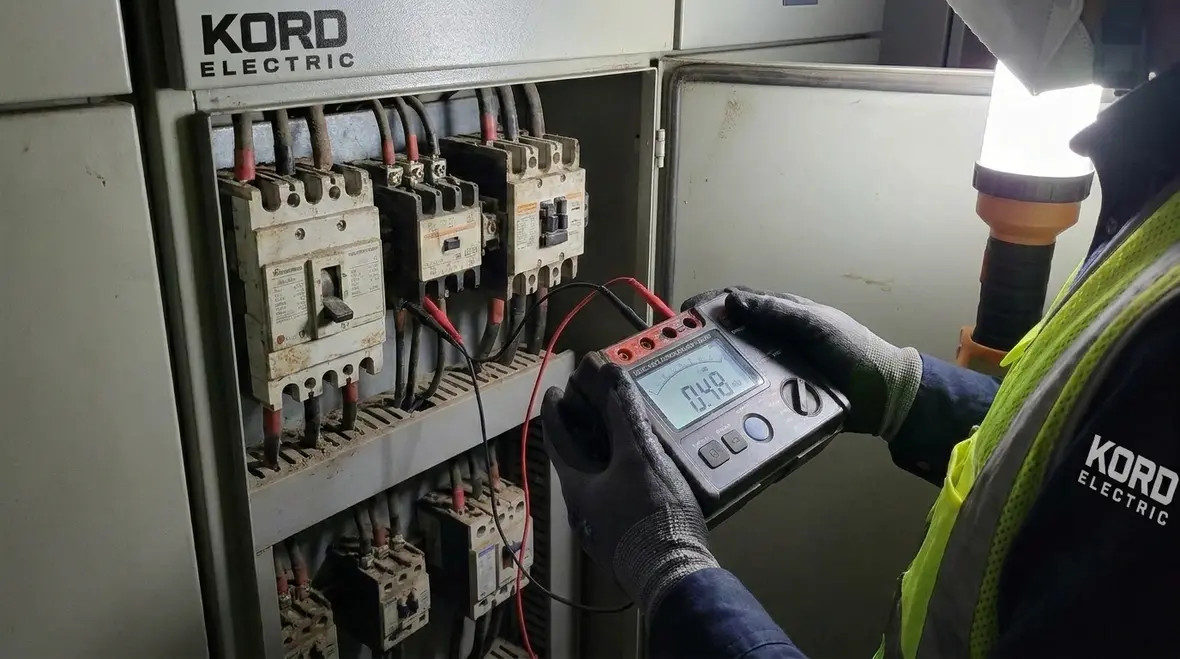
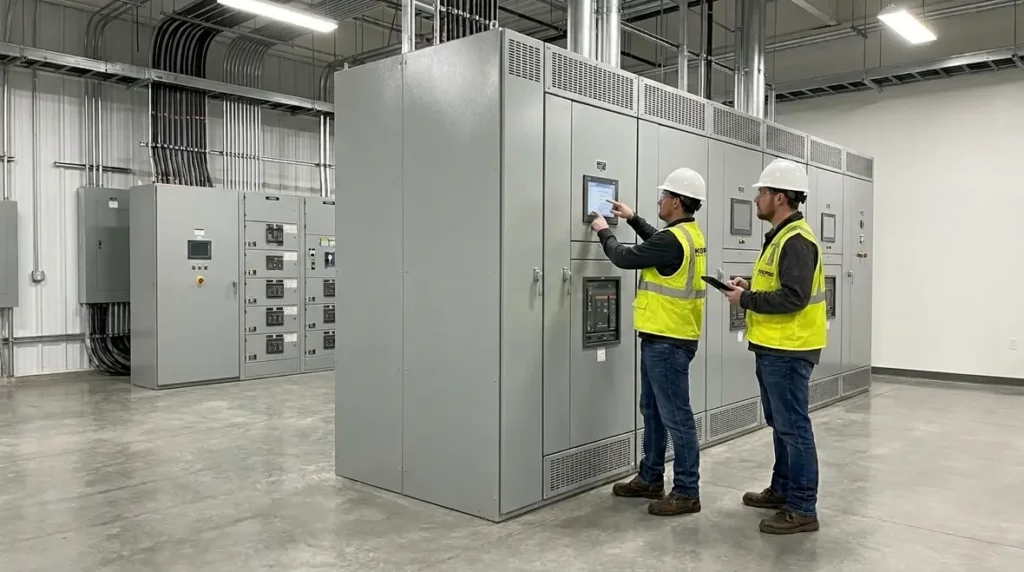
Switchgear and distribution equipment handle the heavy lifting, so wear shows up in predictable ways. Over time, breaker mechanisms can lose proper action, contacts can pit, and insulation can weaken. Additionally, contamination such as dust and moisture can cause tracking or reduce insulation strength.
Kord Electric troubleshoots these components by combining inspection and electrical checks. First, we examine mechanical operation, arc marks, and abnormal heat. Next, we test breaker timing and contact resistance where the design allows. Then, we verify settings that match the load profile and protection goals.
Troubleshooting checklist for protective devices
- Inspect breaker trip linkage and ensure it moves freely
- Check contact wear patterns and tighten torque to spec
- Verify breaker settings and coordination with upstream devices
- Look for repeated nuisance trips that point to sensor faults
Because production managers deserve better than “replace it and hope.” That approach works about as well as asking a microwave to cook a steak.
4) Motors, VFDs, and Controls: When the Problem Starts Small
Motors and drives often fail after small changes stack up. A slight imbalance, a clogged cooling path, or an aging VFD can lead to faults that look random from the outside. Yet inside the system, the pattern shows up in data.
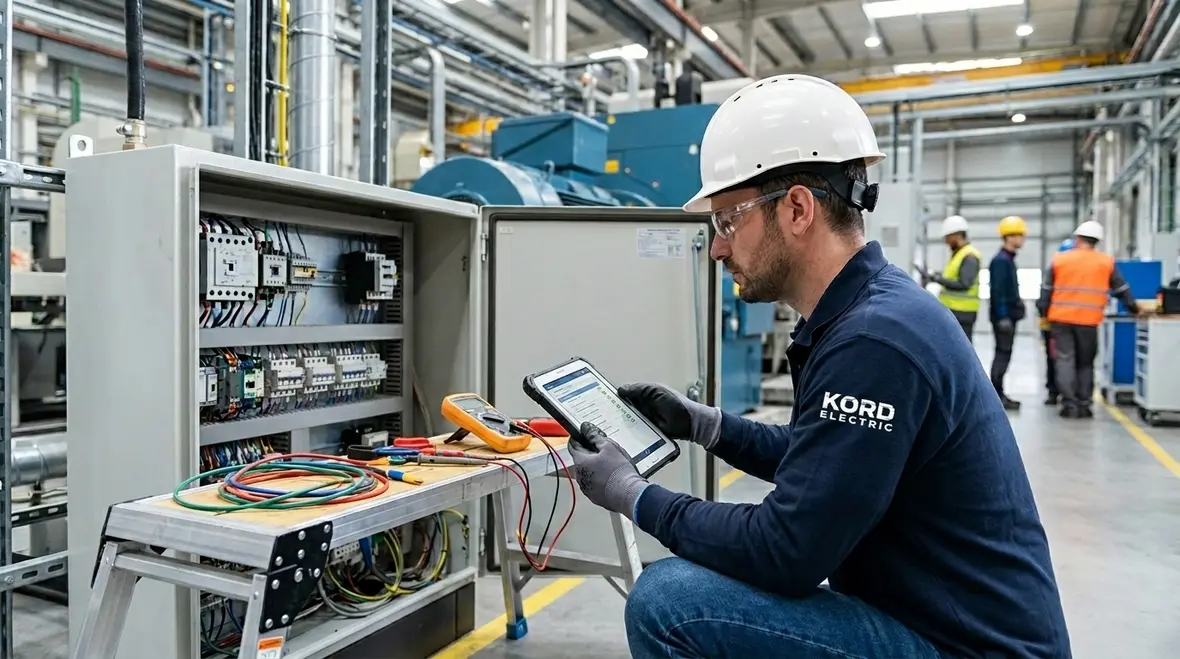
Our technicians focus on the full pathway: incoming power, drive output, motor health, and control signals. Then, we confirm whether faults line up with specific operations such as frequent starts, rapid reversals, or process surges. We also examine grounding, shielding, and cable routing, since VFD systems can act like a megaphone for electrical noise when installed poorly.
Common manufacturing failure signs
- VFD alarms during normal ramp up or load changes
- Motor vibration that increases after drive replacement
- Intermittent control faults linked to cable movement
- Overcurrent faults after maintenance work
From there, Kord Electric narrows the hunt. Instead of swapping parts blindly, we align the symptom to the most likely cause and verify it with measurements and inspection.
5) Grounding, Bonding, and Harmful Heat That Nobody Sees
Heat leaves clues. Sometimes it leaves them quietly inside terminations, inside cable lugs, and inside places that get overlooked during routine rounds. Grounding and bonding mistakes also create steady trouble, including erratic faults, sensitive control equipment resets, and increased nuisance alarms.
When teams do electrical system troubleshooting for factories, they often check what fails first. However, Kord Electric looks for what causes the stress that makes failure likely. We verify grounding continuity, inspect bonding points, and check connection integrity. We also look for signs of corrosion, loose terminations, and poor cable support.
Heat and insulation trouble checklist
- Inspect terminations for discoloration or surface carbon
- Verify torque and correct lug sizing where feasible
- Check bus bars for tightness and clean surface contact
- Confirm cable routing avoids abrasion and moisture capture
If you want a simple mindset, use this: a good connection should not feel like a rumor. It should be stable, tight, and verified.
6) Use Preventive Maintenance to Cut Repeat Failures
Real reliability comes from planned work, not just emergency response. Kord Electric supports preventive maintenance through scheduled inspections, documentation, and practical service that fits industrial schedules. Our team uses the same discipline referenced in our preventive maintenance guidance: we inspect, test, and correct before issues develop into outages.
To make this useful, our expert service staff helps clients build a maintenance plan tied to equipment type and operating load. For example, high cycling equipment gets deeper checks, while critical feeders get tighter monitoring. Then, we track results so trends show up early. Many plants also connect this work with broader strategies like commercial and industrial electrical maintenance plans so repairs, upgrades, and inspections move in the same direction.
A maintenance plan that actually helps a plant
- Set inspection intervals based on load and history, not guesswork
- Include connection checks, protective device verification, and visual scans
- Keep records of test results and corrective actions
- Coordinate downtime windows with production leadership
Think of it like keeping the engine tuned before the road gets rough. Nobody wants to discover the timing is off while the press is running.
7) How Kord Electric Builds a Troubleshooting Report Teams Can Use
After we complete electrical system troubleshooting for factories, we deliver more than “we fixed it.” We provide a clear report that helps the facility team prevent the next failure. The goal is simple: the maintenance lead should understand what happened, why it happened, and what was verified.
Typically, our findings include observed conditions, test results, likely root cause, and recommended actions. If the issue involves protective settings or coordination, we explain how the adjustment affects future behavior. If it involves connections or thermal stress, we include what we found and what we corrected.
Report elements our technicians and experts include
- Symptom summary with time line and affected equipment
- Inspection findings and test data
- Root cause assessment supported by evidence
- Corrective actions and next steps for preventive maintenance
Because when documentation is clear, the next shift is calmer. And calmer shifts make better decisions.
FAQ
Final CTA: Get Reliability on Purpose With Kord Electric
If your plant runs like a drumline, you want steady beats, not surprise stingers. Kord Electric helps commercial and industrial facilities prevent failures with structured electrical system troubleshooting and targeted preventive maintenance. Our technicians and expert service staff deliver clear findings, practical fixes, and documentation your team can act on. If you want fewer trips, fewer drive issues, and more time focused on production, reach out to Kord Electric today and schedule a service visit.
For factories across the region, especially those operating in and around Los Angeles, keeping production steady often means pairing this kind of troubleshooting with dedicated regional support such as Los Angeles County electrical services that understand industrial timelines, shift work, and real-world load demands.
| Before Service | During Service |
Share recent alarms, maintenance history, and any process changes. |
Kord Electric inspects, measures, and verifies likely causes step by step. |
Identify critical loads and planned downtime windows. |
Our technicians provide evidence based findings and next actions. |
When you combine disciplined electrical system troubleshooting for factories with a structured maintenance roadmap, your power system stops being a question mark and starts behaving like the stable, well-documented asset it should be.