
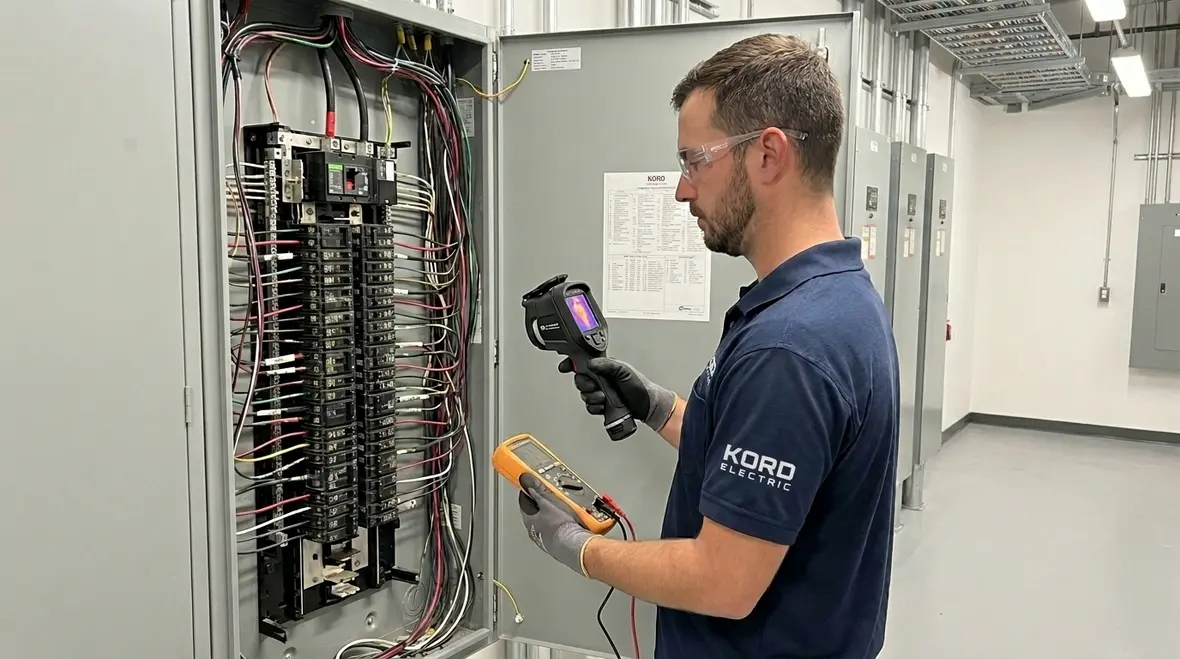
Commercial Electrical Load Balancing for Uptime
Kord Electric helps commercial sites stay steady by using commercial electrical load balancing to spread power demands across panels, feeders, and phases. When we balance the load the right way, businesses keep running through peak hours, weather swings, and equipment upgrades. In the real world, this means fewer nuisance trips, less overheating, and better uptime, even when the building is doing the most. And yes, we get it. Power problems can feel like a bad sitcom: someone flips the wrong switch, and suddenly the whole episode collapses. Still, our team treats electrical load like a living system, not a one time fix.
Third person will tell you load balancing is “important.” We will tell you why it matters, what it impacts, and how Kord Electric technicians help leaders protect uptime in commercial and industrial facilities and major property buildings.
How load imbalances quietly cut uptime
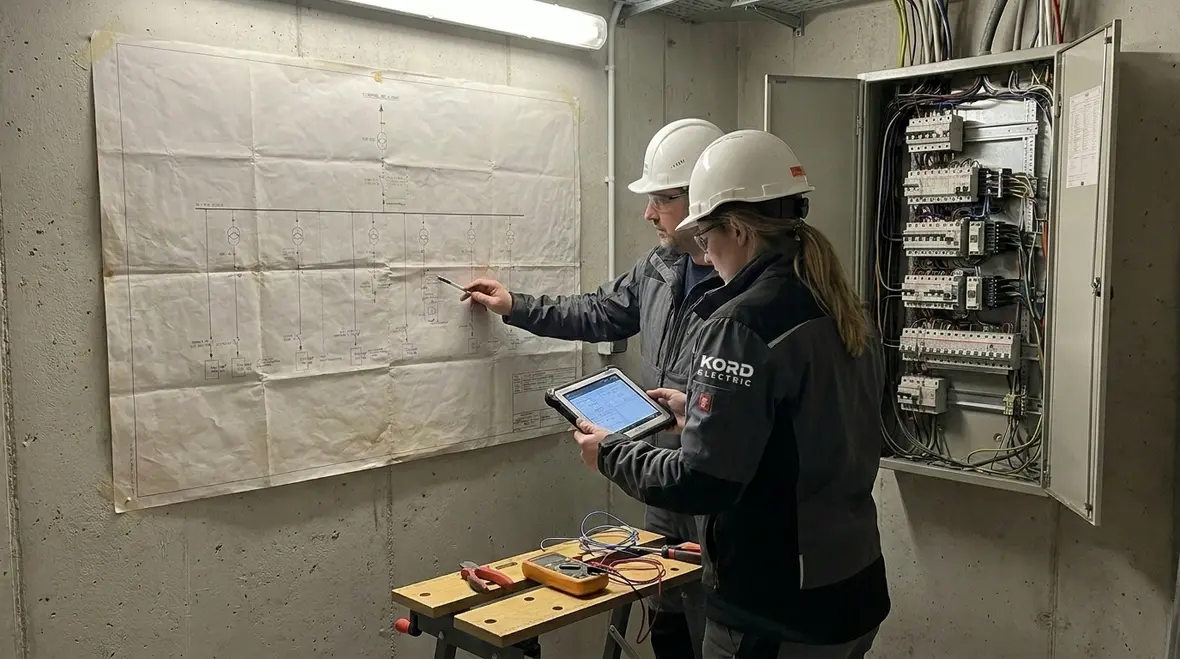
At first glance, an electrical system can look fine while still running out of balance. However, when loads land unevenly across phases or circuits, the consequences show up later: heating in conductors, extra stress on breakers, and voltage dips that make sensitive equipment behave like it is tired. Meanwhile, motors, pumps, HVAC units, and EV charging stations tend to draw current in patterns that shift through the day.
So when a building grows, expands, or adds tenant improvements, the original design may no longer match reality. This is where commercial electrical load balancing becomes less of a “nice to have” and more of a business uptime tool. We see it often in major property buildings where schedules change: one floor runs nights, another runs weekends, and another decides to run everything at once, because enthusiasm is a powerful force.
Here is the calm truth: systems do not fail instantly. They drift. Then one day a breaker trips during a peak moment, or an alarm triggers a chain reaction. Load balancing helps prevent that slow drift from turning into downtime.
Our experienced service staff explains what they find in plain language, not in a maze of jargon. They map where the load actually goes, then they recommend steps that reduce stress and stabilize performance.
What modern buildings demand from the power system
Modern commercial and industrial facilities run complex electrical loads. Based on our view of commercial electrical systems for modern buildings, the system usually includes multiple zones, controls, and power paths that serve everything from lighting and life safety to HVAC, refrigeration, process equipment, and communications. In other words, the electrical system is not just “wiring.” It is an operating backbone.
As buildings become more energy aware, they also become more power sensitive. Demand response programs, time of use pricing, and advanced controls can shift how loads behave. Therefore, even if the total usage stays similar, the distribution can change. And when distribution changes, phase balance matters again.
Additionally, businesses rarely stay still. They add equipment, renovate offices, upgrade kitchens, or install new production lines. As a result, the building’s load profile evolves. Kord Electric technicians treat that evolution like a requirement, not an accident.
To keep power steady, we focus on how power travels through the system. We then help clients plan upgrades with load distribution in mind, so the electrical architecture still matches the building’s current life. If power is the bloodstream, then uneven load is like forcing it through a kinked straw.
Where balancing protects equipment and reduces nuisance trips
When phases or circuits carry unequal loads, heat builds where it should not. Over time, that heat can degrade insulation, worsen connections, and shorten equipment life. Meanwhile, breakers and protective devices may react to overload conditions earlier than expected, especially in systems that see constant cycling.
Load imbalance also impacts voltage. When one phase runs heavier, the voltage quality can sag in that area during demand peaks. Sensitive equipment then faces more stress. That includes controls, networking gear, variable frequency drives, and certain specialty systems used in commercial and industrial facilities and major property buildings.
Furthermore, complex buildings often use standby or backup power. If the load is not balanced and distributed correctly, transfer events and generator runtime can become less efficient. Therefore, balancing supports not just daily uptime, but resilience during disruptions.
Our team helps clients understand what creates the imbalance and how to correct it. And to keep things engaging, we sometimes say: if your electrical system is a team sport, load imbalance is like putting all the players on one side of the court and then acting surprised when defense breaks down. We build a plan that spreads the “players” so the game stays playable.
Steps Kord Electric uses to balance loads in the field
Kord Electric approaches commercial electrical load balancing as a practical field process. First, we gather data. We review the one line diagram, panel schedules, and equipment lists, then we confirm how loads run during the times that matter. After that, we compare what the building is designed to do with what it actually does.
Next, we measure current and phase distribution. Then we identify hotspots, circuits that drift into overload behavior, and areas where loads cluster. This is where our technicians slow down and explain their findings. They do not just point at numbers. They connect those numbers to what the facility experiences, like temperature rise, breaker trips, or repeating alarms.
After the diagnosis, we implement balancing steps. These can include adjusting circuit assignments where allowed, redistributing loads across phases, coordinating breaker settings and protective devices, and planning upgrades that maintain balance as the building changes. We also support operational scheduling changes when they align with electrical stability.
Finally, we verify performance. We recheck distribution and look for improvements in how the system behaves during peaks. Then we document the results so building leaders can plan future work with confidence.
Even when the project involves big changes, we keep the work business friendly. We coordinate around operations so the site can keep doing its job. Because uptime is not a slogan to us. It is a deliverable.
Balancing and building upgrades that do not cause new problems
Many teams assume load balancing is a one time cleanup. However, in commercial and industrial facilities and major property buildings, systems change constantly. So we treat balancing as part of a long term strategy that supports upgrades.
When clients add equipment, we help them evaluate how that new load will distribute. Then we plan the integration so the addition does not tip the balance toward a vulnerable phase. This becomes even more important for projects like HVAC expansions, production line changes, high draw kitchen upgrades, or new tenant build outs in major property buildings.
We also help clients avoid a common mistake: fixing symptoms without addressing the cause. For example, someone might replace a worn component after it heats up. Yet if the load distribution still pushes stress into that same path, the replacement may become the next failure point. Therefore, Kord Electric focuses on root causes: where load collects, how demand shifts, and how the system handles those shifts.
Our service staff can explain the tradeoffs in plain terms, so decision makers understand what they gain. And yes, sometimes we share a light joke to keep meetings from feeling like a never ending utility lecture. But the goal stays serious: stable power, fewer interruptions, and safer equipment life.
FAQ about commercial electrical load balancing
Dual column: what we look at and what we deliver
Our focus in the building
Phase distribution during peak use
Circuit clustering and heating areas
Voltage behavior and protective device response
Load changes from upgrades and tenant work
What our clients receive
A clear diagnosis and explanation
Balancing actions aligned to system limits
Verification after modifications
Documentation for future maintenance and upgrades
Planning for uptime with strategic electrical maintenance
Commercial electrical load balancing works best when it ties into a broader preventive strategy. Facilities that pair balancing with structured inspections, thermal imaging, and testing catch issues while they are still small. That includes loose connections, aging panels, and load shifts that quietly appear after renovations or tenant changes.
Many commercial and industrial leaders build this into recurring programs similar to electrical preventive maintenance services. Instead of waiting for a surprise outage, they schedule periodic reviews of how loads distribute across panels, feeders, and critical equipment. When something drifts, they adjust before it turns into a shutdown.
This ongoing approach also supports planning. When you already understand how your building behaves electrically, decisions about rewiring, panel upgrades, or new equipment installation become clearer. Balancing is no longer a reactive fix. It becomes part of how the facility protects uptime, safety, and long term investment.
For organizations across Los Angeles County, integrating commercial electrical load balancing with broader system care helps support growth, compliance, and resilience. Many facility leaders also rely on comprehensive partners for Los Angeles County electrical services so that load studies, balancing work, and upgrades stay aligned across every project.
Whether the priority is reducing nuisance trips, supporting a new production line, or preparing for future upgrades, commercial electrical load balancing gives leaders a practical way to align electrical infrastructure with how the building really lives and works.
Conclusion
If a facility wants real uptime, it needs stable power, not guesses. Kord Electric helps commercial and industrial buildings and major property facilities keep electrical systems balanced, protected, and ready for peak demand. Our technicians measure what the building actually does, explain the findings clearly, and implement balancing steps that reduce trips, heat, and stress on equipment. If you are planning upgrades or you are seeing recurring power issues, call us now. We will review your system and build a plan that keeps your business moving.


