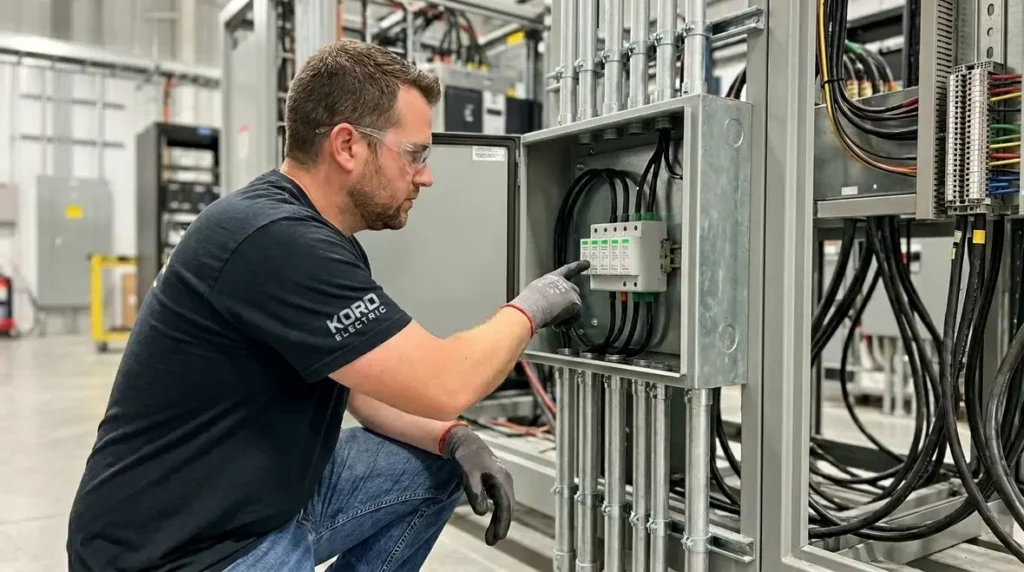
Emergency Power Systems Reliability Testing
Emergency power is not a luxury for commercial and industrial facilities. It is a lifeline, and that is why emergency power systems reliability matters long before an outage ever shows up on the calendar. At Kord Electric, we treat backup power like a promise that must hold under pressure. Therefore, we build certainty through essential testing, clear reporting, and real field expertise from our technicians and expert service staff.
And yes, we test it even when everything seems fine. Because “it worked last time” is a charming sentence, but it is not a maintenance plan. Now let’s walk through what makes emergency power dependable, and how our team helps owners protect people, operations, and data in major properties.
Why emergency backup must pass real proof, not just “looks good” checks
In commercial and industrial buildings, backup systems sit in the background like a seatbelt in a car that never crashes. Then one day the lights flicker, the grid fails, and suddenly everyone remembers that promises are only as strong as the proof. We start by explaining the simple truth our clients need to hear: emergency power systems reliability depends on performance during the moments that actually matter.
Our expert service staff does not rely on assumptions. Instead, we plan testing that verifies transfer behavior, load handling, and system stability. Then we document results in a way that operations teams can understand without needing an electrical engineering degree. After all, the goal is to keep uptime, not to host a mystery guessing game.
What we test first so the system can carry the load when the grid drops
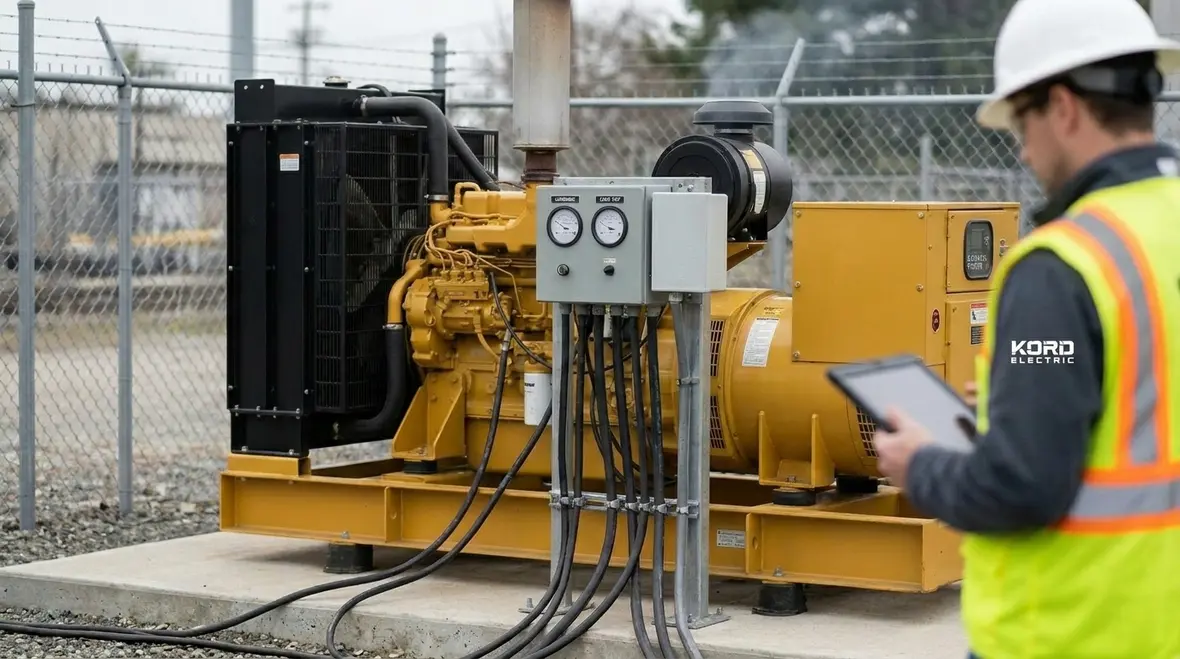
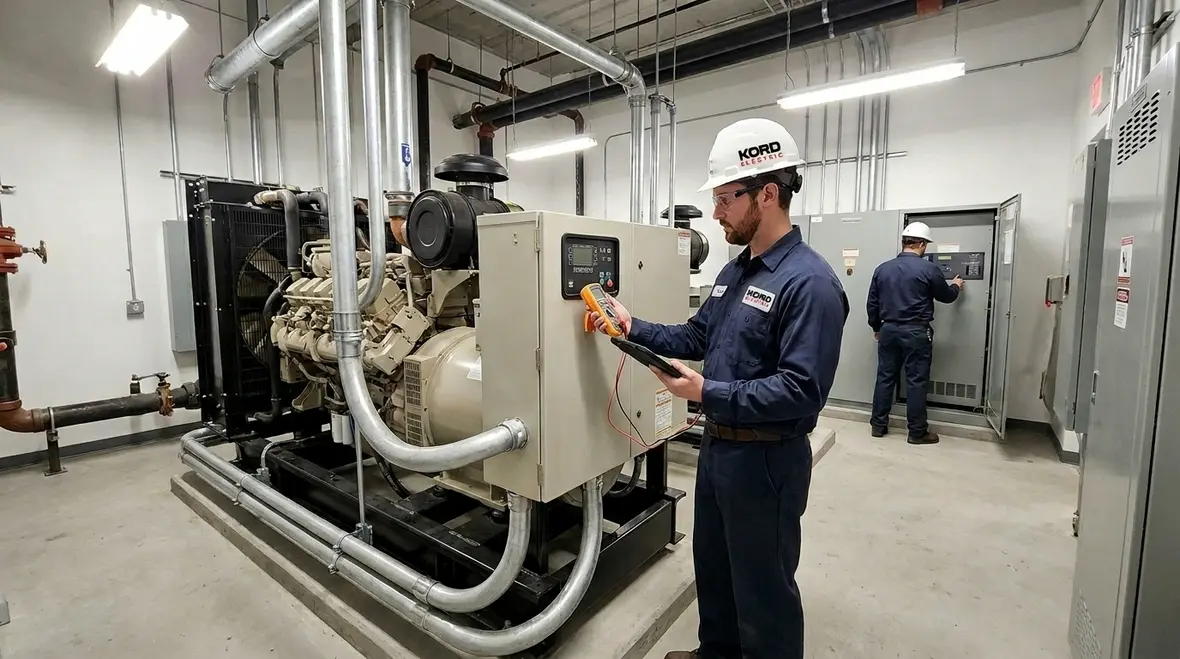
When our technicians begin an assessment, we focus on the chain of events that must happen in order. First comes detection of the utility outage. Next comes transfer from normal power to backup power. Then the emergency source must start, stabilize, and deliver the right voltage and frequency to critical loads.
To support this, we test key items in sequence:
- Automatic transfer equipment to confirm transfer timing and smooth switching
- Generator start and stabilization to verify it reaches proper output before loads ramp
- Voltage and frequency regulation to ensure sensitive loads do not feel “jolts”
- Load management to confirm the system can handle the actual connected demand
From there, we compare test behavior with expected design values. If something drifts, we catch it early. This is the difference between proactive service and reactive repairs. And we have found that reactive work is about as fun as stepping on a Lego in the dark.
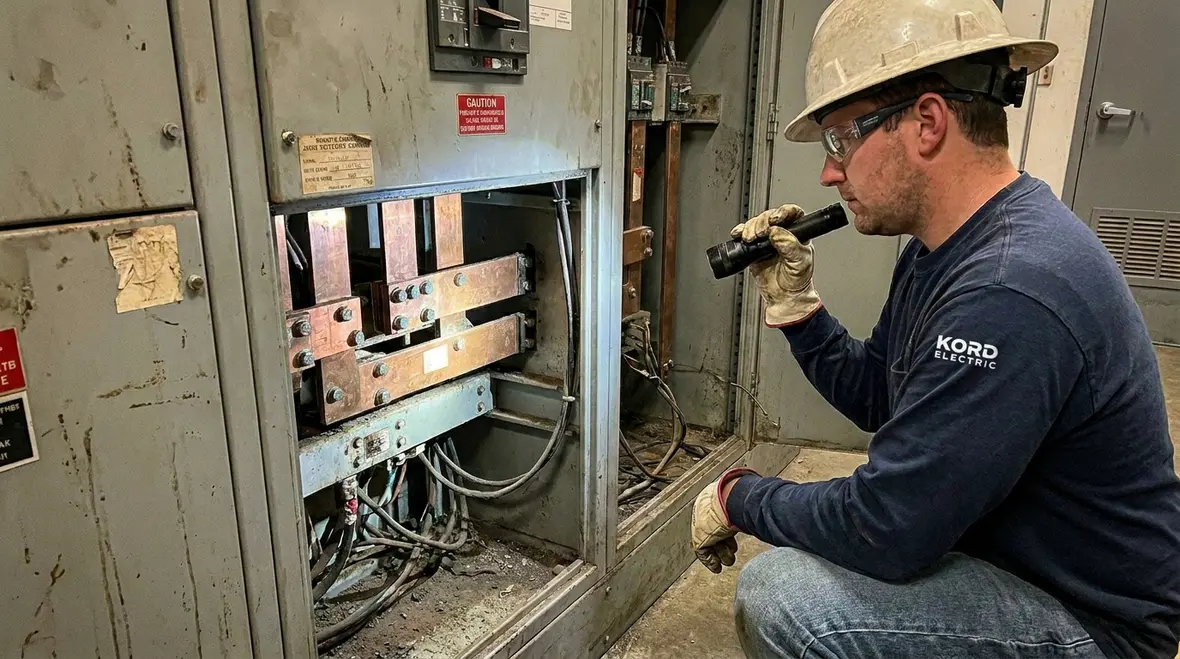
How scheduled load and transfer testing reveals hidden weaknesses
People often think testing means running the system briefly. However, short tests can miss weak links. Therefore, we use load and transfer testing that reflects the real world. In major property buildings, loads behave like a living organism. They change, they surge, and they depend on stable power to keep critical systems running.
We verify performance under conditions that match the facility’s needs, including:
- Engine or power source response under load, not just idle conditions
- Transfer repeatability so the system performs the same way each time
- Overcurrent and protection coordination so faults do not cascade
At Kord Electric, our technicians also explain what the readings mean. We do not dump a spreadsheet on someone and disappear. Instead, we walk through the outcomes, then we recommend the next step. That may include tuning controls, correcting wiring issues, or adjusting load settings. In other words, we close the loop, not just the report.
For facilities that want to understand how testing ties into broader risk reduction, it can help to review the related discussion in Kord Electric’s article on hidden electrical risks in commercial buildings, where subtle issues inside panels and wiring can quietly undermine even well designed backup systems.
Emergency power systems reliability starts with good electrical risk management
Testing is only one part of the story. Electrical risks often hide in plain sight, and they can quietly undermine backup power. Our team references the kind of hazards we see in commercial buildings, including the hidden dangers around aging components, loose connections, and overheating conditions. When those problems exist, they can lead to failures exactly when the facility needs the system most.
For example, our service staff looks at areas like:
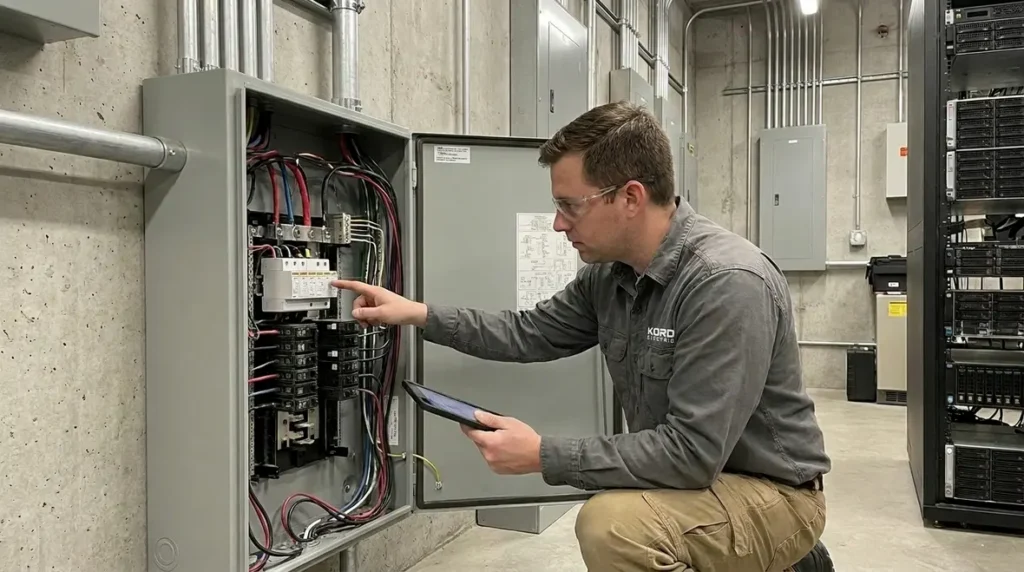
- Connections in critical pathways that can loosen due to vibration, heat cycles, or past work
- Terminations and busbar condition that may show heat damage before a total failure
- Controls and sensing circuits that can drift over time and affect transfer or output
Then we connect the dots between these risks and operational impacts. After all, a weak connection does not care that you planned to “test next quarter.” It fails when it fails. So we address what the tests may not fully reveal at first glance, and we strengthen the system so it stays dependable across seasons.
Commissioning and documentation: how we keep performance consistent over time
Many facilities get a system installed and then assume it will stay stable. Yet, conditions change. Loads get added. Equipment gets replaced. Controls get updated. Parts age. And sometimes, no one updates the records to reflect reality. That is why we treat commissioning details and documentation as part of the reliability plan, not as paperwork.
Our expert service staff helps commercial and industrial customers with:
- Clear baselines so future tests can be compared against real reference numbers
- Component identification so the right parts get serviced, not the ones that are easiest to reach
- Service intervals matched to the facility’s risk level and operating profile
As a result, teams can plan work without guessing. And when someone asks, “Has this generator really performed as expected?” the answer comes from data, not vibes. Because business leaders deserve facts, and technicians deserve fewer surprise calls after hours.
For many organizations, formalizing this approach also connects directly to Kord Electric’s broader preventive programs described in their guide to commercial and industrial electrical maintenance plans, where testing, documentation, and scheduling all work together to support long term reliability.
Common failure patterns we prevent with disciplined maintenance
Over the years, we have seen patterns repeat across commercial and industrial buildings. The good news is that many of these issues show up during testing and maintenance. The better news is that they are preventable when someone runs the process with care.
Here are the failure trends our technicians aim to stop before they become outages:
- Battery and control issues that slow starting, reduce reliability, or cause inconsistent transfer
- Load mismatch where the system cannot deliver stable output to actual connected critical loads
- Protection or coordination drift that causes nuisance trips during switching events
- Environmental stress like heat, moisture, and vibration that damages components over time
We also keep an eye on system behavior after changes to the building. If the facility adds new equipment, we help ensure the emergency power setup still supports critical circuits. In short, we treat emergency power as a living system that should evolve with the building, not freeze in time like an old sitcom rerun.
When emergency events do occur, it can be reassuring for commercial and industrial teams to know there is support beyond routine testing. That is where Kord Electric’s dedicated emergency electrical services step in to stabilize systems and restore power while the long term maintenance and testing strategy continues to reduce future risk.
FAQ
Need a calm, confident plan for backup power in your facility?
If your commercial or industrial building relies on emergency power, Kord Electric can help you prove performance, reduce risk, and protect critical operations. Our technicians and expert service staff plan essential testing, verify transfer and load behavior, and document results clearly so you can act with confidence. Reach out to schedule a reliability focused assessment for major property facilities. We will help you move from “we hope it works” to “we know it will.”
For properties across Southern California that need a partner who understands large scale infrastructure, Kord Electric’s dedicated Los Angeles County electrical services team is built around commercial and industrial demands, from normal operations to outage recovery and emergency testing.
When your facility is ready to turn emergency power from a hopeful backup into a proven asset, it helps to combine disciplined testing, thoughtful maintenance planning, and responsive field support. That combination is how emergency power systems reliability stops being a question mark and starts becoming part of your normal operations strategy.