
Commercial Electrical Load Calculation for Expansion
When Kord Electric plans for a facility expansion, we start with a practical commercial electrical load calculation for expansion. That first step answers the question most owners keep avoiding like a dentist appointment, namely how much electrical capacity the new space will truly require. Then we build the rest of the plan around safe design, clean load documentation, and a system that does not blink when the new equipment kicks on. After all, adding square footage without confirming power availability is like adding seats to a plane without checking the engines. The numbers matter, and our technicians guide the process in plain language from start to finish.
How Kord Electric approaches load growth for industrial buildings
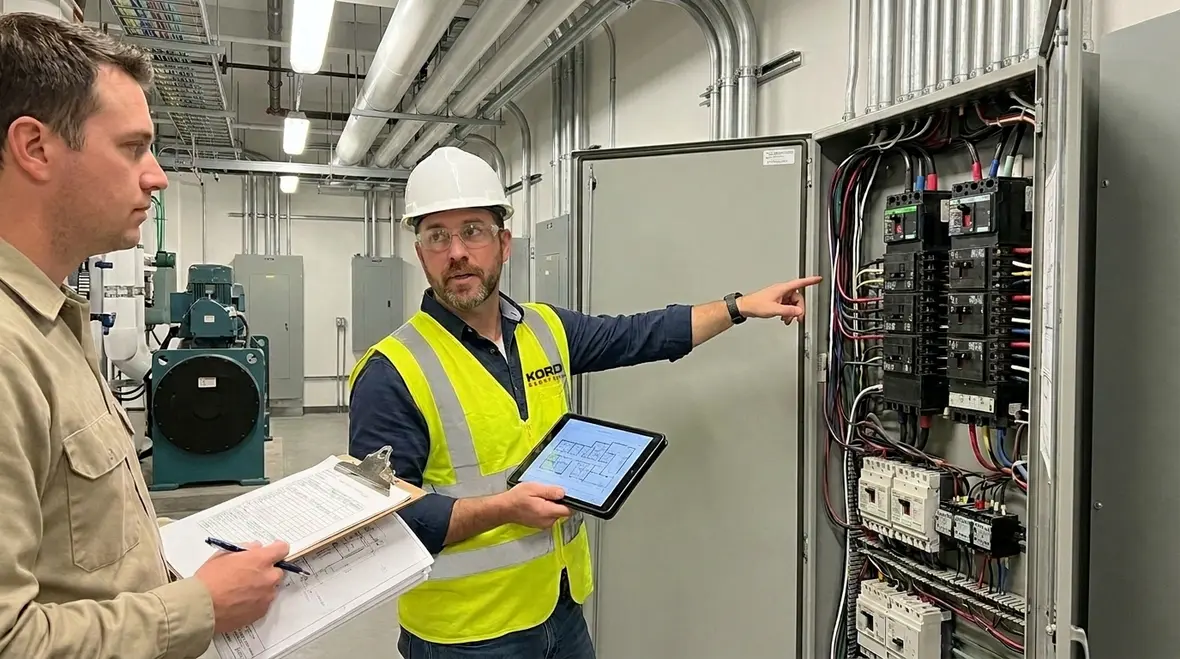
Third party estimates can sound confident, but in commercial and industrial work we rely on a method that holds up under real conditions. Our service teams look at what already exists, then they forecast what will change. First, we review the facility’s current electrical one line, panel schedule, and documented equipment list. Next, we map the loads by area, such as production zones, HVAC sections, lighting groups, and future tenant improvements when major property buildings bring new occupants.
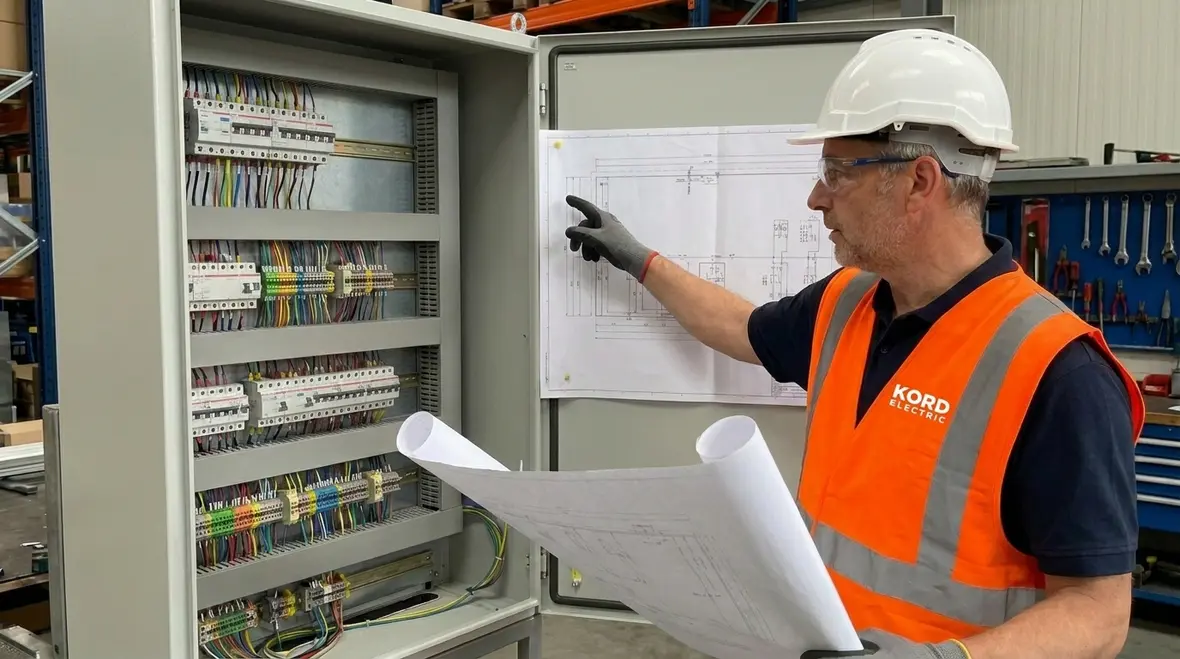
Then we move from “what we think will be added” to “what will actually run.” We consider steady loads, start up surges, and any pieces of equipment that can create a brief but intense demand spike. In addition, we apply realistic assumptions for operating patterns, diversity, and duty cycle. Our technicians explain these choices during walkthroughs, because when owners understand the logic, they approve the scope faster and with less guesswork. And yes, we will still make the joke about “guessing” being fine for sports bars, not for switchgear.

Step by step: identify equipment, schedules, and demand types
Accurate scaling starts with a clean inventory. We begin by listing every existing and planned load, then we sort them by how they behave. Some loads draw power steadily, like certain motors under constant operation. Others cycle, like lighting and exhaust fans. Still others spike on start, like compressors and large HVAC components. Moreover, we separate equipment that runs all day from equipment that runs in bursts, because demand changes everything in a proper commercial electrical load calculation for expansion.
At this stage, our expert service staff often helps teams gather missing details. For example, an owner might know there will be a new production line, but they might not have the full nameplate data. So we help obtain the motor horsepower, voltage, full load amps, heater ratings, and control panel specifics. If the plan includes new EV charging infrastructure, we also confirm charging levels, number of stalls, and whether load management exists. If you have seen our EV charger installation approach, you know we treat the electrical capacity question early instead of after the trench work is done.
Demand factors and diversity: where most mistakes quietly hide
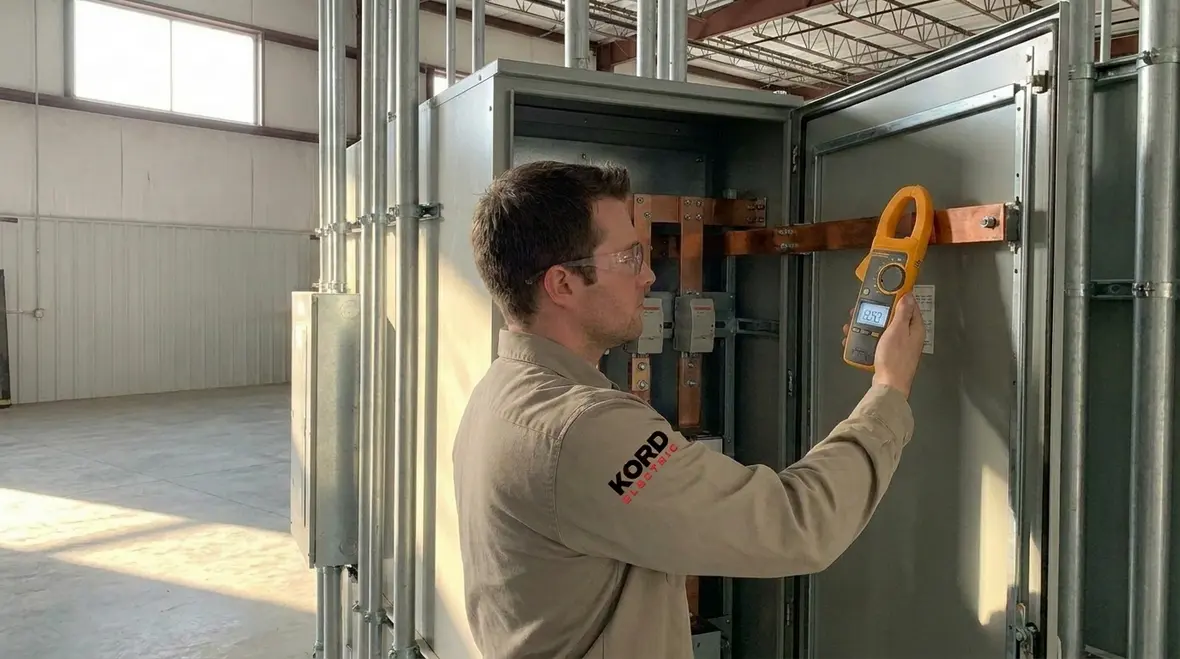
Here is where projects often go off track. People treat every connected device as if it will run at full output at the same time. That is rarely true. However, underestimating demand can lead to overheating, nuisance trips, voltage drop issues, and expensive change orders during commissioning. Therefore, Kord Electric applies demand factors and diversity rules that align with the type of facility and its operating profile.
Our technicians look at the building’s use case. A warehouse with periodic forklift charging behaves differently than a data heavy environment or a manufacturing plant running multiple shifts. We also consider how controls manage equipment sequencing. If a system staggers start times, the effective demand can drop. Yet, we still account for the worst reasonable scenario because real life has a sense of humor and it uses it at inconvenient times.
When we prepare load documentation for expansion, we show how the numbers come together. That way, stakeholders see the relationship between equipment schedules and the final design. In short, we avoid both extremes: we do not overbuild blindly, and we do not underbuild and then cross our fingers.
Lighting, HVAC, and process loads: balancing the three big drivers
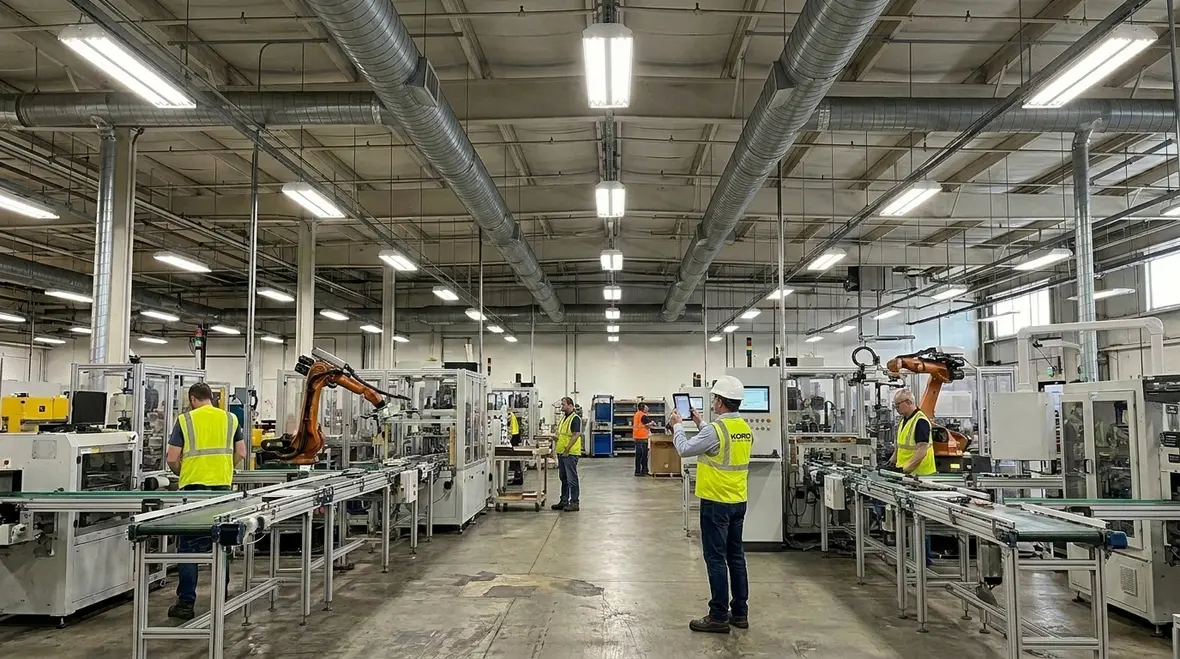
Facility expansion almost always adds to one of three buckets: lighting, HVAC, and process loads. Kord Electric treats each bucket with care, because each one has its own demand profile and its own set of risks.
Lighting usually has steady or near steady draw, and it can be sized with luminance targets, fixture wattage, and control strategy. For example, occupancy sensors and daylighting controls can reduce energy use, but they do not eliminate the need to plan for design loads during peak operation.
HVAC often creates the largest steady demand and it may include staged compressors, air handlers, and rooftop equipment. We confirm whether equipment ramps gradually or starts aggressively. Moreover, we coordinate the electrical requirements for pumps, fans, and controls that may sit on separate panels but share a common power source.
Process loads are the wild card. They may include conveyors, welding equipment, induction heaters, machine tools, and specialty power supplies. These devices can draw large current during operation, and some can have harmonics that affect the rest of the system. Therefore, our engineers evaluate equipment types and how they will operate across shifts.
As a result, our commercial electrical load calculation for expansion does not treat the building like one average spreadsheet row. It treats the building like a system with behavior.
Service upgrades and panel strategy for future-proofing
Once the expanded demand is defined, the next question is how to deliver it. Kord Electric designs panel and feeder strategy with future growth in mind, especially for major property buildings that may evolve over time. We look at the service size, available breaker ratings, and existing bus capacity. If the main service cannot support the growth, we plan a service upgrade rather than forcing the new loads onto a tired system.
Next, we design panel placement and load distribution so that critical areas maintain power quality and reliability. We also evaluate whether we need dedicated circuits for sensitive equipment, and whether we should include load separation for safety and troubleshooting. In addition, we consider the coordination between normal power and any emergency or standby systems.
Our technicians often recommend approaches that reduce future downtime. For example, we may add bus extensions, new distribution sections, or spare spaces that make later expansions easier. And yes, we still keep it business casual in the field. We can talk power quality without sounding like you are trapped in a physics lecture.
EV charging and other modern additions without blowing the budget
Modern expansions frequently include EV charging, and those systems demand thoughtful planning. Kord Electric treats this as part of the same load picture, not as a separate “nice to have” feature. We confirm stall counts, charging speeds, and whether the site uses any load management. Then we size the circuits, breakers, and feeders so the chargers support peak usage while still respecting the facility’s overall demand limits.
If the expansion includes other modern add-ons, we handle them the same way. We evaluate motor driven equipment, automation cabinets, and specialty receptacles with an eye on current draw, starting behavior, and control loads. As we do this, we keep the commercial electrical load calculation for expansion aligned with real installation constraints, such as space for new raceways and the limits of existing switchgear.
To keep the process smooth, our expert service staff communicates the scope clearly before work begins. That means fewer surprises, fewer “we thought it would fit” moments, and more confident project timelines. If someone tells you electrical planning is boring, we invite them to design a load plan while juggling shift changes, construction phasing, and a schedule that somehow always moves.
Featured FAQ: quick answers for commercial expansions
How do you calculate electrical load for a facility expansion?
We list existing and new equipment, classify steady and starting loads, apply demand and diversity factors, then size services, panels, and feeders based on the resulting expanded demand.
How does EV charging affect the electrical load?
EV charging can add significant demand. We confirm charger levels, number of stalls, and any load management, then integrate those loads into the expanded electrical design.
Do you include HVAC and motors in the load calculation?
Yes. We account for HVAC steady demand and motor starting surges, based on nameplate data, control strategy, and how equipment operates across shifts.
What documents do you need to start?
We typically request the one line diagram, panel schedules, and equipment lists, plus any available nameplate details for new equipment. Our technicians help fill gaps.
FAQ: short answers for featured snippets
What is a commercial electrical load calculation for expansion?
It is a structured process we use to estimate electrical demand after adding space, equipment, or services, then size electrical systems to handle safe peak operation.
Why do demand factors matter?
They reflect that not every connected load runs at full output at the same time, which improves design accuracy and reduces unnecessary oversizing.
Can existing panels handle the new loads?
Sometimes, but we verify bus capacity, breaker ratings, feeder capacity, and power quality limits. If it cannot, we plan upgrades early.
Do you coordinate load with commissioning plans?
Yes. We align the electrical design with start up sequences, control settings, and phasing requirements so the system performs reliably when everything comes online.
Do your technicians explain the numbers to owners?
Absolutely. Our expert service staff walks clients through the key assumptions so approvals and budgeting feel clear, not mysterious.
Next steps with Kord Electric: get a confident expansion plan
When your facility is ready to grow, do not guess your way through electrical capacity. Kord Electric can build a commercial load plan that matches your expansion scope, your equipment schedules, and your real operating needs. Our technicians and expert service staff explain assumptions in plain language, so you get decisions you can stand behind. If you are planning an addition, a remodel of a major property building, or modern upgrades like EV charging, contact us for an on site review and a clear, practical path forward.
If your facility is also dealing with power quality issues or planning upgrades beyond load calculations, explore our related services, such as voltage fluctuation diagnostics and correction or lighting installation services, to keep your expansion reliable from panel to production floor.
And if your team wants to integrate ongoing preventive care with your new capacity, Kord Electric’s commercial and industrial electrical maintenance plans can be paired with your commercial electrical load calculation for expansion so the upgrade you invest in today stays dependable for the long term.
To move from rough ideas to a clear, buildable plan, connect with Kord Electric for an on-site assessment, a detailed commercial electrical load calculation for expansion, and a roadmap that ties your new square footage to the power it actually needs.
You can also pair your expansion project with critical-response coverage through our emergency electrical services, so when your upgraded systems are finally in place, you have a trusted team on call to protect operations day and night.
Ready to move from “we think the power is enough” to “we know the system can handle it” for your next expansion?
Take the next step with a structured commercial electrical load calculation for expansion and a service team that treats your facility like the complex, high-value system it is.


