Industrial Energy Efficiency for Warehouse Lighting
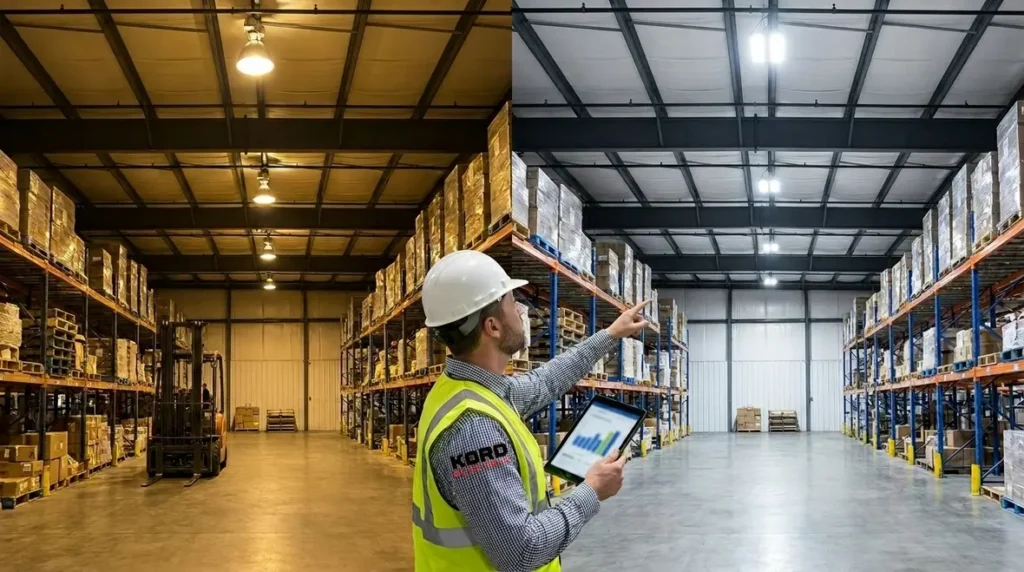
At Kord Electric, we start with an industrial energy efficiency assessment for warehouse lighting. In the first place, it shows us where energy leaks hide, even when the lighting “looks fine.” Then our team maps usage patterns, measures electrical behavior, and checks how controls, fixtures, and power quality interact across the day and night. After that, we build a plan that goes beyond simple LED retrofits, because replacing bulbs is the easy part, like swapping out a tie while the meeting is still on fire. We have seen warehouses spend money on upgrades that did not fix the real load. Meanwhile, we use clear explanations from our expert service staff so decision makers understand what changes will lower cost and raise reliability.
Why warehouses waste power even after LEDs
Even modern lighting can quietly underperform when the system around it stays messy. For example, a warehouse may install LED fixtures yet keep outdated controls, over-energize zones, or run unnecessary schedules that do not match actual traffic. Additionally, poor layout assumptions can keep illumination higher than required in some bays while leaving other areas dimmer than code or safety needs. As a result, the facility pays twice: first through wasted electricity, then through extra maintenance because components operate in stressful conditions.
Our technicians also look for electrical and operational causes. Voltage fluctuations and harmonics can stress drivers and shorten lifespan. Furthermore, air movement, high dust levels, and heat buildup affect performance of both lighting and related power equipment. So, rather than treating lighting as a standalone upgrade, we treat it as part of the warehouse electrical system and building operations.
And yes, if you still have lighting operating like it is 2 AM in a movie set, we understand why the electric bill looks like a horror trailer.
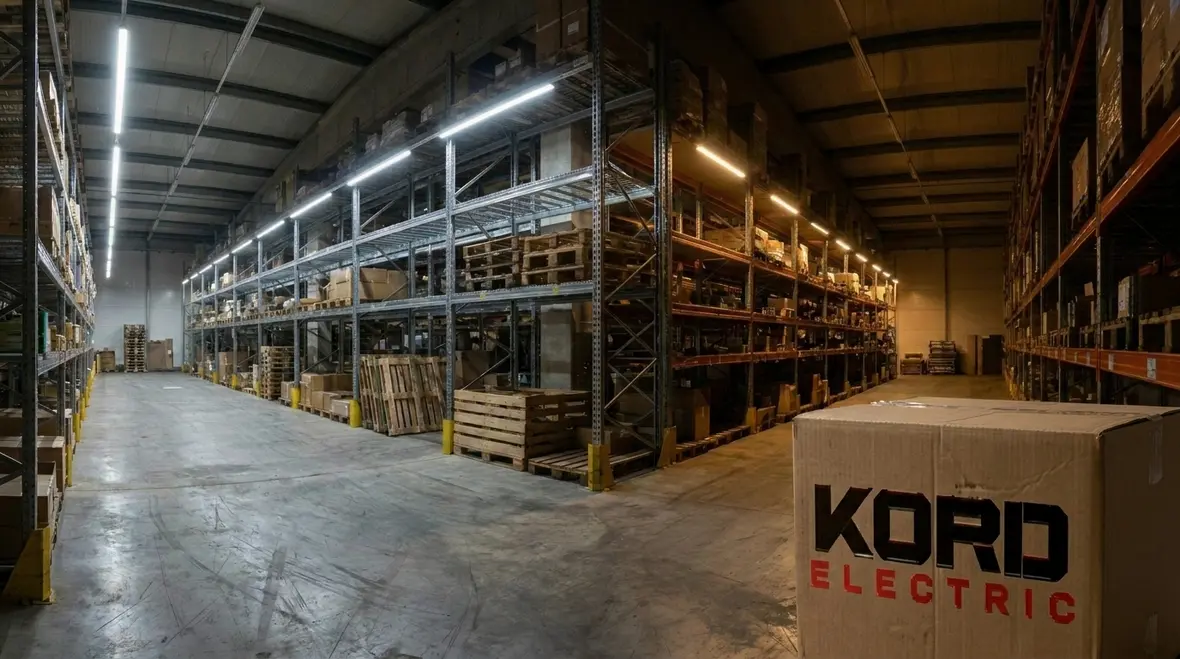
Industrial energy efficiency assessment: what our team measures
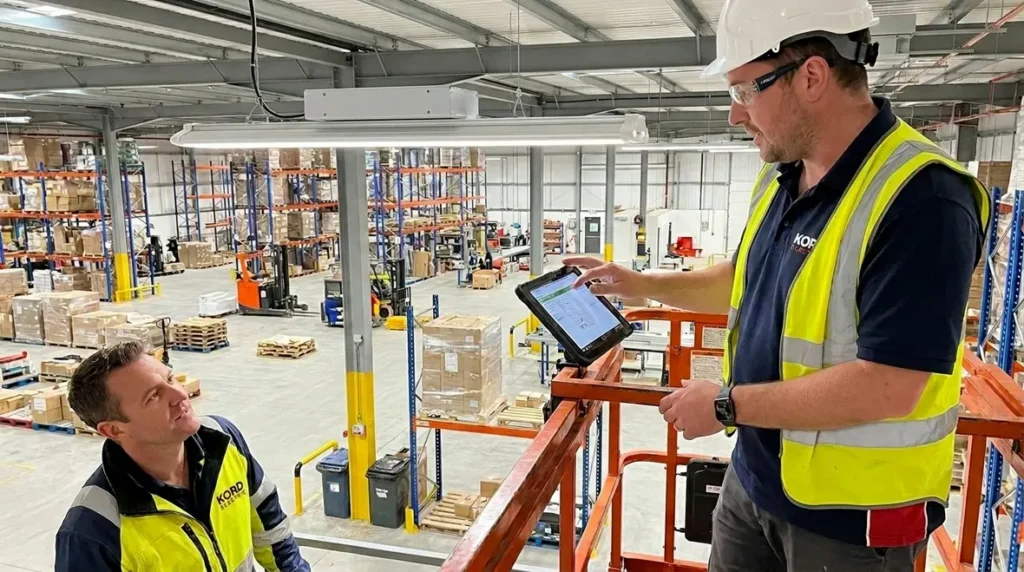
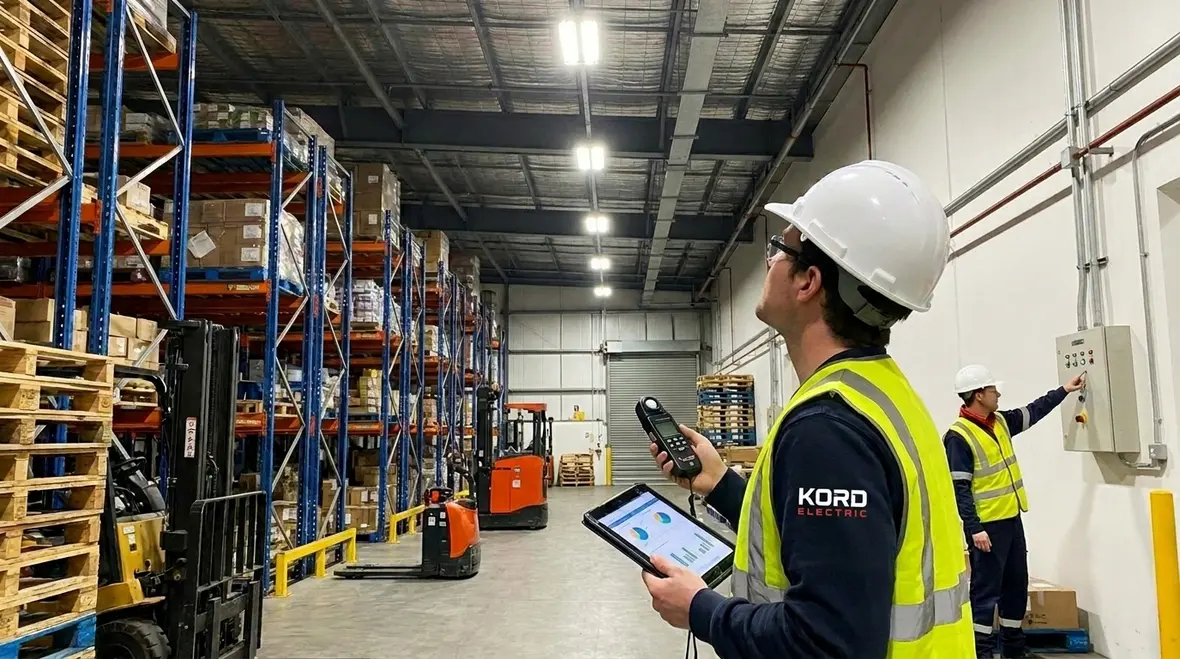
When our expert service staff performs an industrial energy efficiency assessment for warehouse lighting, we do not just check brightness. We gather data that guides engineering level decisions. First, we analyze lighting load by area and time. Then we review switching and dimming strategies, including how zones respond to motion, daylight, and shift schedules. After that, we inspect fixture driver types, control panel conditions, and wiring paths that might create losses or intermittent behavior.
Next, we evaluate power quality indicators that influence lighting stability. We also check for demand charges impacts where applicable. In many facilities, the biggest savings come from shaping how the load profile behaves rather than chasing wattage alone. Finally, we document findings in plain language so others can approve upgrades without guessing.
We explain the “why” behind each recommendation, and we keep our approach practical for commercial and industrial facilities and major property buildings. Nobody wants a lighting plan that looks great on paper but fails in the real world at shift change.
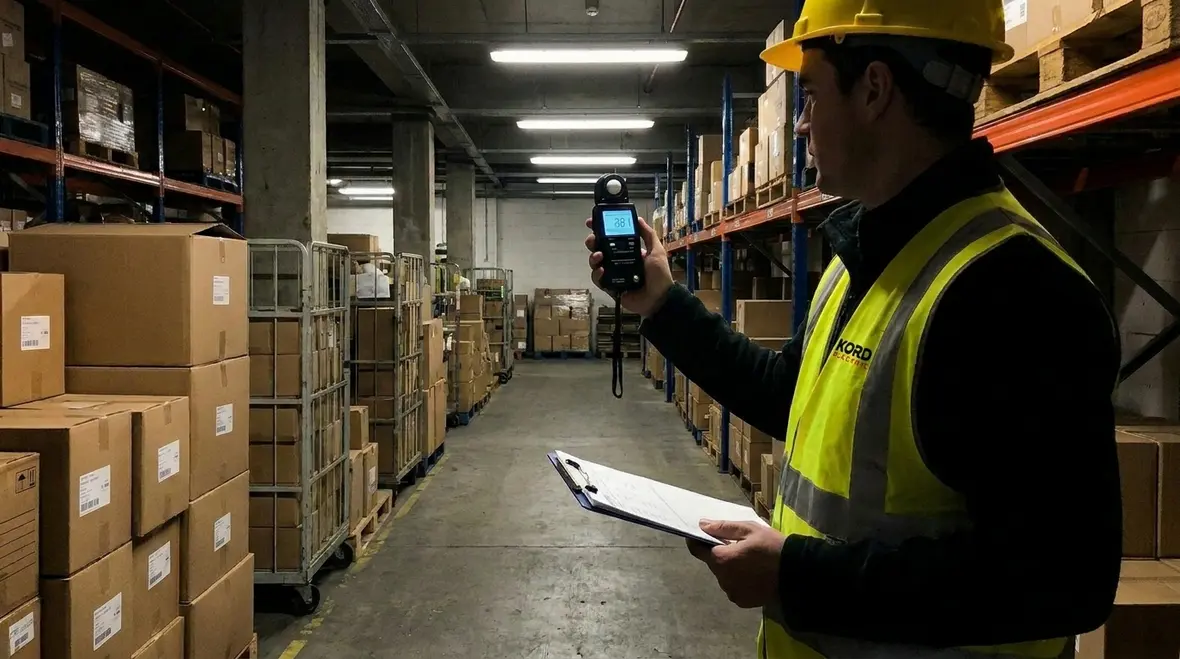
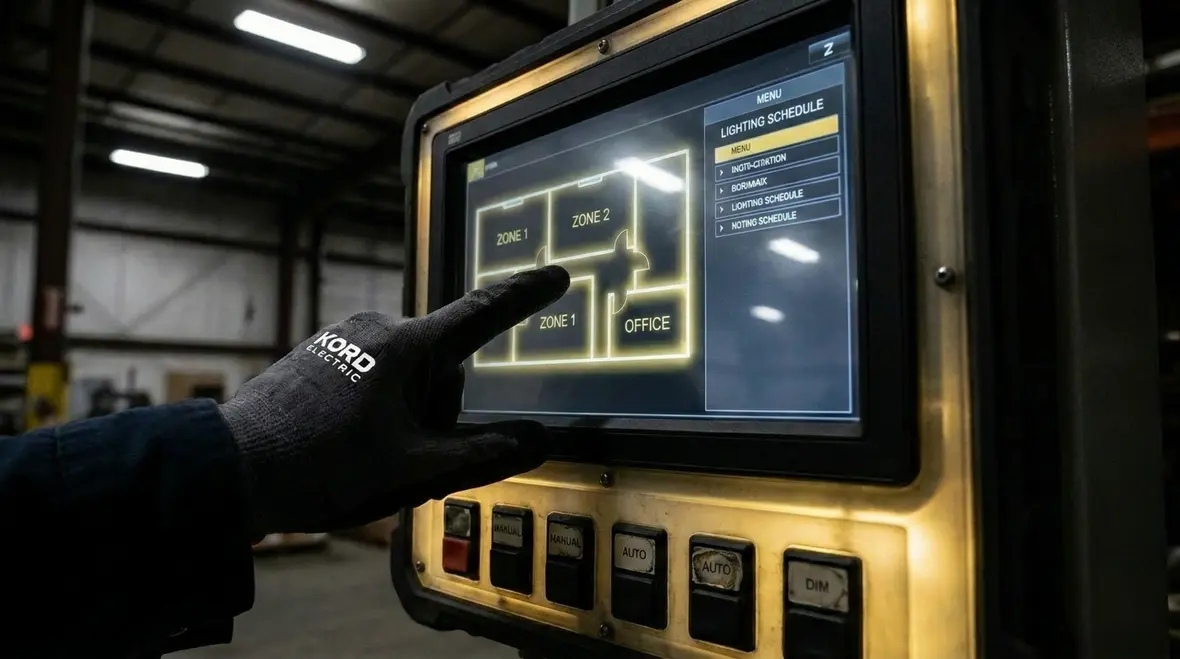
Controls, zoning, and scheduling that cut cost without dimming safety
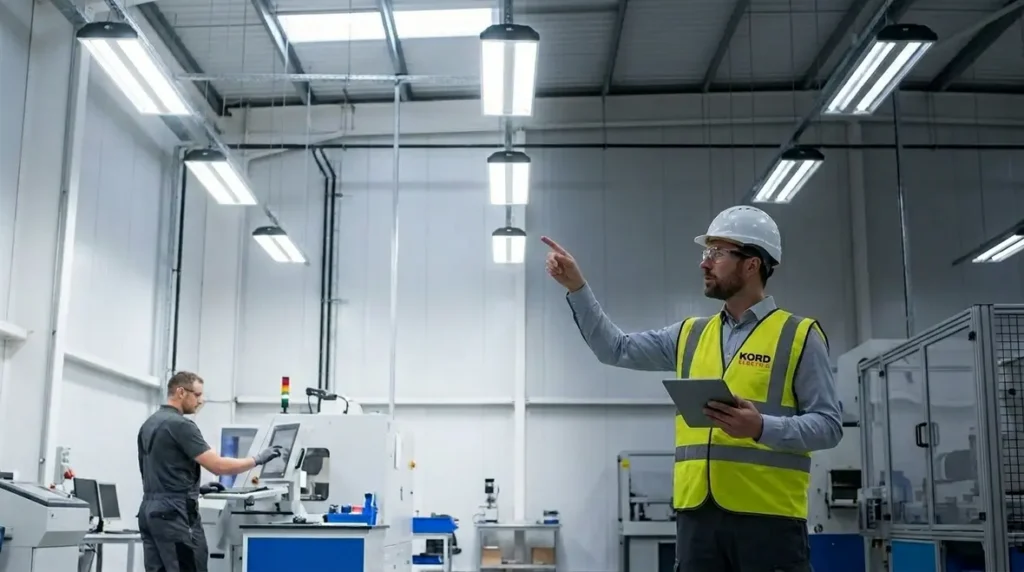
To optimize energy, we focus on controls and how the warehouse is actually used. Many facilities have lighting arranged by the blueprint, not by how workers move today. Therefore, we often redesign zoning so the right lights turn on for the right tasks. Additionally, we help facilities implement smart scheduling that matches shifts, receiving areas, loading docks, and maintenance windows.
Motion sensing and time based logic can work, but only when configured for real activity patterns. We tune sensitivity, install placement for accurate detection, and set hold times that support safe movement. Moreover, we align dimming curves with work requirements. A dimming strategy that lowers power when brightness is not needed can reduce cost, yet still maintain visibility for inspection, picking, and safety signage.
Our technicians walk others through examples in their own spaces, because seeing how zones respond builds trust. It also prevents the classic “turn everything off and hope” plan that turns into a walk of shame for someone holding a flashlight.
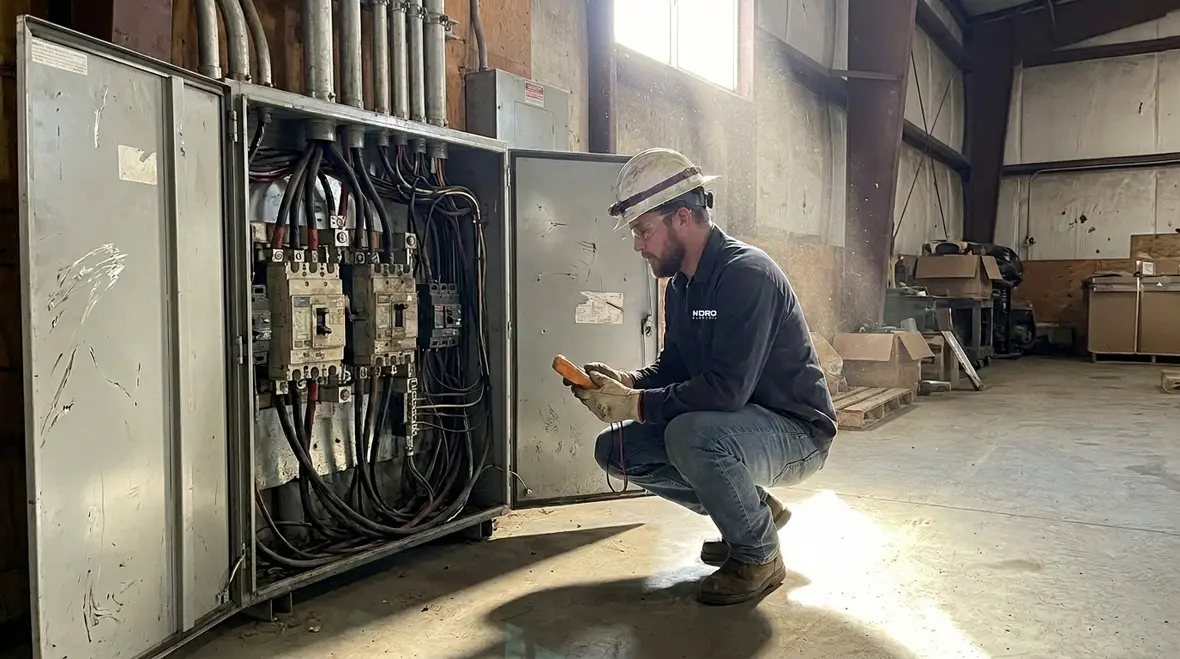
Power distribution upgrades that protect drivers and reduce losses
Energy efficiency is not only about light output. It also depends on how power travels through the building. If distribution wiring, transformers, panels, or switching devices run hot or operate out of spec, losses rise. In turn, connected loads experience more stress. So, we inspect feeder sizing, circuit loading, and protective devices, and we look for signs of aging that might not show up in day to day operation.
Then we coordinate any recommended panel and control upgrades with the lighting plan. For instance, we may adjust how circuits group fixtures so controls behave correctly. We also verify that grounding and bonding meet safety needs, which supports stable operation and reduces nuisance faults. By improving the path from utility power to the luminaire, we help facilities lower wasted energy while improving reliability.
In major property buildings and large industrial sites, we think about scale. A small inefficiency multiplied across thousands of fixtures becomes big money. So we quantify the impact, propose steps that fit the budget, and schedule work to reduce disruption.
Thermal and maintenance planning that extends fixture life
When fixtures age faster, energy optimization becomes harder. Dust and heat reduce light output and can damage drivers and optics. Therefore, we recommend maintenance plans that support both performance and efficiency. We also check environmental sealing and fixture ratings so the system handles warehouse conditions rather than slowly failing in silence.
Additionally, our team helps facilities set cleaning schedules tied to actual dirt loads. Instead of generic intervals, we align service windows with risk and observed performance. We also track lamp and driver behavior patterns so others can detect drift early. That way, the facility does not wait until lighting drops below safe levels.
Here is the calm truth: if you protect the thermal environment and keep drivers healthy, you do not just save power, you save labor and avoid emergency service. And emergency service is expensive, like paying for a burger at the airport. It happens, but nobody should plan for it.
How EV charging and site electrification connect to warehouse energy plans
Many industrial sites now add EV charging for fleets, visitors, and staff. When a warehouse upgrades its electrical system, it should not ignore charging demand. Kord Electric supports EV charging installation through a site wide mindset. Our process includes load awareness, planning of circuits, and practical layout decisions that protect the facility’s capacity.
As a result, the same planning discipline used in lighting optimization can also reduce conflicts later. If we upgrade lighting and controls first, we can better understand available capacity for new loads. Then, when we help with EV charger installation, we coordinate how energy demand shifts across the day. That reduces surprises, such as charging systems pushing the facility into uncomfortable peaks that trigger higher costs.
We explain tradeoffs clearly so others can make decisions with confidence. It is the difference between building a system that grows with the business and one that forces constant patchwork updates.
Implementation steps that reduce downtime and increase results
Optimization works best when it follows a sequence. First, we confirm field conditions and verify existing control behavior. Next, we prioritize changes that deliver savings quickly without risking safety or workflow. Then we phase installs by area so the warehouse continues operating with minimal disruption.
After that, we program controls and validate performance. We do not just “install and hope.” Our technicians test zone behavior, dimming response, and schedules. Then we measure results against baseline expectations. In many facilities, the biggest gains appear when tuning removes unnecessary operation and avoids over-illumination.
Finally, we set a maintenance and monitoring plan so the system stays efficient. In other words, we treat the upgrade like an ongoing program, not a one time event. This approach fits commercial and industrial facilities and major property buildings because they need dependable performance across many tenants, shifts, and operational changes.
FAQ
Final thoughts and next step
If your warehouse energy costs still feel out of control, do not assume the LEDs are the whole story. At Kord Electric, we optimize lighting by starting with an industrial energy efficiency assessment for warehouse lighting, then improving controls, power distribution, and maintenance in a sequence that protects uptime. Our technicians explain every recommendation in business friendly language, so others can move forward with confidence. If you are ready to cut waste and stabilize performance, contact us today and we will schedule a site evaluation for your commercial or industrial facility.
For facilities planning broader upgrades beyond lighting, our dedicated lighting installation services and commercial EV charger installation pages outline how we support large warehouses, distribution centers, and industrial campuses with scalable, code-compliant projects.