Commercial Electrical Panel Safety Guide
Commercial Electrical Panel Safety Tips: A calm start before anyone touches anything
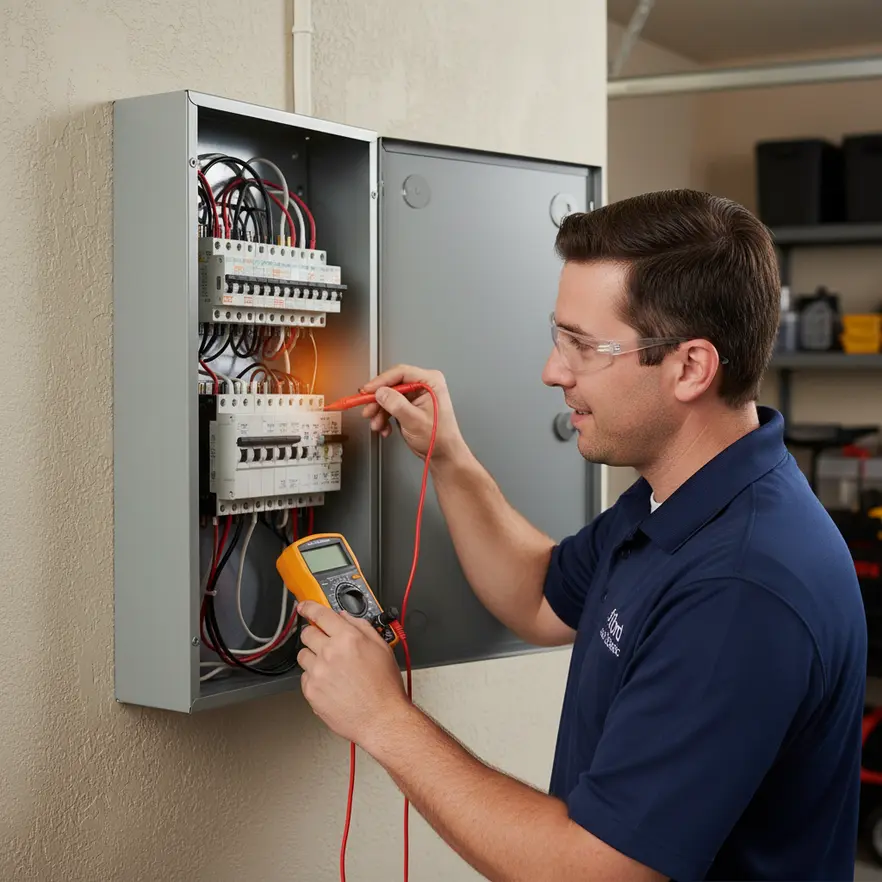
At Kord Electric, we treat commercial electrical panel work like handling a live wire of responsibility, because it is. First, our commercial electrical panel safety tips start with a simple rule: de energize before you inspect, label before you move, and verify before you trust. We also recommend PPE, dry footwear, and clear access around the panel so nobody trips like it is a poorly planned sequel. Finally, we tell facility managers this: if a panel looks damaged, warm, noisy, or smells “electrical,” stop and call our team. Our technicians and expert service staff explain what they find, and then they fix it the right way, not the “hopefully” way.
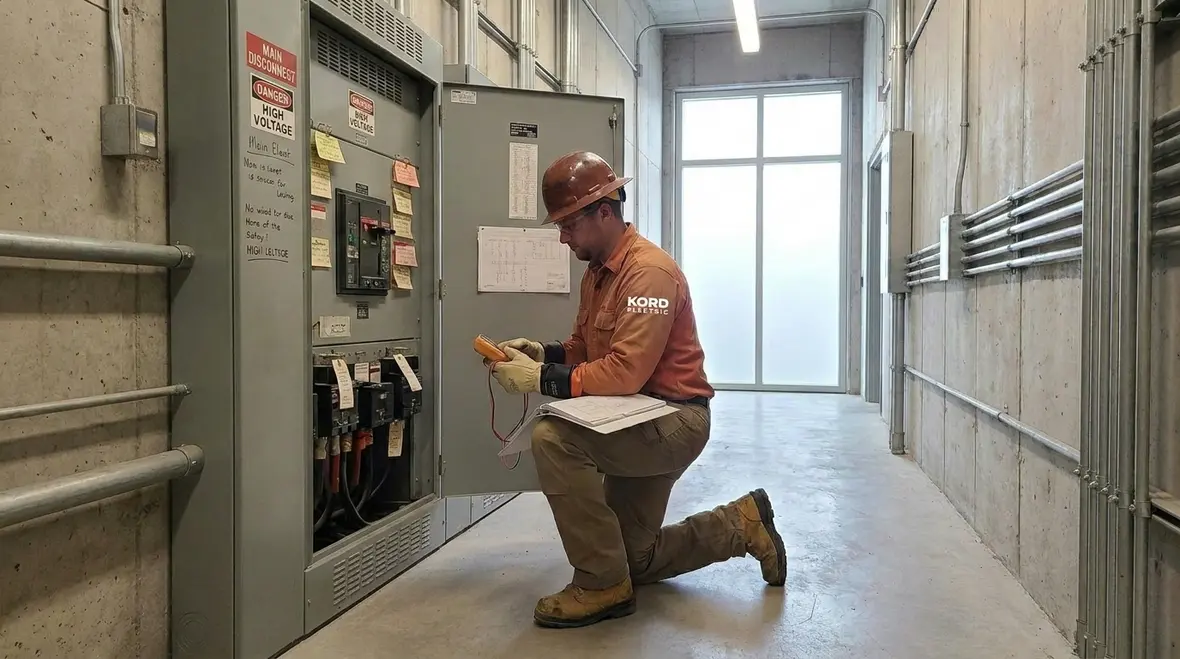
How to identify hazards before the cover comes off
Even in a well run facility, hazards hide in plain sight. For example, we often see loose labeling, missing knockouts, clogged ventilation paths, or signs of moisture around commercial electrical enclosures. In addition, panels placed behind storage, or in hallways with heavy foot traffic, tend to get bumped. And once a panel gets bumped, connections can loosen over time.
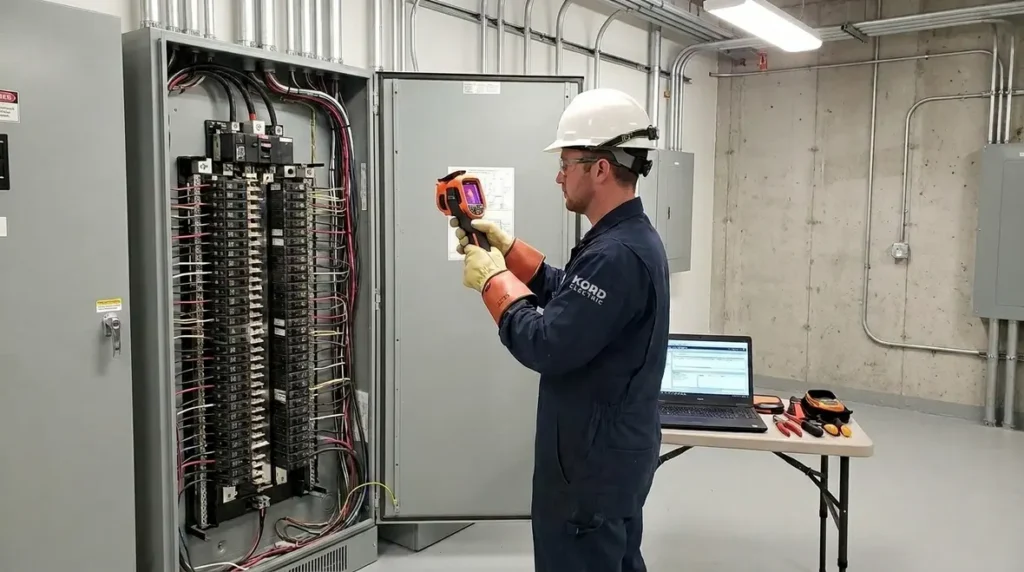
Before anyone opens anything, our technicians take a slow look. They check for corrosion, discoloration, rust rings, and any evidence of heat at the bus bars or breaker terminations. Next, they look for wrong wiring marks, improvised splices, or unused holes sealed with random material that belongs on a craft table, not in a major property building.
Transitioning from visuals to process, our approach also includes confirming the panel schedule matches the actual loads. When the documentation and reality do not agree, the risk rises because troubleshooting gets guessy. And guesswork in electrical work is like using a butter knife as a wrench. Technically possible, practically a problem.
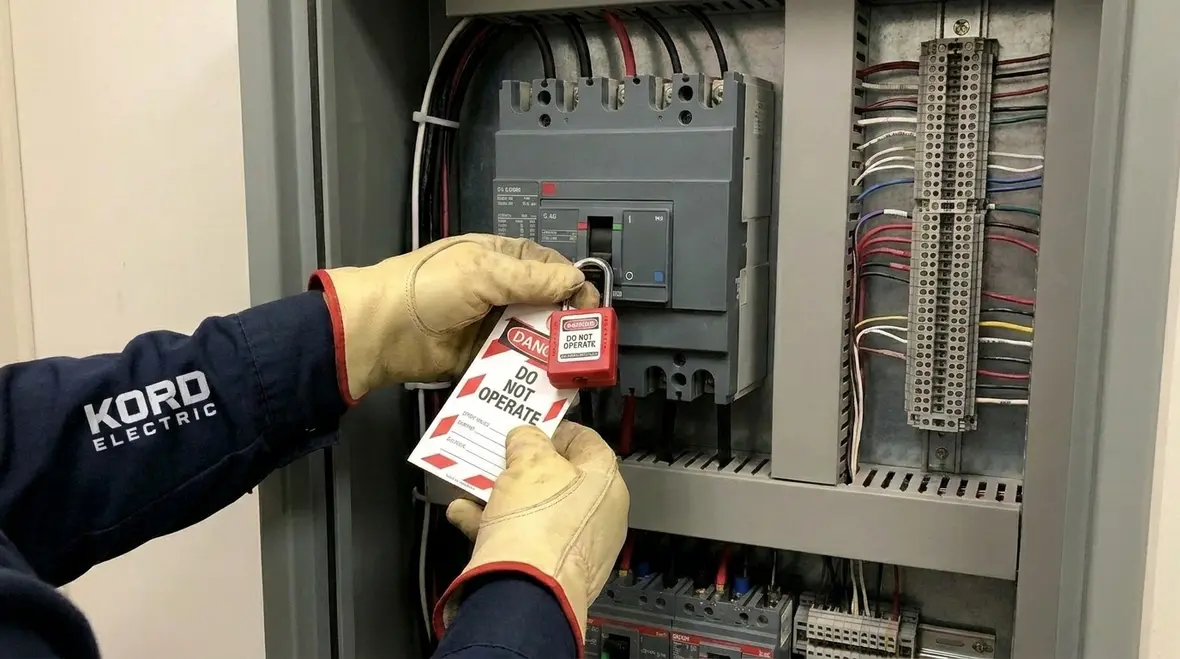
Lockout tagout that actually gets used in industrial settings
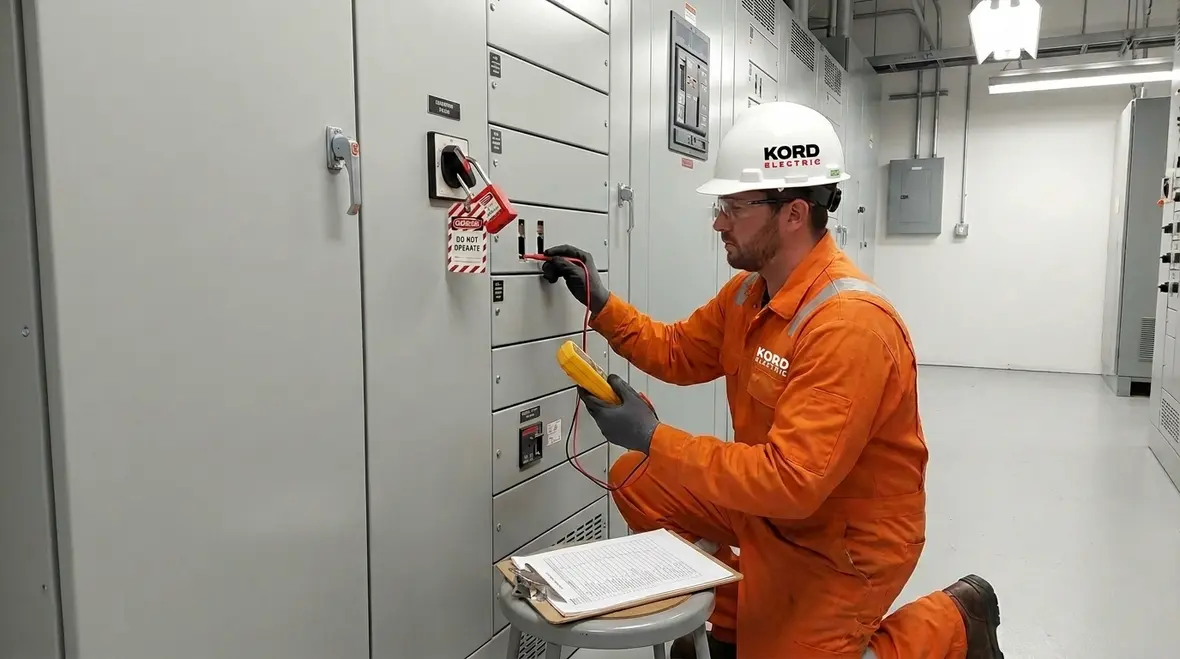
Many facilities write lockout tagout into policy, but real safety comes from consistent practice. Kord Electric focuses on procedures that other people can follow during an emergency, not just during training. That means we help teams establish who isolates, who verifies, who documents, and who gets the final go ahead.
First, we ensure isolation points are clear and accessible. Then our expert service staff confirm the scope: which circuits get worked on, which stay live, and what equipment might backfeed. Backfeed is a sneaky issue in commercial and industrial buildings, especially when generators, UPS systems, or transfer switches exist.
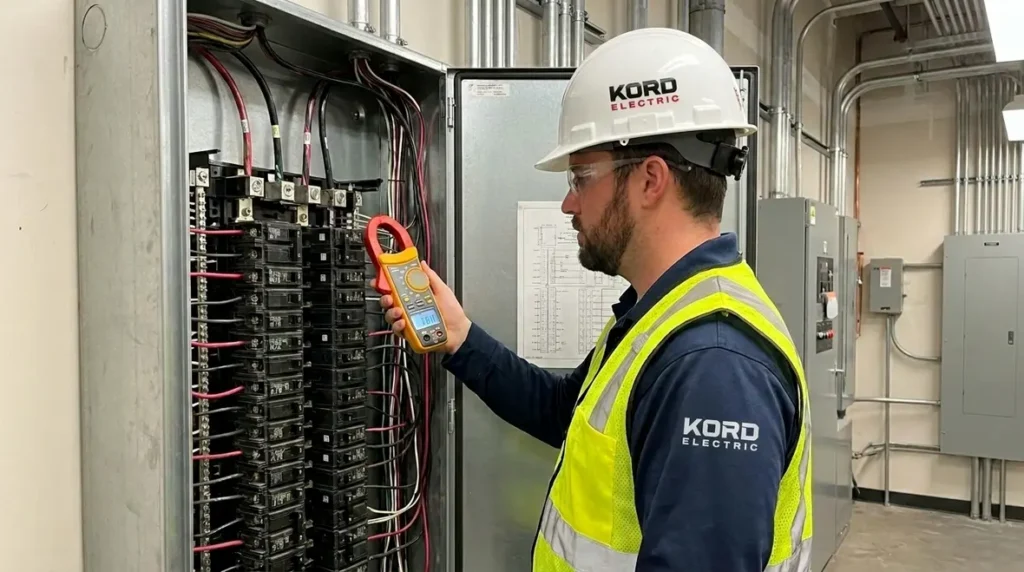
After isolation, verification matters. We do not treat “the breaker is off” as proof. Instead, we confirm absence of voltage with proper test equipment designed for the job. Even if a breaker handle looks calm, the electrical path may not be. Therefore, our technicians verify at the correct points before removing deadfront covers and working inside.
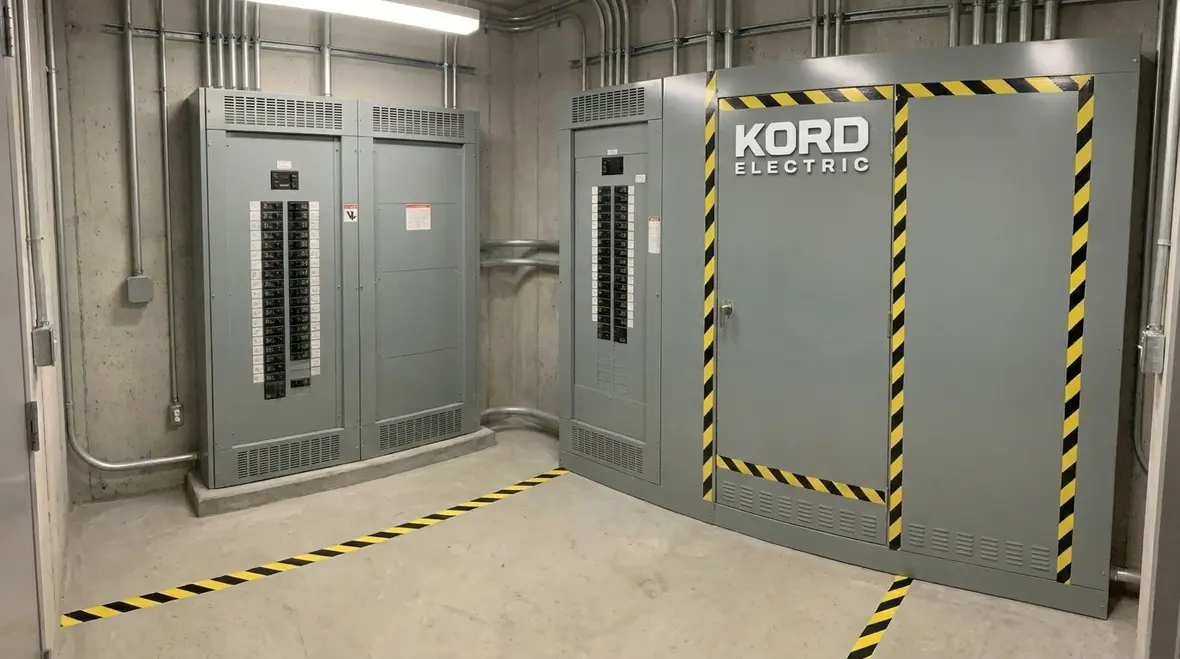
Verifying de energization: the step that prevents expensive surprises
Once the lockout tagout steps are in place, we move to testing, and testing takes control. Our technicians verify de energization at the panel and, when needed, at the load side to ensure no unexpected voltage appears. This matters because some commercial panels include multiple sources or shared neutrals, and those details can be easy to miss.
To keep work safe, we also manage the environment. We limit water exposure, reduce dust buildup near ventilation openings, and ensure panels do not sit next to sources of heat. Additionally, our team keeps the work area tidy. It sounds small, but clutter leads to dropped tools, dropped screws, and dropped patience.
In many major property buildings, the panel serves numerous tenants or departments. So we also coordinate timing. If we must work during off peak hours, we schedule around operations, deliveries, and security checks. That planning reduces disruption and keeps everyone safer.
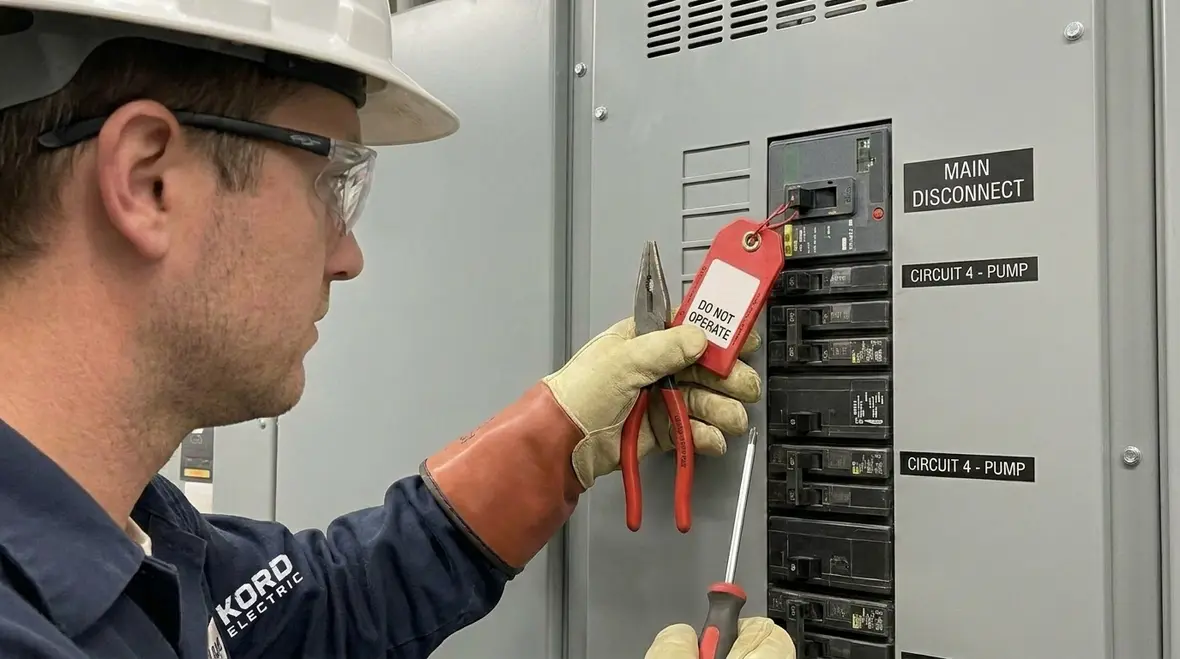
How we handle panel covers, deadfronts, and internal components
Panels are not just boxes. They are systems with moving parts and fixed rules. When we remove covers and deadfronts, our technicians treat each step like it matters, because it does. First, we ensure all wiring compartments get attention, including spaces that look “quiet” but hide loose connections or missing fasteners.
Next, we check breaker seating, bus bar integrity, and termination tightness based on manufacturer guidance. We also inspect for signs of aging like brittle insulation, damaged cable jackets, and discoloration that suggests overheating. If there is evidence of moisture intrusion, we address it rather than covering it up.
When we explain findings to facility staff, we do it in clear language. For instance, we describe what we saw, what it can lead to, and what steps we take next. That way, facility teams know whether we are fixing a current concern or preventing a future failure.
And yes, we keep the process boring in the best way. Boring means controlled, correct, documented, and repeatable. The goal is to avoid the kind of electrical “thriller” where the suspense ends with downtime.
Recessed lighting and related wiring: keeping panel safety linked to site work
In many commercial and industrial facilities, lighting projects and panel work happen in the same building cycle. So we treat them as connected tasks. When our teams install recessed lighting or upgrade lighting systems, we coordinate how those new loads tie back to existing circuits and panels. That coordination helps keep the electrical design balanced and helps prevent overload.
Our technicians follow best practices during recessed lighting installation, including planning cable routing and maintaining proper connections so the system performs as intended. For reference, our team outlines recessed lighting installation details here: recessed lighting installation services. The point is simple. If lighting work brings new current, panel safety must stay part of the conversation.
As a result, we check circuit capacity, confirm breaker compatibility, and verify that cable types match the intended environment. We also ensure grounding and bonding remain correct, because a good lighting job still needs a safe electrical backbone.
Maintenance schedules, inspections, and who should touch what
Commercial electrical panel safety tips do not end with one job. They expand into ongoing maintenance. At Kord Electric, we recommend inspections based on use, load changes, and environmental conditions. For example, facilities with frequent tenant turnover, heavy seasonal loads, or dusty or damp areas need more attention.
During inspections, we look for early warning signs like breaker discoloration, loose labeling, and signs of thermal stress. We also evaluate whether the panel is being used beyond design intent. Then, we confirm documentation stays accurate so other service providers do not stumble into outdated information.
Importantly, we set boundaries. Only qualified technicians should open panels, test energized components when required, or make changes to distribution equipment. Facility staff can manage accessibility, keep clearance rules, and report abnormalities quickly. Yet electrical alteration requires trained hands. That division reduces risk and makes response faster.
Finally, we keep communication clear. Our expert service staff share what they recommend and why, and they provide next steps in a way property managers can act on without needing a degree in electrical engineering.
For facilities looking beyond individual panels to broader building reliability, resources like our discussions on Los Angeles County electrical services and regional support can help align day-to-day operations with long term electrical planning.
Featured FAQ: Commercial electrical panel safety questions answered
CTA: Get panel safety right with Kord Electric
If your commercial or industrial facility operates with speed and uptime targets, electrical safety has to match that level of discipline. Kord Electric supports major property buildings with expert technicians who verify, document, and explain every step in plain language. If you need an inspection, a panel safety review, or guidance before lighting or electrical changes, contact us today. We will help you reduce risk, prevent downtime, and keep your systems running the way they should.
For facilities planning broader upgrades that connect panel work, lighting, and controls, our dedicated lighting installation services can be coordinated with commercial electrical panel safety reviews so that circuits, loads, and control strategies stay aligned instead of drifting apart over time.
From commercial electrical panel safety tips to full scale distribution upgrades, the goal is the same: reliable power without unnecessary drama. When panels stay labeled, maintained, and tested, your building runs like it should, and your team spends more time on production and operations than on emergency calls.
If you are evaluating panel safety as part of a larger electrical plan, pairing routine inspections with regionally focused support such as dedicated Los Angeles County electrical services can keep maintenance, troubleshooting, and future projects under one coordinated umbrella instead of scattered across multiple vendors.
No matter where your facility sits on its maintenance timeline, starting with clear, practical steps around commercial electrical panel safety tips gives you control. From there, deeper projects like system upgrades, lighting changes, or code driven improvements become strategic moves instead of last minute reactions.
When you are ready to talk through next steps, our team makes the process calm, structured, and transparent, so panel safety becomes one more part of your facility strategy instead of a lingering question mark.