Smart Lighting Automation for Commercial Buildings
Kord Electric helps commercial and industrial facilities cut energy waste through smart lighting automation for businesses. Instead of relying on someone to remember schedules, we use controls that adapt to real usage: motion, daylight, occupancy, and time based logic. As a result, building teams see fewer lights running when they should be off, and they often get steadier comfort for staff and customers. And yes, lights can behave better than humans on a Monday morning. While the core idea sounds simple, the real savings come from how the system is designed, installed, commissioned, and maintained. That is exactly what our expert service staff focuses on, with technicians who explain the plan clearly and make sure it works in the real world, not just on a product brochure.
How smart lighting automation reduces waste in commercial buildings
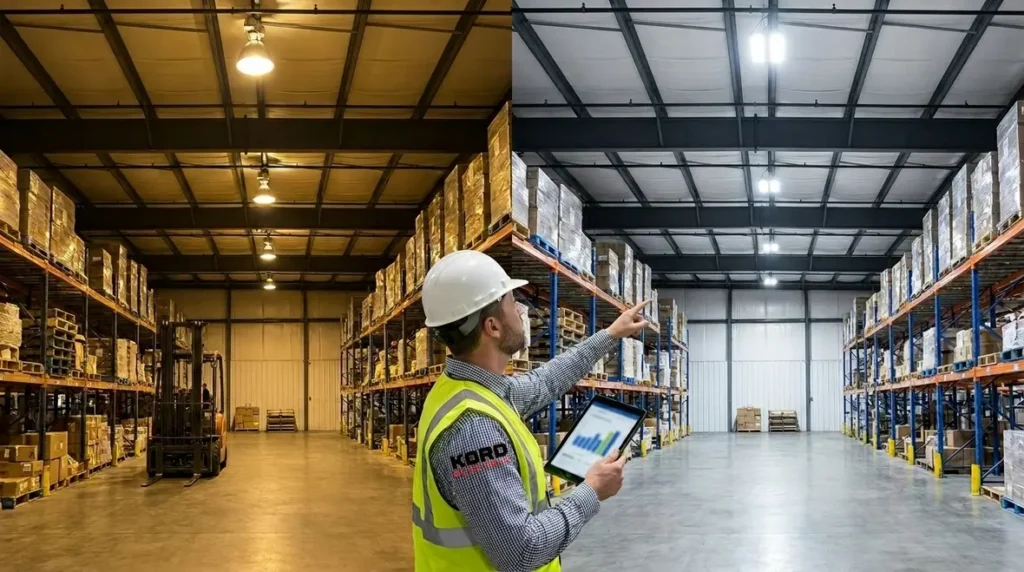
Most commercial sites burn energy in predictable ways. Lights get left on during low traffic hours. Daylight enters through windows, yet interior fixtures keep shining at full output. Motion sensors trigger like they should, but only after someone has already walked past the sensor. And in some buildings, the schedule is set once, then nobody adjusts it when operations change.
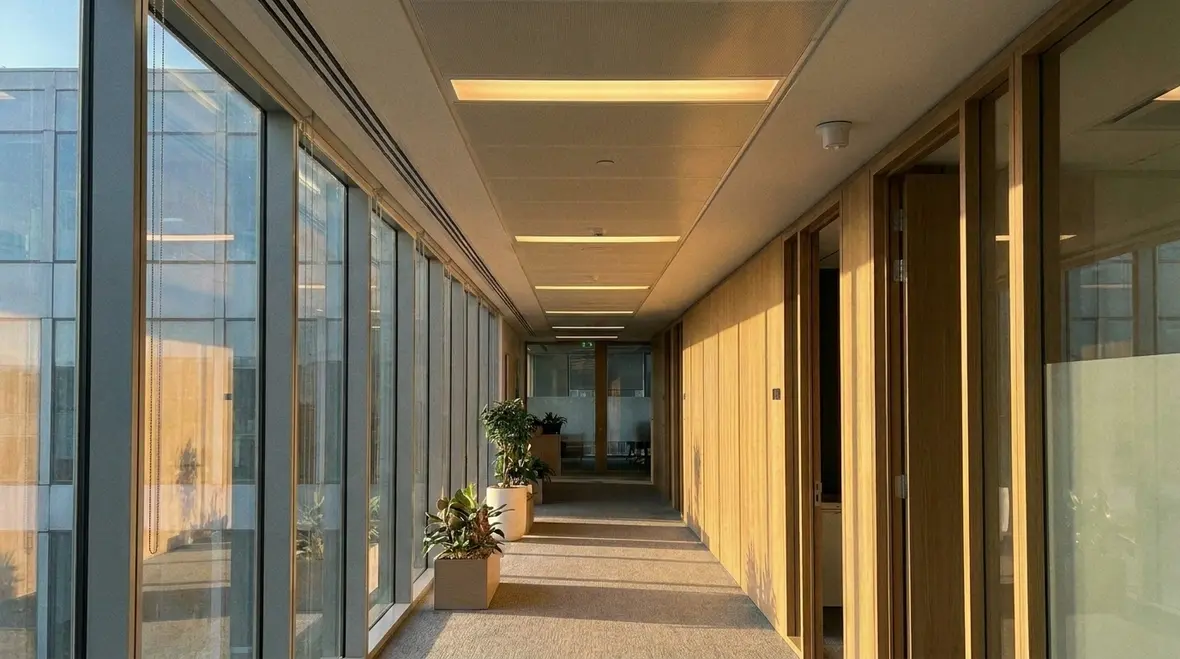
With smart lighting automation for businesses, Kord Electric sets up controls that match how the building actually lives. First, we map lighting zones by function, not by room name. A loading bay, a corridor, and an office suite behave differently. Next, we align schedules with occupancy patterns, such as cleaning cycles, shift changes, and after hours access. Then we add daylight response where it makes sense, so electric light backs off when the sun does its job.
Our technicians also verify that the system does not just cut power, but does it in a safe and comfortable way. They tune sensitivity, manage minimum output levels, and ensure that areas such as stairwells and egress routes meet the rules your facility must follow. In short, the lights do not “flicker,” they adjust. And the building does not feel controlled by a computer, it feels managed like a well run operation.
Key strategies Kord Electric uses for real energy savings
When Kord Electric designs a control plan for major properties, we aim for measurable outcomes. That means we build the system around usage data and operations, not guesswork. Several strategies drive savings while keeping performance steady.
- Zone based control: We divide the lighting into areas that can be reduced independently. This prevents “all or nothing” shutdowns across large spaces.
- Daylight harvesting: We reduce output near windows when natural light is enough, and we keep consistent levels farther inside.
- Occupancy aware scheduling: We combine time schedules with occupancy signals, so lights do not wait for a schedule while still avoiding unnecessary run time.
- Setback and warm up logic: We handle warm up behavior for specific lamps and manage minimum levels to keep comfort without wasting energy.
- Demand aware behavior: In some sites, we coordinate lighting reduction with facility energy management so the building stays within limits.
To keep everything clean and reliable, our expert service staff tests scenes, checks sensor placement, and validates coverage. Also, they document what each zone does and why, so your team can operate the building confidently. If someone ever asks, “Why did the lights dim there,” we do not shrug like a mystery novel. We explain the logic, and the building team can confirm it matches reality.
Designing controls that fit your building, not the other way around
Here is where many installs stumble. Some systems focus on the hardware and skip the building context. That is like buying a great suit and refusing to tailor it. Kord Electric approaches commercial and industrial facilities as unique systems with unique patterns.
We start by learning how the space functions. We ask about shift schedules, cleaning crews, after hours access, and how staff use each area. We also consider maintenance habits and how your team reacts to changes. Then we plan the control sequence: what happens at start of day, during peak operation, and during partial occupancy.
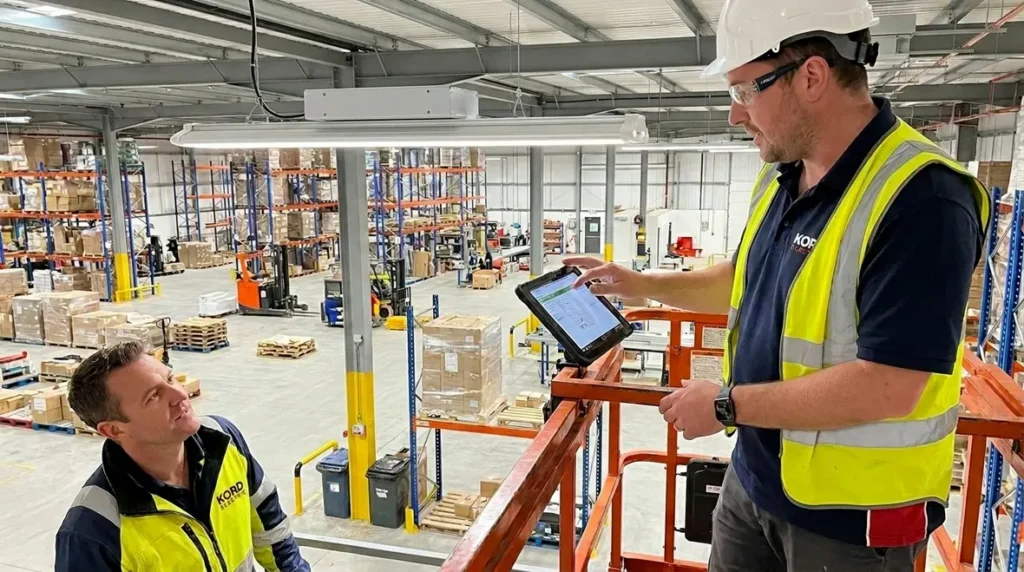
Next, our technicians handle the practical details that matter. Sensor mounting height, field of view, reflective surfaces, and airflow patterns all influence how occupancy detection behaves. We pay attention to glare risk and light quality, because savings should not come at the cost of a space that feels harsh or unsafe.
Finally, we commission the system with your operations in mind. Instead of a one time walk through, we run scenario tests. We confirm that daylight response does not over correct when clouds pass. We validate that corridors and shared spaces maintain consistent levels. And we verify that emergency and life safety requirements stay intact. This process makes the difference between a “smart” system and a system that actually performs after installation.
Typical ROI drivers for warehouses, offices, and mixed use industrial sites
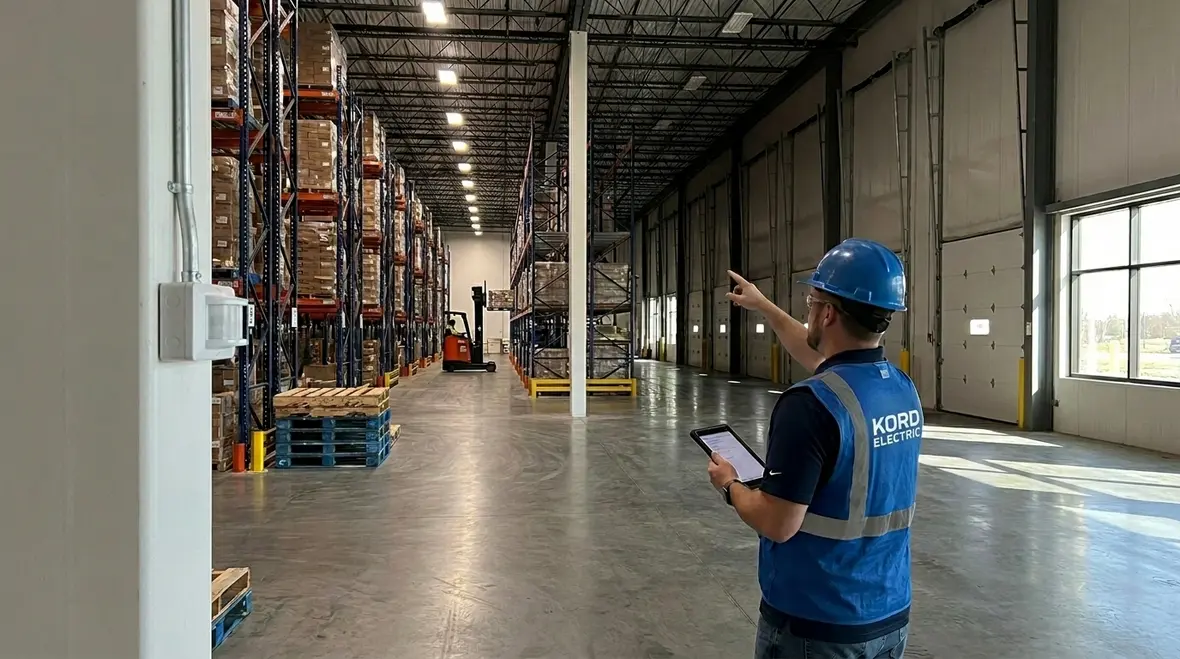
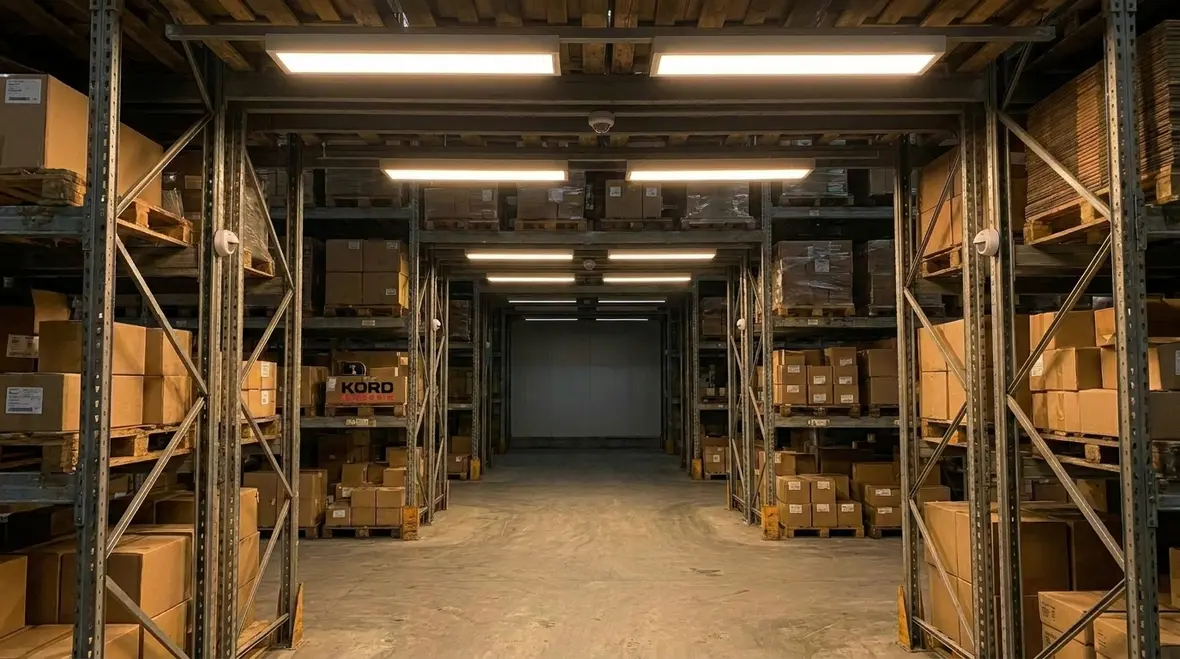
Energy savings come from several layers, and different facilities benefit in different proportions. In warehouses and distribution centers, big gains often come from occupancy control and scheduling. Many of these sites have large areas that stay underlit for a portion of each day. Additionally, lighting in aisles often gets left on longer than needed. Smart lighting automation for businesses addresses that by reducing output based on actual presence and time patterns.
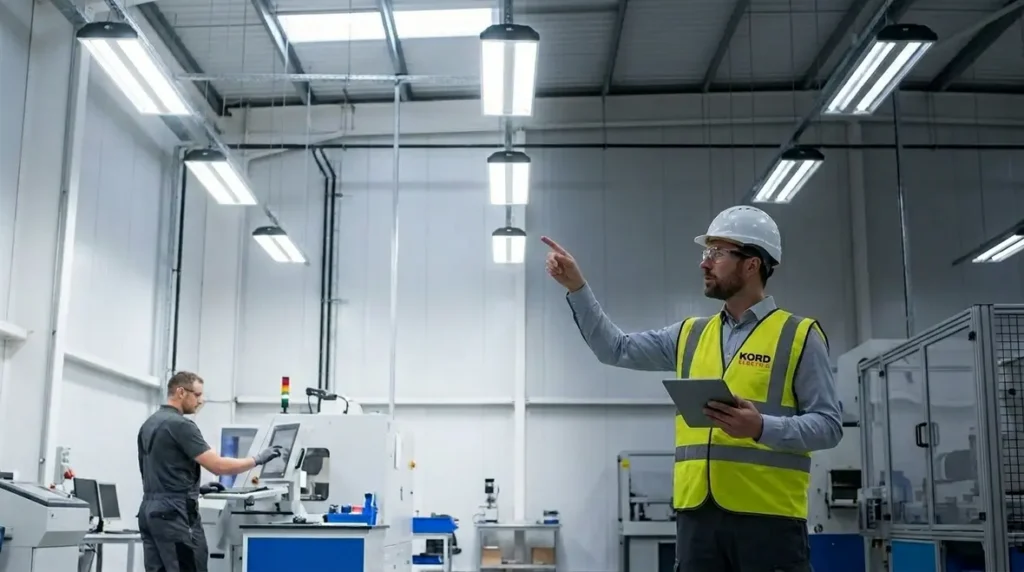
In office environments, daylight harvesting and zone control often drive results. People do not walk around every second, but lights still run everywhere at uniform levels. When the system supports dimming near windows and maintains comfortable output in interior zones, it reduces energy and keeps visual comfort stable.
For mixed use industrial buildings, Kord Electric often sees value from the ability to manage different schedules across zones. For example, loading areas may need different behaviors than administrative spaces. Instead of applying one schedule to everything, we align control logic with each operational area. That also helps property managers explain performance to stakeholders without sounding like they are reading from a control system manual written in ancient Greek.
We also help clients think beyond the first bill. Better control can reduce lamp and fixture wear when applicable, and it can support maintenance planning. Plus, a well tuned system reduces nuisance overrides, which means fewer “manual fixes” that quietly erase savings.

Integration, maintenance, and why our technicians explain everything
Commercial sites rarely run on lighting alone. They often include energy management platforms, access control, HVAC scheduling, and building monitoring. That means Kord Electric designs smart lighting automation to work within the facility’s broader setup, so it does not become a separate island of confusion.
Our expert service staff focuses on integration and clarity. They review what the building already uses and then recommend the approach that fits. Sometimes that means coordinating with existing building management systems. Other times, it means setting up simple controls that your team can operate without calling us every time a schedule needs adjustment.
Maintenance also matters. Sensors and controls need occasional checks to ensure coverage and performance stay correct as furniture moves, partitions change, or warehouse traffic patterns shift. Therefore, our technicians plan commissioning and post installation verification steps that confirm the system stays stable. We also train facility stakeholders so they understand how to adjust zones, how scenes work, and what to do if operations change.
And yes, we keep explanations calm and practical. We do not treat your team like they should love firmware updates. We explain what the system does, why it does it, and how to keep it working. When your people feel informed, the system gets used correctly, and savings stick around.
For teams exploring broader automation strategies, resources like Kord Electric’s recent guide on automated lighting control benefits for facilities and the California Commercial Title 24 Lighting Compliance Guide help connect smart lighting automation for businesses with code requirements and long term performance planning.
Smart lighting automation for businesses: steps to a smooth commercial rollout
Clients often want to know what happens after the first conversation. Kord Electric follows a clear process designed for major properties and industrial facilities.
- Site review and zoning plan: Our technicians evaluate layout, fixture types, and usage patterns, then define zones that match how the building functions.
- Control design: We select dimming, occupancy logic, daylight response, and scheduling rules for each space type.
- Installation with minimal disruption: We plan work so operations keep moving, and we coordinate access in active buildings.
- Commissioning and tuning: We test scenes and validate sensor coverage, then adjust for comfort and performance.
- Training and documentation: Our expert service staff walks your team through operation, adjustments, and best practices.
Because we work on commercial and industrial sites only, we understand the constraints that matter: safety requirements, downtime limits, and accountability. Then we help your team move forward with confidence.
If you are planning controls alongside a broader retrofit, Kord Electric’s Commercial Lighting Upgrade Cost Guide can help you compare investment, savings, and timelines so smart controls and LED upgrades move forward in a coordinated way instead of as separate projects.
Smart lighting automation and broader electrical support across Los Angeles County
Smart lighting automation for businesses works best when it is part of a cohesive electrical plan. For facilities across the region, Kord Electric’s Los Angeles County commercial and industrial electrical services portfolio supports everything from panel work and preventive maintenance to complex control projects. When lighting automation ties into a stable, well maintained electrical backbone, buildings gain smoother operations, better reliability, and fewer surprise shutdowns.
FAQ about smart lighting automation for commercial facilities
Ready to lower your energy costs with smarter control?
Kord Electric can design and install a lighting control approach built for your commercial and industrial facility, not a one size plan. Our technicians and expert service staff tune zones for comfort, commission the system with real scenarios, and explain everything so your team can operate it confidently. If your lights run too long, if daylight is being wasted, or if schedules do not match how the building works, now is the time to take control. Reach out to us for a site review and a practical path to lower energy bills.
Whether you are starting with a basic control upgrade or pairing smart lighting automation for businesses with a larger electrical project, our team can align design, installation, and maintenance so you see predictable savings instead of guesswork. A well tuned control system turns “who left the lights on” into “the system already handled it,” while your staff stays focused on operations.