Manager’s Guide to Troubleshooting Common Office Electrical Issues
When we spot troubleshooting electrical issues in office problems, we do not treat them like mysteries. We treat them like signals from equipment that is trying to tell us, calmly at first, then louder later. In commercial and industrial facilities, small defects can turn into downtime, safety risks, and expensive overtime. That is why our team at Kord Electric helps managers respond fast, document well, and restore power without guessing.
Throughout this guide, we explain how to troubleshoot common electrical headaches in major property buildings, step by step. Also, we have a habit of making sure our technicians explain what they see in plain language, so facility managers are never left wondering, like a meeting invitation that never ends.
Start With the Symptoms, Not the Swapping
First, we collect the story the building is telling. Then we verify it. Managers often want to jump straight to “swap the part,” because that feels productive. However, when we handle troubleshooting electrical issues in office tasks, we start with the symptoms: what changed, when it changed, and what loads were running.
Our expert service staff recommends a short checklist before anyone opens a panel. We ask: did the problem start after a tenant move, a generator test, a seasonal HVAC change, or a building management software update? We also ask whether the issue shows up during business hours only, during weekends, or after storms and power quality events.
After that, we note these details:
- What exactly failed, and what still works
- Any breaker trips, alarm messages, or warning lights
- Whether the issue is one floor, one wing, or the whole building
- Sounds, smells, or heat at outlets, panels, or motor starters
Once we capture the pattern, the fix becomes clearer. In other words, we reduce random actions and increase confidence. And yes, we know “confidence” is not measurable on a multimeter, but it prevents the kind of expensive mistake that makes people whisper in hallways.
Verify Power Quality and Basic Safety First
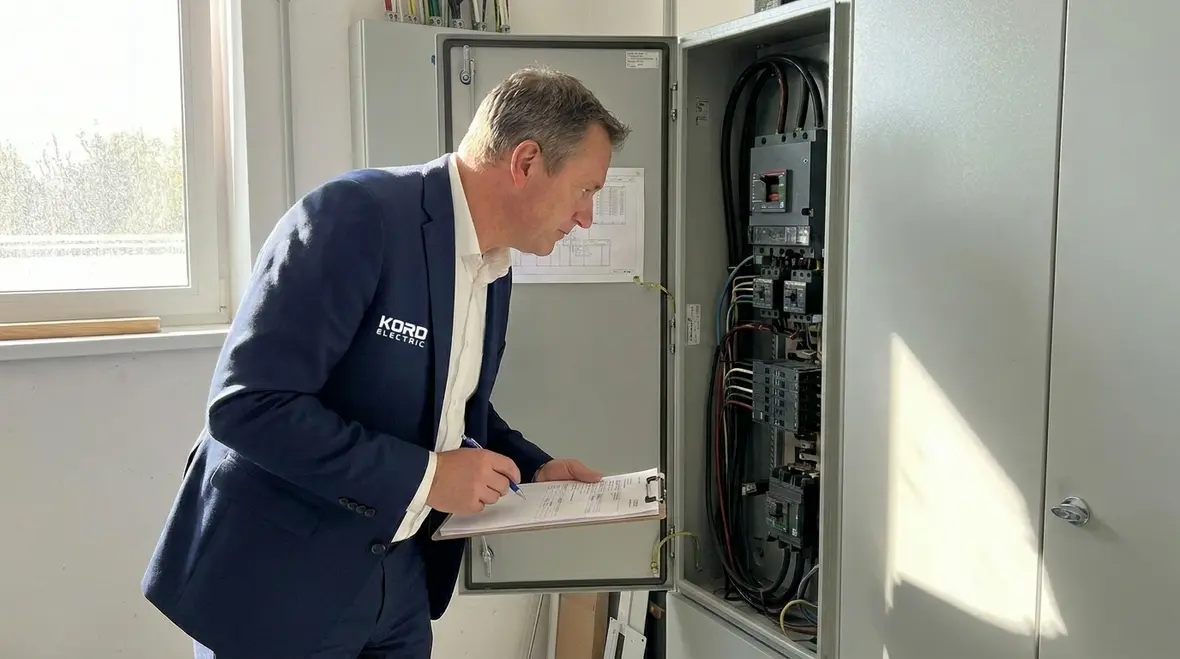
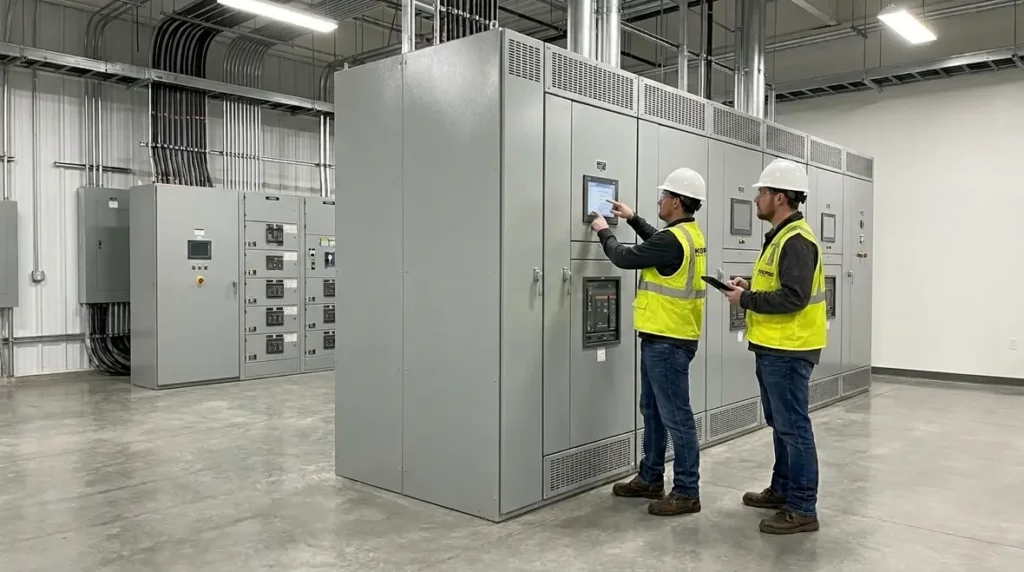
Next, we confirm the basics, because safety comes before troubleshooting. We keep the area clear, we respect lockout and tagout steps, and we avoid opening equipment unless we truly need access. Then we check for obvious issues like loose conduit runs, water intrusion, corrosion, and signs of overheating.
For power quality concerns, we look at voltage stability, frequency stability, and any repeat events. If a manager reports flickering lights or periodic equipment resets, we treat it as a quality problem until proven otherwise. In commercial and industrial facilities, this can point to upstream issues like utility fluctuations, transformer problems, or a failing electrical distribution component.
Our technicians often explain it like this: if multiple circuits act weird at the same time, the building supply is usually the suspect. If only one area behaves differently, the issue often lives locally in a feeder, distribution panel, or branch circuit.
Also, we never ignore grounding and bonding. Poor grounding does not just cause nuisance alarms. It can create unsafe touch potentials and damage electronics. So we verify continuity and inspect connections as part of the early steps.
Common Office Electrical Faults Managers See Every Week

Now we move into practical scenarios. Most facilities run into the same recurring faults, just with different costumes. And if you have ever watched a detective show where they argue for an hour before checking the simplest clue, you already understand why we structure our checks.
1) Breakers tripping or nuisance trips
When breakers trip, we determine whether it is an overload, a short, a ground fault, or a fault caused by moisture or damaged insulation. First, we check if the trip occurs at a predictable load event like elevator operation, cleaning schedule, or after a specific floor’s HVAC cycle starts. Then we compare breaker ratings, wiring condition, and load balancing.
Our expert service staff also reviews whether resets happen too quickly. Repeated resets can worsen a developing fault. We treat this as a “pause and diagnose” situation, not a “reset and pray” situation. That last part is a joke, but only a small one.
2) Lights flickering or dimming
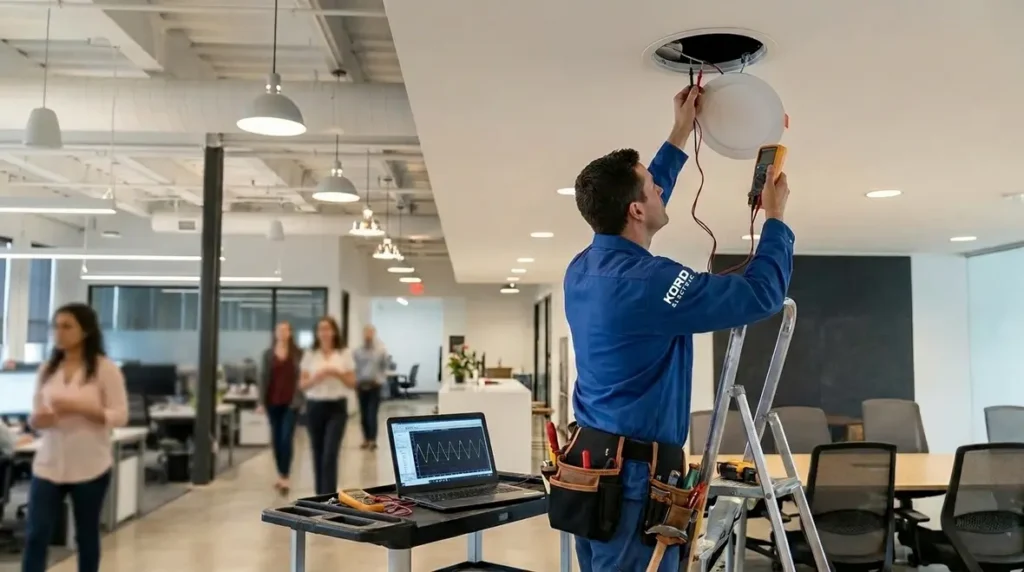
Flicker can come from loose connections, failing ballasts, unstable supply, or motor starts causing voltage dips. We identify whether the flicker affects lighting only or also reaches outlets, computers, or access control systems.
If only fluorescent or LED drivers misbehave, we inspect driver quality, connections, and ambient heat. If dimming follows motor start, we look at feeder capacity and distribution impedance. In major property buildings, this often ties to how loads share circuits.
3) Outlets not working in one area
If outlets fail on one floor or one zone, we focus on the downstream circuit. We check for GFCI tripping where applicable, reset conditions, and visible damage from recent work. We also verify whether the receptacles share a common feed and whether any junction boxes or device backplates show heat marks.
Our technicians explain that sometimes the “problem” is a device at the end of the line that becomes the first liar. Power can appear to be present, but the circuit path is compromised.
4) Motors and HVAC electrical issues
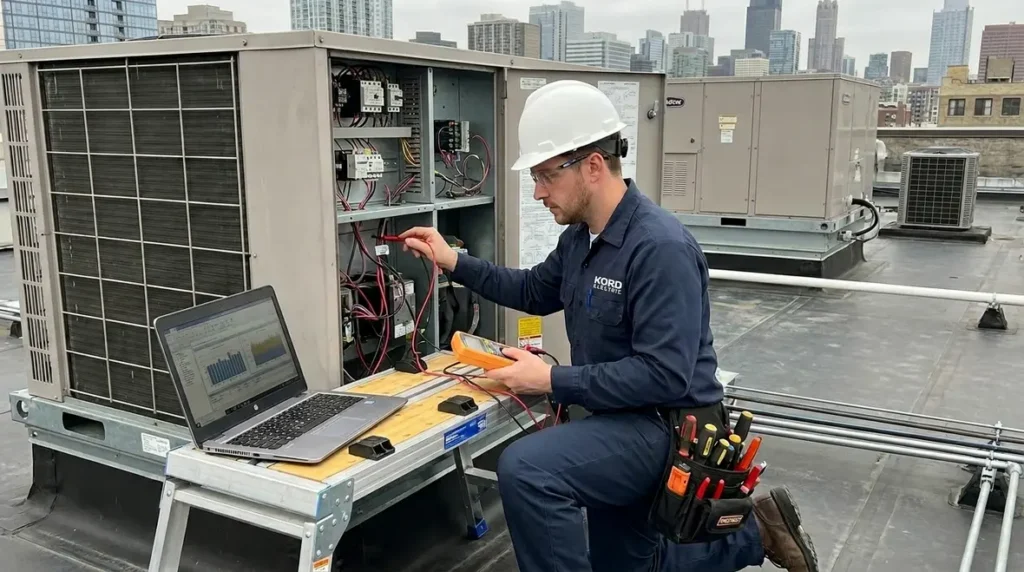
Commercial and industrial buildings rely on motors for pumps, fans, compressors, and HVAC. If a motor starter fails or a unit trips repeatedly, we look at contactors, overloads, wiring terminations, and control circuits. We also inspect for vibration or misalignment that can stress electrical components.
When vibration increases, electrical connections can loosen over time. Then performance drops, and trips follow. It is not magic, it is physics with a schedule.
Document Findings So the Next Technician Does Not Rebuild the Wheel

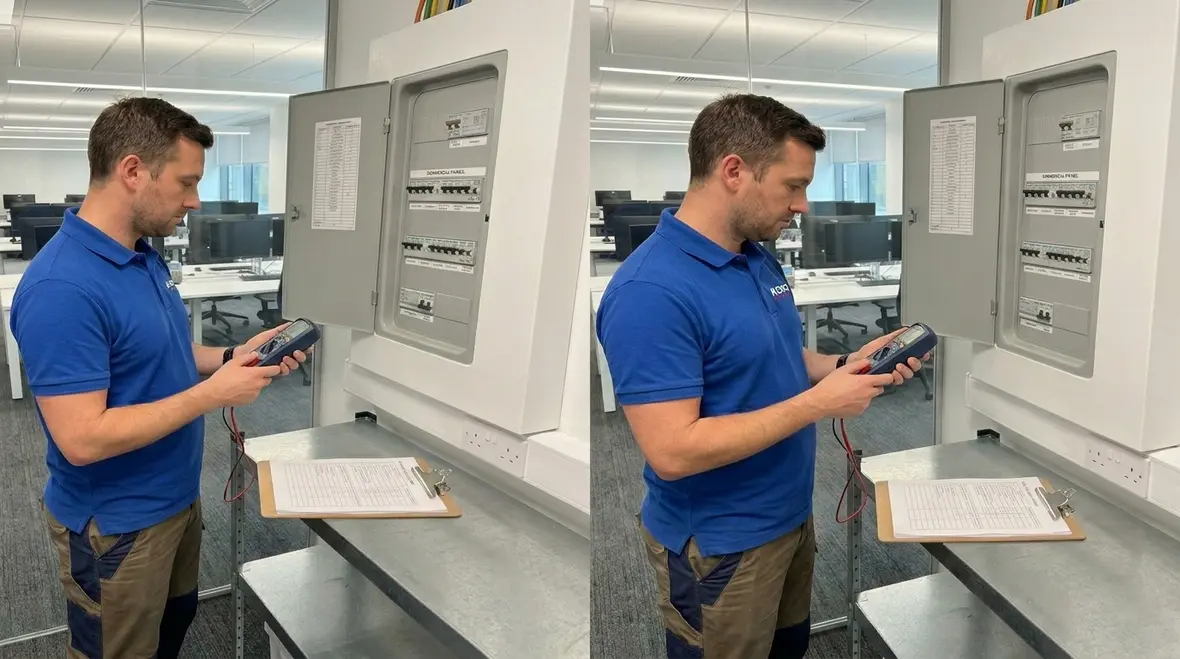
Then we talk about documentation. Managers often think documentation is paperwork. In practice, it becomes a map for faster service. Our approach is simple: capture dates, circuit names, breaker numbers, measured readings, and what changed before the issue began.
When our technicians arrive, they ask for the same information, because it reduces diagnostic time. For example, if a facility notes that a particular panel began showing heat staining after a recent maintenance event, our service team can prioritize inspection of that route and those terminations.
We also recommend tracking recurring events. If a breaker trips every Tuesday at 10:00, something in the weekly routine is pushing the system. Once we know that, the fix becomes targeted instead of broad.
To keep it clean, we suggest this minimal log format:
- Date and time of event
- Location and equipment tag names
- Breaker and device status before and after
- Observed symptoms and any alarms
- Measurements taken and results
Even better, many facilities pair this habit with a structured maintenance plan. For larger properties and industrial environments, documenting fault history makes it much easier to align with programs like Kord Electric’s dedicated electrical preventive maintenance services, where inspections, testing, and reporting are already organized for long term reliability.
When to Escalate: Smart Decisions for Facility Leadership
Some electrical issues deserve quick action. Others require careful escalation. As we guide managers, we focus on decision points that protect people and property.
Escalate immediately when there are signs of arcing, burnt insulation, smoke, repeated breaker failure without a clear cause, or water intrusion near electrical gear. Also escalate if critical systems fail, such as access control, life safety equipment, or essential mechanical systems in a major property building.
We tell managers: if you cannot safely verify the root cause, you do not “continue testing for fun.” Instead, you engage qualified electrical service staff. Our team at Kord Electric works specifically with commercial and industrial facilities and major property buildings, so we align our troubleshooting to real operational constraints and uptime goals.
This is also the point where facility leaders often step back and look at the broader system. For organizations that want to move from reaction to prevention, Kord Electric’s commercial and industrial electrical maintenance plans give managers a structured way to manage risk before it shows up as a shutdown or a hallway full of worried tenants.
Finally, we plan next steps. After we identify a fault, we recommend corrective actions and preventative checks, because the best time to stop a repeat failure is before it becomes a monthly tradition.
Prevent Future Failures With a Maintenance Mindset
After the immediate issue ends, we shift to prevention. That means inspecting terminations, checking torque where applicable, reviewing load profiles, and confirming that electrical distribution remains matched to the building’s current usage. Commercial buildings change. Tenants add equipment. Storage gets rearranged. HVAC schedules shift. Then the electrical system starts to carry new demands.
Our technicians help property managers create a practical maintenance rhythm. For example, we can prioritize inspections for panels with known thermal issues, circuits with intermittent faults, and feeders serving critical loads. We also review whether protective devices and labeling remain accurate, because wrong labels waste time during the next emergency.
In short, we treat troubleshooting as part of a larger cycle: observe, repair, validate, and improve. That way, the building does not keep “performing” the same electrical drama every season.
For facilities that want a deeper, program level approach, many managers connect their fault history and inspection results directly into Kord Electric’s electrical preventive maintenance offerings. By combining structured PM with real world troubleshooting data, property teams can prioritize upgrades, plan budgets, and handle compliance with fewer surprises.
If your property spans multiple buildings or includes high priority spaces like data rooms, production areas, or medical facilities, Kord Electric can also coordinate with other focused service lines. Whether it is specialized lighting work, panel upgrades, or planning for EV infrastructure, the same disciplined troubleshooting mindset applies across the board.
For managers across the region who need comprehensive coverage, Kord Electric’s Los Angeles County electrical services provide a centralized path to handle everything from routine maintenance to complex troubleshooting in major office and industrial campuses.
FAQ
Final Thoughts From Kord Electric
When managers handle electrical problems with a method, they protect people, reduce downtime, and prevent repeat failures. We help property teams move from symptoms to safe verification, then to targeted repair and prevention. Our technicians explain what they find in clear terms, so your decisions stay confident, not chaotic. If you want support with commercial and industrial facilities or major property buildings, contact Kord Electric today. We will troubleshoot, document, and plan next steps that keep your building steady.
Whether you are responding to a single nuisance trip or coordinating a larger strategy for an entire campus, Kord Electric’s commercial team is built to support serious facilities. From structured maintenance programs to project based upgrades, our specialists help you turn troubleshooting electrical issues in office environments into clear, repeatable steps instead of recurring surprises.
If you are planning broader improvements alongside your troubleshooting efforts, you can also explore related resources such as our guides on commercial rewiring, solar integration, and maintenance planning, all designed to give facility leaders practical insight into how electrical decisions affect uptime, safety, and long term cost.