Title 24 Lighting Compliance Guide for Commercial
At Kord Electric, we build and maintain commercial and industrial lighting systems, and we take compliance seriously because cities and utilities do not care about our “good intentions.” In this article, we use our title 24 lighting compliance guide to help property owners, facility managers, and contractors understand what California requires for many commercial properties. Then we translate that into practical steps you can follow during upgrades, new installs, and tenant improvements. If you have ever stared at a lighting sheet long enough to start seeing mirages, you are not alone. Our job is to slow everything down, clarify the rules, and keep your project moving without surprise delays.
Navigating the basics for commercial and industrial lighting projects
Third party rules are never “just paperwork,” and Title 24 is no exception. Our technicians treat it like a design constraint that shapes what you can install, how you control it, and how efficiently it operates over time. Because commercial and industrial spaces differ from offices, retail, warehouses, and campuses, we plan around the actual use of each area, not a generic template.
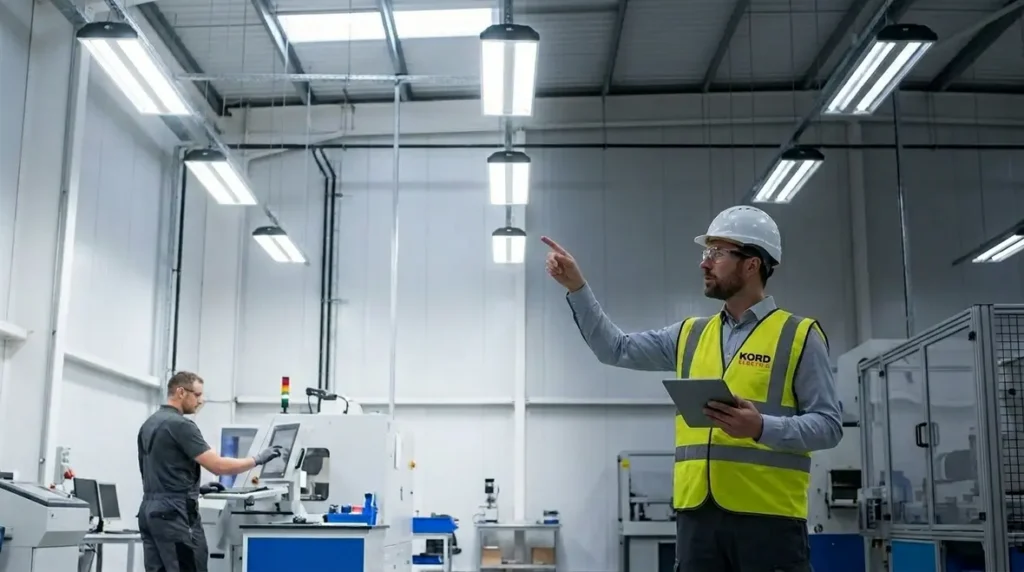
In practice, the title 24 lighting compliance guide helps us align equipment selection and control strategies with the performance paths available under current requirements. That means we pay attention to lighting power, zoning, motion and scheduling controls where they apply, and how fixtures respond when occupancy changes. Also, we document decisions so the final system is supportable if anyone asks later.
And yes, we do use a bit of humor in the field. When someone says, “We will deal with Title 24 later,” our service lead usually replies, “Later is when the inspection clock starts yelling.” Then we calmly get the project back on track.
What the title 24 lighting compliance guide covers in real life
When Kord Electric builds a compliant design, we focus on the pieces that actually determine whether a system passes. This is where our team takes the title 24 lighting compliance guide and turns it into a repeatable process, from early coordination to final verification. Instead of treating compliance like a last day scavenger hunt, we establish clarity up front.
Typically, our approach covers these areas:
- Lighting power and efficiency: We select fixtures and controls that meet the allowed performance and do not overshoot on watts.
- Control requirements: We plan for scheduling, dimming, and occupancy sensing when the space and use case calls for it.
- Zones and switching: We group spaces logically so controls match how people actually move and work.
- Documentation: We keep design notes and cut sheet details so the project team can defend the choices.
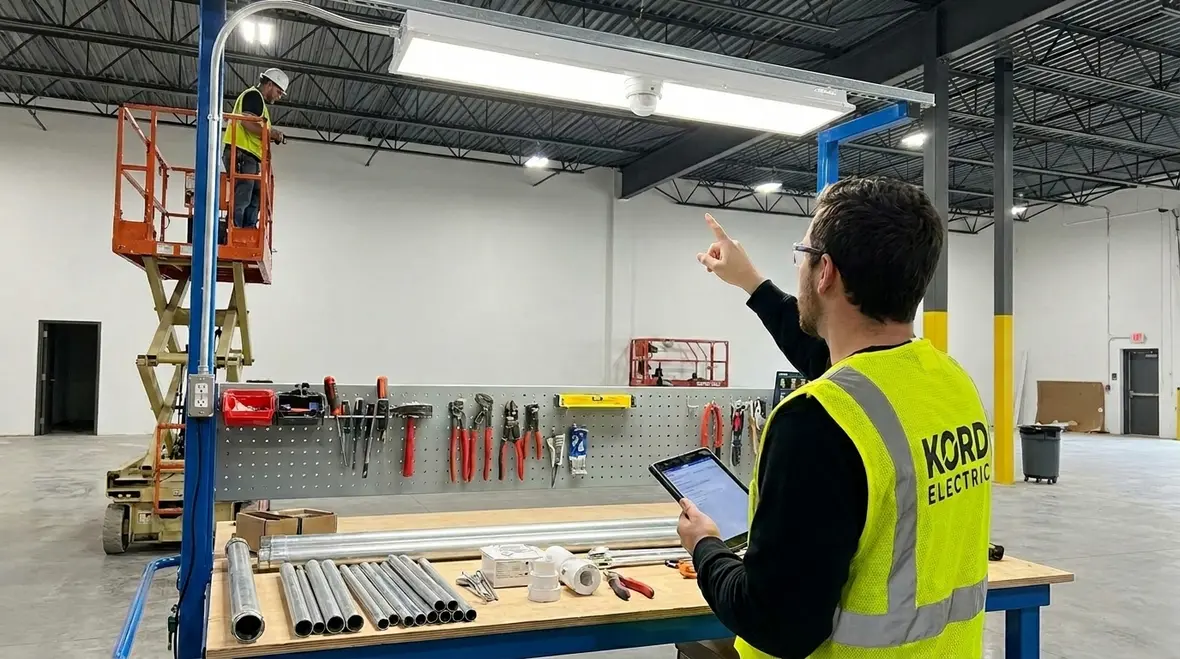
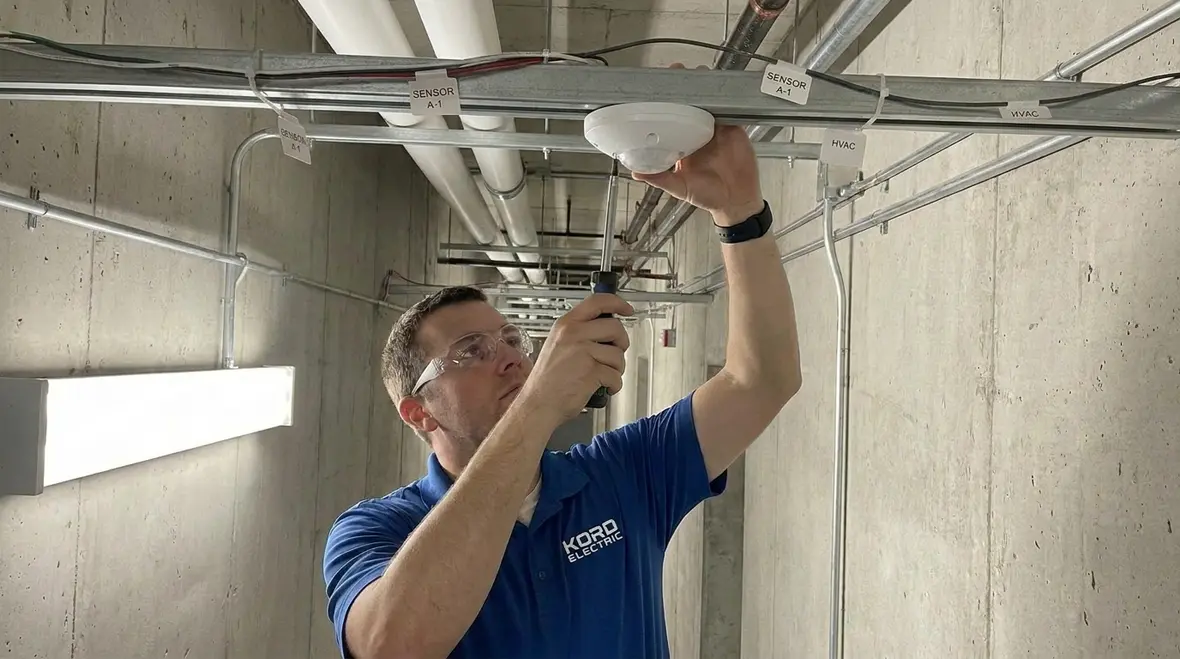
Additionally, we explain how those requirements show up during installation. For example, a room might “look fine” but still fail if controls do not match the plan. Therefore, our technicians coordinate with electrical crews to verify wiring paths, sensor placement, and programming steps before walls close up.
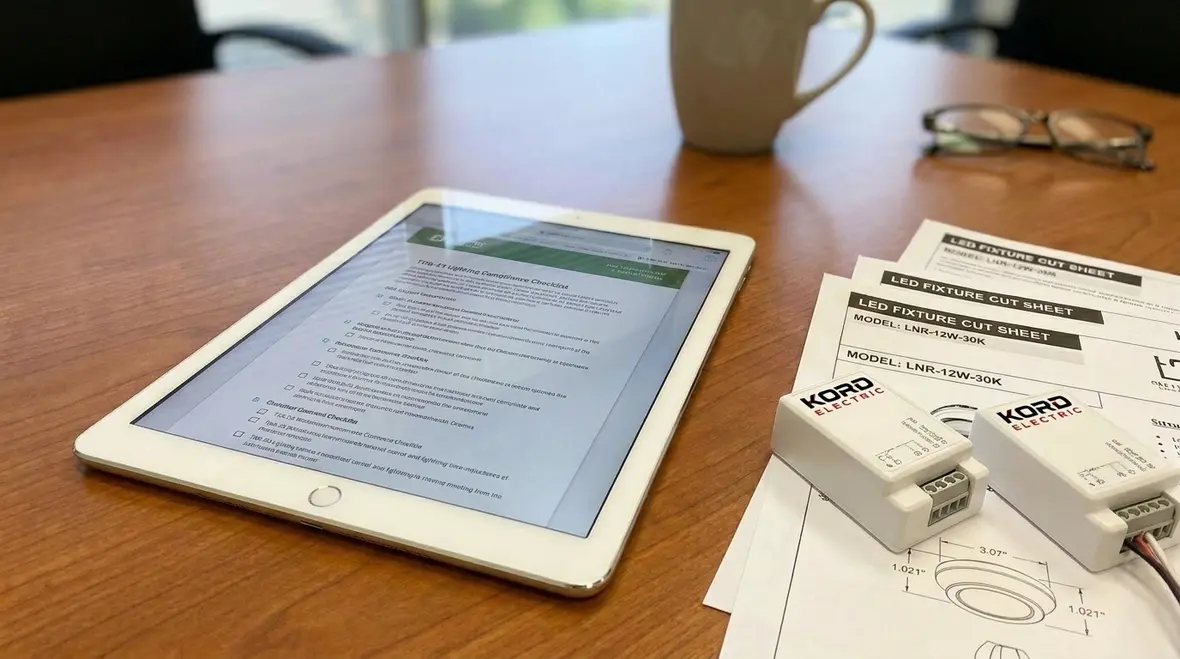
For property teams that want more context on how code requirements show up across different spaces, our article on commercial lighting compliance in California digs even deeper into lighting power limits, controls, and documentation steps that connect directly to Title 24 expectations.
How we assess your facility before we specify fixtures
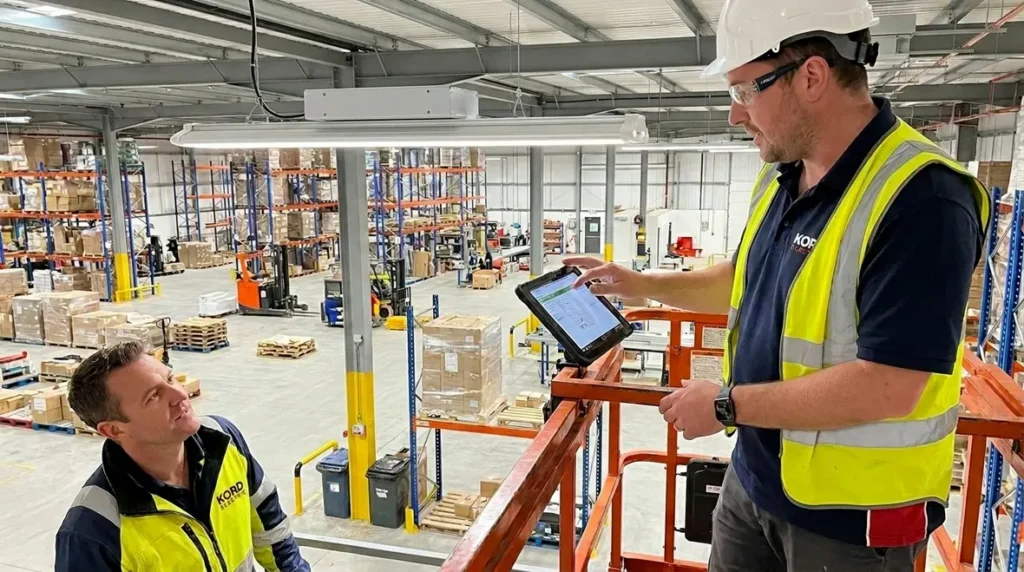
We do not start with a shopping list. We start with the building. Our expert service staff walks the space, reviews usage patterns, and confirms constraints like mounting heights, ceiling type, daylight exposure, and existing electrical capacity. Then we compare what is there today against what the space needs tomorrow.
For many commercial and industrial facilities, the biggest compliance risks come from assumptions. Someone looks at a warehouse and says, “It is one big room,” when in reality there are distinct zones for staging, aisles, and workstations. Someone else assumes the same control approach fits every tenant suite, even when schedules and occupancy vary. We avoid those mistakes by treating each area as its own lighting story.
To keep the process calm and fast, our team also checks these items early:
- Existing controls: We identify what still works and what conflicts with the compliance path.
- Future operating schedules: We confirm when lights should run, dim, or shut off based on actual operations.
- Maintenance access: We plan for safe service so sensors and drivers stay functional.
And just like a good playlist, the right plan depends on the room. The moment we understand how the facility behaves, specifying compliant equipment becomes straightforward. For teams comparing project options, our commercial lighting upgrade cost guide is also helpful for connecting Title 24 aligned designs with realistic budget ranges.

Design choices that prevent failed inspections
Inspections fail for predictable reasons, and our technicians build around those weak points. The goal is not to “game” the system. The goal is to implement lighting controls and efficiency measures that match the compliance intent, so the inspector sees a clean, consistent installation.
First, we coordinate zoning and control logic so the physical layout matches the design. Then we verify that devices are installed as intended, including sensor angles, coverage areas, and time settings. After that, we check that dimming and scheduling sequences behave correctly across scenarios like daytime occupancy and after-hours shutdown.
Second, we make sure the fixture selections align with the approved performance path. A common project mistake is mixing parts that look similar on paper but behave differently in operation. We handle that by tracking cut sheets and confirmation details from the start, not after the order arrives.
Finally, we prepare teams for handoff. We do not toss compliance documents into a folder and hope for the best. Instead, our expert staff explains what the controls do, how operators can use them, and what settings should never be “adjusted for convenience.” Convenience is great, unless it knocks the system out of compliance.
Commissioning, training, and long term performance
Compliance does not end at startup. Over time, lighting controls drift, schedules get changed, and maintenance teams sometimes replace components without realizing they must match the original design intent. That is why our process includes commissioning and practical training for the people who run the building.
During commissioning, we test controls under real conditions. We verify occupancy response, confirm that daylight behavior works as required when applicable, and confirm that dimming curves behave as expected. Then we document the results so the facility can repeat success during future service.
Afterward, our team trains the right operators. We explain the system in plain language. For example, we show how scheduling works, what the override modes do, and what “fault” indicators mean so they do not get ignored until something feels “off.” In other words, we help your building avoid the classic problem: lights that never turn off because nobody can find the settings menu.
Because commercial and industrial facilities run on uptime, we keep the focus on stability. We want your lighting to perform day after day, and we want your team to understand it without needing a decoder ring. Pairing this work with an electrical preventive maintenance program also helps keep Title 24 compliant systems operating smoothly long after the initial inspection.

Dual column planning checklist for your next commercial lighting upgrade
To keep projects moving, we often use a practical checklist that teams can share. Below, we lay out the items we confirm early and the actions we take during installation and verification.
|
Pre install checks
|
Install and verification
|
Additionally, we coordinate with general contractors and facilities teams so decisions do not bounce between meetings. When everyone understands the same plan, inspections go smoother. And that means fewer late nights, fewer rework calls, and fewer “Why does this one corridor act haunted?” moments.
If your project includes recessed or architectural fixtures, you can layer this checklist with insights from our commercial recessed lighting installation cost guide to balance compliance, performance, and budget before any ceiling tiles move.
FAQ
Ready to make compliance feel manageable?
If you manage or build commercial and industrial facilities, you already know that lighting projects can get complicated fast. Kord Electric helps you move from design intent to verified installation without the last minute stress. Our technicians and expert service staff coordinate early, confirm zones and control behavior, and train your team to keep the system performing. Reach out today for a consult and we will map the best path forward using our title 24 lighting compliance guide, so your project passes with confidence.
For organizations planning multi-site upgrades or broader electrical improvements across the region, our Los Angeles County electrical services provide a structured way to coordinate Title 24 compliant lighting, power quality, and preventive maintenance under one experienced team.