
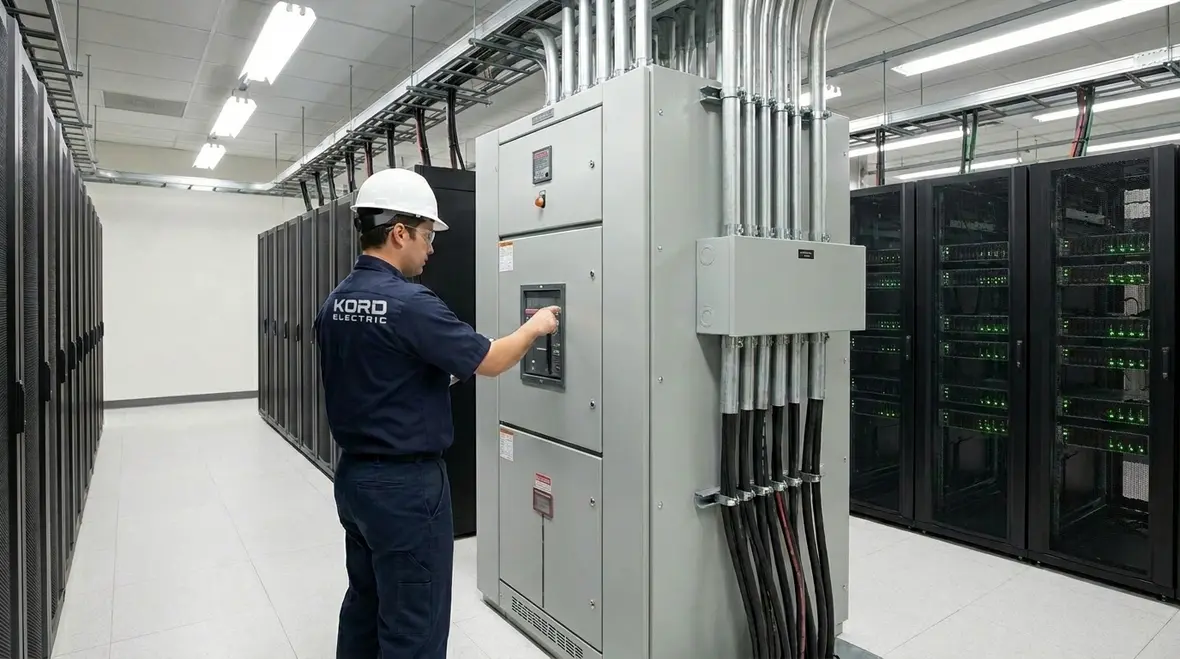
Data Center Power Redundancy for Maximum Uptime
Maximizing uptime starts with data center power redundancy
In commercial and industrial facilities, and especially major properties, we at Kord Electric treat uptime like a promise we keep, not a target we chase. When a critical load depends on steady power, we build systems that keep running even when parts fail. That means designing for data center power redundancy from the very first planning meetings, then validating it with real testing and careful maintenance. And yes, we still plan for the unexpected, because the only thing more reliable than electricity is human confidence right before something goes wrong. Now, let’s walk through how our expert service staff helps customers plan redundancy that performs under pressure.
How we plan redundancy before alarms ever happen
Others often wait for a failure to learn what they need. We do not. Our approach starts with a clear picture of the risk, the load, and the operating rules of the site. First, our technicians review critical circuits, start-up times, and how equipment behaves during transitions. Then we map out which components can be down, for how long, and still keep the facility within safe limits.
To do that well, we align electrical design with operational reality. For example, a switch that looks fine on paper may create an outage during transfer if coordination timing and breaker settings drift over time. Therefore, we plan the whole path from utility source to transfer to UPS to distribution, and we make sure each handoff tolerates real-world timing.
Then we document assumptions. In this phase, our team explains the logic in plain terms, so property managers and facility leaders understand what will happen during a controlled transition. And if someone asks, “What does this mean for downtime?” our experts answer like they are already living the question, because they have.
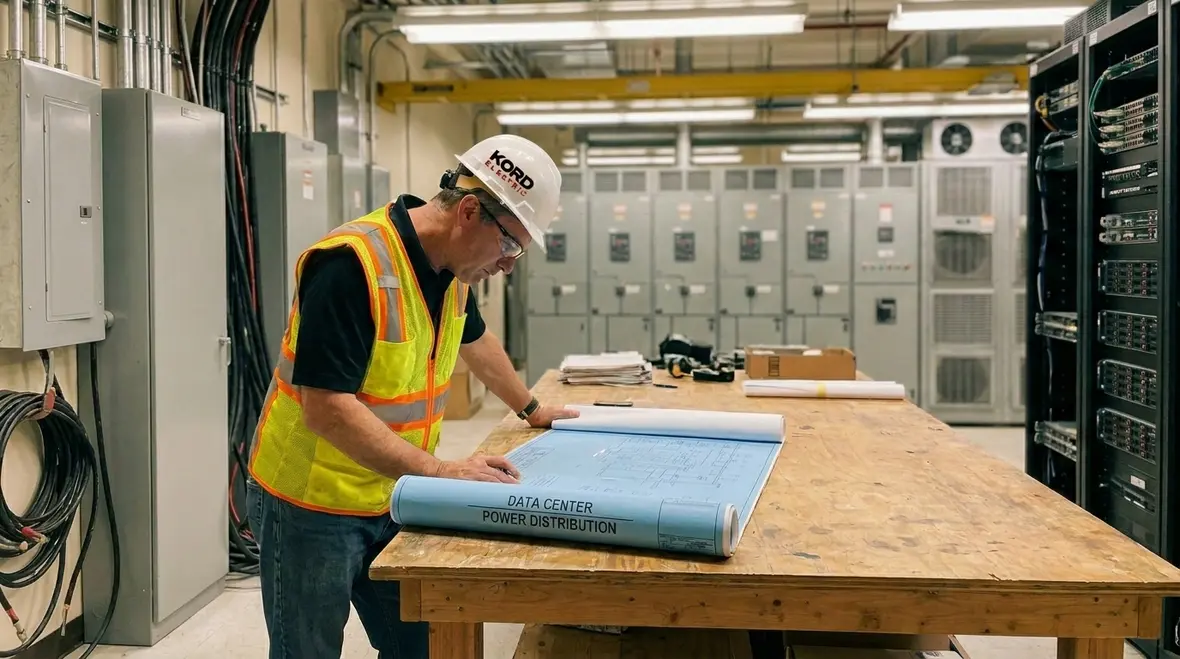
Essential layers of a power system that survives component failure
Power redundancy is not a single feature. It is a stack of protective choices that work together. Typically, we structure the system around multiple supply paths and multiple ways to transfer load. As a result, one failure does not become a cascading event.
We commonly see these layers in a well-planned data center power system:
- Multiple utility feeds or resilient supply routes so the building does not depend on one upstream moment
- UPS architecture designed to carry critical loads through transfer windows
- Transfer equipment that coordinates timing and breaker behavior
- Redundant distribution paths with appropriate protection and labeling
- Generator support with start and stabilization settings that match site requirements
However, the “layers” idea only helps if the system also handles the weak points. So we focus on reliability details like contact condition, maintenance intervals, and correct torque practices. In our field experience, small issues love to hide inside big systems, like a pop song secretly playing in a quiet office elevator.
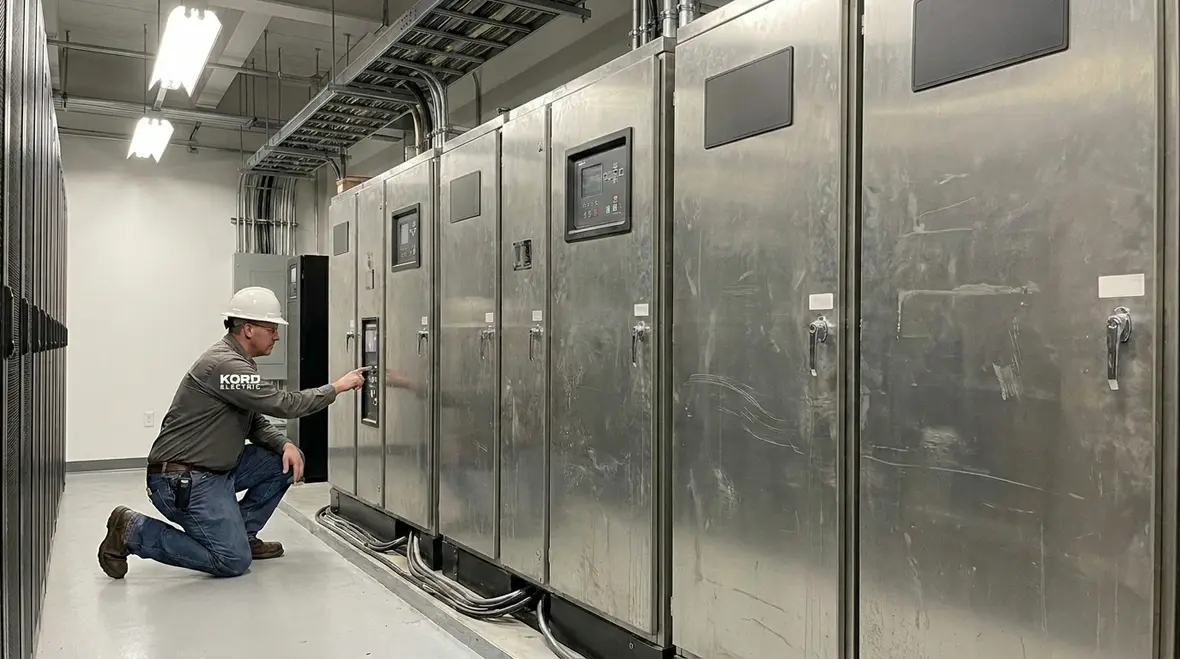
What hidden electrical risks look like in commercial buildings
Even strong designs can get undermined by conditions that people stop noticing. We regularly reference the kinds of hidden electrical risks we highlight in our Kord Electric blog about commercial buildings, including our article on hidden electrical risks in commercial buildings. In that spirit, we focus on failure drivers that quietly reduce redundancy value over time.
For example, insulation breakdown and overheating do not announce themselves politely. Similarly, loose terminations can add resistance, which creates heat, which damages components, which increases the chance that protective devices act differently than expected. And when protective behavior changes, redundancy loses its meaning because transfers do not happen as planned.
Here are the risk categories we actively look for in commercial and industrial installations:
- Terminations and bus connections that show heat stress or loose hardware
- Overloaded feeders that quietly run near limits until a transient becomes the tipping point
- Poor grounding and bonding that can affect protection and fault clearing
- Moisture intrusion that worsens corrosion and tracking over time
- Mis-coordination between protective devices that can cause wider outages
We do not just point at symptoms. Our technicians walk teams through what likely caused the issue and what it means for actual transfer performance. So while the building may still be “working,” our experts help customers see how future transitions could fail the moment the load needs stability most.
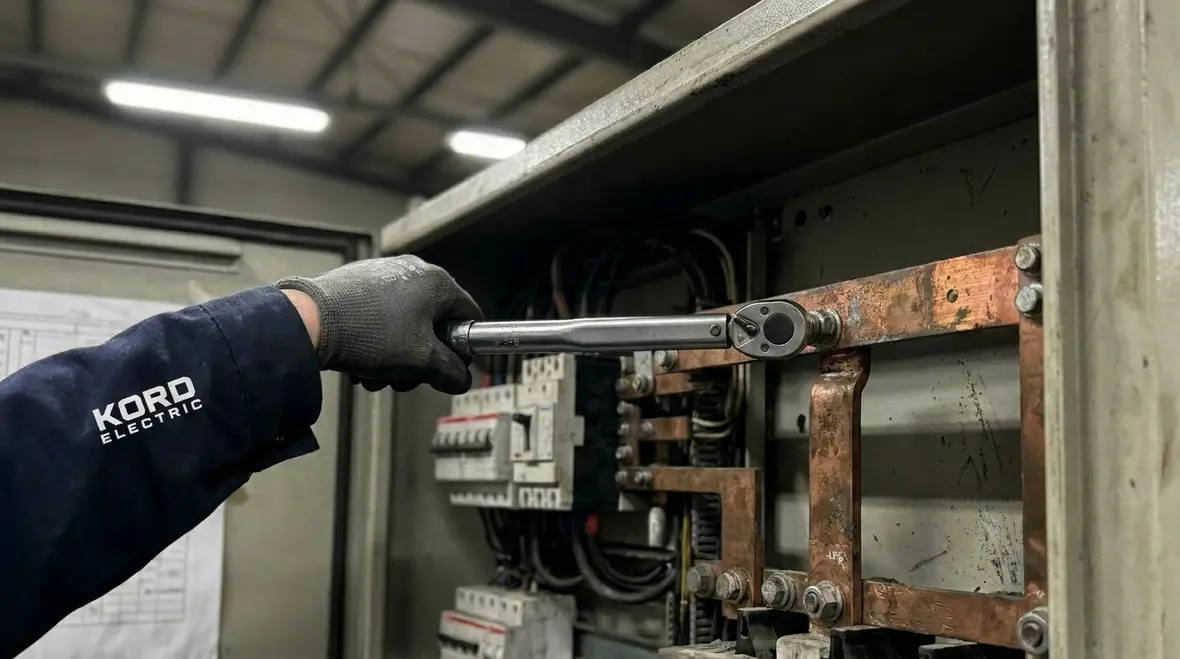
How to reduce the downtime risk during transfers
Transfer events often decide uptime. A redundancy system can exist on paper, yet still produce interruption if the transition sequence is not matched to the load profile. Therefore, we engineer transfer logic so it supports both fast response and safe sequencing.
In practice, we evaluate transition timing, breaker coordination, and UPS ride-through behavior. We also verify that protective relays clear faults without causing unnecessary upstream trips. Additionally, we confirm that the system configuration supports planned maintenance without turning maintenance into surprise downtime.
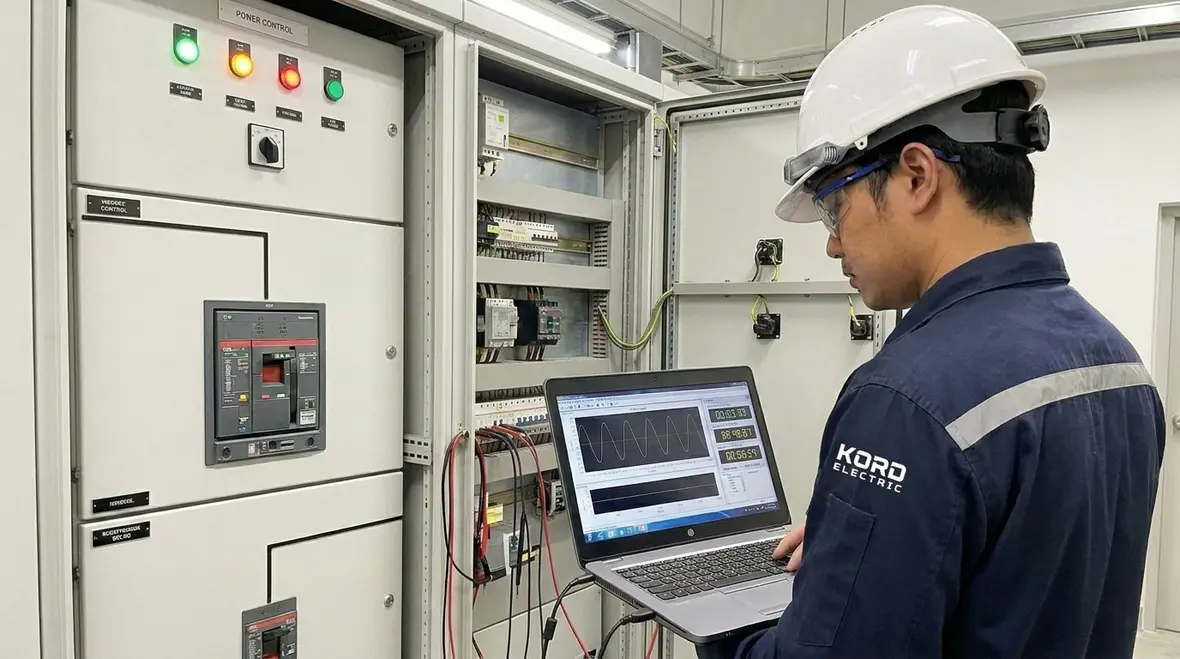
Our expert service staff also verifies operational details that get missed. We confirm labeling, control wiring checks, and the availability of spare components where needed. And we encourage teams to run scenarios during commissioning and periodically afterward, because no one wants to find out what happens during transfer from the worst possible teacher: the outage report.
To keep it simple and real, we want facility teams to understand two things. First, what the system will do in normal operation. Second, what it will do under fault and transition conditions. When our technicians explain this clearly, decision makers can plan maintenance windows and response actions with confidence.
Maintenance and testing that keep redundancy honest
Redundancy planning does not end at installation. Systems drift. Settings change. Connections loosen. Filters load up. Batteries age. That is why we plan maintenance and testing as part of the uptime strategy, not as an afterthought.
Our technicians develop schedules that match the equipment and the consequences of failure. Then we test the system in ways that confirm performance, not just functionality. For example, we focus on verifying that protective devices behave as designed, and that transfer sequences still coordinate correctly after maintenance work. For many facilities, that approach aligns closely with structured programs like our electrical preventive maintenance offerings.
We also treat documentation as a living asset. Therefore, we keep as-builts current and we update operating procedures so staff can run the system correctly. When the maintenance team knows what “correct” looks like, the system stays dependable.
And yes, we still see situations where procedures exist but nobody trusts them. Like a group project where the best student does the work and the rest “collaborate.” We fix that by training teams and explaining the logic behind each step, so the system does not rely on hope.
Training, roles, and response plans for major properties
For commercial and industrial facilities, redundancy succeeds when people execute it. We support this by aligning roles, responsibilities, and response steps with the system design. That includes clear escalation paths, who authorizes switching actions, and how teams coordinate between electrical, mechanical, and operations.
Our approach includes training that focuses on practical decision making. Our technicians explain what indicators matter, what alarms signal a real threat to critical load, and what actions protect the system. Then we help customers set up response plans so the team does not improvise during a high-stress moment.
In major property buildings, these plans must also handle business realities like tenant requirements, life safety coordination, and schedule pressures. When we design redundancy with those realities in mind, power systems become less like a mystery box and more like a tool that people can use confidently.
Designing data center power redundancy for maximum uptime
Data center power redundancy goes beyond keeping servers plugged into a UPS. In the kinds of commercial and industrial environments we serve, critical IT rooms often share infrastructure with production, office, and life safety systems. That means redundancy has to protect the whole power story, not just a single rack.
When we evaluate a facility that hosts data processing or on-site compute, we look at upstream utility reliability, on-site generation, transfer arrangements, and distribution architecture together. Our goal is straightforward: make sure critical loads ride through faults, transfers, and maintenance activities with minimal disruption and clear recovery steps. That mindset is the same whether we’re supporting a modest server room inside a major property or a customer scaling toward full data center operations.
Why data center power redundancy matters even more in hybrid facilities
Many commercial and industrial buildings now host a mix of uses: production lines next to data rooms, logistics operations next to office suites, or multi-tenant spaces that mix standard office loads with heavier equipment. In those hybrid facilities, data center power redundancy is not just a technology conversation. It is an operations conversation about how much downtime the business can tolerate and what happens if a transfer does not go as planned.
We help teams decide where to draw the line between “nice to have” redundancy and “non-negotiable” protection. That often includes separating truly critical IT and control systems from less sensitive loads, defining clear power paths for each, and confirming that redundancy does not accidentally create blind spots. When that work is done correctly, facilities gain confidence that they can handle both scheduled outages and surprise events without scrambling to invent a plan on the fly.
Connecting redundancy with broader electrical strategy
A strong redundancy plan does not live on an island. It ties into preventive maintenance, capital planning, and even budgeting discussions. The same systems that protect your most critical loads also need ongoing inspections, torque checks, and periodic testing. That is why we often connect data center power redundancy conversations with long-term maintenance roadmaps and upgrade strategies shaped around risk, not guesswork.
For some facilities, that roadmap includes addressing voltage stability and power quality issues that could undermine redundancy during real-world events. In those cases, our work on transfer logic and backup systems aligns with broader support for issues like voltage fluctuations, hidden electrical risks, or outdated equipment that no longer matches the building’s actual load profile. The result is a more coherent electrical strategy: redundancy that is not just installed, but actively supported.
If your facility operates in Los Angeles County or anywhere in the surrounding region, it can also benefit from broader, campus-level support through our Los Angeles County electrical services, which are designed for commercial, industrial, and major property portfolios.
FAQ
Final words: let’s protect your uptime with a real plan
If your facility depends on uninterrupted power, you deserve redundancy that stays true after installation, not just during the commissioning video. Kord Electric builds and verifies power system designs for commercial and industrial facilities and major properties, with technician-led explanations and practical testing. Call us to review your current setup, identify hidden electrical risks, and strengthen transfer performance. Then, when an outage tries to interrupt your business, you will not improvise. You will respond with a plan that already exists.
Whether you are managing a single major property or a multi-site portfolio, our team can help you connect data center power redundancy, preventive maintenance, and emergency response into one coherent strategy. That way, your power system becomes more than a collection of components. It becomes a resilient, well-understood backbone for the tenants, processes, and critical loads that depend on it every day.


