Electric Vehicle Fleet Charging Infrastructure Guide
Scaling electric vehicle fleet charging for commercial and industrial operations is not a “buy a few chargers and hope” kind of project. We have seen what happens when sites add ports without planning for power, space, safety, and uptime. Vehicles wait, drivers get frustrated, and your team starts treating electricity like it has a sense of humor and a bad attitude. And to be fair, electricity does have a personality, just not the one you want.
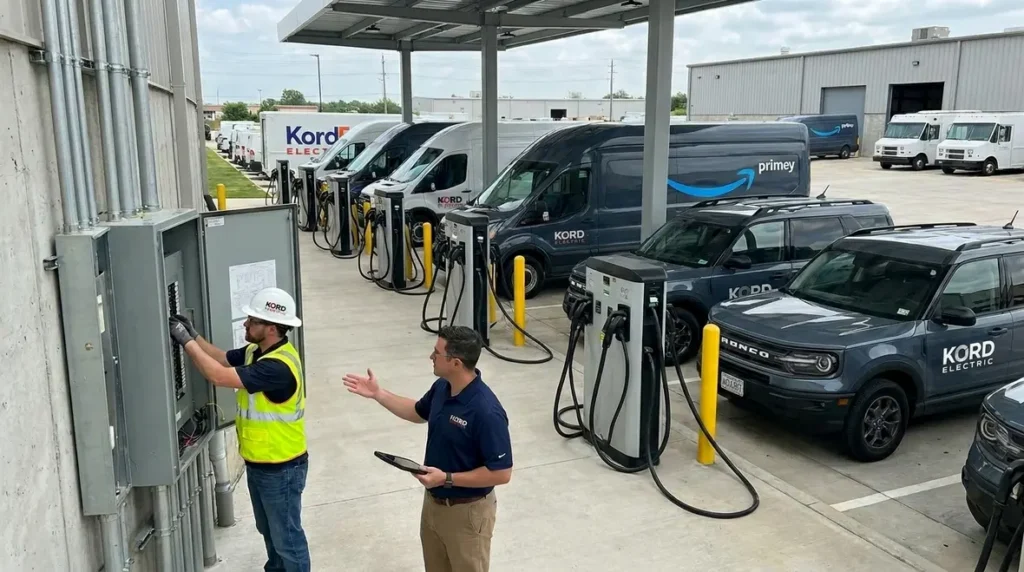
At Kord Electric, we work with commercial and industrial facilities and major property buildings that need reliable charging for buses, delivery vans, service trucks, and fleets that never really stop. In this guide, we explain the infrastructure requirements that matter, plus how our technicians and expert service staff guide planning, installation, and upgrades so your charging system grows without chaos.
How we map your load before you expand ports
Before anyone talks about charger counts, we start with electrical capacity. First, we review utility service size, demand charges, existing panels, busways, transformers, switchgear, and how the site already uses power. Then we model the load schedule, meaning we look at when fleets plug in, how many chargers run at once, and what charging levels you plan to use.
Why does this matter? Because electric vehicle fleet charging is rarely steady. It ramps up when drivers return, and it can surge at the start of a shift. Therefore, we design for the worst case you actually face, not the polite case everyone imagines.
Next, our team checks available capacity for future growth. We include a margin for fleet expansion, new routes, and seasonal demand. If you skip this step, you can end up swapping gear before it fully pays off. In other words, you buy twice. Like paying for the same movie ticket, then buying popcorn again because you forgot you already had it. It happens, but we prefer you don’t.
Commercial wiring, conduit, and grounding that actually lasts
Once we confirm capacity, we move into installation requirements that affect safety and longevity. In commercial and industrial settings, wiring must handle continuous duty, heat, and frequent load cycling. We follow applicable codes and manufacturer needs, and we design for serviceability, so repairs do not turn into long downtime events.
Our technicians plan the path for conduit runs, cable sizes, and terminations. They also consider environmental conditions like moisture, dust, chemicals, and temperature swings. In major property buildings, we coordinate with site access routes, parking flow, and building operations so electrical work does not disrupt tenants or core business hours.
Then we address grounding and bonding, because a charging network without correct grounding is like a smoke alarm installed without batteries. It may look fine, but it will not perform when it counts. Moreover, we ensure the hardware, enclosures, and protective devices match the expected fault currents and operating conditions.
Switchgear, panel upgrades, and the “right size” conversation
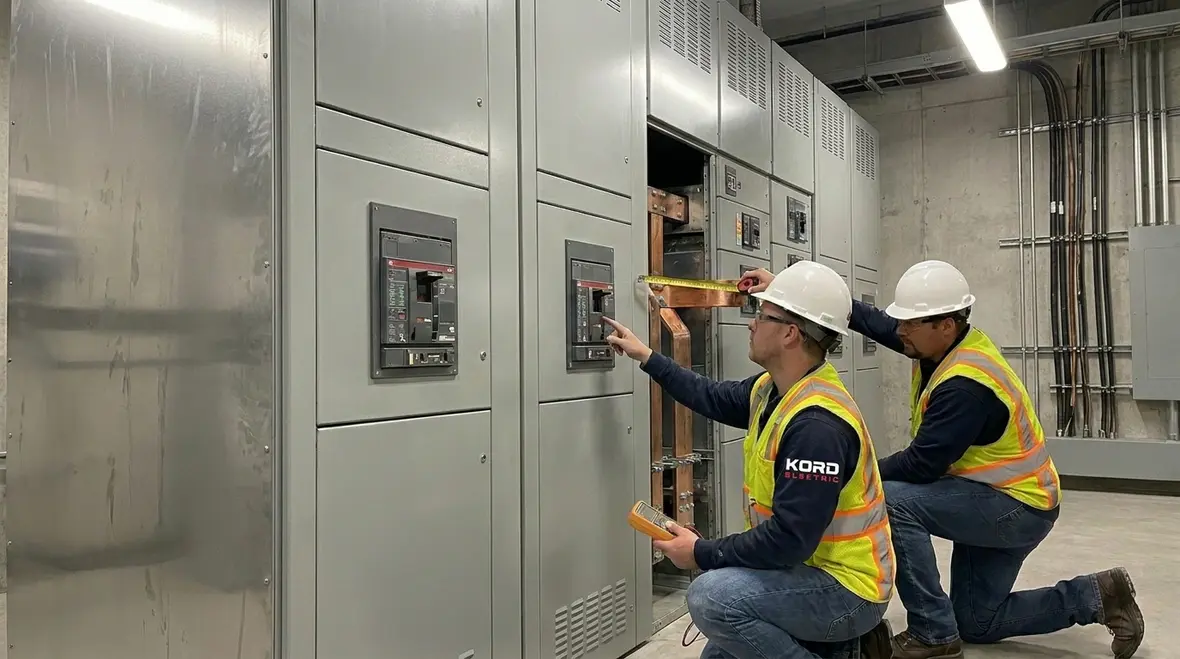
Scaling electric vehicle fleet charging often triggers upgrades to panels, distribution gear, and sometimes service equipment. However, we do not simply recommend the biggest box we can find. Instead, we size and stage upgrades based on load calculations, redundancy needs, and the utility requirements tied to demand and timing.
Our expert service staff explains options in plain language. For example, we may add dedicated breakers, busbar extensions, or distribution panels to reduce strain on existing infrastructure. In other cases, we recommend replacing aging gear or adding a new feeder path to protect the rest of the facility.
We also discuss power management strategies. Some sites need smart load sharing to avoid demand spikes, while others can support higher simultaneous output. Either way, the goal stays the same: stable charging that does not interfere with production, elevators, HVAC, cold storage, or other critical loads.
If you are wondering about electrical planning costs, it helps to know how commercial facilities often calculate electrician and project expenses. Our blog on electrician cost for commercial facilities covers how labor, site complexity, and electrical scope typically drive pricing. We use those same principles to keep budgets realistic and timelines honest, instead of letting your project drift like a late-night text thread you cannot end.
Charging placement and spacing for real site flow
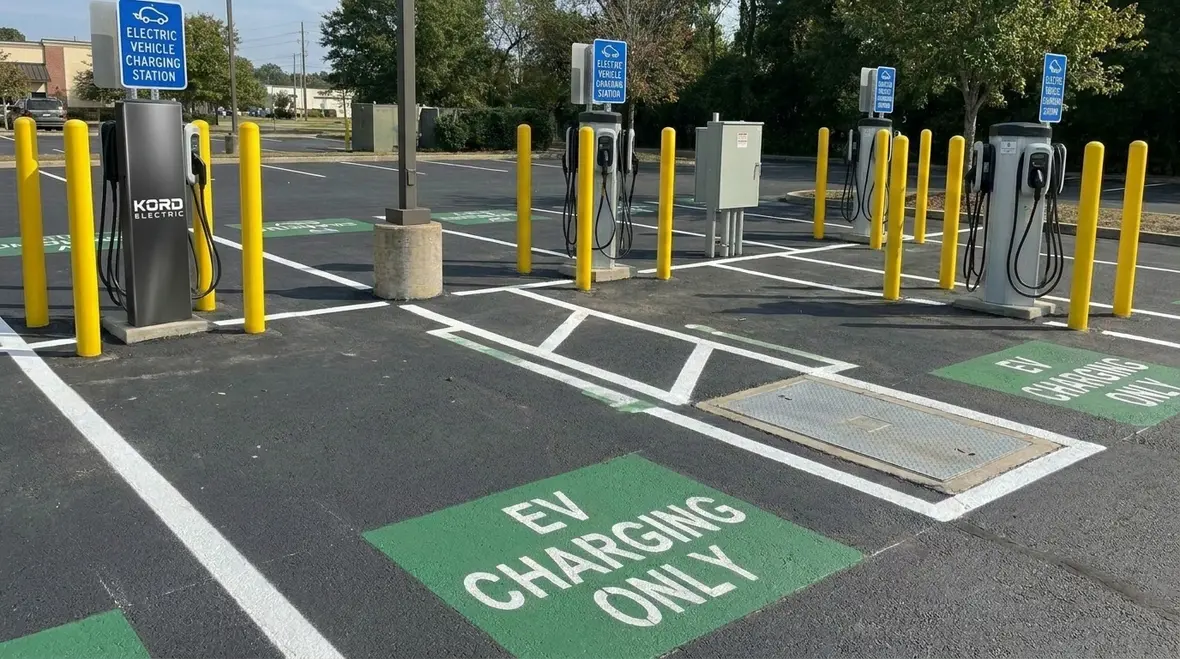
Infrastructure design does not stop at the electrical room. Next, we design placement. If chargers land in the wrong spot, drivers queue in unsafe areas, maintenance access gets blocked, and you lose efficiency. Therefore, we plan parking layout, cable routing clearances, and access for service and inspections.
We also think about bollards, signage, and protection from vehicle impact. For commercial and industrial operations, we include physical protection so a charger does not become a casualty of everyday driving. Additionally, we confirm snow melt or weather exposure needs where relevant.
In major property buildings, we coordinate with traffic patterns and pedestrian safety. We make sure charging locations support the flow of tenants, visitors, and deliveries. And yes, we remind teams that chargers need room to breathe. Heat buildup and airflow matter more than people think, which is also true for coffee at 9 a.m.
Power delivery and efficiency: avoiding wasted capacity
As fleets grow, efficiency becomes more than a buzzword. We consider conductor losses, voltage drop, and the impact of long cable runs across parking lots and campuses. When a site uses multiple charging zones, we may recommend distribution strategies that reduce unnecessary distance and minimize energy loss.
We also evaluate the charging profile. Fleet operators often schedule charging for off-peak windows, and smart controls can help reduce demand spikes. Then, when vehicles return at the end of a shift, the system distributes power in a planned way rather than “everyone plug in and pray.”
Because commercial operations run on deadlines, we design with uptime in mind. We plan for monitoring, staged commissioning, and clear maintenance access. Our team understands that a charging network must support operations, not interrupt them.
For many facilities across Los Angeles County, this kind of thoughtful planning pairs naturally with broader commercial and industrial electrical services that keep the rest of the power system running smoothly while your EV fleet infrastructure scales up.
Safety systems, monitoring, and code-ready operations
Scaling electric vehicle fleet charging requires safety layers that work together. We ensure proper overcurrent protection, fault detection design, and compliant disconnecting means. We also address labeling, documentation, and site-ready electrical records, because inspections do not care about your charging roadmap. They care about what the equipment shows, how it is installed, and what the paperwork says.
Next, we consider monitoring and operational visibility. Many fleet managers want to track energy usage, charger status, and fault history. Therefore, we support system components that help staff respond quickly and avoid long outages. Our technicians also help teams understand what alarms mean and what checks matter first.
Our expert service staff routinely explains the system like we are training someone who just got promoted and wants to do well. We do not talk in circles. We explain the steps, the risks, and the “do this first” actions. It keeps your team calm, even when the charger makes a noise it has no business making. And if you have ever heard an electrical panel chatter, you already know that calm is a real goal.
Implementation planning: staging upgrades without shutting down the facility
Commercial and industrial sites cannot always stop operations for major electrical work. So we plan implementation in phases. First, we coordinate schedules for load testing, material staging, and installation windows. Then we sequence work to keep critical systems running and to reduce the time chargers sit idle.
We also align installation with fleet timelines. If you add vehicles in phases, we can stage distribution capacity and charging ports so you do not pay for unused hardware. That approach keeps costs grounded and helps you reach operational readiness faster.
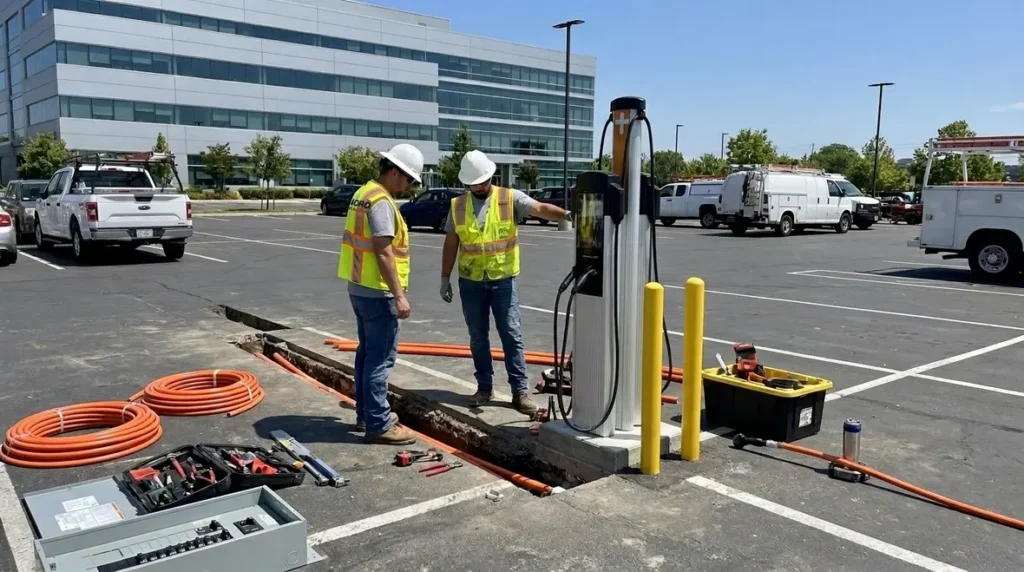
In many projects, the biggest risk is not the equipment. It is the coordination. Therefore, we communicate with facility managers, operations leads, and other trades early. We confirm trenching and mounting locations, manage cable routing, and verify readiness for inspections.
In short, we build a plan that respects how your site actually runs. You should not need a miracle to switch on your chargers.
FAQ
Conclusion: let’s build a charging plan that grows with your fleet
If your commercial or industrial facility plans to scale electric vehicle fleet charging, we recommend starting with load planning, infrastructure readiness, and a phased approach. Kord Electric brings experienced technicians and expert service staff who explain the process clearly, then execute the work with safety and uptime in mind. Reach out to us for a site review and infrastructure assessment. We will help you design a charging system that supports your operations today and expands smoothly tomorrow. Let’s make power feel predictable again.
When you are ready to turn planning into action, our team can also connect your EV strategy with related services like commercial EV charger installation, preventive maintenance, and emergency electrical support so your infrastructure stays efficient long after the first charger goes live.