
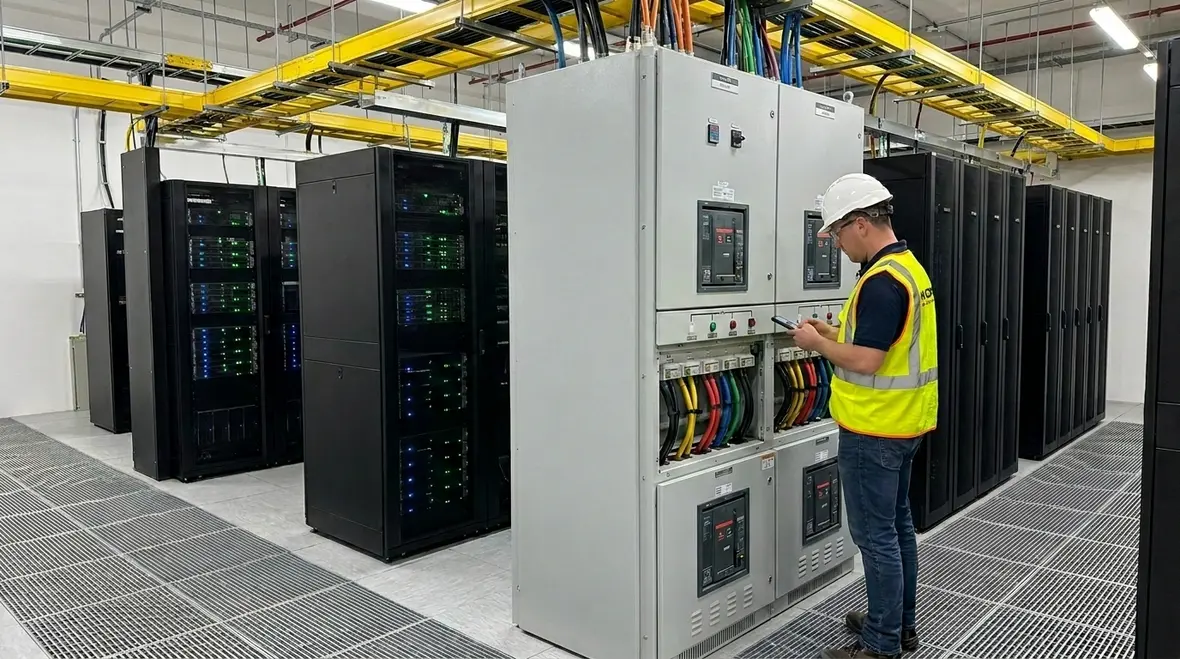
Data Center Power Distribution Design Guide
Kord Electric helps commercial and industrial facilities build dependable electrical foundations, and we start by setting a clear direction for data center power distribution design during planning, not after the alarms. In our approach, we map loads, plan redundancy, and design protection that stays steady when the environment gets busy. Then our technicians and expert service staff explain the “why” in plain language, because nobody should have to learn power engineering through trial and error. After all, the only thing that should be hot in a data center is the coffee, not the switchgear.
How Kord Electric structures a reliable power plan
Third person deserves clarity here, so let’s speak plainly: our team begins with a power study that links business needs to electrical reality. First, we gather building schedules, cooling assumptions, and equipment lists. Next, we define what “up” means for each load category, including what can ride through a disruption and what cannot. Then we translate that into a measurable design: feeder paths, bus architecture, transfer methods, and protection settings.
Meanwhile, the data center power distribution design work does not stop at the single line diagram. It also addresses installation details that can make or break reliability. For example, we look at routing, segregation of power and communications, and how maintenance actions affect live systems. Because yes, maintenance happens, and when it does, the design should help people do their jobs without improvising.
At Kord Electric, our technicians walk through planned operations and emergency scenarios before equipment is finalized. As a result, the facility team understands how the system behaves, not just how it looks on paper.

Best practices for load zoning and redundancy without chaos
Good power distribution design starts with load zoning, because the system should protect critical operations from unrelated events. Instead of grouping loads by convenience, we segment by function and risk. Then we assign redundancy levels that match business impact, so the facility avoids paying for reliability it does not need.
When a commercial or industrial facility requires high availability, we commonly design with multiple paths, so a failure in one section does not remove power from the entire operation. Additionally, we plan for maintenance windows by using transfer schemes and switching strategies that keep critical loads fed. In practice, this means the system can support planned work, not just survive disasters.
Our expert service staff also addresses real world behavior. They explain how load imbalances can affect protective devices and how switching transients can stress equipment. In other words, we help others avoid the classic problem of building a perfect plan that collapses under actual operating conditions.
Protection and coordination: where reliability gets its backbone
Protection is not a box you tick. It is a system that must coordinate under different fault levels, with settings that match the actual equipment. Kord Electric designs protection schemes that reduce downtime by isolating faults quickly while keeping healthy circuits online.
First, we calculate fault current levels using accurate transformer data and available system impedance. Then we select protective device types and ratings that match expected duty. After that, we coordinate time current curves so upstream devices do not trip for faults that downstream devices should handle.
Equally important, we account for selective coordination across switching devices and bus sections. Because when coordination fails, the result feels like a bad sequel: the same failure repeats, but with more downtime. Our technicians also verify that protection settings support typical and abnormal operating modes, not only the “textbook” case.
Finally, we prepare documentation that helps facility teams adjust and troubleshoot safely. Then our service staff explains it during commissioning and turnover so everyone knows what to check and what not to touch. (If someone says, “Let’s just guess the settings,” we politely decline. Humor aside, that is how outages happen.)
Efficiency and heat: power losses still matter
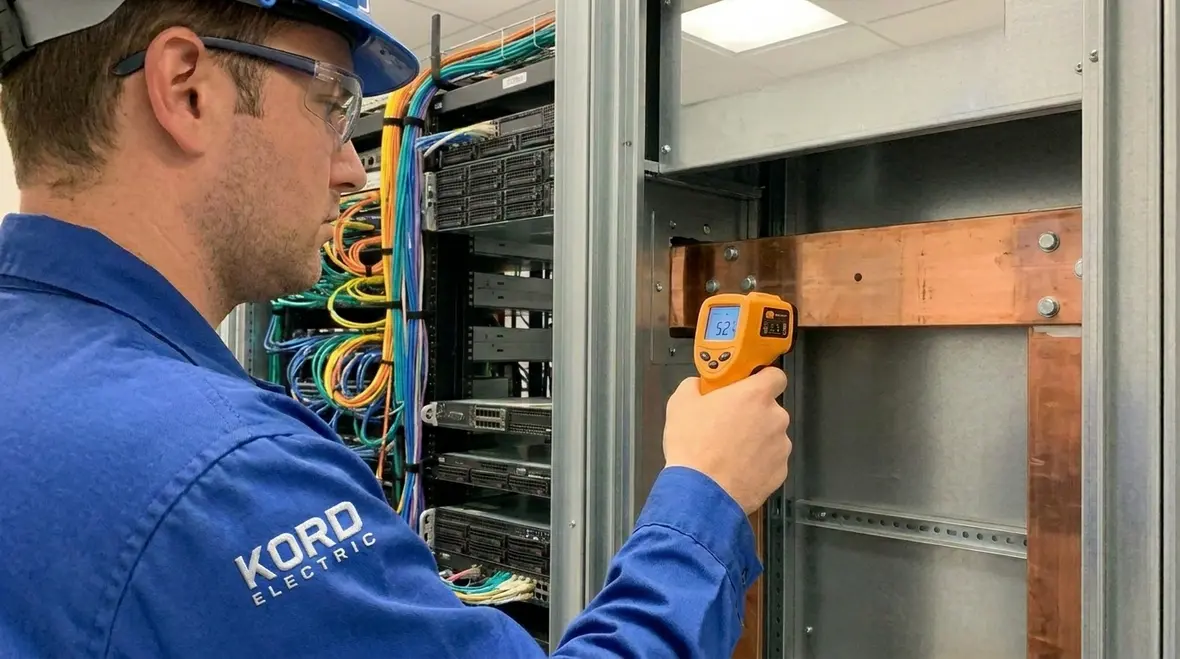
In a data center environment, electrical losses create heat, and heat creates risk. Therefore, we design power distribution with efficiency in mind while still meeting safety and reliability targets. We evaluate conductor sizes, bus capacity, and equipment efficiencies so the system stays within temperature rise limits.
We also consider how harmonics and non linear loads affect distribution. That includes UPS systems, variable frequency drives, and modern power supplies. Consequently, we recommend design choices that reduce overheating and protect against nuisance tripping. This is not just an “energy savings” talking point; it directly supports stable operation and longer equipment life.
Our team coordinates with mechanical and controls partners during design reviews. Then we verify that power distribution choices align with cooling strategies and monitoring points. Because if the facility cooling plan assumes one heat profile and the electrical system creates another, the building ends up in a constant argument with itself.
Safety hazards that disrupt power systems and productivity
Electrical safety affects productivity directly. When a system fails, maintenance grows, and operations slow down. In our own blog on workplace lighting safety hazards, we highlighted how issues like poor visibility, unclear labeling, and unsafe access harm daily performance. In the same spirit, Kord Electric helps facilities avoid power distribution safety hazards that create downtime and stress for technicians. For a deeper look at how lighting conditions affect productivity, see our guide on workplace lighting safety hazards that hurt productivity.
First, clear labeling and panel identification prevent mistakes during testing and maintenance. If a worker cannot quickly confirm what a breaker feeds, time gets wasted, and the risk grows. Second, proper working clearances matter. Tight spaces force awkward movements, and awkward movements lead to errors, especially under time pressure.
Third, we plan for safe access to switchgear, metering sections, and transfer equipment. We also make sure the design supports safe lockout and tagout practices. Additionally, we address grounding and bonding continuity, because poor connections can create unexpected fault paths and nuisance alarms.
Finally, we support safe monitoring. When metering and alarms function as intended, teams spot issues early and avoid “surprise” failures. And yes, no one enjoys chasing a phantom fault at 2 AM while hoping it is not real. Our technicians focus on making those moments rarer.
Commissioning, documentation, and training that stick
Many facilities install equipment and then cross their fingers. Kord Electric does the opposite. We build commissioning steps into the project so the system performs as designed across normal and abnormal conditions.
During commissioning, our team verifies continuity, phase rotation, insulation resistance, protective device behavior, and transfer operation. Then we validate metering accuracy and alarm thresholds so monitoring supports fast response rather than noise.
Just as important, we help others understand the system after the work completes. Our technicians and expert service staff explain operating sequences, switching steps, and troubleshooting priorities in a way facility teams can use. That training covers what to check during daily operations, what to escalate, and what maintenance actions stay within safe limits.
To keep this knowledge alive, we provide organized documentation that supports operational handoffs. Consequently, a facility does not rely on memory. It relies on a clear plan. For facilities in and around Los Angeles, pairing this discipline with regional support such as Los Angeles County electrical services helps keep upgrades and troubleshooting aligned with local demands and real-world load profiles.
FAQ for data center power distribution design
Featured snippet answers: keep it simple
How often should power distribution settings be reviewed?
They should be reviewed when equipment changes, load profiles shift, or after major maintenance events that could affect coordination.
Can a design be efficient without sacrificing safety?
Yes. We size conductors and equipment for correct temperature and protection behavior while targeting realistic efficiency improvements.
What safety issues most often slow down maintenance?
Poor labeling, unsafe access, unclear identification of panels, and incomplete documentation often slow technicians and increase risk.
Does harmonics affect distribution design?
Yes. Harmonics can overheat equipment and cause nuisance trips, so design choices should consider expected non linear loads.
Make the next upgrade safer and more dependable
Kord Electric supports commercial and industrial facilities with power distribution designs that stay reliable under real operating conditions. Our technicians and expert service staff help others plan redundancy, coordinate protection, improve safety for daily work, and document systems so teams can operate with confidence. If your facility is planning a build, expansion, or upgrade, contact Kord Electric for a design review and practical recommendations you can use right away. Your next outage should be scheduled, not unexpected.
For facilities that depend on stable, well-documented systems, pairing strong data center power distribution design with structured support services like electrical preventive maintenance helps keep power quality, protection coordination, and documentation aligned over time. When the electrical backbone is designed thoughtfully and maintained intentionally, the data center stops being a question mark and starts behaving like the dependable asset it should be.
Whether you are refining an existing facility or planning a new build from the ground up, Kord Electric can help you connect the dots between uptime goals, risk tolerance, and practical implementation. From early planning through commissioning and long-term support, our team focuses on turning complex requirements into clear, actionable designs your staff can live with day after day.
If you are operating in or around Los Angeles County, you can also tie your upgrade plans directly to regional field support by exploring our Los Angeles County electrical services. That combination of thoughtful data center power distribution design and on-the-ground electrical expertise helps keep both planned work and surprise events under control.


