Commercial Electrical Panel Safety Guide
At Kord Electric, we take commercial electrical panel safety seriously, especially in commercial and industrial facilities and major property buildings where one small failure can become a big outage. We see safety issues early when we inspect, test, and maintain panels before they escalate into heat, arcing, or unwanted downtime. And yes, we do explain what we find in plain language, because our technicians do not believe in mystery boxes. We also keep the conversation calm and clear, like a steady voice on a late night cable show, but without the weird commercials.
Common hazards we find inside commercial panels
Commercial electrical panels are busy systems. They handle high loads, frequent switching, and sometimes decades of “temporary” fixes that somehow never get removed. As we look through panel interiors, we focus on the risks that show up again and again.
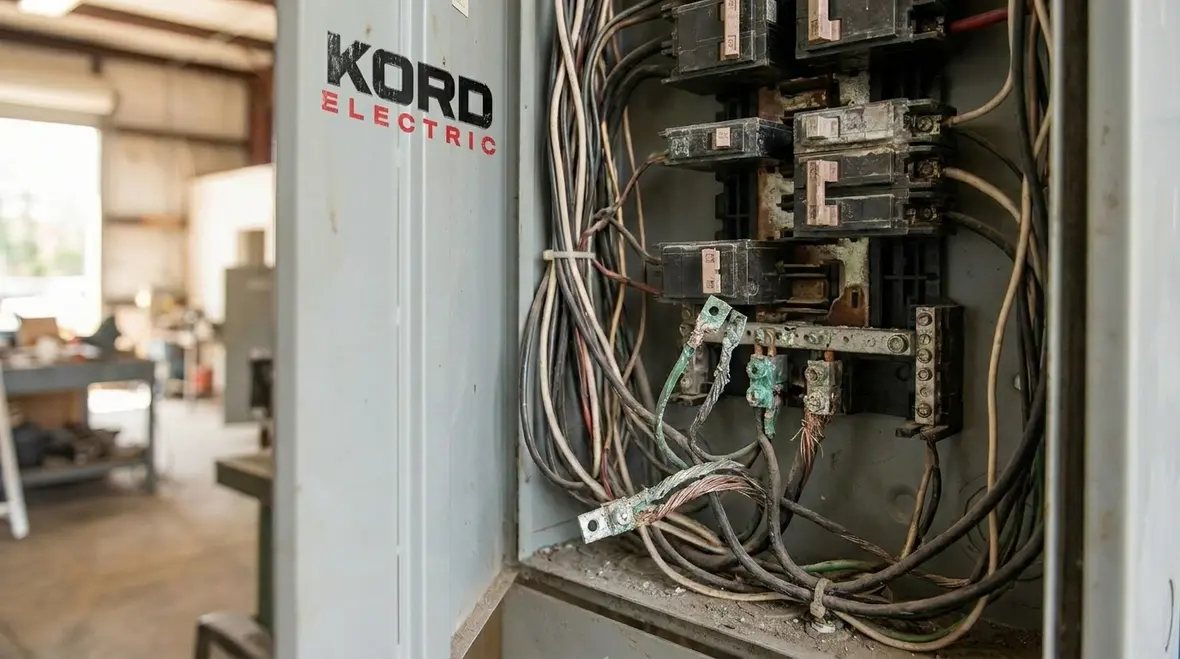
- Loose connections that create heat and increase the chance of arcing
- Overcrowded conductors where wires get pinched, poorly landed, or stressed
- Damaged breakers with worn mechanisms, oxidation, or signs of overheating
- Corrosion and moisture that weaken insulation and raise leakage risk
- Incorrect labeling or mismatched wiring that leads to wrong shutoffs during service
- Improper bonding and grounding that can leave equipment unsafe during faults
- Missing or incorrect covers that expose energized parts
And when we say safety risks, we do not mean “sounds bad.” We mean risks that drive measurable failures: temperature rise, insulation breakdown, and fault currents that act fast. In other words, the panel can behave like a ticking clock, and we prefer to read it before it goes off.
For facility teams that want to go deeper into how aging infrastructure and hidden issues develop behind the scenes, Kord Electric also shares insight in their article on hidden electrical risks in commercial buildings, which pairs well with a focused look at panel interiors.
Signs of trouble: what our inspection staff looks for first
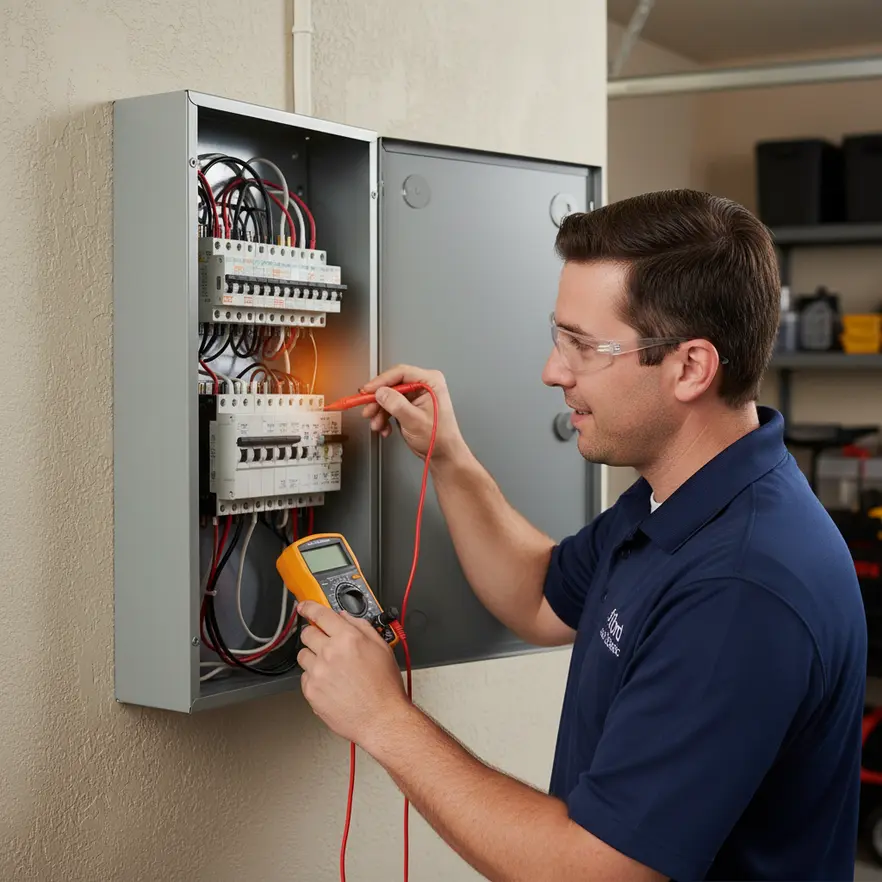
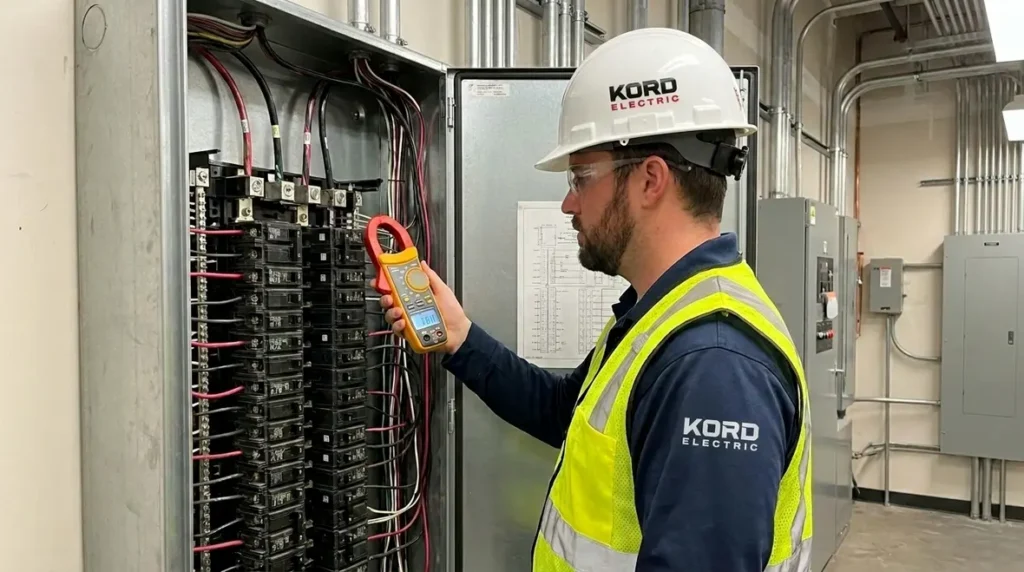
When our technicians arrive, we follow a consistent process. First, we observe the panel environment, then we check the condition of components, then we verify what the system actually does under load. Next, we document findings so facility managers can act without guessing.
- Hot spots around breaker terminals, bus bars, or wire entry points
- Discoloration on lugs or enclosure surfaces that points to overheating
- Burn marks or strong odors that can indicate prior arcing events
- Loose hardware such as fasteners or cover screws that keep working parts secured
- Water stains or condensation tracks that show moisture intrusion
- Evidence of panel tampering like mismatched screws, added jumpers, or nonstandard parts
Then we explain each issue. Our team often hears, “We thought it was fine because it still powers the building.” However, the absence of a full outage does not mean commercial electrical panel safety is intact. Heat damage and insulation wear can progress quietly, and we help others see the difference between “working” and “working safely.”
In many facilities, these early warning signs show up alongside the same kinds of problems discussed in Kord Electric’s guide to emergency power failures in commercial buildings, where unnoticed panel issues can set the stage for larger outages.
Why commercial sites see more panel risk than you think
Commercial and industrial facilities face conditions that many smaller sites never experience. Loads cycle throughout the day, motors start and stop, and new equipment gets added during renovations. As a result, the panel becomes a living system, and the risks grow when changes happen without full review.
In major property buildings, we also see different tenant setups, shared equipment, and complex power distribution. One floor might add HVAC loads, another might add server capacity, and later someone swaps lighting without updating documentation. Consequently, load balance shifts, breaker utilization rises, and neutral or ground paths can get stressed. If a panel was built for a different era, it can start acting like an old suit that “still fits,” right until it does not.
Moreover, compliance and safety depend on correct procedures. If someone opens the wrong section or forgets a lockout step, it increases exposure. That is why we emphasize safe work habits as much as we do equipment health. Our expert service staff uses clear explanations so others understand what we are doing and why, not just what we fixed.
As buildings evolve, so does the need to bring panels and distribution in line with current standards. Kord Electric’s overview of NFPA 70 and the National Electrical Code offers helpful context for how modern code expectations intersect with day-to-day panel safety decisions.
How maintenance and labeling prevent unsafe surprises
When we talk about electrical panel safety, we mean the full lifecycle. That includes maintenance schedules, torque practices, and the boring-but-important details like accurate labeling. Because when the next service call arrives at 2 a.m., the most heroic thing a panel can do is help someone shut off the right equipment.
Our technicians focus on these practical controls:
- Torque checks on terminations and verification after any service work
- Cleaning and inspection to remove dust buildup and check for insulation wear
- Circuit identification that matches the as-built and as-maintained reality
- Barrier and cover integrity so exposed energized parts stay protected
- Documentation updates after modifications, including one-line records when needed
- Load review to avoid overloading and to improve balance where possible
Also, we recommend periodic visual checks between major service intervals. If a facility manager sees a trend, they can schedule downtime proactively rather than react to a failure. And if you think labeling is too small to matter, imagine a fire drill where everyone gets a different map. That is how “close enough” documentation feels during emergency response.
Many of these same habits form the backbone of a structured electrical preventive maintenance program, where panel inspections, documentation, and testing are built into a long-range plan instead of last-minute emergency calls.
Reducing arc flash and shock exposure with safer workflows
Even when equipment looks intact, risk can still exist. Arc flash and shock hazards depend on system design, fault paths, and protective device behavior. Therefore, we treat workflow as part of safety, not an afterthought.
Our expert service staff typically supports safer outcomes by:
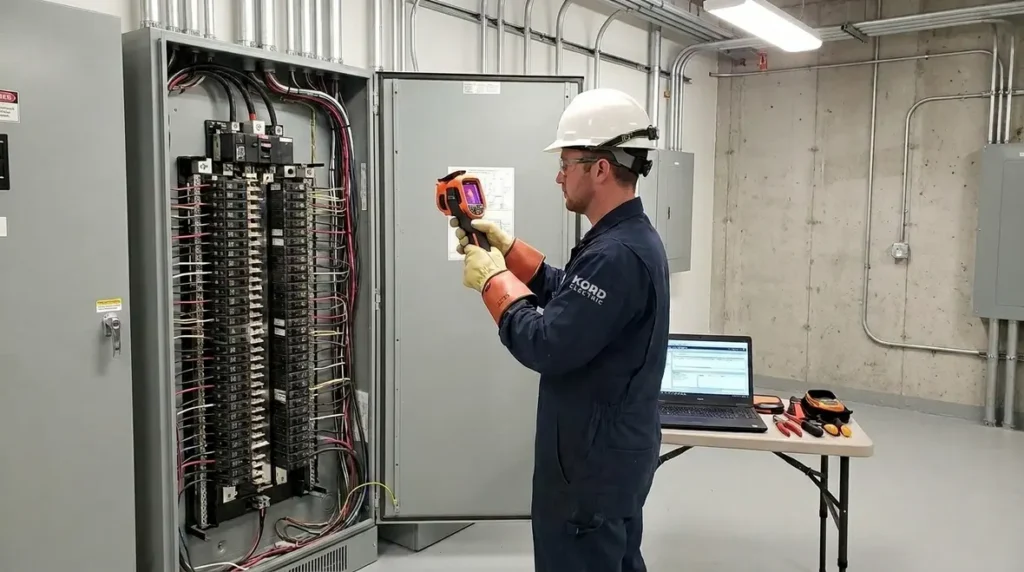
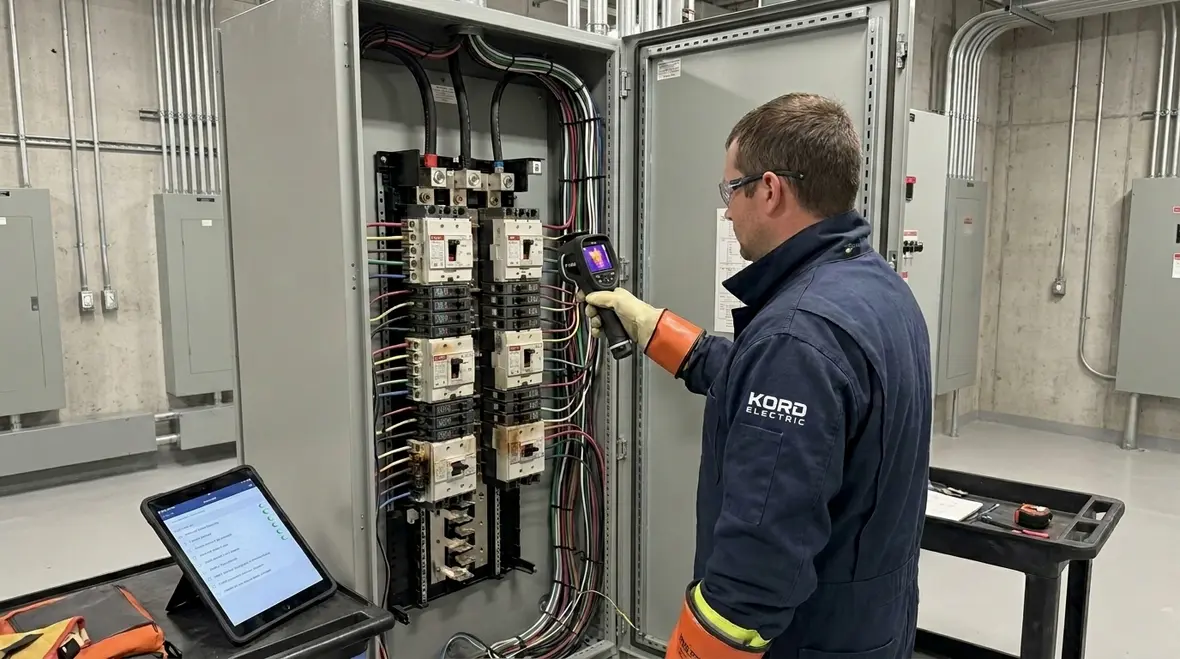
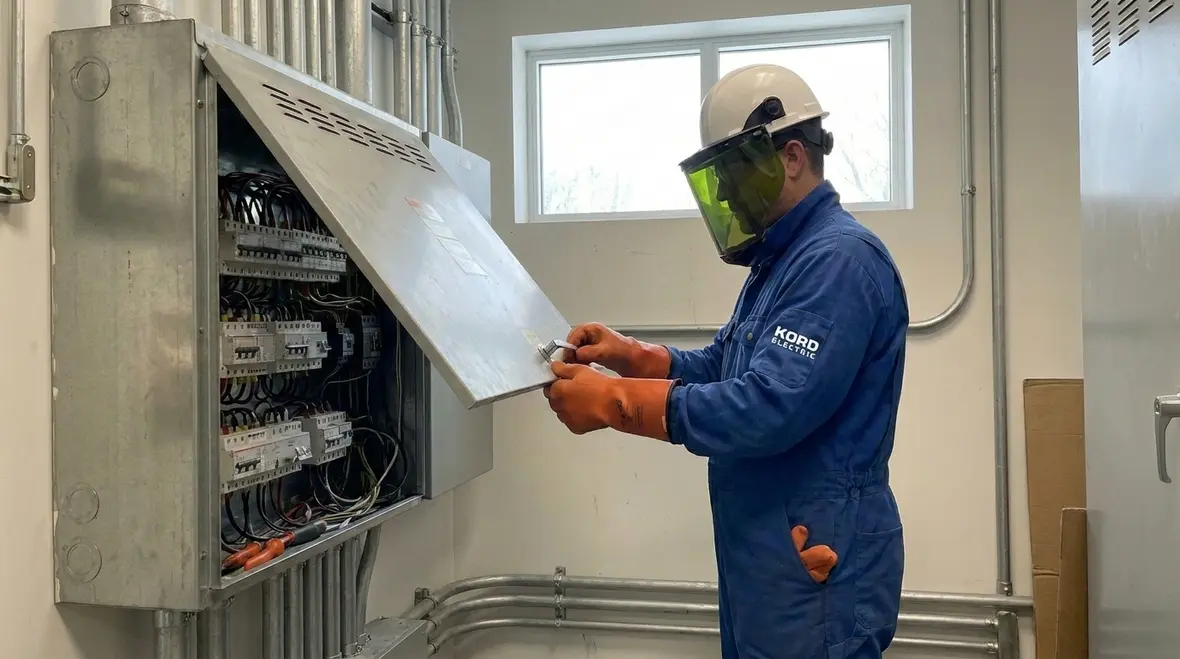
- Using proper protective equipment and safe access practices for panel work
- Confirming equipment status before opening covers, based on site procedures
- Verifying that protective devices operate as intended under fault conditions
- Promoting clear boundaries so only qualified people work inside energized environments
- Supporting plans that coordinate maintenance with building operations
As a result, others can reduce exposure during routine tasks. We also make sure explanations match real conditions on site. For example, we explain why certain panels require different handling than others, even if they look similar. Because in the field, “it’s basically the same” is the kind of phrase that makes electricians age ten years in one job.
When panels, breakers, and conductors are already running near their limits, the combination of arc flash risk and aging infrastructure makes a strong case for strategic upgrades like those explored in Kord Electric’s rewiring cost guide for commercial electrical systems.
Electrical panel safety audits that fit real building schedules
Facility teams do not have unlimited downtime. So our approach supports schedules while still improving safety and reliability. We plan around occupied spaces, critical equipment, and power-sensitive operations.
Here is how audits and service typically move forward:
- Site walk to understand the panel area, access constraints, and equipment priorities
- Panel assessment to identify risks like heat stress, corrosion, damaged components, and labeling gaps
- Evidence-based reporting with clear descriptions and photos where appropriate
- Recommended actions that balance urgency, impact, and budget
- Execution planning that coordinates with facility operations for minimal disruption
We also follow through. In many cases, the safest decision is not only to find problems, but to fix them with correct parts, correct procedures, and a documented outcome. That is how Kord Electric supports commercial electrical panel safety as an ongoing program, not a one-time checkbox.
For properties across the region, especially those coordinating multiple locations or large campuses, this kind of structured approach works hand in hand with broader Los Angeles County electrical services that keep panels, distribution, and specialty systems aligned.
Frequently asked questions
CTA: schedule a safety-focused panel review
If you want fewer surprises, safer service work, and steadier power for your facility, contact Kord Electric. We help commercial and industrial teams identify risks early, document what matters, and plan fixes that fit real schedules. Our technicians explain findings clearly, so your team understands the “why,” not just the “what.” Call us today to schedule a commercial electrical panel safety review and get your next inspection started the right way, before the panel starts acting like it is in a hurry.
For facility managers comparing options or planning a longer-term strategy, pairing a focused panel review with Kord Electric’s broader electrical panel services and regional Los Angeles County electrical services ensures your commercial electrical panel safety improvements connect directly to a reliable, code-compliant power system across the entire property.