Emergency Power Failures in Commercial Buildings
When commercial power drops without warning, it rarely feels “scheduled.” Emergency Power Failures can turn a smooth morning into a scramble for flashlights, call trees, and that one guy who always says he “totally saw it coming.” In the first moments, everyone focuses on the lights, the elevators, and the equipment that simply refuses to be patient. Then comes the real question: why did it happen in the first place?
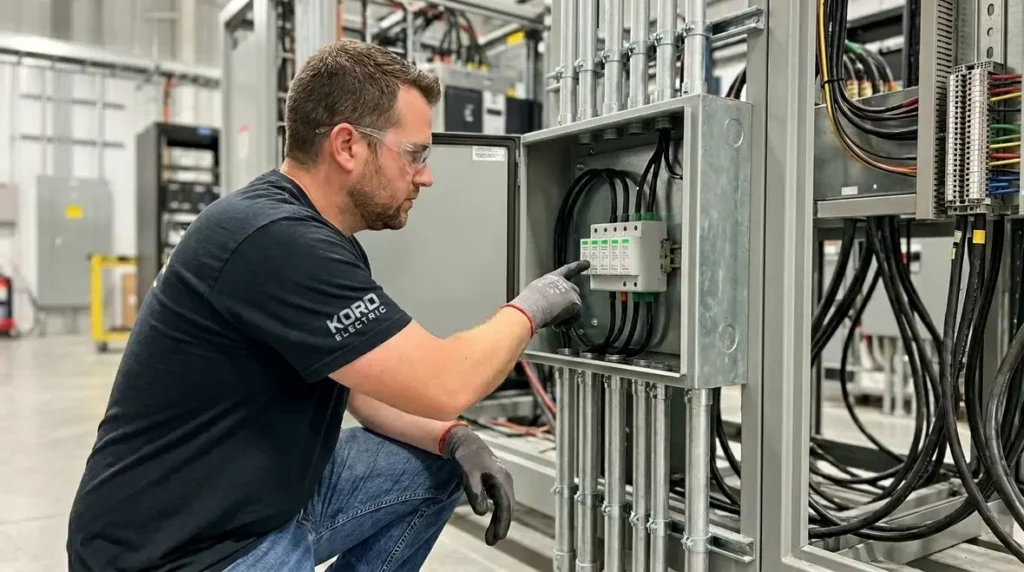
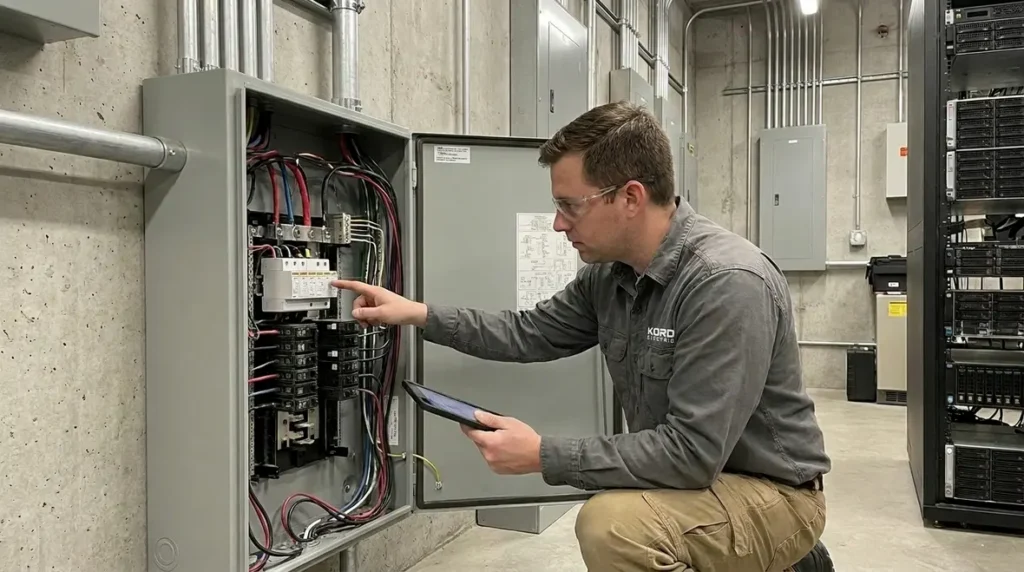
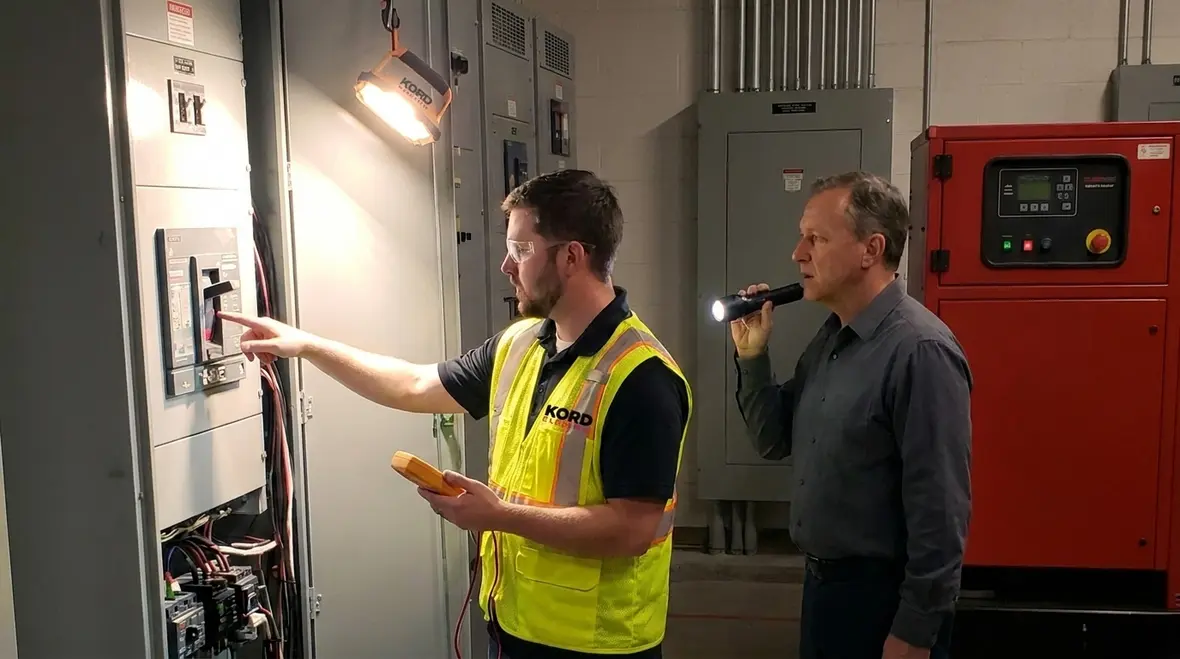
At Kord Electric, we work with commercial and industrial facilities and major property buildings. And we do not just restore power and disappear. Our technicians and expert service staff explain what caused the outage, where it started, what other components likely weakened, and what to fix next so you stop treating every outage like a surprise party.
Common causes of unexpected electrical power outages in commercial buildings
Commercial facilities face a mix of risks that show up again and again. Even when a building seems modern, power systems age, loads change, and small faults build up quietly. As a result, the outage arrives when the system can least handle it.
First, unexpected tripping often stems from overloads, short circuits, or ground faults. When staff add new equipment, adjust operating hours, or upgrade processes, the electrical load profile shifts. Then protective devices may respond correctly, yet you still experience downtime. Next, power quality issues like voltage sags can cause sensitive electronics to shut down. And while the utility may “stay within specs,” your equipment may not like what it receives.
Finally, maintenance gaps matter more than people think. Dirt, moisture, loose connections, and worn components raise resistance and heat. That heat turns into failure. We see it often, and our technicians document it clearly, so the next steps do not rely on guesswork.
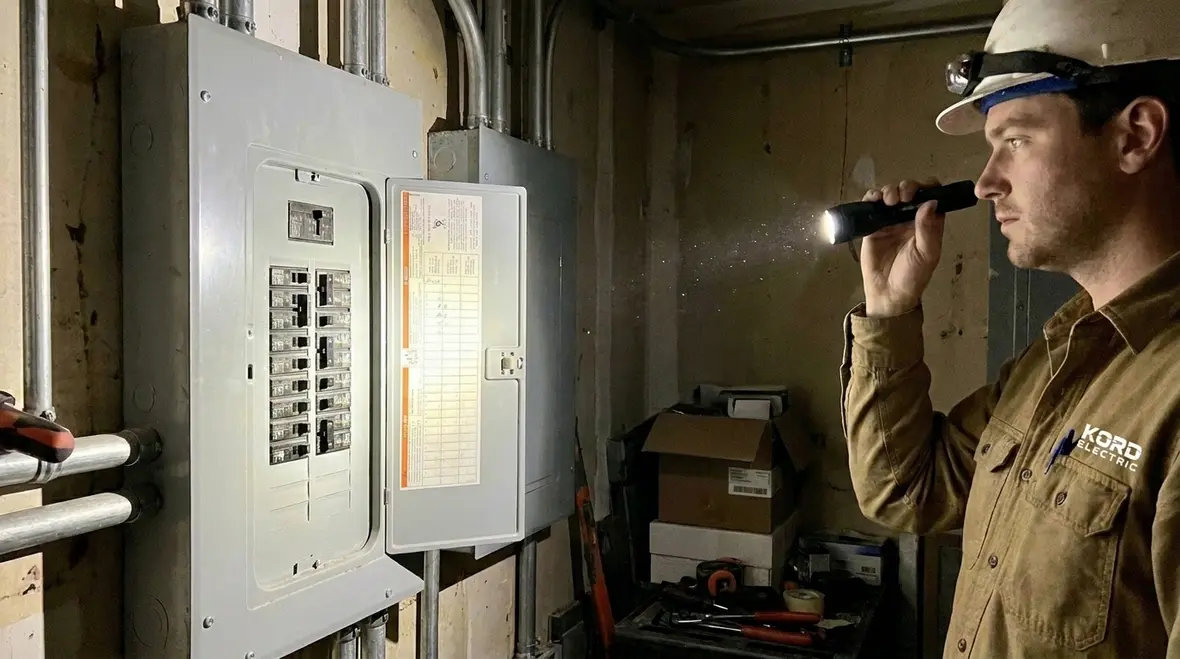
For buildings that keep seeing unexplained voltage swings or nuisance trips, it can help to pair on-site inspections with a deeper review of power quality and voltage stability over time. Teams that want to go further can explore how dedicated voltage fluctuation services reinforce reliability for large commercial and industrial facilities by addressing the root causes of unstable supply before they turn into sustained outages.
How load changes create hidden stress on electrical systems
When a commercial site grows, the electrical system grows in a different way than most teams expect. For example, lighting retrofits, tenant improvements, new HVAC schedules, and additional refrigeration all increase demand. However, the panelboard, busbar connections, and feeder conductors still reflect the old design.
Additionally, intermittent high starting currents can strain transformers, switchgear, and motor starters. A piece of equipment may run fine most days, yet it creates a brief surge during startup that stresses breakers and terminations. Over time, the stress contributes to heat damage. Then you get faults that look random, because the failure depends on operating conditions.
To prevent this, we help facilities perform load reviews and verify breaker sizing, conductor ratings, and device coordination. Moreover, our expert service staff explains the “why” behind each measurement, so facility managers can plan upgrades without rolling dice.
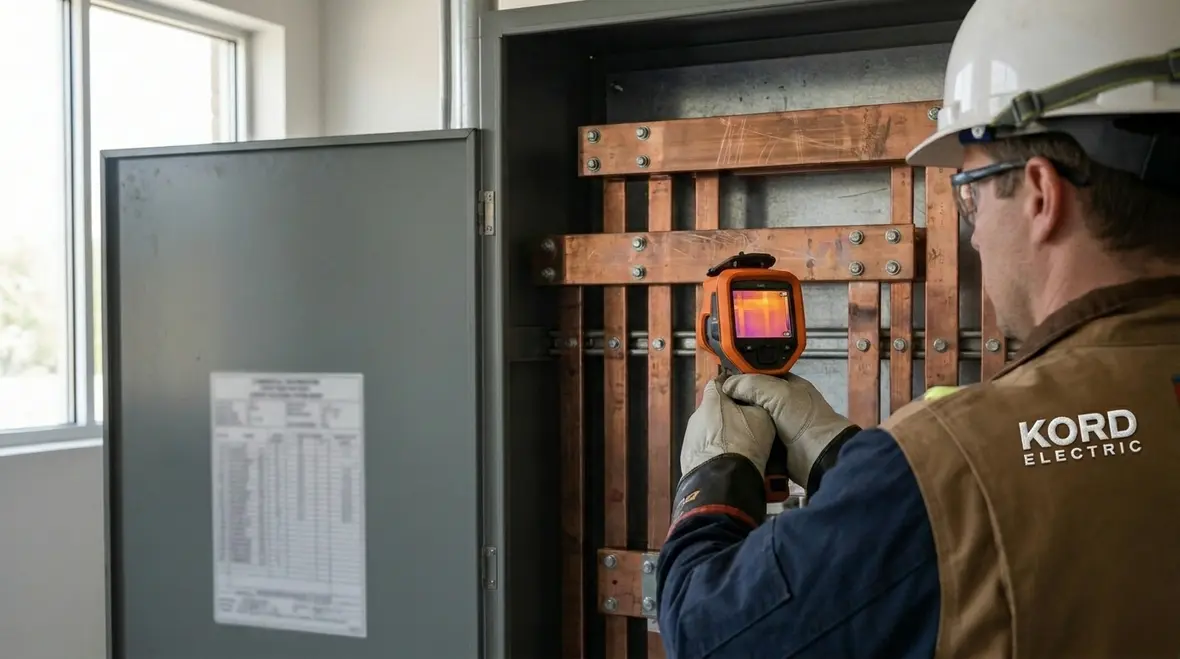
For portfolios where load growth is becoming the norm instead of the exception, structured electrical preventive maintenance can act like a pressure release valve. With planned inspections, thermal imaging, and system testing built into the calendar, teams can catch overloaded conductors, under-rated breakers, and aging components before they fail, instead of waiting for the next round of Emergency Power Failures to reveal the weak spots.
Breaker, panel, and switchgear failures that trigger outages
Breakers and switchgear are supposed to protect you. Unfortunately, if they fail, they can become the reason the lights go out. Sometimes the issue is mechanical wear. Other times it is contamination inside enclosures, caused by dust, airborne particles, or moisture. Then there is the classic: loosened terminations that arc under load.
Arc faults can be especially hard to diagnose after the fact. That is because the system may isolate quickly to protect people and equipment. Yet isolation often looks like a total outage from the building side. Meanwhile, the damaged component might be inside a panel that still “looks fine” on a quick glance.
At Kord Electric, our approach focuses on evidence. We inspect thermal conditions, verify torque and connection integrity when applicable, and evaluate breaker health through proper testing methods. Then we recommend targeted replacements rather than expensive guesswork.
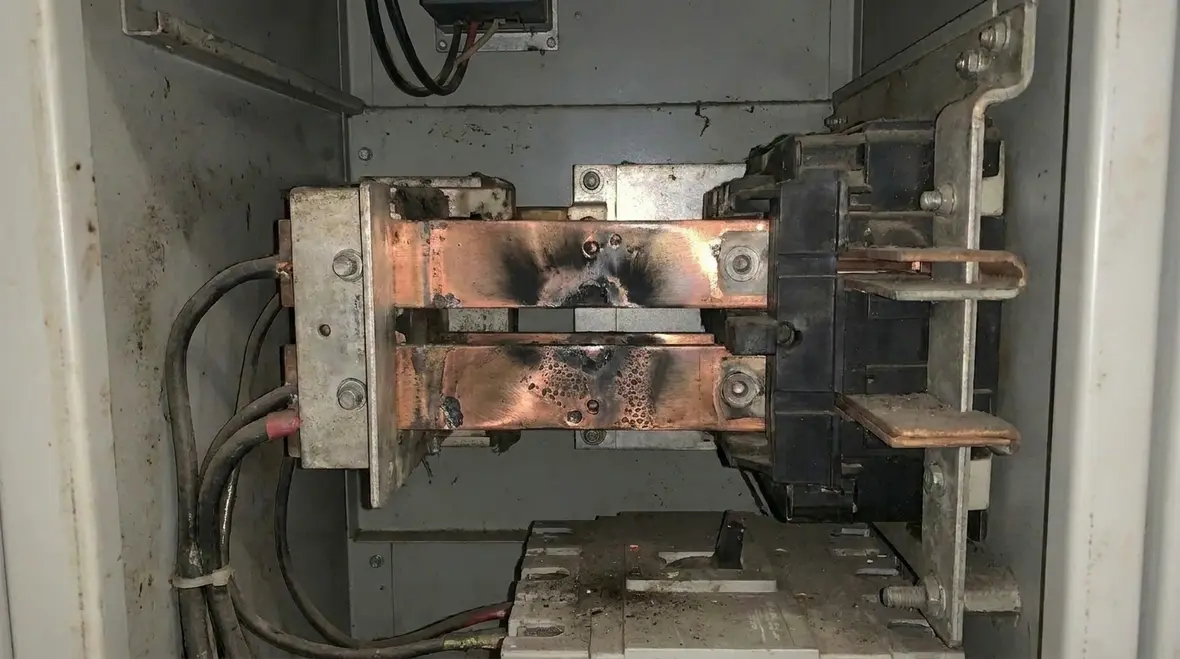
This is also where commercial and industrial electrical maintenance plans earn their keep. Systematic torque checks, breaker testing, and panel inspections turn “mystery trips” into documented findings, with photographs, trends, and recommended next steps that make it easier to justify upgrades before a small defect becomes a full outage.
Utility-related power events and voltage issues
Not every outage originates inside the building. Utility disturbances can include momentary interruptions, harmonics, and sustained voltage dips. Even when the utility works correctly, your building equipment can still react poorly.
For instance, a short voltage sag can cause elevators to drop to emergency mode, rack servers to reboot, or compressors to cycle off. And once equipment cycles repeatedly, it can increase internal load and create a chain reaction. Additionally, sensitive controls can fault in ways that look unrelated, even though they share the same root: power quality.
We coordinate with facility teams to understand operational priorities, then we assess how your electrical distribution interacts with your critical equipment. When we plan improvements, we focus on stability, not just “getting power back.”
For sites that have already dealt with unexplained restarts or flickering equipment, a focused review of voltage fluctuations in commercial and industrial facilities can uncover whether the building’s own infrastructure, the utility feed, or a combination of both is putting your uptime at risk.
Emergency Power Failures and standby system risk points
When Emergency Power Failures happen, the building’s backup systems either carry the load or they fail to do it, and that difference matters. Many facilities assume their standby gear will work perfectly on demand. Yet standby systems sit idle, then they face a stress test during an actual event.
Common risk points include generator fuel issues, clogged filters, failed battery banks, or missing transfer switching. Also, automatic transfer switches can develop problems from corrosion, misalignment, or control logic faults. Furthermore, load bank testing might be skipped because it takes time and coordination. Then, during an outage, the generator struggles under load and the system falls back instead of stabilizing.
Our technicians help facilities reduce that risk with disciplined inspection routines and practical testing. We also make sure the standby system supports the loads you truly need, like life safety circuits, critical process equipment, and communications. And yes, we explain it in plain language, because nobody wants to hear “trust us” when their operations are on the line.
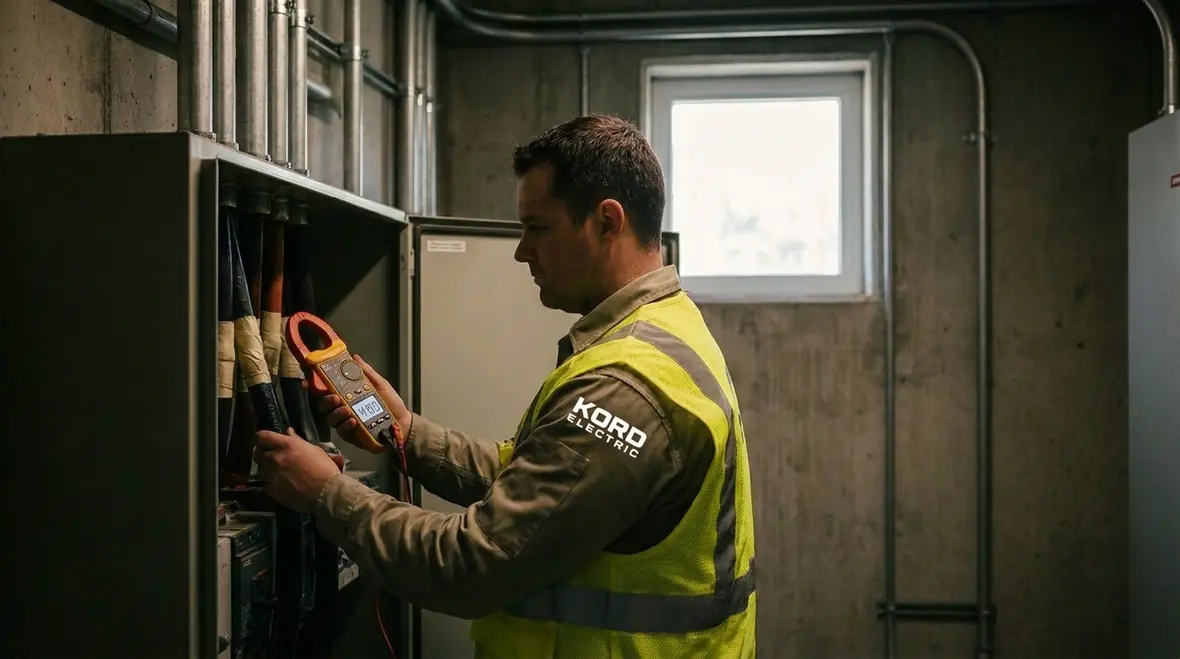
For properties that want standby power to feel like a dependable tool instead of a roll of the dice, combining generator and ATS inspections, emergency lighting testing, and broader electrical preventive maintenance will keep critical circuits ready for the next real-world event instead of just the monthly “test” everyone walks past in the hallway.
Environmental and human factors that quietly cause outages
Outages often come from where people do not look. Environmental factors include water intrusion, condensation in enclosures, and pest entry in rooftop or outdoor components. Dust buildup can also reduce cooling and raise the temperature inside cabinets. Meanwhile, seasonal changes stress insulation and connections.
Human factors matter too. A facility might schedule maintenance during off hours, but mistakes still happen when someone bypasses a safety interlock, swaps a breaker label incorrectly, or neglects to torque connections during panel work. Then the system holds until the next peak load, and the outage appears “mysterious.”
To keep these issues from turning into downtime, we recommend clear labeling, documentation, and a maintenance plan that matches the building’s operating patterns. Our expert service staff also walks teams through observed issues, so corrective actions stay on track instead of getting parked in a spreadsheet.
Over time, disciplined documentation also makes it easier to justify upgrades like rewiring projects when older infrastructure simply cannot keep pace. When the maintenance log shows repeated temperature spikes, nuisance trips, or damage in the same areas, conversations about a rewiring cost guide for commercial electrical systems become less theoretical and more about protecting people, uptime, and assets.
Commercial lighting upgrades and why power reliability ties in
If you are planning a lighting upgrade, you should treat it as more than a comfort project. New lighting can change electrical demand and power quality behavior, especially when you add controls, dimming, or higher efficiency driver systems. For many major property buildings, LED retrofits reduce load, but the way the drivers interact with the rest of the distribution can matter.
We reference our commercial lighting upgrade cost guide because budgeting and reliability need to share the same conversation. In our approach, we look at the whole picture, including panel capacity, circuit loading, and how the upgrade affects scheduling for maintenance. That helps teams avoid the “we saved energy, so everything must be fine” trap. Sometimes it is fine. Sometimes the circuit capacity and control wiring were never evaluated, and then a later change pushes the system past the safe margin.
So, we coordinate lighting work with electrical assessment, and we plan updates in a way that protects uptime. In the field, that can mean timing improvements around critical operations, verifying connections after installation, and confirming performance under real operating conditions.
For large facilities ready to modernize lighting without sacrificing reliability, partnering with a dedicated lighting installation services team keeps design, installation, and power quality concerns under one roof, so tenants enjoy better light while your electrical system keeps its footing.
Frequently asked questions about commercial power reliability
Next steps to reduce outage risk at your facility
Outages cost more than you think. They interrupt operations, strain critical equipment, and create expensive “fire drills” that nobody budgets for. At Kord Electric, we serve commercial and industrial facilities and major property buildings with expert service staff who inspect, explain, and improve your power system so reliability becomes routine. If you want a clear plan, contact us for a focused assessment of distribution, standby readiness, and any areas where unexpected faults could take you down. We will help you build a safer electrical future, one dependable circuit at a time.
If your facility is already feeling the strain of reactive fixes and unscheduled shutdowns, it may be time to connect your outage response strategy with a broader electrical preventive maintenance program. Pairing structured inspections, testing, and documentation with fast, emergency electrical services gives your team both immediate support when something goes wrong and a long-term path to fewer surprises.
From there, you can layer in targeted upgrades—whether that means modernizing aging panels, coordinating a commercial lighting retrofit, or tightening up generator and ATS testing routines—so that the next time the utility blinks or a fault appears, your building responds calmly, systems stay online where it matters most, and everyone goes back to work instead of hunting for flashlights.
When you are ready to turn Emergency Power Failures from a recurring headache into a controlled, well-documented risk, bring in a commercial electrical team that treats your power system like the backbone of your operations, not an afterthought tucked away in a mechanical room.
At Kord Electric, that is the work we do every day: calm, systematic, and focused on keeping your building powered, safe, and ready for whatever the grid or the calendar throws at it next.
Plan your next step with Kord Electric
If you are ready to align outage prevention, standby readiness, and lighting reliability under one strategy, our team can help you map out practical phases that fit your budget and operations. From the first walkthrough to final documentation, we keep the focus where it belongs: clear communication, reliable power, and fewer surprises.