Commercial Electrical Panel Safety Guide
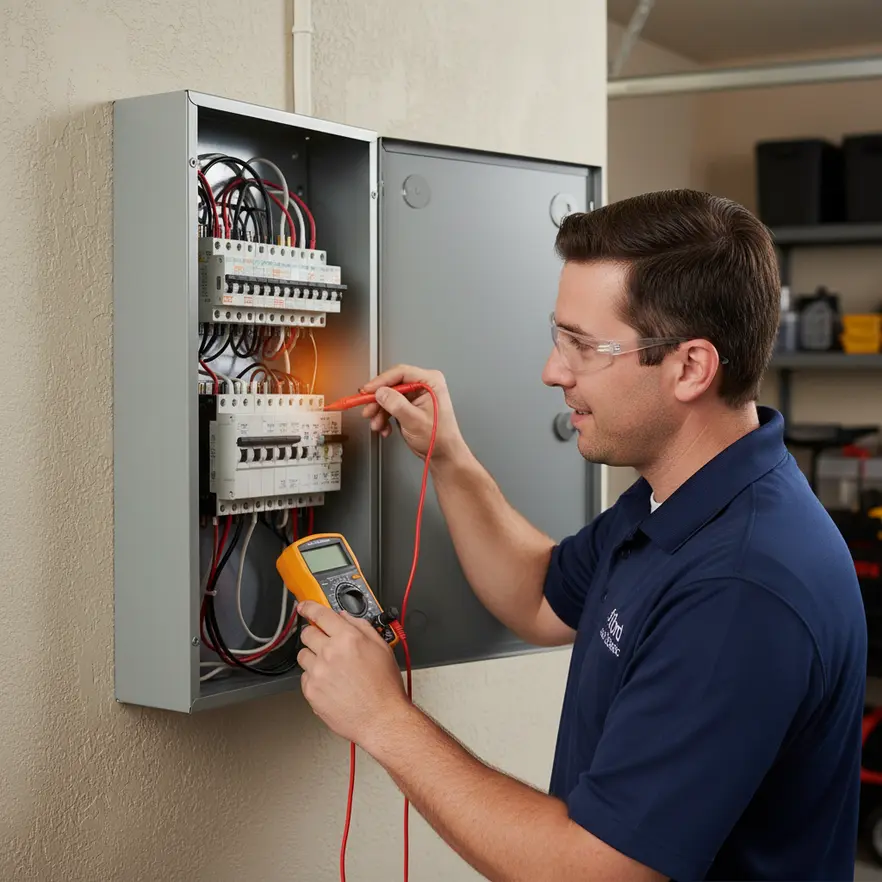
Commercial electrical panels can look calm from the hallway, but inside they can behave like a high speed soap opera. To keep people safe, our team at Kord Electric shares top electrical panel safety tips every commercial property manager should know. We advise that staff should never open a panel cover without training, and we recommend routine inspections to catch loose connections, moisture intrusion, and aging breakers before they cause trouble. In addition, we tell property managers to plan for clear labeling and safe access, so the panel area stays usable in emergencies. And yes, we still see “temporary” storage shoved near panels like it is a permanent lifestyle choice. Let’s prevent that.
What commercial property managers should prioritize first
In commercial and industrial buildings, electrical panels sit at the center of power distribution, and they also sit at the center of risk. Therefore, property managers should start with a simple goal: reduce exposure. When our expert technicians enter a facility, they immediately look for conditions that invite accidents, such as blocked access, missing safety markings, and untrained personnel “just taking a quick look.”
Next, they verify that the panel area meets real-world use standards. That means there is enough working clearance, and no storage items crowd the space. Meanwhile, they confirm that labels match the actual equipment, because outdated circuits create confusion during maintenance. In other words, when someone needs power isolation fast, accuracy matters more than guesses. As one of our service professionals likes to say, “If the label is wrong, the panel becomes a liar. And liars cause outages.”
Finally, managers should set a clear internal rule: no one opens panels for curiosity. Instead, only trained electricians or authorized staff should do it. If other teams need access, then Kord Electric helps them create a safe process that fits building operations.
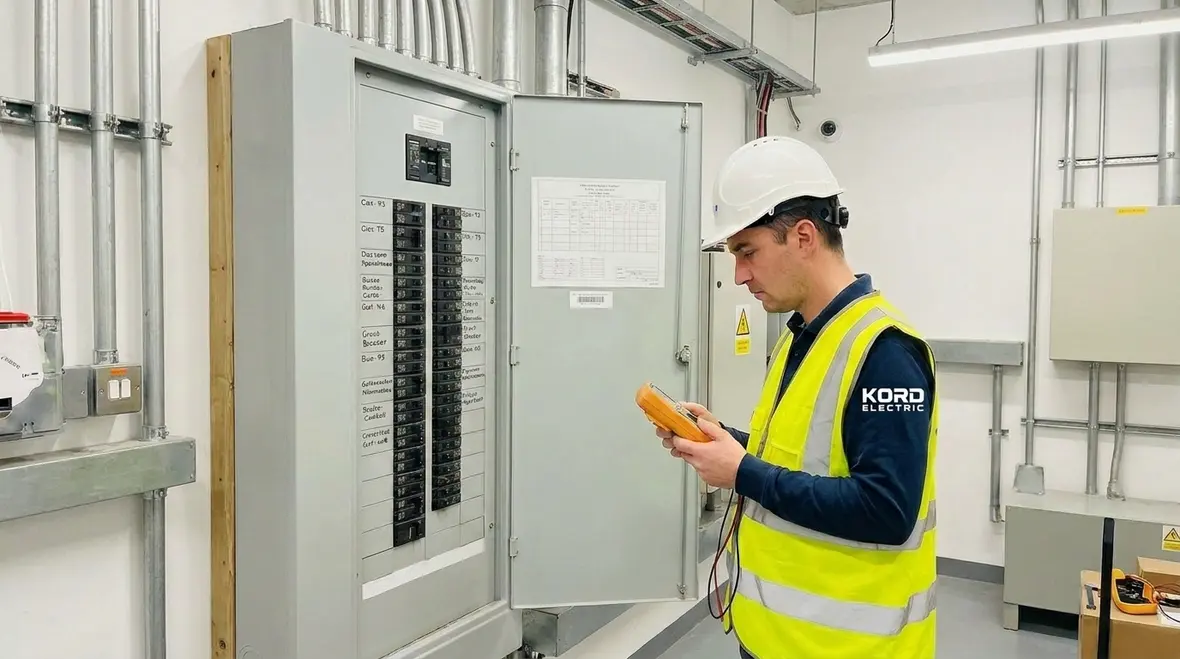
Electrical panel hazard zones in commercial buildings
Even well kept buildings can develop hazard zones over time, especially in high traffic areas or spaces that see frequent tenant work. For that reason, our technicians pay attention to three problem categories that show up again and again in commercial electrical work.
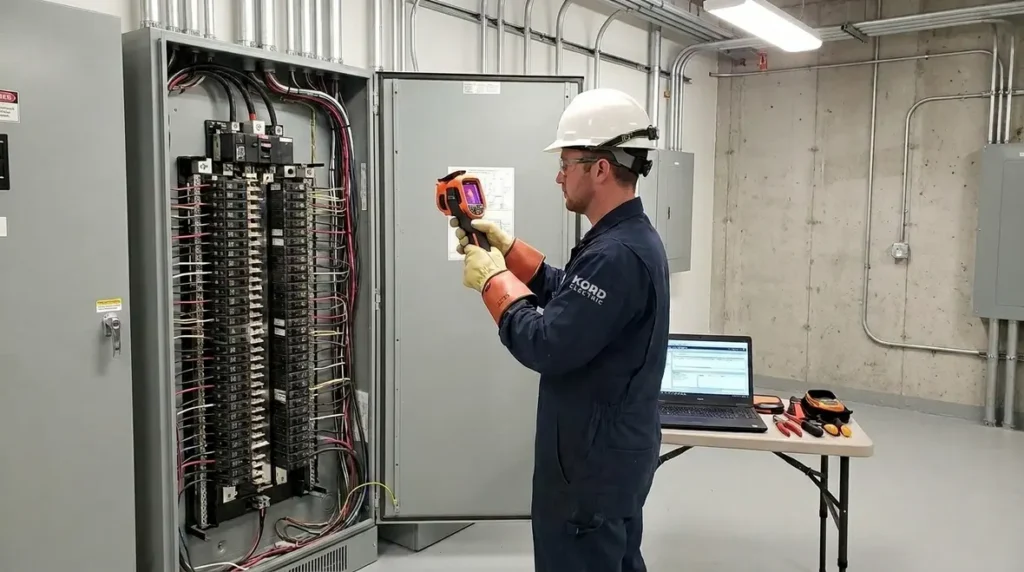
First, heat and arcing risks. If a panel has loose connections, the resistance builds up and creates localized heating. Then, arcing can start as tiny events that grow quietly until a failure occurs.
Second, moisture and contamination. Condensation, roof leaks, steam exposure from nearby processes, and cleaning chemicals can degrade insulation and increase leakage paths. As a result, panels may behave inconsistently, especially during seasonal weather swings.
Third, mechanical damage. In commercial corridors and utility rooms, doors may swing into cabinets, carts may bump enclosures, and vibration from nearby equipment can affect terminations. Moreover, if someone repeatedly opens a cover without proper torque checks, it can worsen the issue.
To manage these hazards, property managers should schedule inspections on a realistic timeline and connect inspection findings to corrective work orders. Our staff documents what they see, and then we guide facilities on the safest next steps. For deeper context on these issues, many facility teams also review our post on hidden electrical risks that grow quietly inside commercial buildings, where we walk through how unseen faults, overloaded circuits, and aging switchgear can compound over time if panel maintenance falls behind.
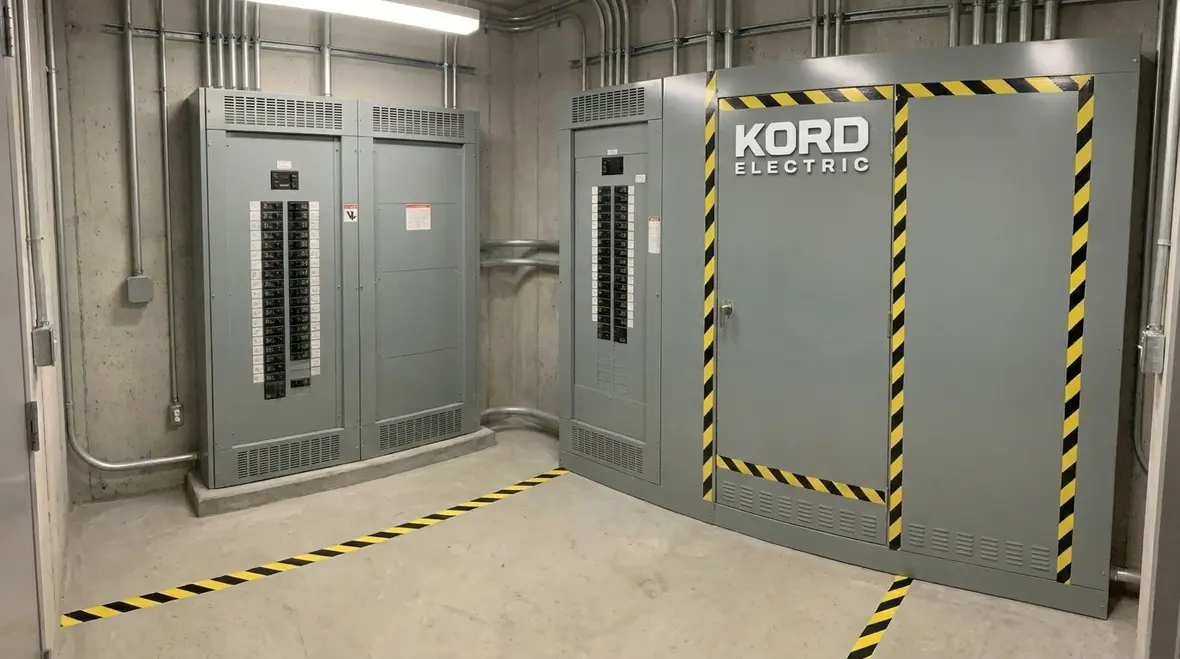
Safe access rules that protect people and equipment
Safety is not only about electrical theory, it is also about behavior and layout. When access rules are clear, the panel zone stays calm even when the building is busy. Therefore, we recommend a few practical standards that property teams can adopt right away.
Keep clearance clean and intentional. No storage, no temporary shelving, and no “we will move it later” piles. When the panel is reachable, emergency response improves and maintenance work stays controlled.
Control access and permissions. Panels in commercial spaces should have controlled entry. Also, staff should know who can open doors and who must call for service. Our expert service teams can help you define roles so no one improvises.
Use proper tools and PPE. Trained personnel should use insulated tools and appropriate protective equipment. In addition, they should confirm verification steps before interacting with conductors.
Plan for emergencies in advance. Property managers should identify shutoff locations, provide routes for responders, and confirm that fire safety teams know the panel location. Then, during an event, less time is wasted hunting for gear.
And remember, pop culture has taught the public that “hero mode” always works out. In real commercial electrical panel safety work, “hero mode” is a great way to turn a small issue into a big incident.
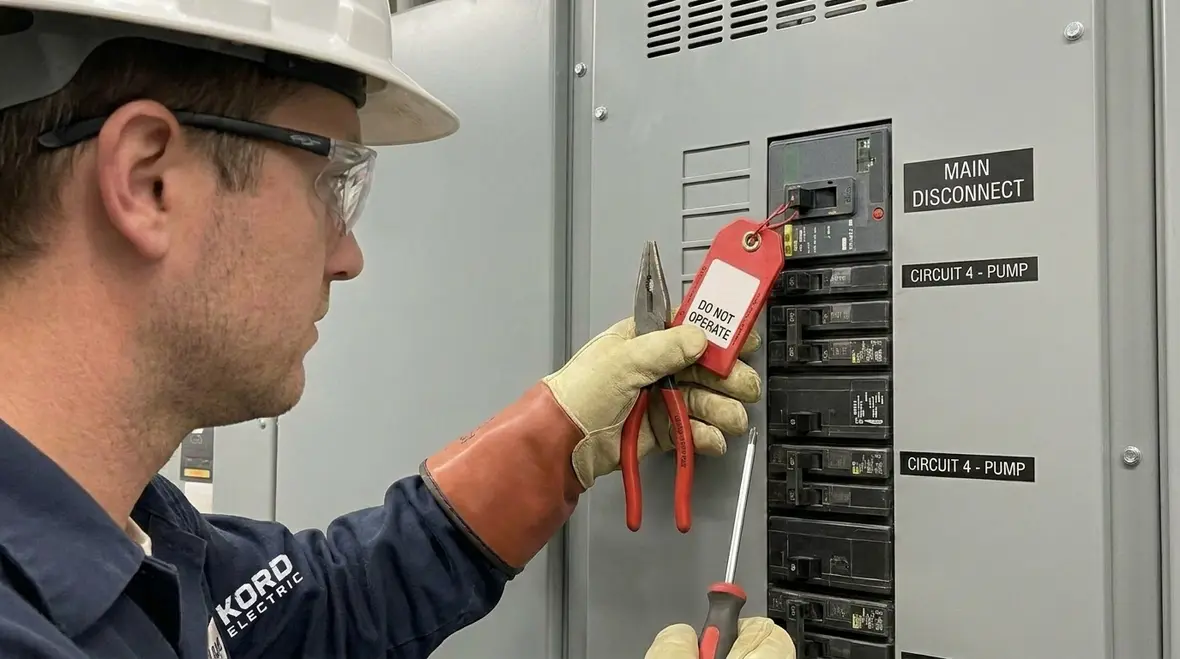
Lockout and labeling practices that reduce mistakes
When electrical panels are involved, small misunderstandings can create major risk. So, we focus on two safeguards: lockout procedures and labeling discipline. Both protect people, and both prevent repeated mistakes during routine tasks.
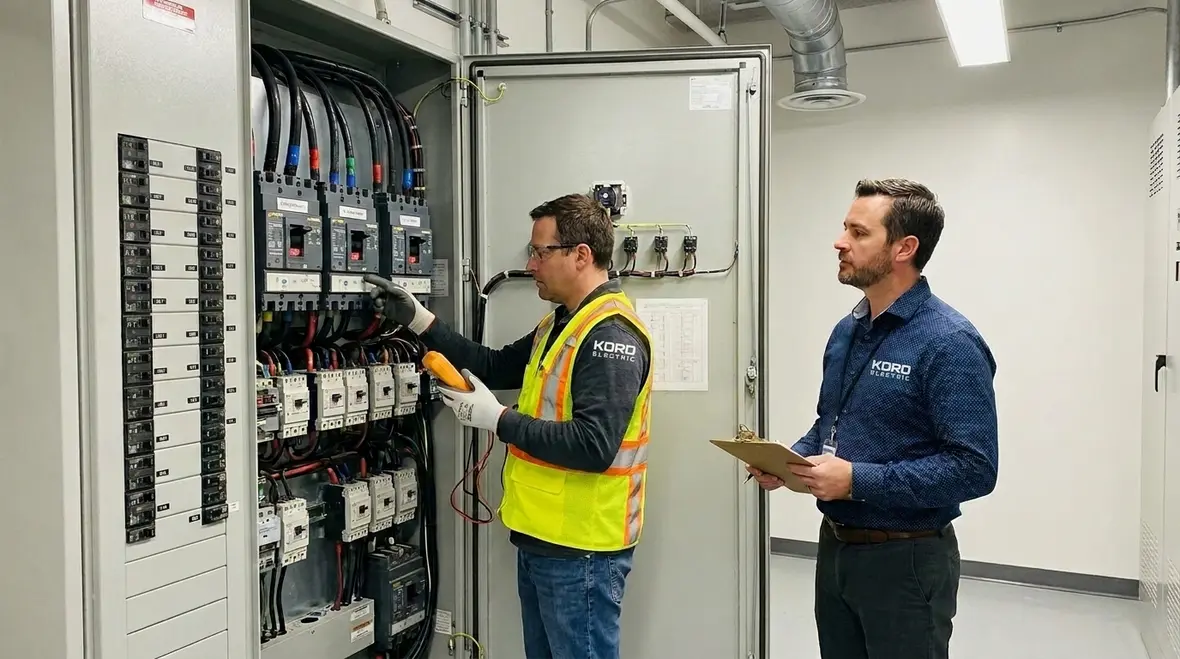
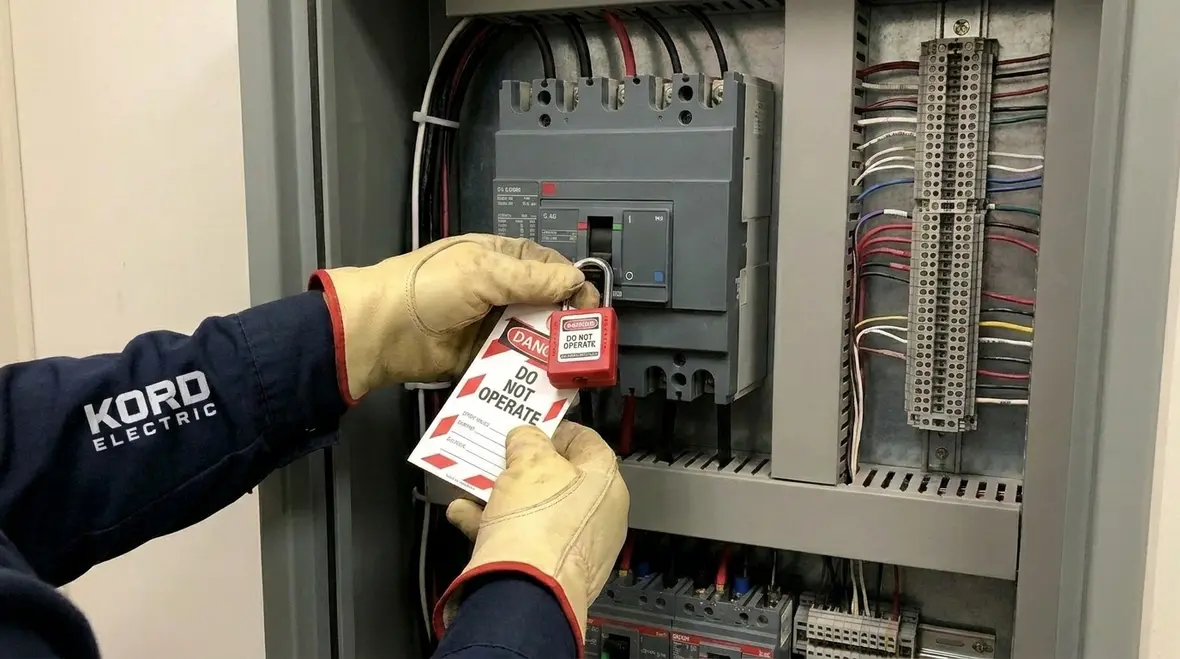
Lockout and tagging must be treated as a standard practice, not an optional step. Before any maintenance that could energize conductors, qualified staff should isolate equipment and apply tags that others can see. Then, everyone involved understands the equipment status. If a contractor arrives, our staff helps property teams clarify expectations so there is no “I thought it was off” moment.
Labeling should match reality. That means circuit designations, panel schedules, and upstream equipment names must align with what is physically installed. Over time, tenants add loads, remodel spaces, and sometimes adjust wiring. As a result, old labels become fiction. Kord Electric supports updates by verifying circuits during service visits and updating documentation where needed.
Additionally, managers should ensure that panel schedules are readable and stored properly. When schedules disappear, maintenance becomes guesswork. And guesswork is like using a fitness app that never updates. It might feel helpful, but it does not keep you safe. For a deeper dive into panel schedule clarity and naming conventions, property teams can also review our electrical panel labeling best practices guide, where we show how good labeling turns a metal box into a fast decision tool during outages and maintenance.
Inspection checklists for commercial electrical panel safety
Inspections should not feel like a mystery tour. Instead, they should follow a checklist that catches issues early and supports dependable operations. Our technicians use field driven checks designed for commercial and industrial facilities, where uptime matters.
Visual condition includes looking for discoloration, rust, corrosion, soot, and signs of moisture. Then, they check for cable entry problems, missing knockouts, and open conduit gaps that can invite contamination.
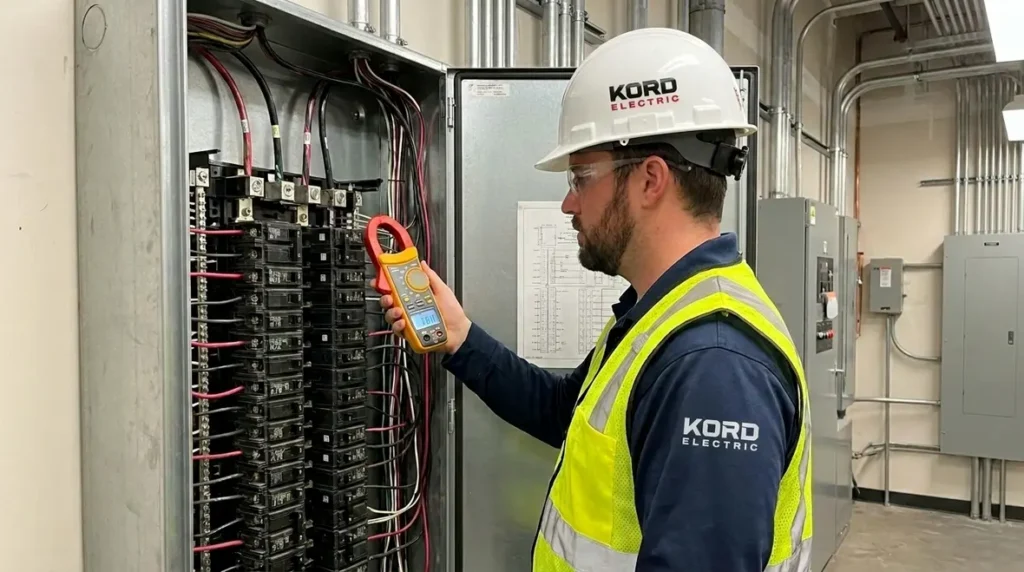
Connection integrity focuses on torque and contact condition. Even when a panel “runs fine,” connections can loosen due to thermal cycling, vibration, or installation quality. Therefore, we treat connection verification as a routine safety action, not a reaction to failure.
Breaker behavior includes checking for abnormal wear, damaged handles, and signs that breakers have been stressed. Our experts also verify that breaker ratings align with the load expectations described for the building.
Grounding and bonding checks help prevent unexpected fault behavior. If grounding is weak, equipment and people can face higher risk during faults. So, we verify and recommend corrections when needed.
Documentation and trends matter. We track findings so the facility can see patterns over time. Consequently, property managers can budget smartly and avoid emergency replacements.
For facilities that run in harsh conditions, we recommend increased inspection frequency. That decision should reflect usage, environment, and tenant activity, not a one size fits all calendar. Many teams pair these commercial electrical panel safety tips with a structured electrical preventive maintenance program so inspections, testing, and corrective actions stay on a predictable schedule instead of reacting to failures.
Emergency response and tenant coordination
In multi tenant commercial buildings and industrial sites, emergencies rarely follow a neat script. Electrical incidents can involve tenants, contractors, and building operations teams all at once. For that reason, coordination becomes a safety tool.
First, property managers should define who calls Kord Electric when issues arise, and what details they collect before we arrive. That includes what sparked the problem, what alarms or signs appeared, and which areas lost power. Then, our team can plan the correct approach and reduce downtime.
Second, tenants should receive clear instructions on what to report. For example, if they notice repeated breaker trips, burning smells, crackling sounds, or partial outages, they should report it immediately. Meanwhile, they should avoid resetting breakers repeatedly, because persistent tripping can signal ongoing damage.
Third, contractors must follow the same safety rules. Our expert service staff can coordinate with approved contractors so everyone understands lockout expectations and access controls. When everyone plays by the same safety rules, the building stops acting like a group chat with bad assumptions.
FAQ: electrical panel safety for commercial properties
When you want calm, controlled power, call Kord Electric
Commercial buildings deserve electrical panel safety that is deliberate, documented, and handled by trained professionals. If your facility has aging equipment, active tenant turnover, moisture exposure, or recurring breaker issues, we can help you reduce risk and improve reliability. Our technicians explain findings in plain language, coordinate with your team, and support safe next steps. Don’t wait for a crisis to make the panel “a priority.” Contact Kord Electric today for an inspection or consultation. For facilities that want panel safety wrapped into a wider reliability strategy, our electrical preventive maintenance services create a long range plan that keeps panels, switchgear, and distribution equipment under regular care instead of hoping nothing goes wrong.
If your commercial site is already planning lighting upgrades, process changes, or new equipment, this is also the right time to revisit panel capacity, labeling, and code alignment. Our team regularly coordinates panel work with larger project scopes so you can improve commercial electrical panel safety tips execution while also upgrading lighting, integrating solar, or preparing for future EV charging stations without overloading existing infrastructure.
Whether you manage a single building or a portfolio of commercial and industrial properties, Kord Electric can help you turn electrical panel safety from a background worry into a documented strength. With the right inspections, labeling practices, and maintenance planning in place, your panels stop behaving like a high speed soap opera and start acting like the calm, reliable backbone your operations deserve.