Commercial EV Charging Infrastructure Design
At Kord Electric, we start every project with a clear commercial EV charging infrastructure design built for commercial and industrial facilities and major property buildings. Our approach blends load planning, safe electrical upgrades, smart network options, and a layout that fits how people actually move through a site. As a result, the system gets installed once, works reliably, and avoids the kind of surprises that pop up when budgets and schedules are treated like optional accessories.
Then, we build the rest of the plan around real-world power limits, tenant needs, and long term growth. Our expert service staff and technicians explain each step in plain language, so others on the team can make confident decisions. And yes, we keep it calming, even when the facility manager is saying, “We need this yesterday.”
Strategic planning that protects budgets and schedules
Strategic planning does not begin with chargers. It starts with the site itself. First, we review utility service capacity, available panel space, and the electrical one line so the new work aligns with what the building already has. Next, we evaluate expected driver behavior and charging patterns. For example, employees might plug in during set shifts, while visitors might arrive with less predictable timing.
After that, we translate those patterns into power demand profiles. Then we choose whether the charging system should spread load across multiple outlets, use managed charging, or include staged expansion. Finally, we confirm the permitting pathway for commercial and industrial installations and coordinate with property operations so the work happens with the least disruption.
In other words, others should not buy chargers and hope the electrical system can “figure it out later.” That is how projects turn into expensive puzzles with missing pieces. We prefer a plan that closes the gaps before anyone starts drilling.
How we map electrical capacity for commercial sites
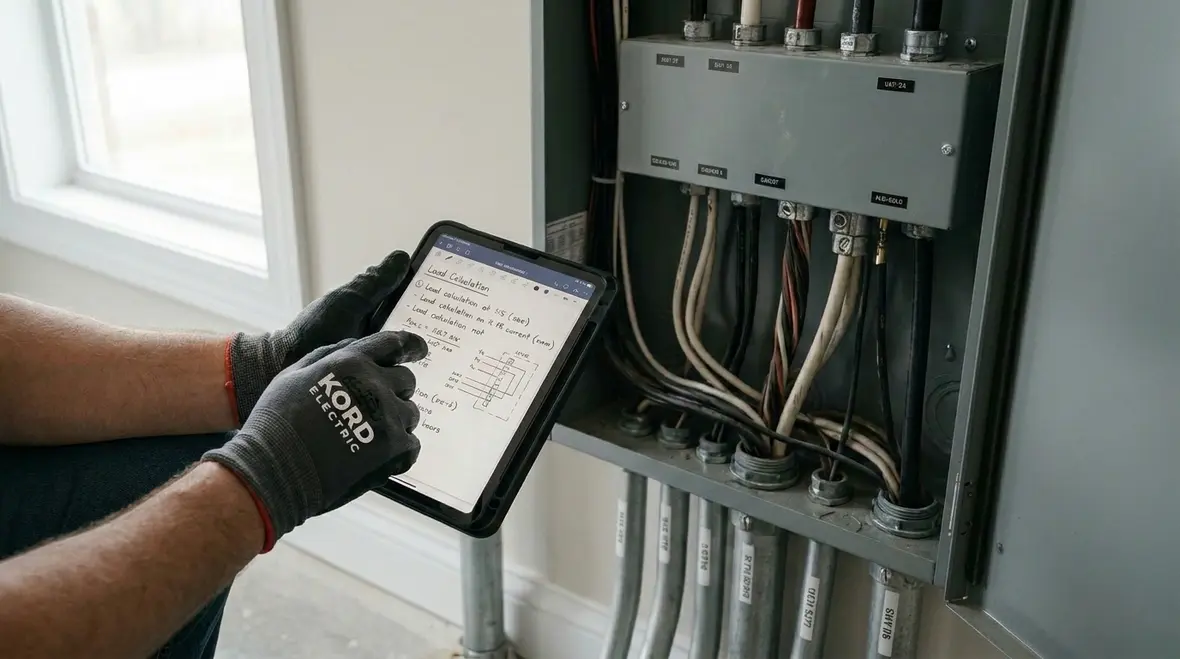
In commercial settings, electrical capacity can feel like a locked door that no one tells you is there. However, our process makes it visible early. We run a practical load assessment that looks at existing demand, demand growth, and the realities of what is already running on the same circuits.
Then we determine what the facility can support without compromising critical loads. In many cases, the correct move is not just “add more power.” Instead, we integrate upgrades in a way that maintains safety and keeps operations stable. We also factor in conductor sizing, protection devices, conduit routing, and grounding and bonding requirements so the system meets code and lasts.
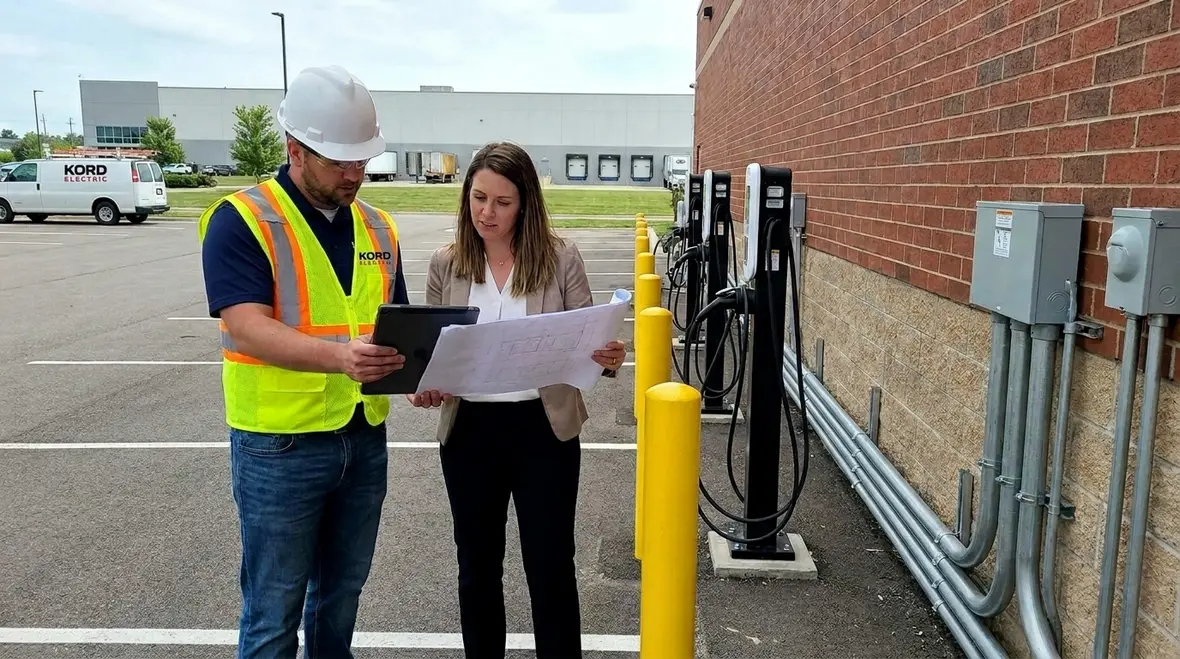
Our technicians and expert service staff walk others through the findings using clear diagrams and straightforward explanations. That way, property stakeholders understand why certain upgrades are necessary and what tradeoffs exist. We avoid vague answers. People get facts, not fortune cookie predictions.
Design decisions that make charging usable and safe
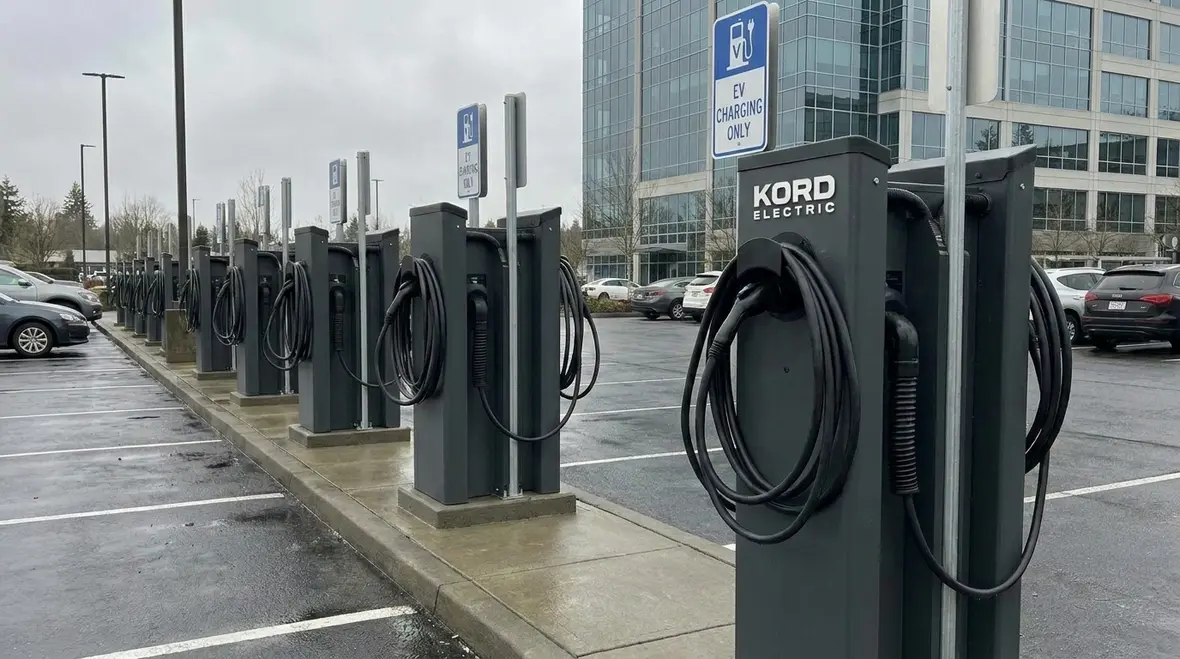
Once electrical capacity is clear, the design decisions shape daily usability. We consider where vehicles park, how long they typically stay, and how drivers need to access the units. We plan for safe cable routing and proper placement so the charging area stays neat and predictable. Because in a commercial or industrial environment, “close enough” can turn into trip hazards and maintenance headaches.
We also plan for signage, wayfinding, and access control where required. Then we evaluate weather exposure and the durability needs of the installation location. For industrial facilities, we think about how equipment traffic and site operations interact with the charging zones.
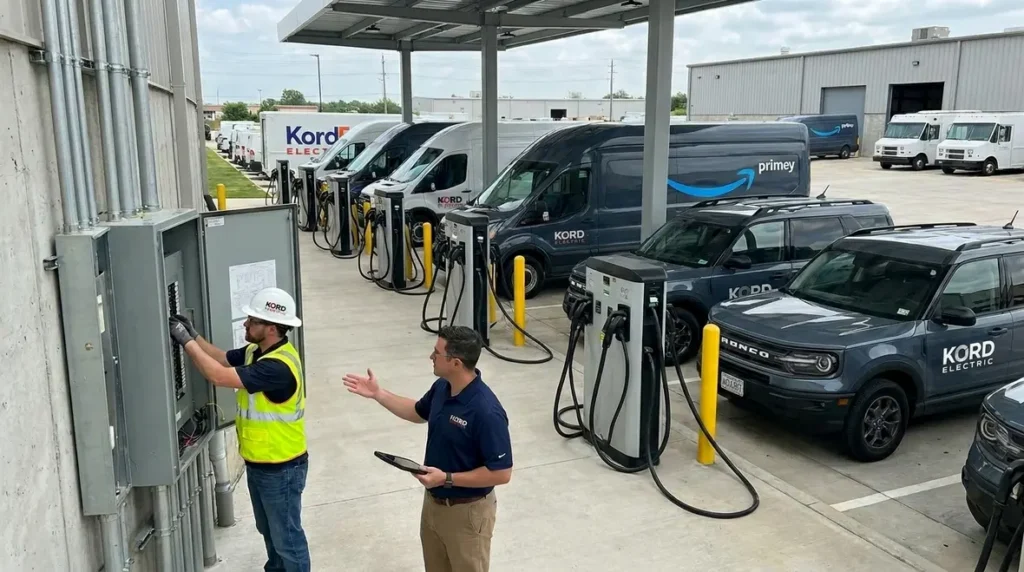
Meanwhile, we confirm that the charging system matches the building’s electrical architecture. That includes compatibility with existing panels, metering options, and any integration needs for future network upgrades. If others later want additional stations, we design with expansion in mind instead of starting over like it is a new movie with a different cast.
Managed charging and future growth planning
Many businesses worry about adding EV charging without turning the facility into a power stress test. So we often recommend managed charging strategies that optimize output based on real-time conditions or schedules. As a result, the system can balance demand across multiple ports and reduce peak loads.
Then we address future growth. We plan cable pathways, reserve panel space, and logical equipment placement so expansions require minimal downtime. Instead of treating every new charger like a brand new electrical project, we create a foundation that supports phased rollouts.
Our team also helps others think about operational goals. Some customers prioritize fastest turnaround for employee charging. Others focus on cost control through load management and improved monitoring. Our approach stays practical: we align the design with what the facility needs now and what it will likely need later.
And if someone tells you they “might add more vehicles someday,” we listen. Because someday has a habit of arriving with a stopwatch.
Permits, compliance, and coordination for major property buildings
Commercial and industrial installations involve more than electrical work. They require coordination, documentation, and compliance steps that can slow projects if the team does not plan ahead. Therefore, we build permitting and scheduling into the overall strategy from the start.
We help manage the scope so others know what approvals are needed and what inspection checkpoints will happen. Then we coordinate around property operations, tenant constraints, and access limitations. For major property buildings, that coordination matters because work hours, loading zones, and life safety requirements can shape what is possible.
Our technicians and expert service staff explain the compliance steps in a way that keeps stakeholders aligned. So, when others ask, “What happens next?” they get a real answer with dates, deliverables, and responsibilities. We do not hide behind technical fog.
If there is one theme we repeat, it is this: a smooth install comes from planning the paperwork as seriously as the wiring.
Implementation workflow: from site review to commissioning
After planning, we move into execution with a workflow designed for commercial environments. First, our team performs a site review and confirms the physical layout against the design assumptions. Then we verify equipment selections and ensure that materials match the project requirements.
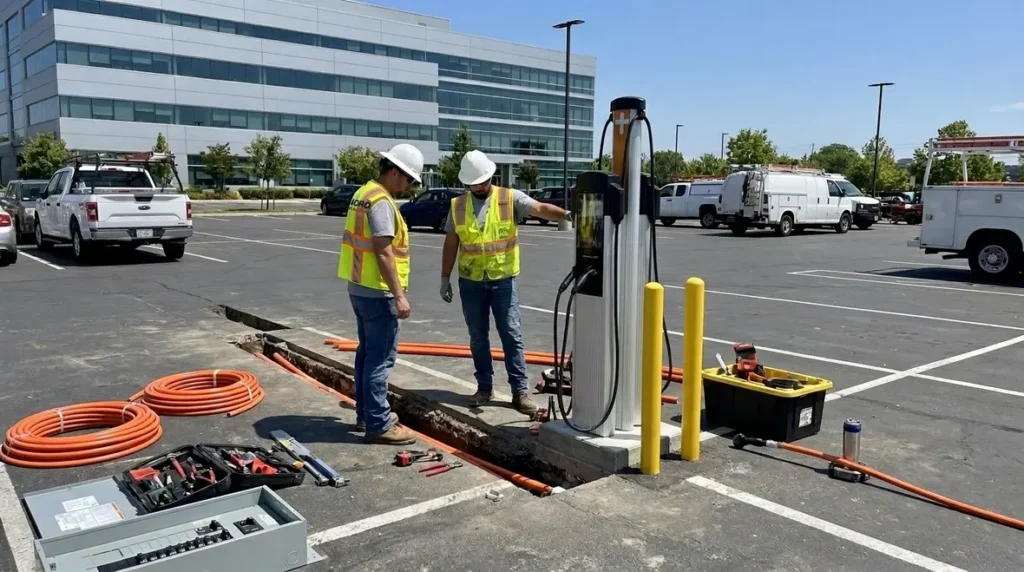
Next, we handle safe installation practices. That includes trenching or conduit routing, mounting and placement, electrical terminations, labeling, and weather protection where needed. As soon as the hardware is in place, we test the system components and verify safe operation.
Then we commission the charging network and confirm that management settings work as intended. We also check that the system behaves correctly under typical load conditions. After that, we document the work and provide guidance for ongoing operations.
Because in the real world, the project does not end when the last cable is tied off. Others need a system that performs, a team that can support it, and clear instructions for what to monitor. Our expert service staff focuses on that handoff so the facility can run with confidence.
What we verify early
- Utility capacity and electrical load profile
- Site layout and parking or vehicle access
- Conduit routing and equipment placement
- Expansion plan for phased growth
- Permitting and inspection milestones
What we validate at the end
- Safe operation and protection settings
- Managed charging behavior under load
- Correct power delivery at each station
- Documentation for ongoing operations
- Simple support guidance for others
Commercial EV charging infrastructure design for operational success
When the project team treats EV charging as a long term operations system, outcomes improve. That is why our commercial EV charging infrastructure design focuses on consistency across planning, installation, commissioning, and support. We design for how commercial and industrial facilities run, including shift changes, site logistics, and the need for dependable uptime.
Moreover, we help others understand the performance assumptions behind the design. That includes how charging capacity is allocated, how peak demand can be managed, and how the facility can add stations without major disruption. This is where many projects stumble, because they design for the “install day” instead of the “operational year.”
And look, nobody wants their charging system to behave like a rented scooter that works fine until the first pothole. Our job is to prevent those surprises through disciplined planning and clear communication.
For facility teams that want additional context on budgets and build decisions, you can also review Kord Electric’s Commercial EV Charging Installation Cost Guide or their recent article on EV charging infrastructure scalability for commercial sites. Both resources explore how electrical capacity, layout planning, and load management connect directly to long term performance in the field.
FAQ
Ready to integrate EV charging with a real plan?
If your facility needs commercial EV charging that works on day one and scales without chaos, Kord Electric is ready. We plan the electrical capacity, design safe and usable layouts, manage compliance steps, and commission the system for dependable operation. Others get clear explanations from our technicians and expert service staff, so decisions stay grounded in facts. Contact Kord Electric today to schedule a site review and build an infrastructure plan your facility can trust for the long haul.
If you are already evaluating specific equipment and timelines, you can also explore Kord Electric’s dedicated EV charger installation services. That service page connects the commercial EV charging infrastructure design process with field-proven installation, commissioning, and long term maintenance support, so your project moves from concept to live charging with a single coordinated team.
For facilities dealing with broader power quality concerns or sensitive equipment, related services like voltage fluctuation diagnostics and repair for commercial and industrial buildings can be integrated into the same roadmap. That way, your EV charging buildout, preventive maintenance, and power stability strategy all support the same operational goals instead of pulling in different directions.