Commercial Electrical Panel Surge Protection for Buildings
At Kord Electric, we help commercial buildings protect their power with commercial electrical panel surge protection built for real world risks. We install protection that helps reduce damage from voltage spikes that can sneak in from lightning, utility switching, and motor start ups. Others treat surges like background noise, but that is how expensive failures begin. Meanwhile, our technicians and expert service staff explain what is happening in plain language, so building owners do not have to guess whether the next power event will cost them a fortune or just a small inconvenience. Yes, electricity can be dramatic. However, we prefer to handle the drama before it reaches your equipment.
Why power spikes hit commercial panels so hard
Commercial and industrial facilities run on equipment that never stops thinking, even when no one is watching. Computer systems, controls, HVAC drives, security devices, process equipment, and lighting panels all depend on stable voltage. In turn, when a surge arrives, it does not just “turn on and off.” A spike pushes extra energy into wiring and connected circuits, and that energy looks for the easiest path to ground. If your panel and downstream devices have no proper surge protection, that path often runs straight through sensitive components.

Utility operations also cause spikes. When a transformer switches load, or when a feeder is re energized, the electrical waveform can momentarily rise beyond normal levels. Furthermore, in many commercial buildings, large motors start and stop throughout the day. Those motor events can create transient voltage changes. The panel is the gateway. So if the gateway is unguarded, the rest of your building can take the hit.
Our service staff often compares it to leaving a door unlocked during business hours. You might feel safe because the street looks calm. Yet, one timing issue or one bad actor, and suddenly you are paying for damage you never expected.
What surge protection actually prevents inside a panel
Surge protection for commercial panels does not act like a magic shield that stops all problems forever. Instead, it helps reduce harmful overvoltage events that can stress insulation, weaken components, and damage electronics. When a spike enters, protection devices divert excess energy away from critical circuits. As a result, downstream equipment receives a lower voltage stress level, and that can improve reliability across the life of the installation.
However, not all protection works the same way. We focus on the right type, rating, and placement for each facility. Because panels vary by design, load, and upstream utility behavior, a one size approach fails in the field. Our technicians review panel configuration, connected equipment categories, and typical electrical conditions. Then we select components that match the demands of major property buildings and industrial operations.
Also, we do not ignore maintenance. Surge devices age with each event, even if you do not feel it in the moment. Therefore, our team helps ensure protection remains effective and not just installed on paper. Pairing surge protection with structured electrical preventive maintenance gives your panels a better chance to perform when the power system misbehaves, instead of turning one disturbance into an outage.

For facilities that want to integrate surge protection into a broader reliability plan, coordinating with ongoing electrical preventive maintenance programs helps keep both the protective devices and the panels behind them in dependable condition.
How we design protection for real commercial and industrial loads
When building owners ask about commercial electrical panel surge protection, they usually want a clear answer. We give that, but we also explain the variables that affect performance. First, we consider the service entrance rating and the wiring path that leads into the panel. Next, we evaluate grounding and bonding practices, because proper grounding helps the protective system work as intended.
Then we look at the load profile. A data room behaves differently than a warehouse. A facility with variable frequency drives needs thoughtful coordination. In contrast, a site with heavy motor cycling can generate frequent electrical transients. By understanding how your building actually runs, we can align the protection strategy with what your panel will face.
Finally, we coordinate with the existing electrical design. We aim for clean integration so the panel stays organized, labeled, and safe. Our expert service staff also documents the install, so your maintenance team can track what was done and why.
In short, we protect the panel first, then we support the equipment that depends on it. That is how we keep reliability from turning into a game of “guess what failed this time.” When surge protection pairs with clear panel labeling and distribution design, technicians can see how power moves, where it is protected, and where improvements make the most difference.

For facilities exploring other reliability upgrades, surge protection also fits naturally alongside projects like emergency power failure mitigation and solar or EV infrastructure planning, where voltage stability and clean switching are critical.
Why downtime and repair costs rise after the first event
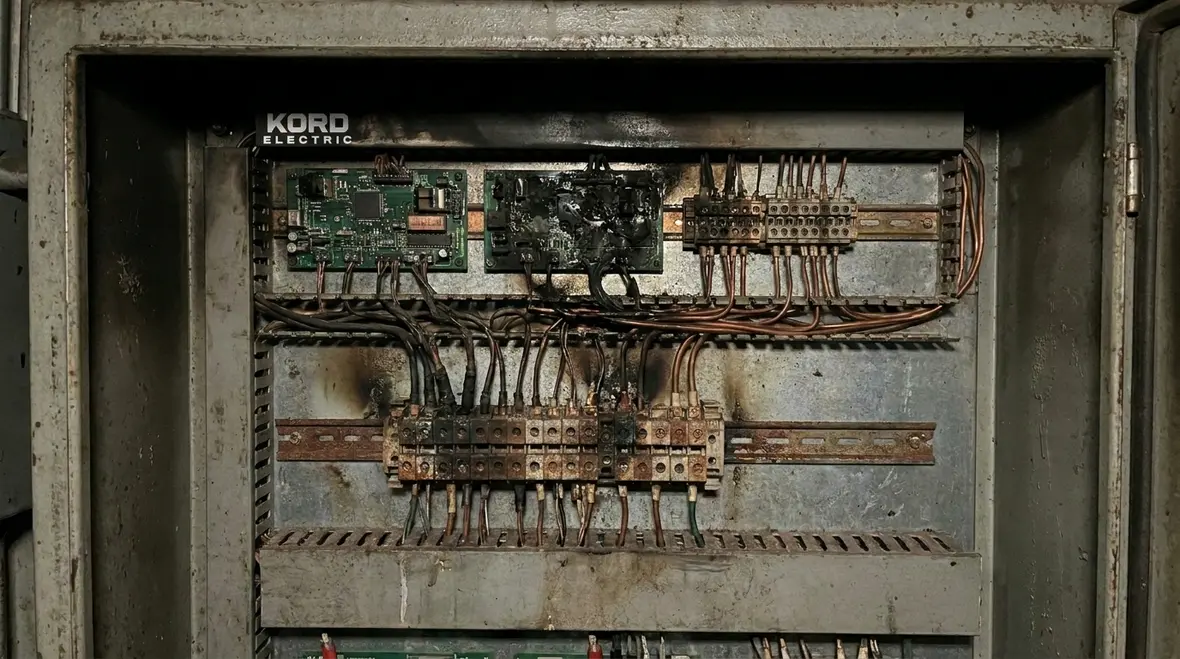
Many owners think surges are obvious because something will immediately shut down. Yet, the worst damages can be subtle. A surge can weaken power supplies, harm surge sensitive components, or degrade insulation in a way that does not show up until later. Consequently, you may get a delayed failure, and the timeline makes it harder to connect the cause.
In commercial and industrial facilities, that delay turns into downtime. Then you face labor costs, replacement parts, and potential service interruptions that affect operations and customers. Additionally, you can see data loss risk in systems that rely on clean power for consistent performance. In other words, one surge can snowball into multiple problems.
We have seen cases where one event leads to repeated troubleshooting visits. The building looks fine at first, because the panel may not show visible signs. However, internal stress can remain. That is why we approach protection proactively rather than after the fourth “mysterious failure” of the year. Electricity loves patterns, and so do costs.
Hidden electrical problems inside panels, feeders, and terminations often reveal themselves only after a sequence of events. Surge protection does not replace detailed inspection, but it gives those components fewer chances to experience the kind of stress that shortens their life in ways you cannot see from the outside.
Surge protection strategies our technicians recommend
Our technicians focus on a practical approach that matches the facility’s needs. We often recommend:
Service entrance protection to reduce incoming overvoltage impact before it travels deeper into the building
Panel level protection where sensitive loads receive power downstream, so the equipment faces fewer harsh spikes
Coordination and device selection based on the panel design, protective ratings, and facility load behavior
Grounding and bonding verification to help ensure the protective path functions correctly during events
Clear labeling and documentation so maintenance and troubleshooting teams can act fast
Meanwhile, our expert service staff explains these steps like we are teaching someone how to use a seatbelt. You hope you never need it, and yet you sleep better knowing it is there. And if you do need it, you want it installed correctly the first time, not after a rerun of the same emergency.
In some facilities, surge protection also connects to specialized systems like fire pump controllers and life safety equipment. In those cases, we coordinate with fire protection partners so protection at the panel level supports the reliability of pumps, alarms, and other safety circuits that must perform under pressure.
How to evaluate your facility’s surge risk
Surge risk depends on location, utility conditions, and your electrical environment. A major property building near lightning prone areas faces different challenges than a facility in a stable grid region. Also, facilities with frequent switching, backup generator transitions, or high motor loads see more transient activity. In addition, older electrical systems and panels without modern protective components can respond poorly to spikes.
To evaluate risk, we review the electrical distribution path from service equipment through main panels and branch circuits. Then we identify where sensitive loads connect and how often electrical switching events occur. After that, our team helps you decide the best protection level and placement.
For leaders of commercial and industrial operations, this is not just an electrical decision. It is a reliability decision. It affects maintenance planning, budget forecasting, and uptime goals. We keep the conversation grounded in what your building actually experiences.
If you already have service history that includes unexplained resets, nuisance trips, or “random” device failures, we can pair surge risk evaluation with a review of past outages and maintenance records. That way, commercial electrical panel surge protection becomes part of a larger plan to reduce both visible and hidden electrical risks in your building.
FAQ
Get commercial panel protection installed the right way
Surges do not ask permission, and they do not follow your maintenance schedule. Kord Electric helps commercial and industrial facilities protect critical electrical panels with commercial electrical panel surge protection designed for your loads, wiring path, and operating conditions. Our technicians and expert service staff explain each step, so you know what protects your equipment and why. If you want fewer surprise failures and stronger reliability, schedule an assessment with us today and let’s secure your power before the next event rolls in.
For properties that want surge protection as part of a broader reliability strategy, Kord Electric also supports projects like solar integration, EV charging build outs, and data center electrical distribution upgrades. No matter which path you take first, the goal stays the same: power that behaves itself when your building is busiest.
To learn more about how panel level protection fits into long term maintenance and uptime planning, you can review Kord Electric’s electrical preventive maintenance services and coordinate your next steps with a team that treats reliability as a daily practice, not a once a decade project.