Industrial Lighting Control Energy Savings Guide
Maximizing Energy Savings With Advanced Industrial Lighting Controls: The Business Case
At Kord Electric, we focus on one thing first: industrial lighting control energy savings that show up on real utility bills, not in some fantasy spreadsheet. With advanced controls, commercial and industrial facilities can cut wasted light, reduce late night burn, and manage load in a smarter way. And yes, the lights still work perfectly. In fact, they work better, because we match lighting to how people actually use the space. That means fewer “lights on just because it feels safer” situations. Frankly, that habit is older than most sitcoms, yet it still costs companies money.
Now, others might install switches and call it a day. We do better. Our technicians explain the why and the how, step by step, so your team understands what changes, what benefits, and what happens next. Then we make it all work with your building, not against it.
Where Waste Starts in Industrial Buildings

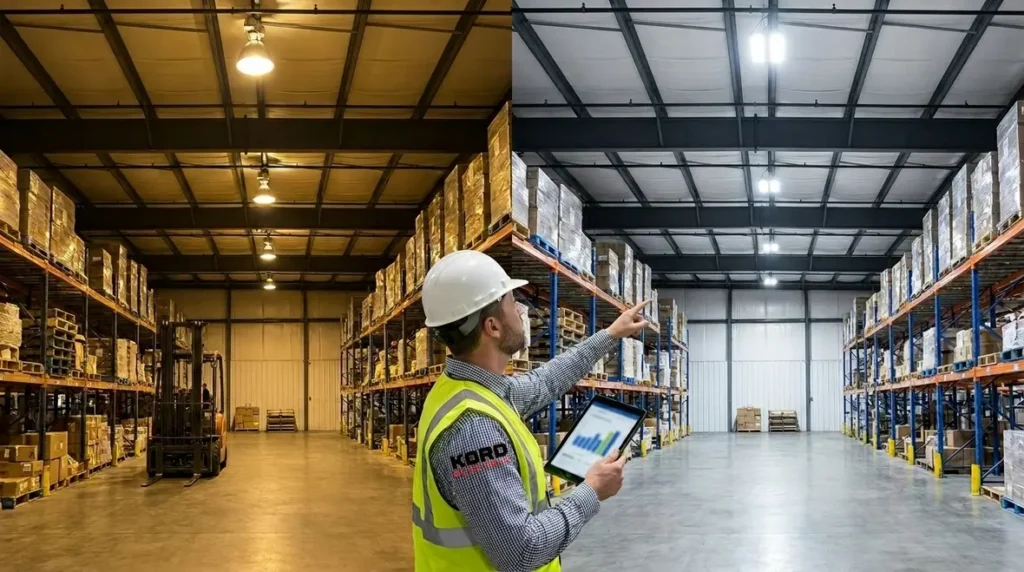
Most energy waste does not come from the bulbs themselves. Instead, it comes from how lighting gets controlled. For example, many facilities run lights based on a schedule that was set months or years ago. Yet operations change. Shifts rotate. Maintenance corridors open and close. Production lines speed up and slow down. When lighting control does not adapt, the building keeps spending money to light areas no one is using.
In addition, older layouts often use one control zone for spaces that behave differently. A warehouse aisle might need low light all day, while a nearby staging area needs brighter light only at specific times. Meanwhile, offices and break rooms have occupancy patterns that follow humans, not timers. As a result, the lights either stay too bright too long, or they shut off at the wrong moment and frustrate staff.
Therefore, the best path is not just “more lights off.” The best path is coordinated control: occupancy, daylight, schedules, and zoning that reflects how the facility really runs.

How Advanced Controls Deliver Industrial Lighting Control Energy Savings
When Kord Electric designs a control plan, we start with a simple principle: lighting should follow usage and available daylight. We then implement controls that do exactly that. Here is what that looks like in practical terms.
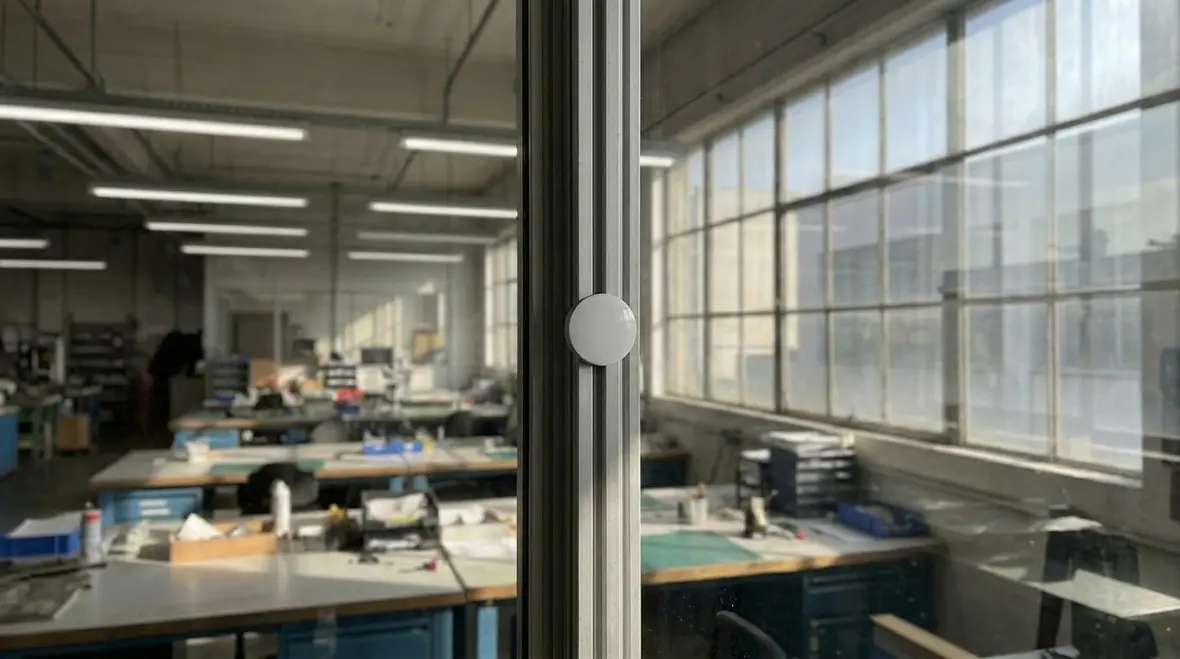
- Occupancy sensing: Sensors detect movement in areas like corridors, storage zones, and workstations so lights dim or shut off when spaces sit empty.
- Daylight harvesting: Near windows, controls reduce output when sunlight is available, instead of keeping lamps at a fixed level.
- Scheduling and override: Timers handle regular patterns, while override options support safety and convenience during unusual tasks.
- Dimming strategies: Dimming uses power reduction without sacrificing usable light. We set thresholds carefully so workers can see what they need.
- Smart zoning: We break buildings into zones that match real activity, so the wrong area does not carry the energy load.
Consequently, the system avoids the most common “on too long” problem. And because it dims instead of only switching, it maintains visual comfort. In the long run, this approach tends to deliver industrial lighting control energy savings while also supporting smoother operations.
Of course, like any tool, it works best when installed correctly. Our expert service staff walks your team through setup, programming, and how to interpret performance changes. Because if people cannot understand the system, they will fight it. And nobody wants a lighting war on a Tuesday.
Designing a Control Plan That Fits Your Facility
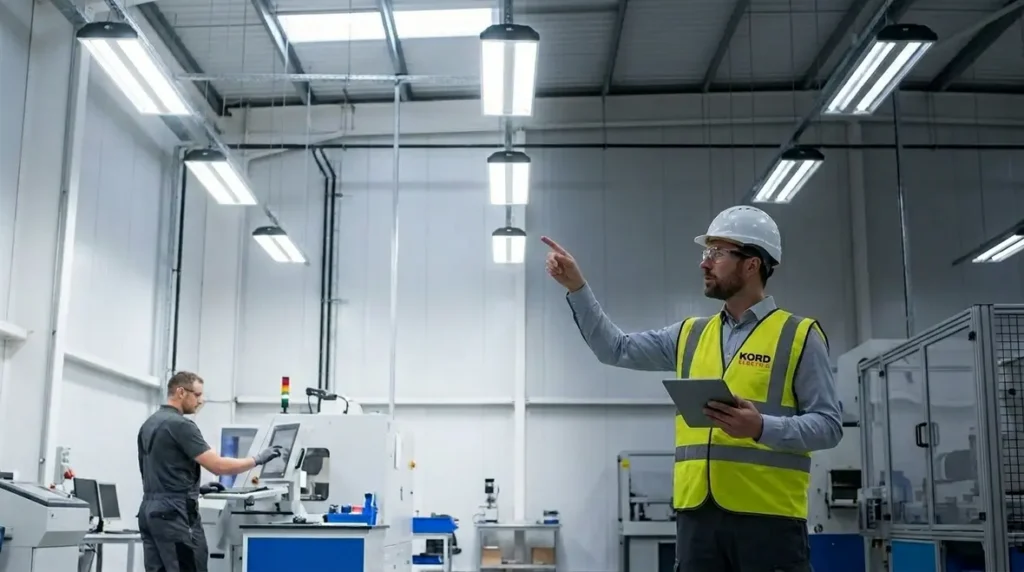
Every major property building has a different rhythm. A distribution center does not run like a manufacturing plant. A multi tenant complex does not behave like a single campus. For that reason, our technicians start with a site review focused on usage and layout, not just equipment lists.
We consider several factors before we lock in a design.
- Space types: Production floors, loading docks, offices, restrooms, and parking areas each need different control logic.
- Occupancy patterns: We look at shift schedules, downtime windows, and how long tasks actually take.
- Light levels and codes: We set dimming targets that keep illumination safe and compliant for work tasks.
- Network and control architecture: We plan wiring and communication paths so controls stay reliable.
Then, we explain our choices in plain language. For instance, if an area sees sporadic use, we might use occupancy based control with a conservative minimum light level. Meanwhile, if a space tracks daylight strongly, we might lean into daylight harvesting with smooth dimming. In other words, we avoid one size fits all thinking.
Additionally, if the facility has other electrical upgrades happening, we coordinate. We approach lighting controls as part of the bigger picture: energy management, load planning, and building modernization.

Getting the Most Savings Without Creating Operational Headaches
Even the best technology can underperform if it gets misconfigured. So Kord Electric treats commissioning as a key part of the project, not a final afterthought.
Our technicians verify that sensors trigger correctly, zones match the floor plan, and dimming curves feel natural to occupants. As a result, your team does not get surprise darkness when someone is halfway through an inspection. Also, we fine tune time delays and sensitivity so controls respond quickly, but not twitchy.
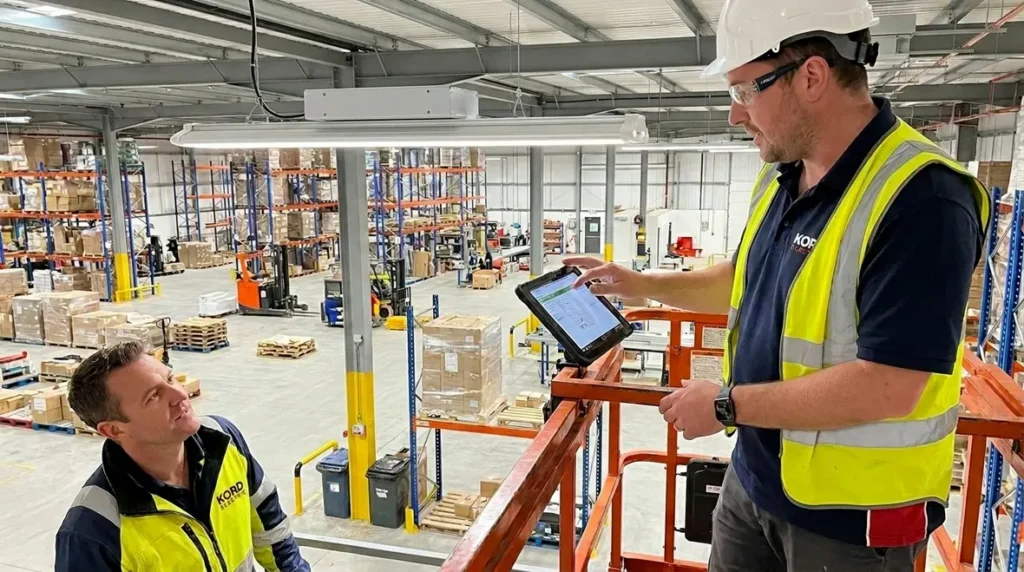
We also train your operators. After all, someone needs to manage the system after we leave. Our expert service staff shows how to handle schedule changes, what the override options do, and how to report any odd behavior. That prevents the “call us again, it is stuck” problem that burns time and money.
And yes, we keep the mood light when possible. If the controls ever feel too dramatic, we remind people that the building is not trying to audition for a sci fi movie. It is trying to save energy.
Planning for Building Upgrades: EV Charging and Power Growth
Many commercial and industrial facilities now add EV charging, and that introduces new electrical load. While lighting controls focus on light use, smarter buildings manage power overall, so the two upgrade paths should make sense together. Kord Electric supports industrial sites with planned electrical work, including EV charger installation. You can review our approach here: EV charger installation.
When a site expands, energy demand shifts. Therefore, lighting control energy savings can support overall load balance. They can reduce baseline consumption, which helps keep the building’s electrical system healthier as new equipment comes online.
In practice, this means we coordinate electrical capacity conversations and we help facility teams think in systems. For example, if you add charging infrastructure for fleet vehicles, we look at how lighting schedules and occupancy patterns can reduce daytime spikes. Then, we align the controls plan with your operational reality so the upgrades feel like a single strategy, not a pile of separate projects.
This systems mindset also reduces future rework. Nobody enjoys tearing out work because the second upgrade did not account for the first. Our team plans ahead so your modernization stays clean and reliable.
If your facility is already planning broader lighting work, Kord Electric’s dedicated lighting installation services help align fixture choices, controls, and code compliance so industrial lighting control energy savings become part of a larger, coordinated upgrade instead of an isolated project.
FAQ: Industrial Lighting Controls and Energy Results
Ready to Cut Waste and Keep Operations Smooth
If your lights stay on “just in case,” you are paying for uncertainty. Kord Electric helps commercial and industrial facilities install advanced industrial lighting controls that reduce wasted run time, improve comfort, and support long term energy planning. Our technicians and expert service staff explain the system in simple terms, then commission it so it works the way you expect. If you want measurable industrial lighting control energy savings without operational headaches, contact Kord Electric today for a facility review and next step plan.
To integrate controls with a broader upgrade path, explore our dedicated lighting installation services for commercial and industrial facilities or coordinate lighting control work alongside EV charger installation so your building’s power, lighting, and charging all move forward together.