
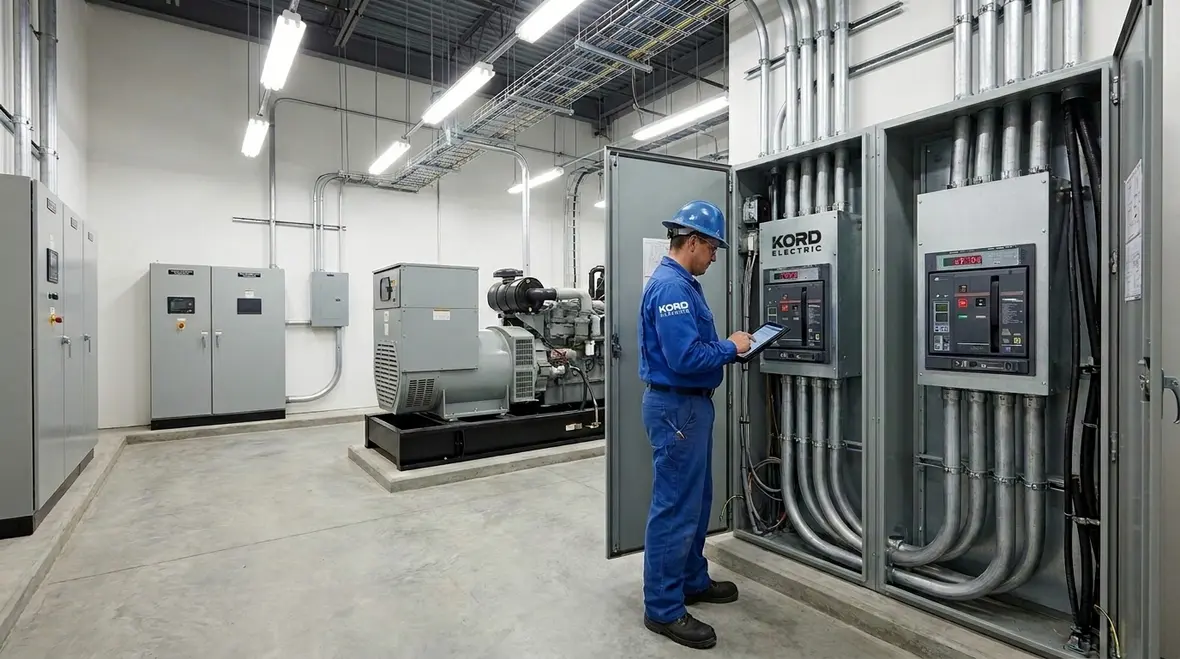
Business Continuity Electrical Power Backup Plan
Business continuity electrical planning that keeps the lights on
At Kord Electric, we build a business continuity electrical power backup plan into our electrical design from day one. That is how commercial and industrial facilities avoid the kind of downtime that turns a minor power issue into a very expensive headline. When the grid hiccups, backup systems and smart load management take over. Meanwhile, our expert service staff explains each step in plain language, so decision makers understand what will happen and when.
In other words, we plan like grown ups, not like people who just hope the breaker fairy shows up. And yes, we also get why that feels like a joke right now, until it becomes a payroll problem later.
How planning reduces downtime at busy facilities
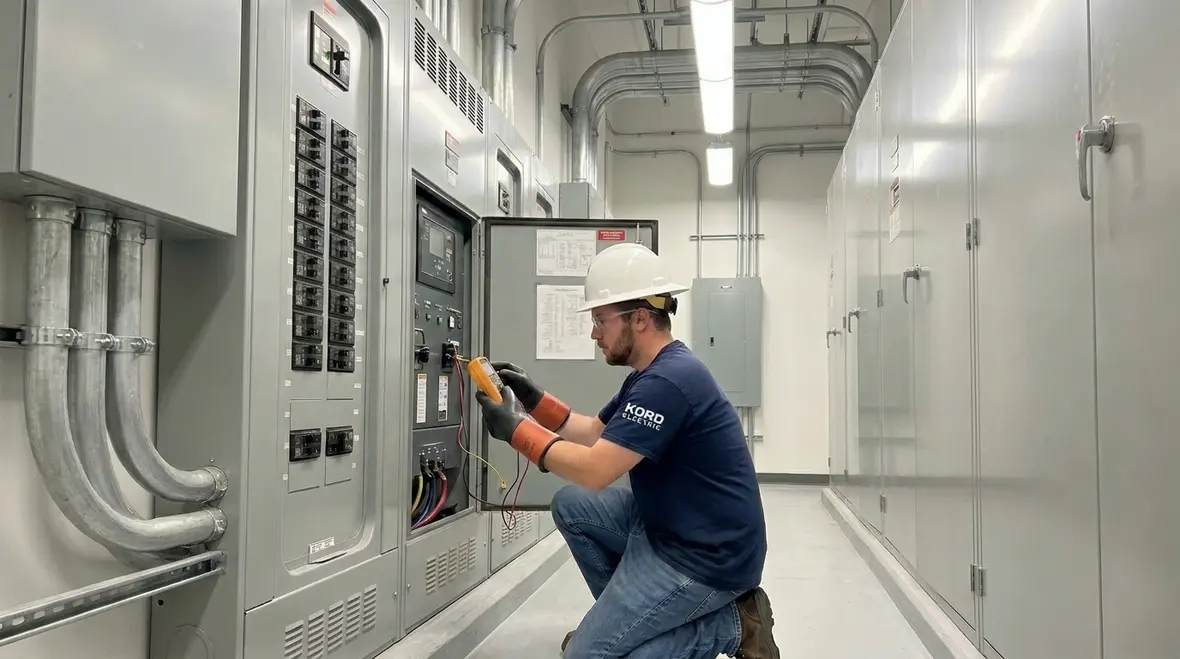
Most downtime does not happen because power fails by magic. It happens because teams cannot coordinate the response fast enough. Therefore, business continuity electrical planning focuses on what fails first, what fails next, and what must stay alive no matter what. We start by mapping critical loads, then we align electrical protection, wiring, and backup operation to that reality.
Next, we set priorities. A data rack, a control system, and a security network do not share the same needs as convenience lighting. As a result, our designs separate circuits, define transfer behavior, and prevent unnecessary startup surges from tripping equipment. When the right systems ride through, operations keep moving, and the team stays focused on customers, not chaos.
Our technicians walk facility leaders through the plan, so people know what the backup will support, how long it can support it, and what the operating sequence looks like. That communication matters. It turns uncertainty into a checklist. And while nobody wants a fire drill for electricity, planning beats guessing every time.
Designing electrical backup as a system, not a box
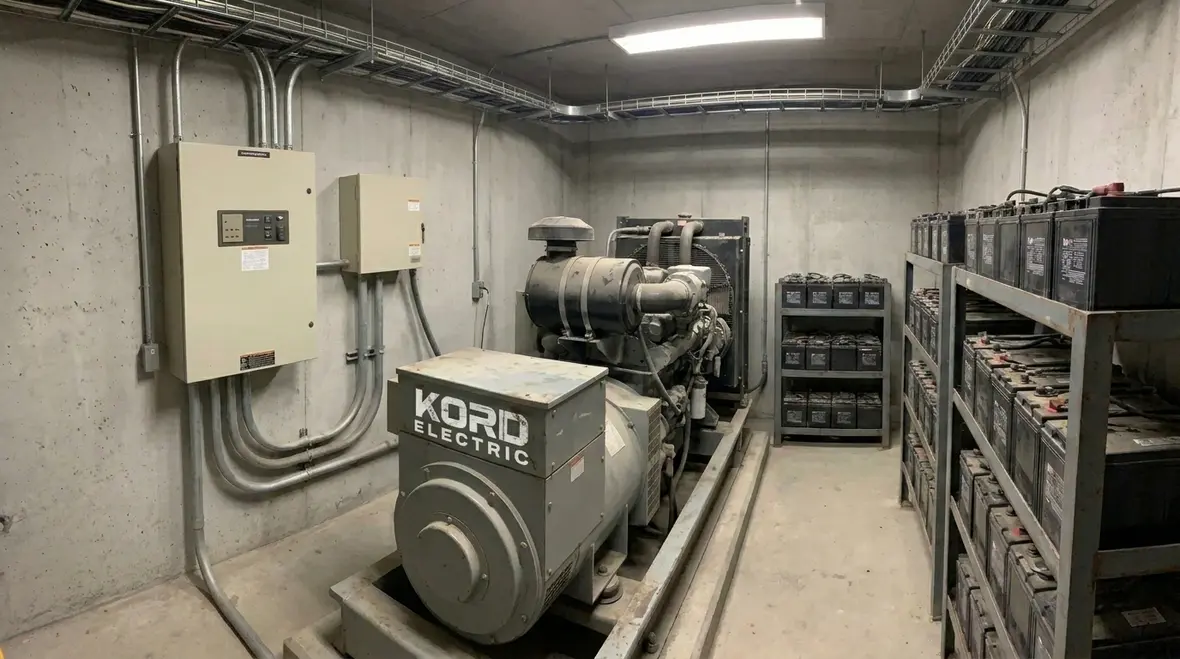
A backup power setup works best when it behaves like part of the building, not a plug and play accessory. So, we treat electrical continuity as a system with inputs, outputs, controls, and safeguards. We consider the utility source, the generator or battery interface, the transfer switch logic, and the downstream protection devices that keep equipment safe.
To prevent costly downtime, we coordinate three layers. First, we stabilize the supply through proper switching and voltage regulation. Second, we protect sensitive loads with correct circuit design and surge protection. Third, we validate that the control sequence will run under real conditions. That includes starting conditions, load steps, and any time delays that help avoid sudden inrush.
We also look at how the building loads change across shifts. A warehouse does not demand the same power at 2 a.m. as it does at noon. Therefore, our planning includes load profiles, not just a nameplate list. Then, our expert service staff explains the results so your operators can plan maintenance windows and respond calmly during events.
Why load management and transfer logic matter
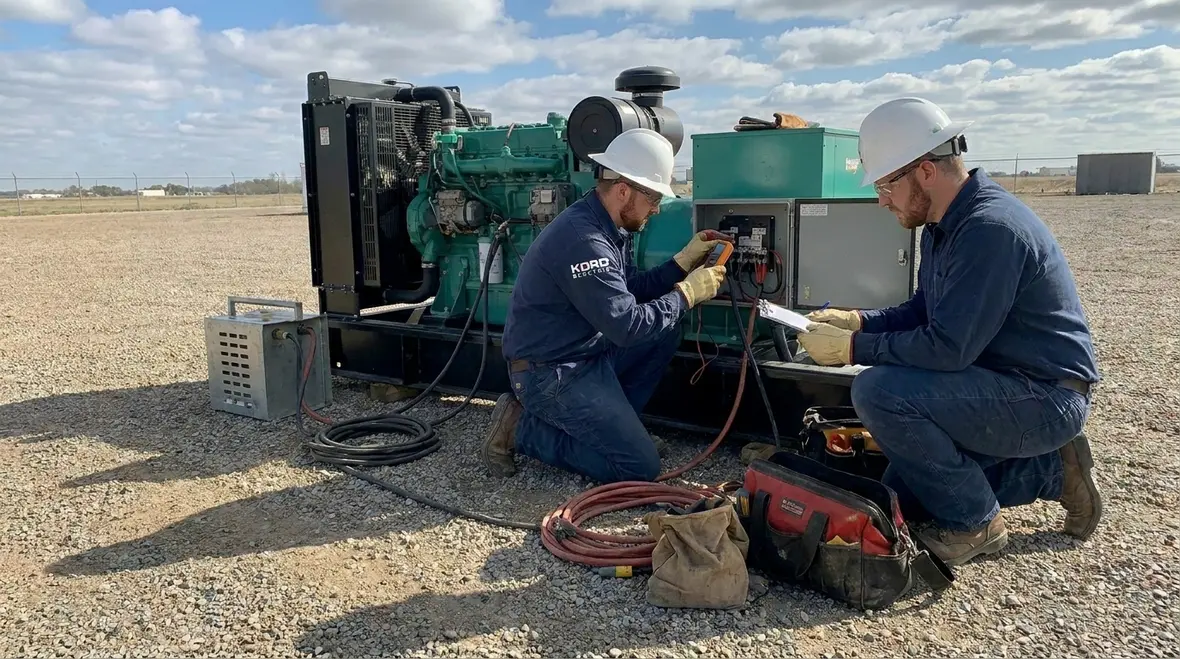
When people hear “backup power,” they often picture the whole building running. However, that assumption can create the very downtime they fear. Backup systems have limits. So, effective load management ensures the system carries critical circuits first, then adds other loads only if capacity allows.
Transfer logic plays a big role. If switching is slow or confusing, critical equipment may reboot and fail to recover. For that reason, we plan how the transfer switch operates and how controls communicate with panels and monitoring systems. We also verify that protection settings prevent nuisance trips. Those trips often happen when loads step too fast, or when breakers see a condition they were never tuned to handle during transfer.
Our technicians review scenarios with the facility team. Then, they show what operators will see and what they should do. In commercial environments, clarity reduces response time. And in industrial settings, response time directly ties to equipment health. It is less “hold my beer” and more “here is the operating path.”
Preventive testing and real-world commissioning keep the backup ready
Planning on paper is useful, yet it is not the same as performance. Therefore, Kord Electric schedules commissioning steps that test the backup power system the way it will actually be used. We verify transfer times, stability under load, and the ability to ride through expected events. Then, we check alarms and monitoring so issues get flagged before a failure becomes a stoppage.
We also test for the human factor. During an outage, people need to know who contacts whom and what sequence to follow. So, our expert service staff provides walkthroughs of the system behavior. They explain how the business continuity electrical power backup will respond and what indicators should trigger action. That way, the facility team does not rely on rumors, or worse, a group text that spreads misinformation at the speed of Wi-Fi.
Finally, we align maintenance with the operating schedule. Facilities often cannot shut down during peak demand. So, we plan checks in a way that supports continuity. This reduces the chance that the backup looks great during install and performs poorly later.
Learning from EV charger installation planning
Downtime risk shows up in many modern power projects, including EV infrastructure. For instance, our approach to EV charger installation reflects the same core thinking. We evaluate power availability, plan for safe integration, and size electrical components so chargers can operate without destabilizing other systems.
Moreover, EV charging adds load variability, because charging behavior changes minute by minute. Therefore, we plan how chargers will draw power and how the facility distribution will handle demand. That mindset carries directly into business continuity work. The goal stays the same: prevent overloads, avoid nuisance faults, and keep critical systems stable even when usage spikes.
In short, we treat new loads as part of the electrical story, not as a separate chapter. When facilities plan that way, both daily operations and outage response get stronger. And nobody wants a “charging moment” to become a “facility-wide power problem.”
Design steps we follow for commercial and industrial facilities
Kord Electric works with major property buildings and commercial and industrial clients. So, our process targets the realities of those environments: multiple tenants, complex loads, and strict uptime needs. We follow a clear path that supports decision making, reduces surprises, and improves long-term reliability.
- Critical load mapping: We identify equipment that must stay on, plus what can shed first when capacity tightens.
- Electrical coordination: We align protection devices, panels, and switching so transfer events do not trigger unnecessary trips.
- Capacity and runtime review: We confirm the backup system can handle the required load and operating time.
- Control and monitoring planning: We define what alarms show, how alerts reach staff, and how operators respond.
- Commissioning and tests: Our technicians validate behavior under realistic conditions, not just installation checks.
- Staff walkthroughs: Our expert service staff explains the process and the expected system response in clear terms.
Then, we document the plan so it stays usable during maintenance, upgrades, and tenant changes. That keeps continuity from becoming a one-time project that fades when schedules get busy.
FAQ
Final word from Kord Electric
Downtime is expensive, and it almost always arrives without permission. Kord Electric helps commercial and industrial facilities prevent those outages from turning into lost revenue by building a practical business continuity electrical power backup plan, then validating it through commissioning and clear staff training. Our technicians and expert service staff explain the process step by step, so teams know what to do when the lights go out. If you want continuity that actually works, contact Kord Electric today for a focused electrical assessment and explore related services like data center electrical distribution design for reliability to support your overall power strategy.
When you are ready to align business continuity with broader compliance and safety goals, pairing this planning with code-aware upgrades rooted in standards such as NFPA 70 electrical code guidance helps keep your backup systems both reliable and inspection ready.
For facilities that need help beyond planning, Kord Electric’s commercial and industrial service team can also support targeted upgrades, emergency-ready distribution design, and integration with new projects such as EV charger installation so your continuity strategy covers both today’s loads and tomorrow’s expansions.


