Commercial Electrical Panel Upgrades Guide
Kord Electric helps commercial and industrial facilities stay powered, safe, and ready for business. When it’s time for commercial electrical panel upgrades, we do more than swap metal boxes. Our team evaluates what the building needs today and what it will need next, then guides owners through a plan that supports safe operations. In the paragraphs ahead, we lay out the real signs teams miss until something trips, flickers, or fails. And yes, we know what you are thinking: “Not again.” Still, just like a popular streaming show, electrical problems rarely start when you want them to. They start when you least can afford downtime.
Commercial electrical systems show stress before they fail
Most facility managers do not wake up and decide to ignore their electrical panel. Instead, small issues grow quietly. Over time, the panel experiences heat, vibration, humidity, and uneven loads. As a result, connections loosen, breakers wear out, and internal components degrade. While a panel may still “work,” it can operate outside safe limits.
At Kord Electric, our experienced service staff explains the situation in plain language. We show owners what we see in the field, why it matters, and how it connects to day to day operations. Then, we recommend commercial electrical panel upgrades when the risk and cost of waiting outweigh the cost of acting.
When commercial and industrial facilities start weighing upgrades, they often read related guidance first. For example, understanding how panels interact with broader distribution and renewable systems can help owners think in terms of long term strategy, not just immediate fixes—similar to how a facility might plan for solar integration and panel capacity together in a comprehensive roadmap.
When does a commercial electrical panel need replacement
Commercial electrical panel upgrades become necessary when the panel can no longer handle the building’s real demands. This often happens after tenant improvements, equipment expansions, or added HVAC loads. Therefore, the panel may run near capacity, even if it did not start that way.
We also consider the age and condition of the equipment. Older panels can contain components that do not perform as they once did, especially when the facility uses more power than it was designed for. Moreover, repeated breaker trips can signal that the panel is struggling with load management or that connections need attention.
Here are practical triggers that our technicians commonly spot during inspections at commercial and industrial properties:
- Frequent nuisance tripping or persistent breaker cycling
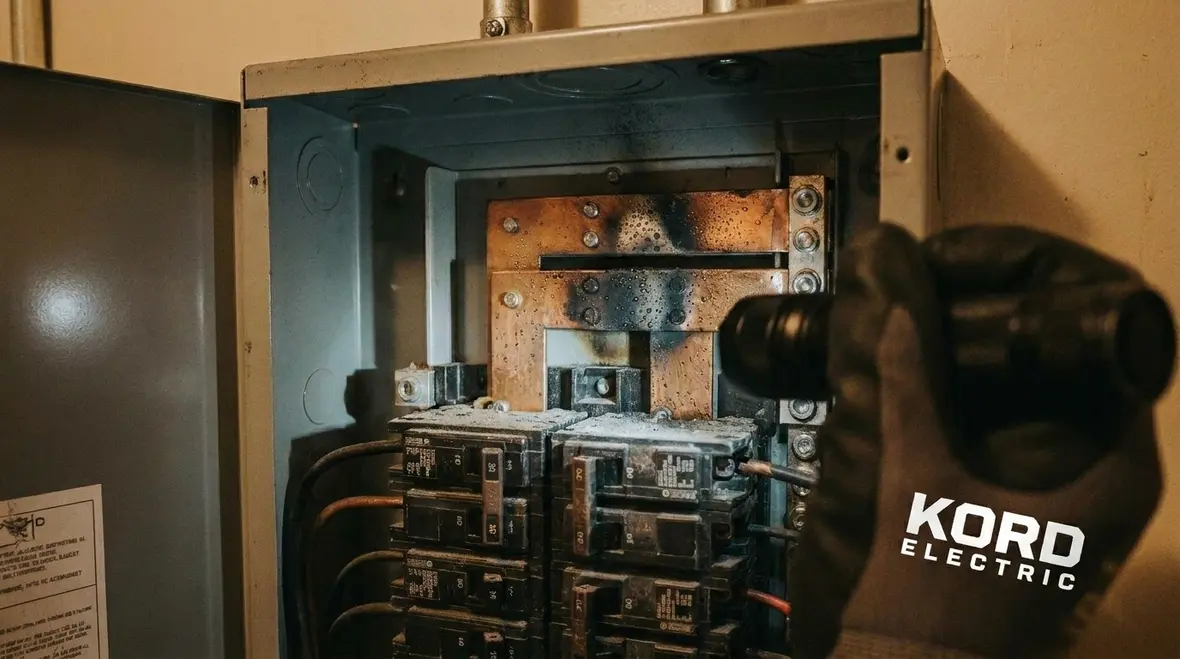
- Visible corrosion, staining, scorching, or a hot panel area
- Loose or outdated components that no longer meet today’s safety standards
- Signs of overheating at lugs, neutral bars, or bus connections
- Insufficient capacity after new circuits or major equipment upgrades
And if you’re wondering whether a panel can “just keep going,” we’ll be honest. It can sometimes. However, the margin for error shrinks each year, and the failure mode becomes harder to predict.
In many commercial buildings, panel condition ties directly into code expectations like NFPA 70 and local requirements. When inspection findings point to overloaded equipment, outdated components, or unclear documentation, upgrading the panel becomes part of staying aligned with current standards instead of reacting to red tag surprises later.
Overloaded panels and rising energy demands
Buildings do not stay still. As operations evolve, power use shifts. A warehouse may add refrigeration. An office tower may upgrade lighting, servers, or EV charging. Meanwhile, a manufacturing facility may increase motor loads. Consequently, the existing electrical distribution can become mismatched to the load profile.
When a panel runs close to capacity, heat builds up in places you cannot easily see. Heat affects insulation and bus bars, and it also accelerates oxidation at connections. Over time, that means higher resistance, which creates more heat. This is a loop, and the loop does not care that payroll is due soon.
Our technicians review load history when available, and we perform on site electrical assessments. Then we determine whether upgrades are about capacity, safety, or both. Sometimes the fix is a redistribution and targeted improvements. Other times, it is a full panel upgrade because the panel cannot be adapted without compromising performance.
For facilities already exploring renewable integration or major system changes, aligning commercial electrical panel upgrades with broader projects can also reduce downtime. When panel capacity, distribution, and labeling are coordinated in the same window, teams gain a cleaner baseline for future work and avoid piecemeal fixes that age at different speeds.
Overloaded or undersized panels also tend to reveal themselves during emergencies. Power quality issues, unexpected shutdowns, and erratic behavior at sensitive loads often trace back to distribution that never quite caught up with the building’s current usage. When owners treat panel upgrades as part of a reliability plan instead of a last minute rescue, they see fewer of those “did everything really just shut off?” moments.
What safety issues indicate a panel upgrade is urgent
Some signs deserve attention immediately. For Kord Electric, safety comes first, and we explain the reasoning with calm confidence. If you see or smell something unusual, you do not wait and hope. You investigate.
Common urgent safety indicators include:
- Burning odor near the panel or frequent breaker trips during normal use
- Buzzing, crackling, or arcing sounds when equipment runs
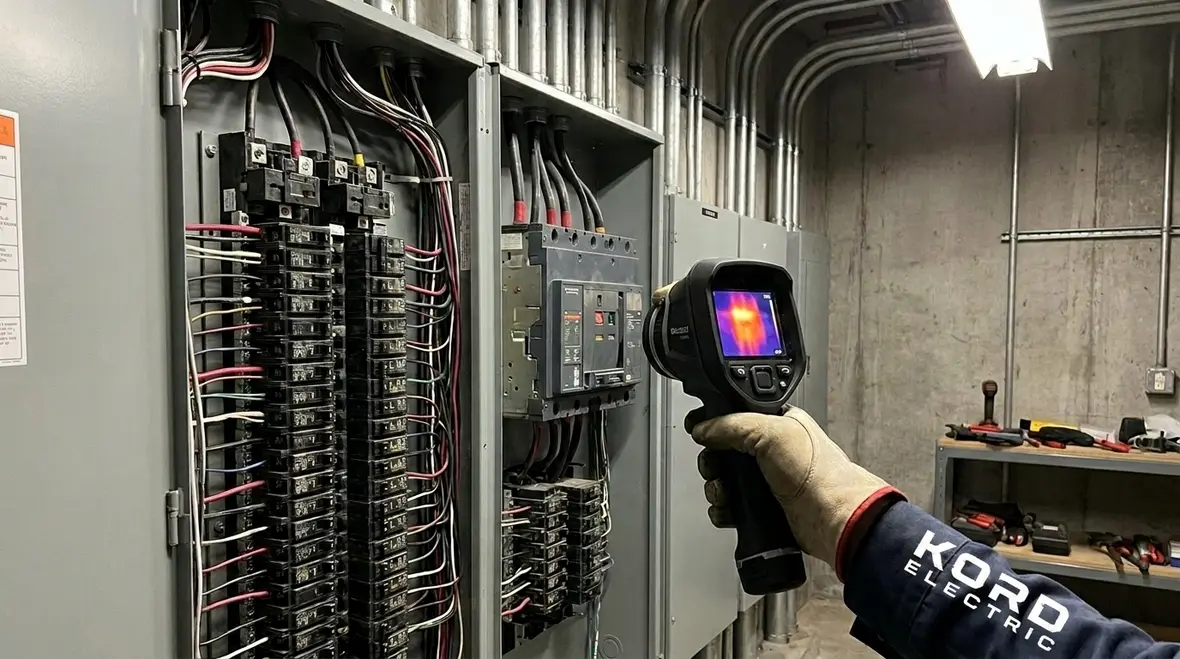
- Panels that feel unusually warm to the touch, especially around covers
- Signs of moisture intrusion or heavy condensation inside the enclosure
- Inconsistent power quality, including dimming lights or erratic equipment behavior
Then, there is the hidden safety factor: aging connections. Even when the panel looks fine from the front, inner contact points can loosen due to thermal cycling. Thermal cycling means the panel heats up and cools down with use. Over time, that movement can degrade contact integrity. Therefore, a panel can become less reliable long before it visually “fails.”
We also follow the needs of commercial and industrial facilities, where downtime costs real money. So, our approach aims to reduce risk during operation and maintain compliance with applicable requirements. That includes paying attention to how panel condition interacts with overall emergency response plans, clear labeling, and documented shutdown procedures, so teams are not left guessing during a stressful moment.
In some cases, what starts as a simple burnt odor at a panel door traces back to years of deferred maintenance. When Kord Electric investigates, we often find a mix of overloaded circuits, tired components, and improvised modifications that may have made sense “for a weekend” but never got corrected. Those are exactly the moments when commercial electrical panel upgrades move from a future plan to today’s agenda.
Planning upgrades around production schedules and tenant needs
Upgrading a commercial electrical panel is not just a technical task. It is a scheduling problem. Facility teams often need power to keep running, and operations rarely pause on a weekday afternoon. That is why we plan upgrades with practical restraint and clear communication.
First, we coordinate with the property team on the power requirements during the work window. Then we confirm access routes, material staging, and safe isolation procedures. After that, our technicians verify existing wiring paths and evaluate how the new panel will integrate with the distribution system.
Depending on the building, upgrades may include:
- Replacing outdated panels with modern equipment designed for commercial loads
- Updating breaker capacity and circuit organization
- Improving grounding and bonding where needed for safe operation
- Adding surge protection and power quality support where required
- Ensuring labeling, documentation, and circuit traceability are accurate
And yes, we hear the humor in “Can you do this without stopping anything?” In many cases, partial arrangements and careful sequencing make it possible. In other cases, we recommend a short, controlled outage window. Either way, we explain options and risks so the decision stays in your hands.
For regional facilities that operate on tight production schedules, pairing upgrades with broader service, such as dedicated Los Angeles County electrical services support, helps align work windows, shift coverage, and follow up inspections. Instead of treating each panel upgrade as a standalone event, owners can fold it into a larger plan that keeps the entire electrical backbone moving in the same direction.
How inspections and load assessments guide the right decision
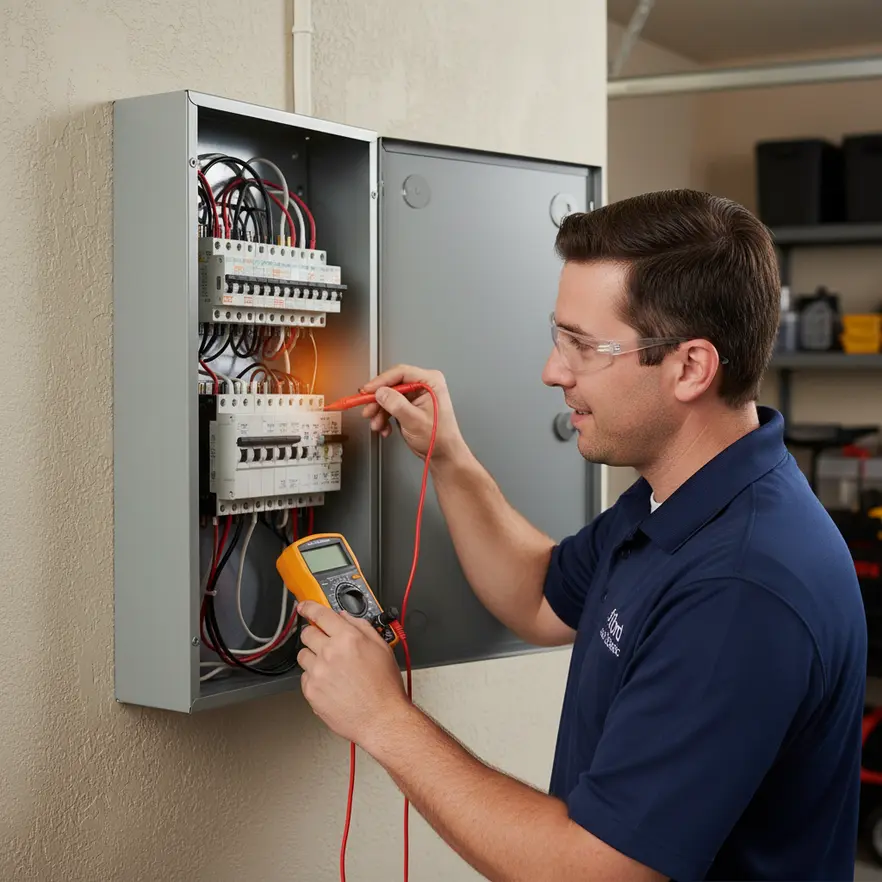
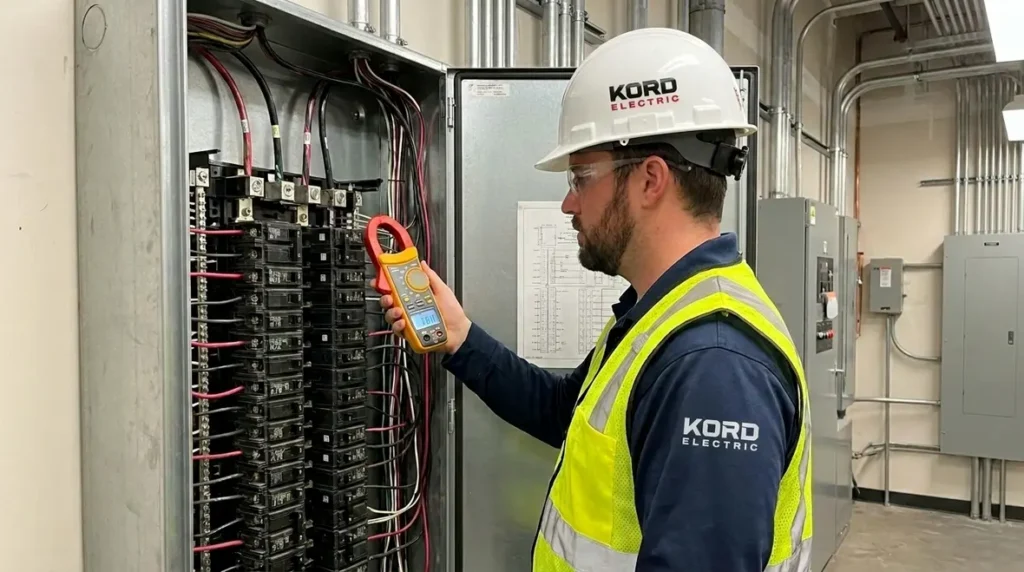
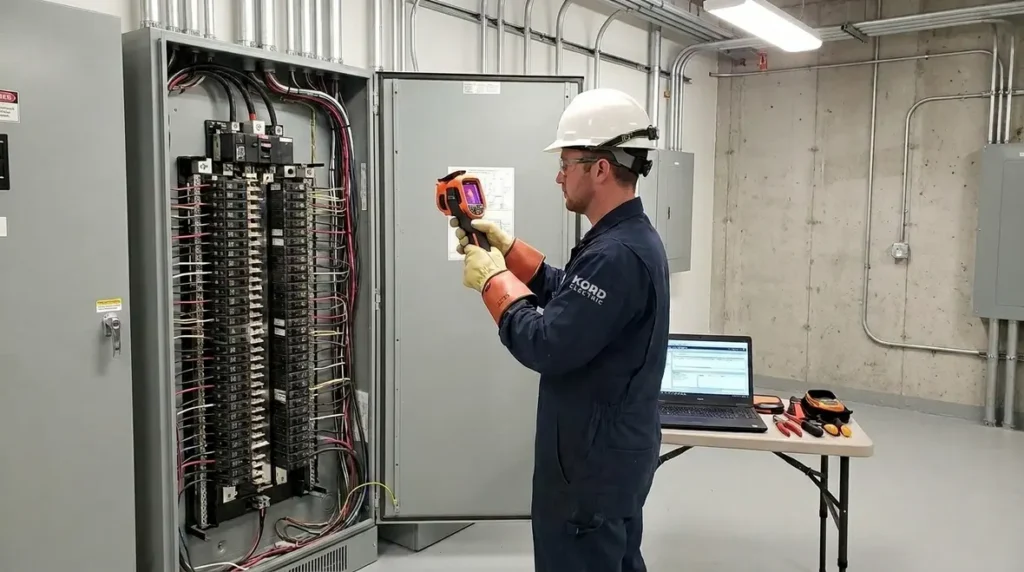
Instead of guessing, Kord Electric uses an approach that starts with evidence. We inspect the panel interior and evaluate the condition of components, connections, and bus bar integrity. Then we look at how the building distributes power, including critical circuits.
Next, we assess load behavior. This matters because two buildings can have the same total amperage on paper, yet one runs steady while the other experiences peaks, imbalance, or constant cycling. Consequently, the panel may wear out faster in one facility than the other. Our technicians help owners understand this difference, and we connect it to upgrade timing.
We also consider future changes. For major property buildings, owners often plan expansions, new tenants, or new equipment. Therefore, an upgrade should not just solve today’s issue. It should prepare the facility for tomorrow’s electrical growth.
In short, our service staff explains what we find, what it means, and what we recommend. We keep it business casual, not techno theater. The goal stays simple: stable power, safe operation, and fewer surprises.
When inspections point to recurring issues—like mislabeled circuits, capacity stretched to the limit, or repeated trouble calls for the same section of a panel—commercial electrical panel upgrades become part of a smarter reset. After the work, facilities usually see cleaner documentation, more predictable breaker behavior, and less scrambling during outages, because the system finally matches how the building actually runs.
For facilities across the region, especially those operating in and around Los Angeles, keeping production steady often means combining this evidence based approach with reliable regional support such as Los Angeles County electrical services that understand industrial timelines, tenant needs, and real world load demands.
FAQ
Bottom line for commercial teams: upgrade before the plot twist
When a commercial electrical panel shows stress, waiting usually costs more than acting. Kord Electric helps commercial and industrial facilities make clear decisions through inspections, load assessments, and practical planning. Our technicians explain findings in plain terms, then recommend upgrades that support safe power, reduced downtime risk, and room for future growth. If you want fewer breaker surprises and more steady operations, contact us now to schedule an evaluation and build an upgrade plan.
By planning commercial electrical panel upgrades before the next plot twist, you give your building the margin it needs to handle growth, emergencies, and code changes without constant stress. Panels stop being mysterious metal doors and become what they should be: clear, documented, and ready for the next chapter of your operations.