LED Retrofit ROI Calculation for Commercial Buildings
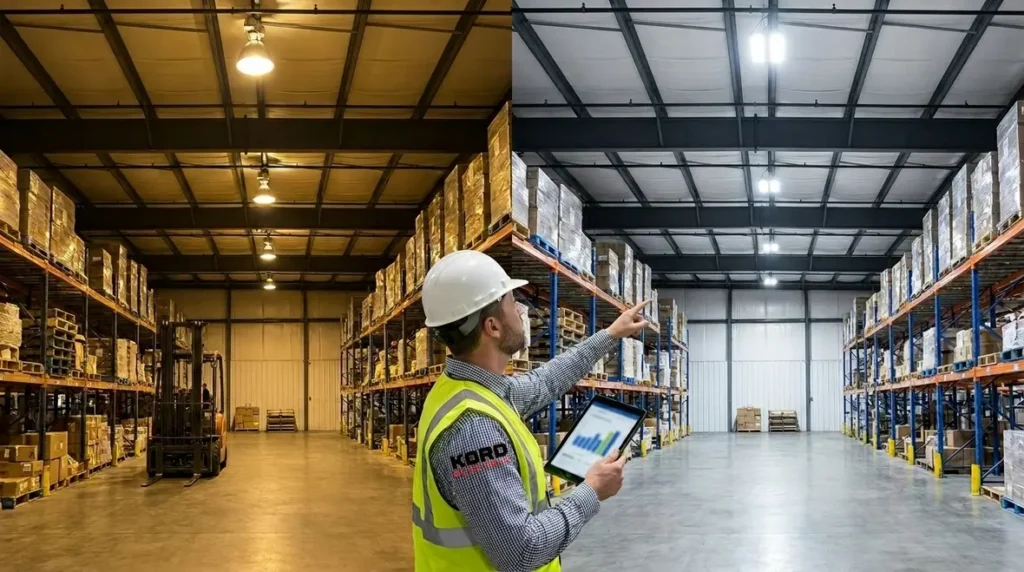
Kord Electric treats the ROI of LED retrofits like a real business decision, not a marketing slogan. In our led retrofit roi calculation, we look at what you pay now, what you pay later, and how quickly the math stops hurting. Others guess. We measure. For one commercial site, our team plugged in current wattage, utility rates, and run hours, then forecasted savings against retrofit cost. The result gave a clear payback window, plus a separate view of long-term value that keeps compounding year after year. And yes, your lights can pay you back. Not like a sitcom loan where you never get paid. Like actual savings.
1) Understand the led retrofit roi calculation before you approve spending
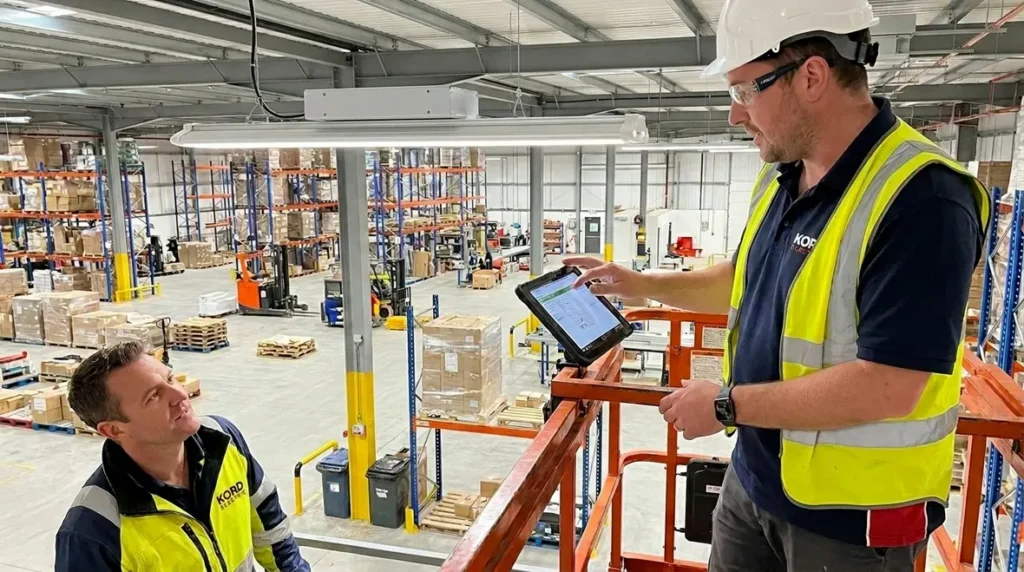
When a business owner asks about LED retrofit savings, they deserve a straight answer. So our technicians and expert service staff start with your real lighting schedule and real operating conditions. Then they run the led retrofit roi calculation with inputs that match how your building performs, not how a brochure imagines it. We account for hours of use, fixture counts, current lamp power, expected lumen maintenance, and typical fixture life.
From there, we translate energy use into dollars, then compare that to the cost of the retrofit. Next, we test the sensitivity. What if usage hours change? What if utility rates rise? What if maintenance cycles shift? By the time we finish, you see a clear payback period and a long-term savings view that supports budget planning with confidence.
And to keep the process calm, our team explains every line item in plain language. You do not need a lighting degree. You only need the ability to ask “What does this do to my operating costs?”
2) Where long term savings actually come from in commercial buildings
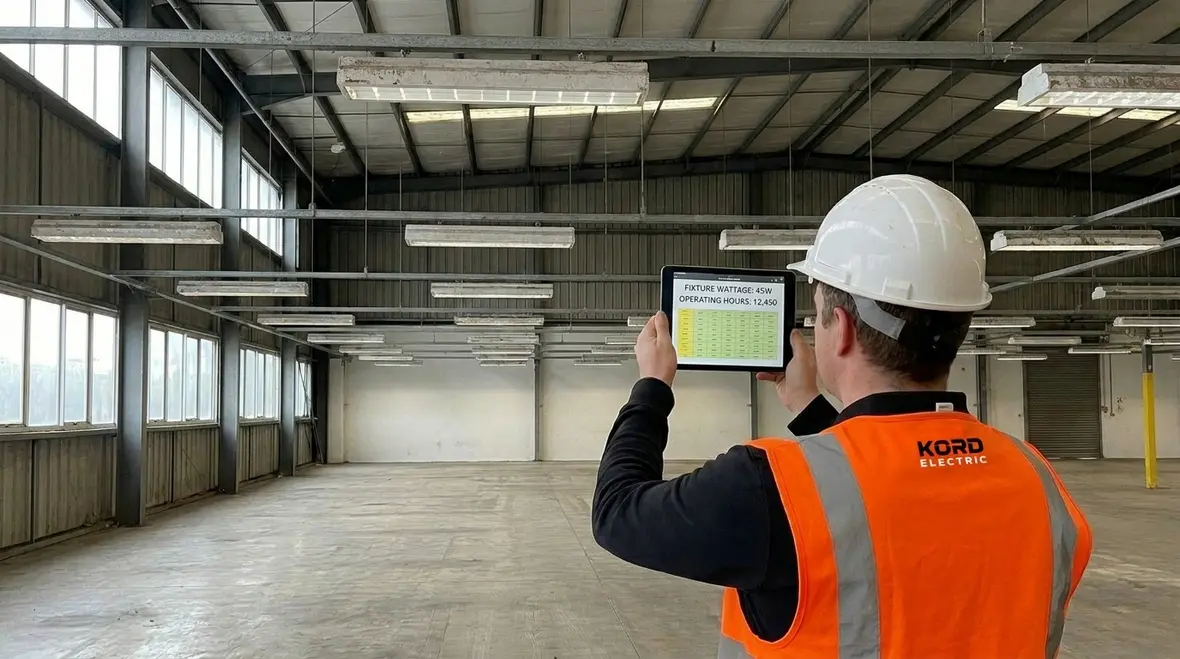
LEDs save money in more ways than most people expect. First, they use less energy for the same usable light. Second, they lower maintenance. Third, they help stabilize lumen output over time compared to older lamp types. However, the real story for industrial and major property buildings comes from the combination, not from one feature alone.
In practice, we see these savings drivers show up:
- Energy reduction: LED systems cut watts while maintaining light levels for tasks and safety.
- Reduced lamp replacements: Fewer failures means fewer service calls and fewer disruptions.
- Less downtime: When a fixture fails on a warehouse shift, production schedules pay the price. LED retrofits reduce that risk.
- Better controllability: With the right drivers and controls, we can support dimming and scheduling, which lowers energy further.
Then we add one more detail that many people overlook. When illumination stays consistent, you avoid “workarounds” like adding temporary task lights or running lighting longer than needed. In other words, you stop paying extra just to compensate for weak lighting performance.
If you want to see how LED upgrades shape budgets across fixtures, controls, and code requirements, our commercial lighting upgrade cost guide walks through how investment, savings, and lifecycle performance connect for large facilities.
3) Payback period and cash flow: the decision that keeps owners up at night
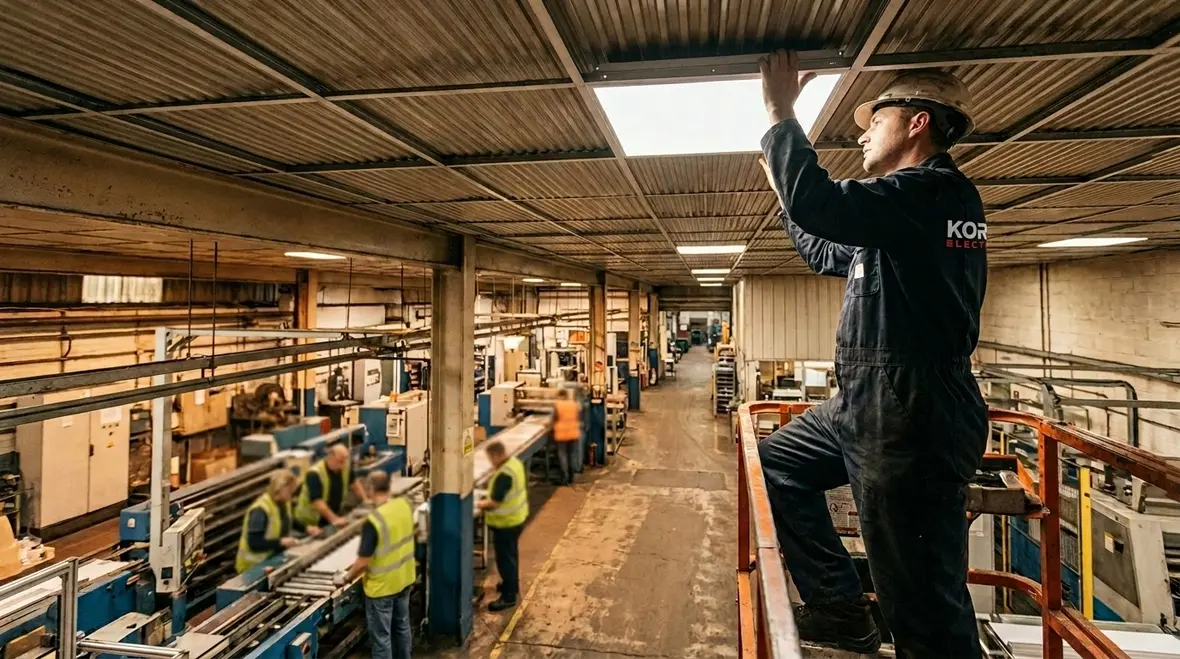
Business owners care about two things: when savings start and how reliably they arrive. So our team builds the payback timeline around your cash flow reality. We do not just ask how many dollars you can save. We ask when those dollars hit your budget, and how stable the savings stay under your operating pattern.
To do that, we review:
- Operating hours by space type such as office, warehouse, corridors, parking, and loading areas
- Current lighting performance including hot spots, dark zones, and fixtures that already show aging
- Maintenance history such as how often your staff or contractors replace lamps and ballasts
- Control strategy and whether we can upgrade it without wasting your time
Next, we align the retrofit scope to how you run your facility. For example, we can stage work to keep production moving and reduce interruptions. That matters because the best ROI on paper does not help if your crews and operations get stuck in a scheduling traffic jam. Nobody wants that, not even Batman with his dramatic cape and dramatic delays.
4) Maintenance and downtime cost: the hidden line that your spreadsheet forgets
Energy savings get attention. Maintenance savings often do the quiet work. Yet in commercial and industrial facilities, maintenance affects labor time, safety, and production continuity. When older lighting systems fail, the cost spreads: you pay for labor, you pay for parts, and you pay for the lost attention of your maintenance team.
Our technicians and expert service staff treat maintenance costs as a key part of the retrofit story. We look at how your current fixtures behave over time, then forecast maintenance reduction based on LED life and reliability. Also, we consider what happens during peak demand periods. A light outage in a critical area does not just mean darkness. It can trigger work slowdowns, extra inspections, and customer complaints in retail-adjacent spaces, though we focus on commercial and industrial facilities and major property buildings.
So we help you see the full value chain. You save electricity, yes. You also save your people from repeating the same job every few years. That is the kind of savings that feels like winning the lottery, except the lottery takes your money and never gives it back. LEDs, on the other hand, keep giving.
For facilities that want to connect maintenance savings with code-driven upgrades, pairing your led retrofit roi calculation with a review of lighting installation code compliance keeps your savings aligned with inspection realities.
5) Lighting quality and compliance: ROI that does not break safety standards
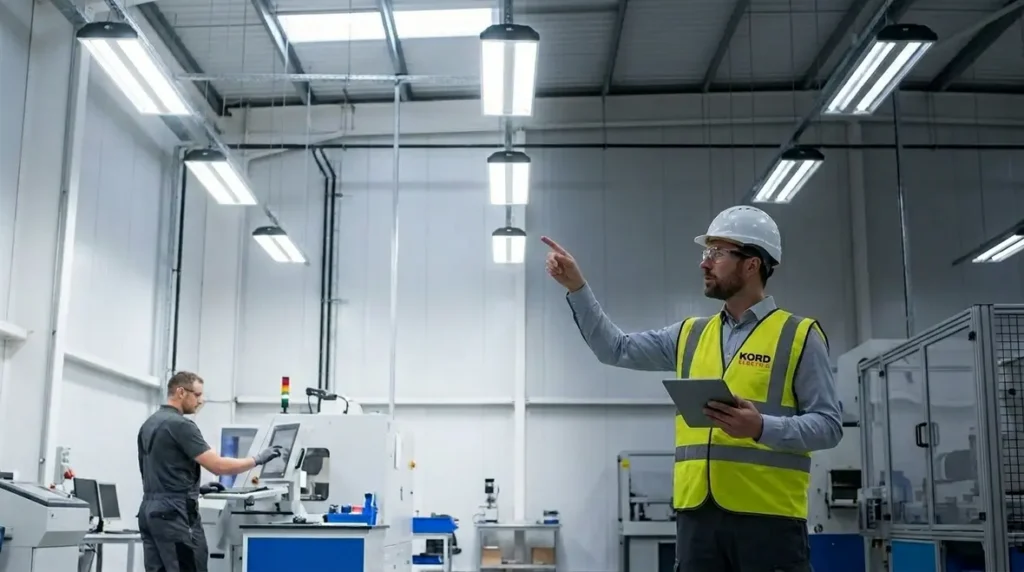
ROI becomes fragile when lighting performance drops below required levels. Therefore, our team does not treat retrofit as a swap-and-walk-away task. We aim to maintain or improve light levels for safety and day to day work. That supports better visibility for drivers, staff, and equipment operators. It also helps with compliance and reduces the risk of expensive rework.
For major property buildings and industrial operations, we pay attention to task areas, circulation routes, and exterior lighting where glare and uniformity matter. We also consider color consistency and how LEDs perform in the spaces where older lamps struggled. Additionally, we help match fixture types to the environment, whether it is a warehouse with high ceilings, a corridor with frequent foot traffic, or a facility that needs stable output.
And since our clients often ask for specifics, we show how the lighting plan supports real operations. We do not hide behind vague statements. We explain the outcome, then connect it to the financial results. Because when quality improves and energy drops, the led retrofit roi calculation stops feeling like a guess and starts feeling like a plan.
If you manage properties in California, aligning retrofit ROI with standards in the California Commercial Title 24 Lighting compliance guide helps you avoid the “save now, fix compliance later” trap.
6) How we build your retrofit model step by step
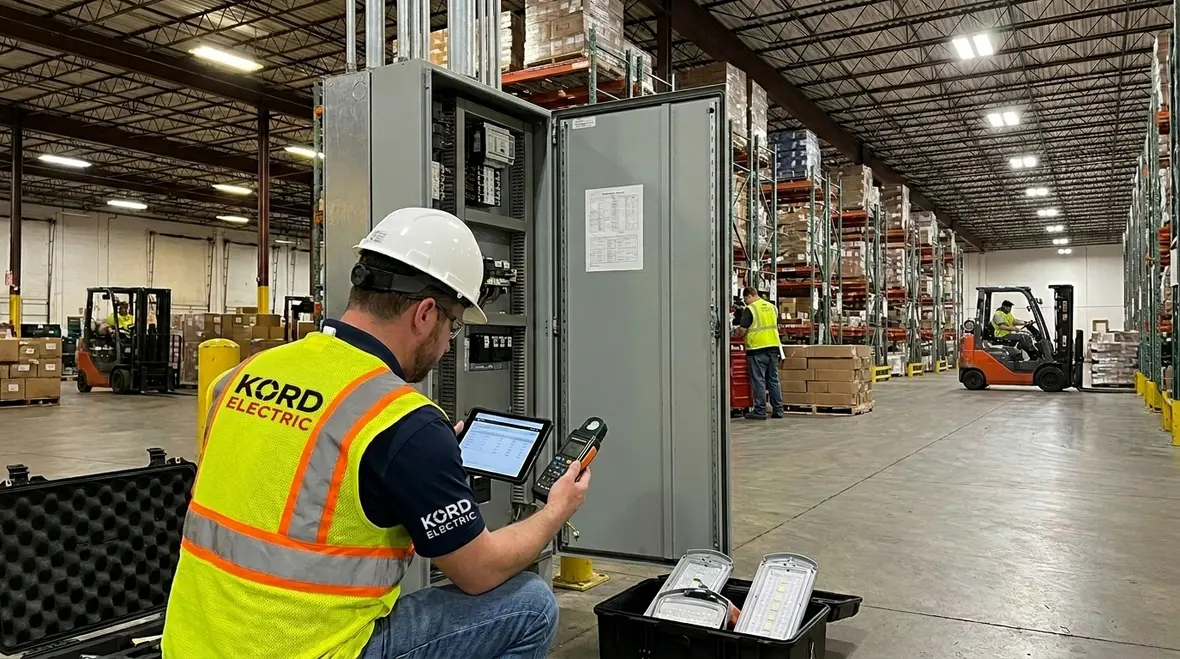
If you want the “how,” you get the how. Kord Electric develops a practical retrofit model that fits commercial and industrial work, not a one size fits all template. Our process moves from data to decision, with a focus on accuracy and clarity.
Here is how we typically structure the approach:
- Site and fixture review to confirm existing wattage, counts, and operating context
- Usage profiling based on how spaces actually run, including schedules and seasonal patterns
- Energy forecast that translates reduced wattage into kWh and then into cost
- Maintenance forecast based on expected life and service cycles
- Control integration check if you want added savings through dimming, scheduling, or sensors
- ROI summary with payback period and long-term savings outlook
Then our expert service staff walks you through what drives the numbers. If something changes, we show how it affects results. This keeps the retrofit conversation honest. You can tell us, “Our utility rates are different.” We can adjust. You can tell us, “Our shifts run longer.” We can recalibrate. That is the difference between a static estimate and a model that stays useful.
For buildings that combine LED upgrades with fixture changes or ceiling work, our dedicated recessed lighting installation services keep the retrofit model tied to how new fixtures are actually installed and tested.
7) What to watch for when comparing retrofit offers
Not all LED retrofit proposals protect you in the same way. Some will chase a quick payback using assumptions that do not match your building. Others might understate maintenance impacts, or they might ignore control options that would lower energy further.
When you compare options, pay attention to these points. If a vendor avoids them, that is usually a clue:
- Fixture level clarity: Are they clear about what you replace, not just the final “LED savings” number
- Assumption transparency: Do they show the inputs behind the retrofit ROI model
- Maintenance logic: Do they explain how lamp, ballast, or driver replacement changes
- Lighting performance targets: Do they address uniformity, task lighting, and safety needs
- Scope control: Do they plan for staging and minimal disruption for your operations
To be blunt, if the offer sounds like a magic trick, ask for the receipts. We do not rely on vibes. We rely on site data, tested assumptions, and technician feedback. That keeps your retrofit savings grounded, not fictional.
FAQ
Conclusion: let’s calculate your LED retrofit savings with real numbers
If you manage a commercial or industrial facility, you already know energy costs and downtime do not wait. At Kord Electric, we help you see the ROI of LED retrofits using your actual site details, not generic assumptions. Our technicians and expert service staff explain the led retrofit roi calculation clearly, so you can plan with confidence. Contact Kord Electric today to review your current lighting, build a retrofit model, and map long-term savings you can stand behind.
When you are ready to move from analysis to installation, our dedicated Los Angeles County electrical services team coordinates LED retrofits, controls, and broader electrical work so your project stays aligned with both ROI targets and real-world operational needs.
For facilities that want to connect LED savings with broader lighting installation strategy, the Kord Electric lighting installation services group designs, installs, and maintains systems engineered for long-term performance, safety, and measurable financial results.