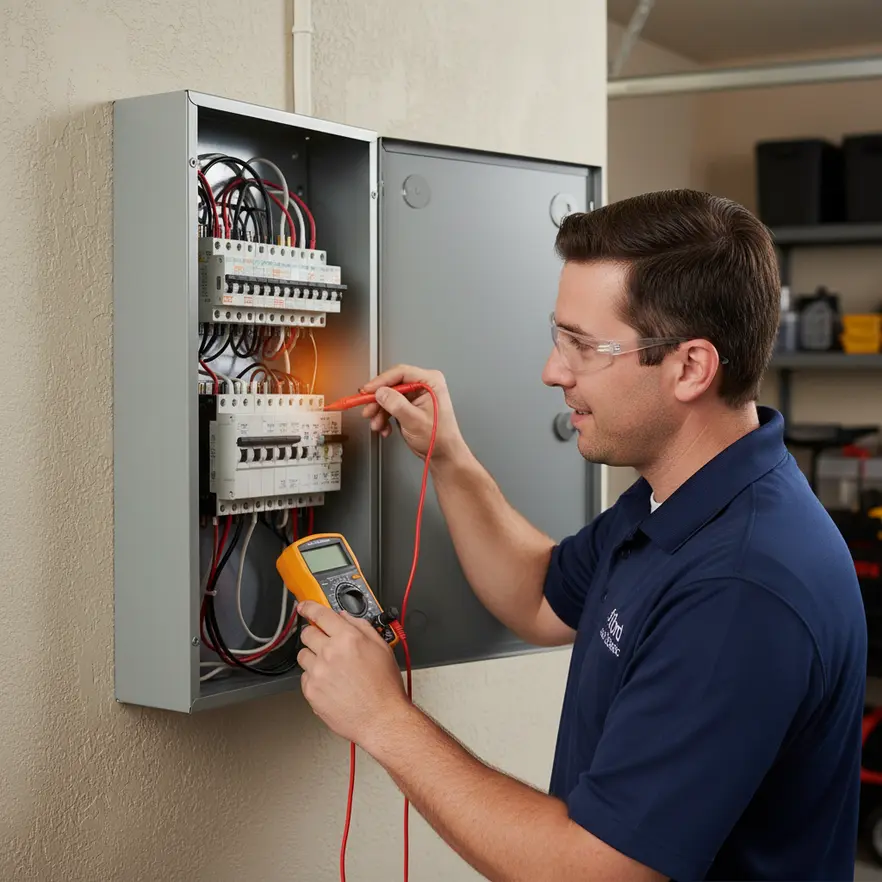
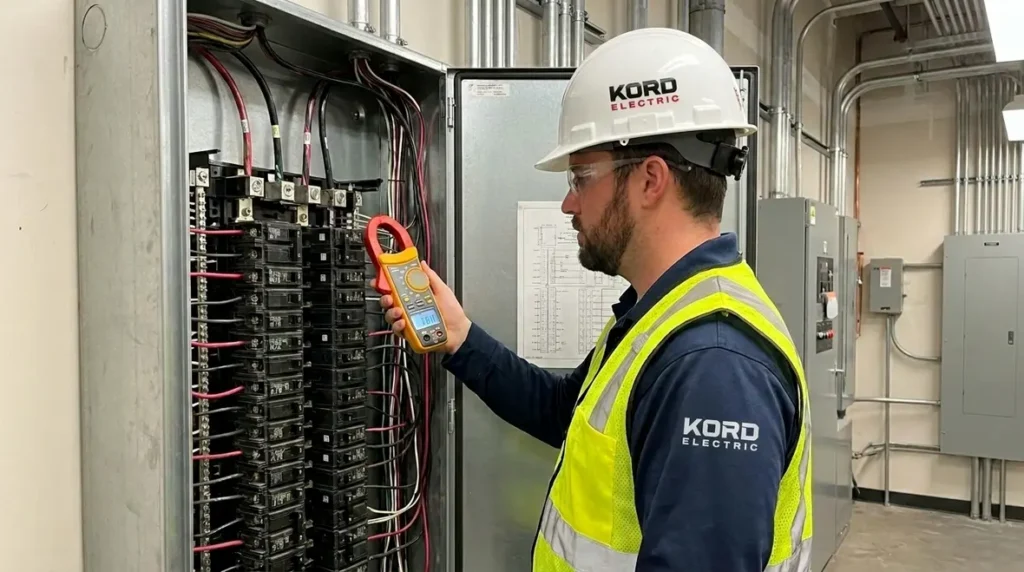
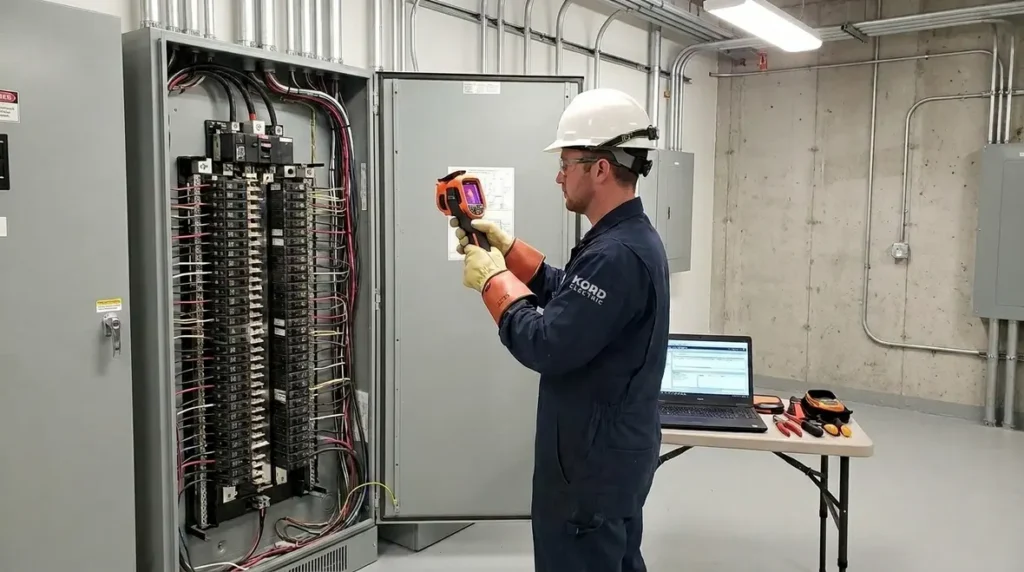
Commercial Electrical Subpanel Sizing Guide
Commercial electrical subpanel sizing guide for smart expansions
When a commercial tenant expands, the electrical demand grows, and the question becomes simple but important: will the distribution system keep up. Our commercial electrical subpanel sizing guide helps property managers and facility teams plan capacity before they run into hot breakers, nuisance trips, or the kind of “surprise” outage that no one budgets for. At Kord Electric, we size subpanels for commercial and industrial facilities and major property buildings, and we explain the reasoning clearly. In this article, others learn how we help teams expand without guessing, and why proper sizing matters as much as a good lock on the front door. Also, yes, electricity does not care that someone told it to “just handle one more thing.”
Know the load you need before you touch the panel
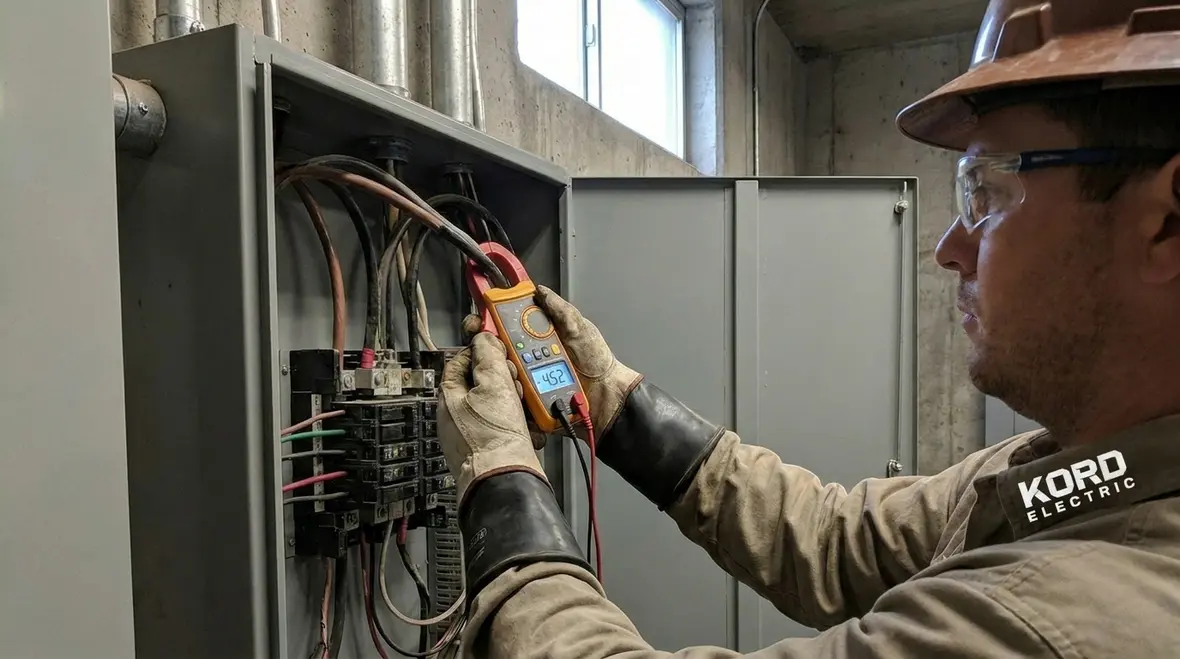
First, we tell clients that sizing never starts with the subpanel. It starts with the load. A solid commercial electrical plan gathers information from equipment schedules, historical utility data, and the actual way the building runs. Then we translate that into a demand load, which helps prevent oversized panels that cost too much and undersized panels that fail too soon.
In practice, our technicians and expert service staff walk through the expansion scope with the facility team. We confirm what changes and when. For example, a new HVAC package and a lighting retrofit do not behave the same way as a tenant buildout with motors, appliances, and intermittent loads. As we review these details, we also note operating schedules, starting currents, and power factor impacts, because those details change the math.
As we build that load story, we also pay attention to the hidden contributors that quietly push systems toward their limits. For many commercial facilities, plug loads, process controls, and seasonal equipment can stack on top of each other in ways that do not show up on a simple nameplate list. That is why our commercial electrical subpanel sizing guide focuses so heavily on real-world operation instead of theoretical maximums alone.
Choose the right subpanel type for commercial service
Next, we match the panel design to the facility. Commercial and industrial buildings often require higher interrupting ratings, clear labeling, and a layout that supports ongoing maintenance. Also, when a project expands, future capacity becomes a business decision, not just an engineering one.
Kord Electric typically considers the subpanel’s role in the distribution path. Some expansions need a subpanel that feeds a specific area, like a new production room or an office zone. Others need a subpanel that balances loads across multiple circuits. Either way, we confirm bus rating, enclosure type, and how conductors route through the building. In short, we plan for safe installation today and service access tomorrow.
We also talk through whether the subpanel should live closer to heavy mechanical equipment, critical IT rooms, or tenant spaces that change frequently. A well-placed panel can reduce feeder lengths, simplify future work, and support better voltage performance at the equipment terminals. A poorly placed panel can bake in extra cost and risk for decades. Those placement decisions belong in any serious commercial electrical subpanel sizing guide, because where you put the gear matters as much as how large you make it.
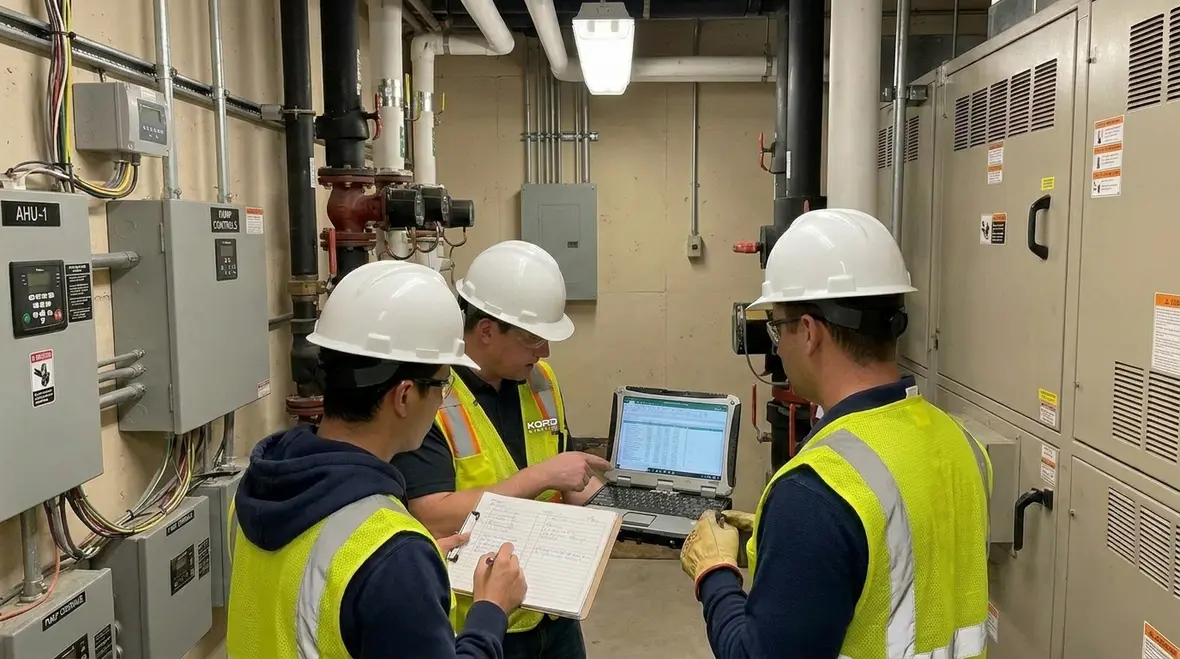
Enclosure ratings and environmental conditions also enter the conversation. For panels near production floors, loading docks, or partially exposed areas, we evaluate dust, moisture, temperature, and physical access. That way, the panel can handle the environment without turning maintenance into an adventure every time someone opens the door.
Apply demand factors and load calculations the practical way
Once the load list is ready, we apply calculation steps that reflect real usage. We do not treat every circuit like it runs at full power at the same moment. Instead, we use demand factors and grouping logic that reflect how commercial systems behave.
Then we include the loads that people forget, because those loads always show up right on schedule. That includes receptacle loads in work areas, supplemental ventilation, small process equipment, and control circuits. Even if these are “small,” the totals add up fast in commercial electrical subpanel sizing work.
Our technicians also review starting conditions for motors and compressors. Motors can draw several times their running current during startup, and that can affect breaker sizing, conductor heat, and panel bus performance. Therefore, we handle motor loads with care and we confirm coordination requirements so the system protects itself instead of relying on luck. Luck is great for casinos, but not for feeders.
On top of that, we consider diversity between process areas and tenant zones. A production line may spike early in the morning, while office loads peak mid-day and EV charging ramps up in the evening. When our commercial electrical subpanel sizing guide accounts for those timing patterns, we can size intelligently, avoid overbuilding, and still keep margin where it matters.
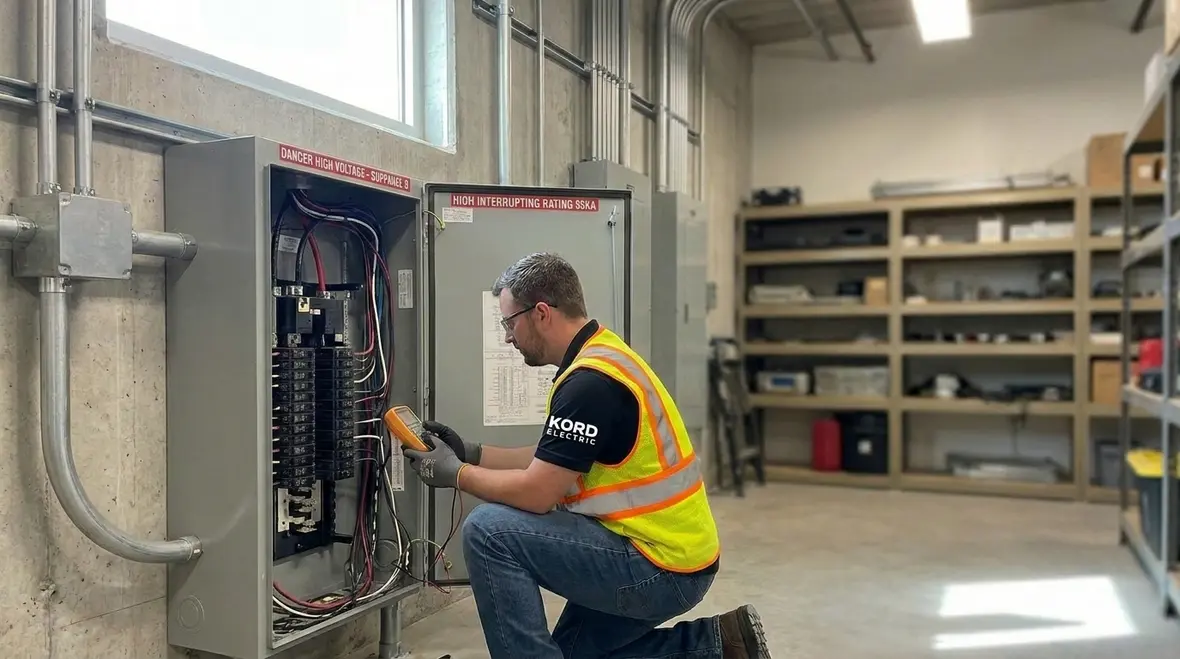
We also respect the role of power quality. Nonlinear loads, variable frequency drives, and sensitive electronics can influence how we group circuits and how we select breakers and protective devices. When we size a commercial subpanel, we are not just chasing amperage. We are guarding the stability of everything downstream.
Account for voltage, phase, and installation details that change everything
Electrical capacity does not exist in a vacuum. It depends on voltage, phase configuration, conductor sizing, and the physical installation. For a major property building, we often encounter multiple distribution voltages and mixed loads, so we verify the incoming service characteristics before we finalize the subpanel size.
We also consider how conductors run, where they terminate, and how heat dissipation works in the enclosure. Long feeder lengths can raise voltage drop and lower usable performance at the load end. Additionally, we confirm whether the facility has existing spare capacity in upstream gear, because the subpanel cannot fix a problem that belongs to the feeder or main disconnect.
Finally, we coordinate how the expansion ties into the existing labeling and circuit numbering. Facilities operate faster when the electrical system reads clearly, and our team treats documentation as part of the install, not an afterthought.
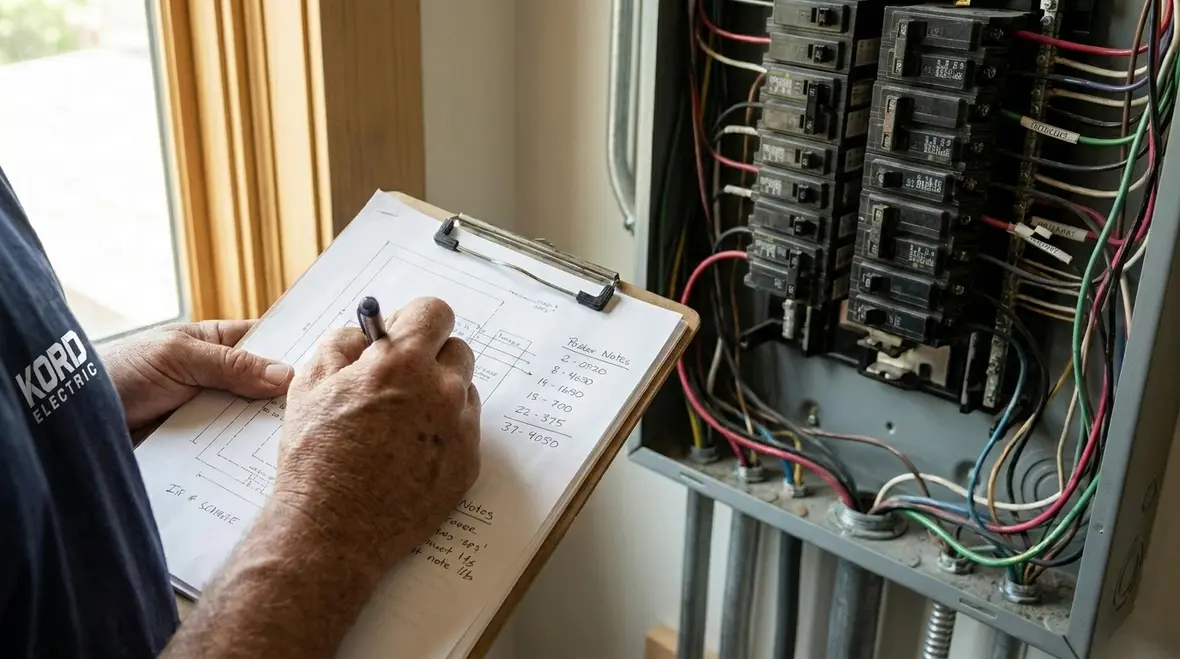
In many commercial and industrial buildings, mixed phase systems and step-down transformers serve different zones. When we apply the commercial electrical subpanel sizing guide to those environments, we confirm how each new panel interacts with existing transformers, grounding schemes, and short-circuit levels. That is how we keep new work aligned with the original design intent instead of fighting against it.
Plan for future growth and EV charging without rerunning everything
Many expansions stall because teams plan only for today’s needs. However, commercial and industrial buildings rarely stop growing. Tenants change, equipment evolves, and new demands appear. For that reason, we plan for growth margins in the distribution system.
One example shows up again and again: EV charging. If your property adds chargers, that load becomes a long term factor, not a one day project. If you want to see how we approach EV capacity and electrical integration, you can review our EV charger installation information here: https://kordelectric.com/ev-charger-installation/. We use a similar disciplined approach when we size subpanels for future charging loads, including the way charging demand can vary by time of day.
As we coordinate charging additions, we also think about panel segmentation and circuit allocation. We avoid cramming new loads into circuits that were never meant for them. Instead, we create a clean path for expansion, so future electrical work stays orderly. Nobody wants an electrical system that looks like a sitcom prop with duct tape logic.
Future growth also covers more than EVs. Specialized equipment, additional HVAC capacity, process upgrades, and lighting retrofits can all push distribution systems harder. A smart commercial electrical subpanel sizing guide bakes in extra capacity where it makes sense, so tomorrow’s projects plug into a prepared system instead of forcing a full redesign.
Coordinate breakers, upstream gear, and safety protection
After we estimate the load, we verify protection and coordination. Breakers and fuses must match the calculated currents and the fault protection needs of the system. Even if the subpanel bus rating looks correct, improper overcurrent protection can lead to nuisance trips or, worse, inadequate fault clearing.
Kord Electric aligns the subpanel design with upstream disconnects and feeders. We confirm that fault currents, interrupting ratings, and coordination time frames work together. Then we check that the installation meets commercial safety expectations, including safe conductor terminations, grounding and bonding, and proper labeling.
Meanwhile, our expert service staff explains the reasoning to the facility team. We do not hide behind jargon. Instead, we walk through what we sized, what we assumed, and what we tested or verified. That way, decision makers understand the “why,” not just the final panel schedule.
We also connect subpanel work to broader preventive maintenance. When panels, switchgear, and feeders are inspected and serviced regularly, commercial facilities see fewer surprise outages and less equipment damage. For property leaders who want to extend that discipline across their entire system, Kord Electric’s electrical preventive maintenance services provide a structured, code-conscious way to keep panels, breakers, and protective devices performing the way they were designed.
Maintenance, labeling, and commissioning that keep the system stable
Sizing gets people excited, but commissioning keeps them calm. Once the subpanel installs, we verify performance through testing, inspection, and operational checks that reflect the building’s use. We check torque settings, confirm circuit continuity, and verify breaker labeling accuracy.
We also help facilities build a maintenance friendly environment. Good labeling reduces downtime when technicians need to isolate a circuit quickly. Clear documentation improves troubleshooting and supports preventive maintenance planning. And because commercial and industrial buildings run on schedules, we coordinate work windows so operations stay stable.
Then we close the loop by explaining how the new circuits should be used and monitored. If the building adds load later, they know exactly what to review first. That reduces the odds of “we’ll figure it out when it trips,” which is a strategy that tends to end in emergency calls.
A well-commissioned subpanel becomes part of a calm, predictable electrical ecosystem instead of another source of mystery. When that work ties into ongoing maintenance programs and clear recordkeeping, property teams can make better decisions about expansions, upgrades, and risk tolerance for years to come.
FAQ
Call Kord Electric for a commercial electrical subpanel plan that holds up
If your commercial or industrial facility is planning an expansion, Kord Electric helps you size the right subpanel, coordinate protection, and plan for what comes next. Our technicians and expert service staff explain the load math in clear terms, so your team can approve the project with confidence. Then we commission the install so the system performs as expected. Contact us today to schedule a site review and get a commercial electrical subpanel sizing plan built for real building life, not wishful thinking.
If your plans also include EV charging, you can connect this work directly with our dedicated EV charger installation services, which cover site evaluation, system design, installation, and commissioning for commercial and industrial properties. By aligning subpanel sizing with your EV roadmap from the start, your building can grow methodically instead of reacting to sudden demand.
For facilities that want to go one step further and keep new panels performing at their best year after year, Kord Electric’s electrical preventive maintenance programs provide structured inspections, testing, and reporting for panels, switchgear, and distribution equipment. Together, these services turn a single project into a long term strategy for safer, more reliable power.