

Commercial Kitchen Electrical Code Compliance Made Simple
Commercial Kitchen Electrical Code Compliance, Without the Guesswork
Modern commercial kitchens run on speed, heat, and power, and that means electrical systems must meet commercial kitchen electrical code compliance from the first wire to the last breaker. Kord Electric works with commercial and industrial facilities, as well as major property buildings, because we understand that one loose connection is never “just a small issue” when the hood is cooking and the staff is moving. Our approach stays safety first and efficiency always, and our technicians explain what they find in plain language, so decision makers can act fast. And yes, we keep it calm, too. Even when the fryer is louder than the music in a late night sports bar.
Because electrical infrastructure is not a one time project, we plan, test, and maintain it like an operational system. Then we help others keep it that way through smart management, proactive upgrades, and solid documentation.
Why Kitchen Power Demands a Different Kind of Control
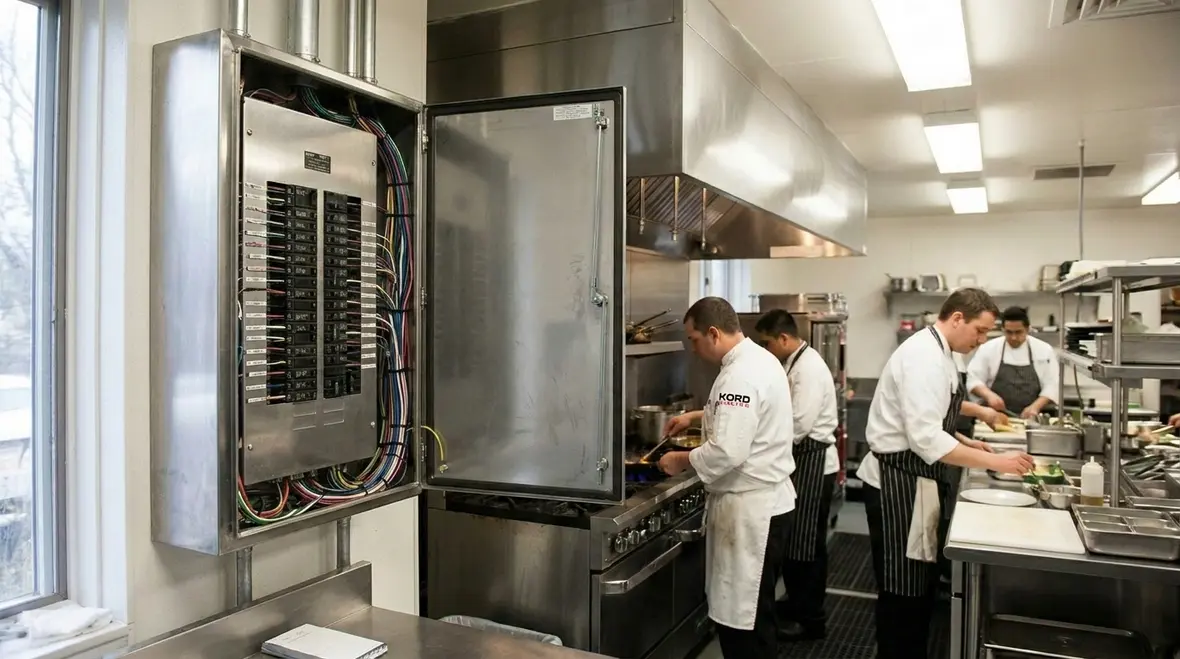
In a commercial kitchen, load changes fast. One moment you run ventilation and refrigeration, and the next moment you bring on high draw equipment like griddles, steamers, dishwashers, and warming cabinets. Consequently, the electrical system experiences frequent start ups, voltage dips, and surges. If the design does not match that reality, components wear out early and staff feels it later as delays, nuisance trips, and equipment downtime.
In addition, the environment adds pressure. Heat, grease vapor, moisture, and frequent cleaning can challenge wiring insulation, connections, and enclosures. Therefore, teams need more than basic power. They need a managed distribution layout that protects circuits, maintains stable operation, and supports future growth without turning every upgrade into a stressful “call the electrician right now” moment.
Kord Electric builds that kind of resilience for major properties and industrial operations. Our expert service staff walks through the circuit map, explains why certain loads should run on dedicated paths, and shows how good separation reduces interference and nuisance faults. It is not magic, it is engineering, and we keep the tone steady even when the chef wants answers ten minutes ago.
Load Planning and Circuit Zoning That Prevents Downtime
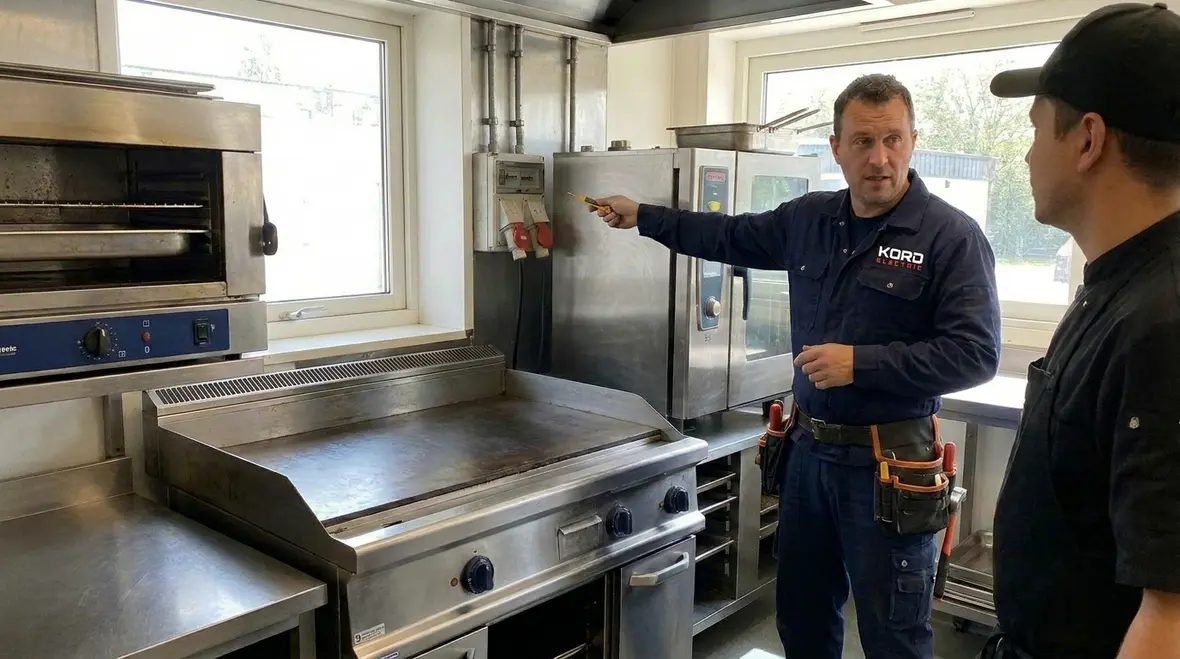
Good kitchen power starts with planning that matches how the space actually works. First, we identify equipment categories by load profile: motor loads like exhaust fans and conveyors, resistive loads like griddles and ovens, and mixed loads like dish systems with pumps and heaters. Then we group them into circuit zones that reduce stress on any single feed. This also improves maintenance because technicians can isolate sections safely and accurately.
Next, we evaluate where and how equipment connects. For example, kitchens often add equipment over time. If the original panel has no spare capacity or if future loads do not get engineered into the distribution, voltage drops and overloading can sneak in like a pop quiz at the end of the semester. We reduce that risk by planning panel capacity, checking conductor sizing, and verifying that overcurrent protection matches the equipment requirements.
Our technicians also help others avoid hidden problems caused by shared neutrals, improper bonding, and misaligned breaker curves. These issues rarely show up as dramatic failures at first. Instead, they appear as intermittent malfunctions and “weird” behavior. However, a careful load planning review usually reveals the root cause.

Voltage Fluctuations and Their Real Impact on Kitchen Equipment
When power quality slips, kitchens feel it. A brief voltage fluctuation can cause motors to run hotter, shorten component life, and create control board errors. Sometimes the symptoms look unrelated: a fryer that takes longer to reach temperature, refrigeration that cycles more often, or a dishwasher that throws a fault mid cycle. To address this, Kord Electric reviews the electrical behavior that your kitchen experiences during peak demand.
We reference the kinds of voltage fluctuation conditions discussed in our service guidance here: Voltage Fluctuations in Commercial & Industrial Facilities. Then we translate that into what others can see on site, not just what reads well on paper. For instance, voltage dips can happen when large loads start. Surges can occur when equipment switches off and on. In either case, the result is stress on transformers, drives, and sensitive controls.
Therefore, we test and validate. Our expert service staff typically looks at measurements, load timing patterns, and the condition of connections in panels and distribution paths. If a kitchen struggles with stability, we help determine whether the solution is better distribution design, revised load sequencing, improved grounding and bonding, or selective upgrades to address the weakest points. Nobody wants to replace a control board when the real fix is a connection that never should have been loose in the first place.
In short, stable power supports reliable heating, consistent motor performance, and safer operation across the shift.
Thermal Safety, Overcurrent Protection, and Connection Integrity
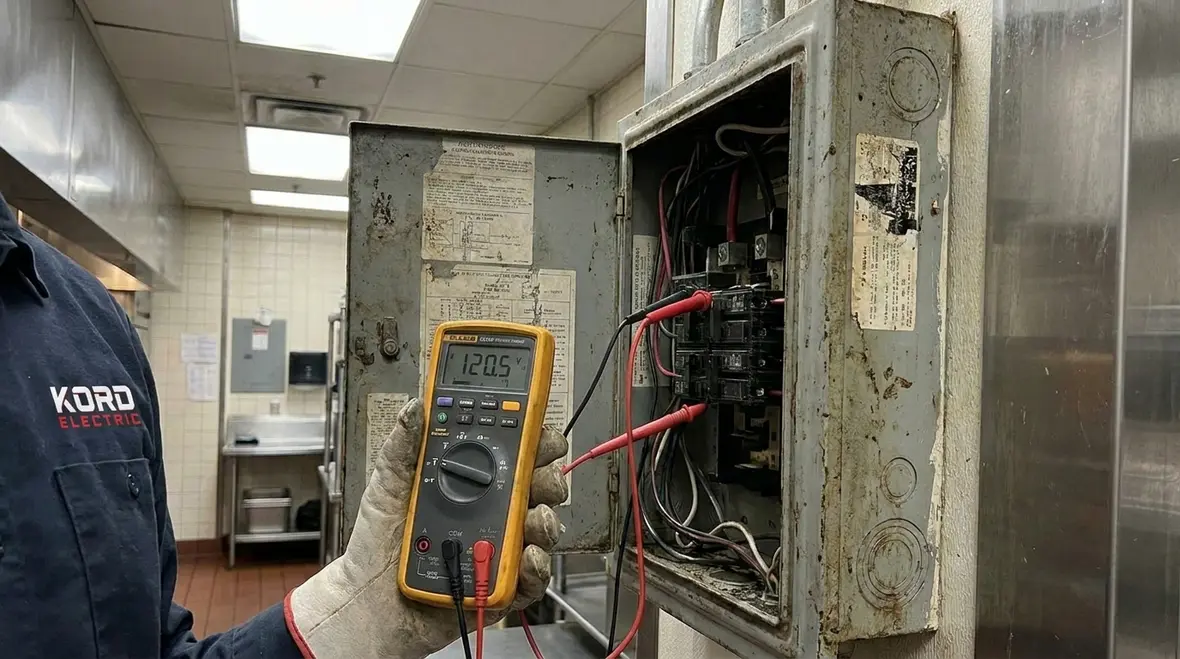
Electrical safety in a commercial kitchen is not only about code. It is about controlling heat. When connections loosen, corrosion forms, or materials age, resistance increases, and heat follows. Over time, that heat can damage insulation, degrade terminals, and in worst cases create fire risk. Consequently, connection integrity becomes a core part of efficient operations.
Kord Electric focuses on the details. We inspect and verify torque on terminations, review the condition of bus bars and lugs, and check protective device alignment. We also confirm that breakers and fuses match the required trip characteristics for the equipment they serve, because protection that is too aggressive can cause repeated outages, while protection that is too slow can fail to stop dangerous fault conditions.
Then we move beyond inspection. We help others build a maintenance rhythm that includes periodic checks before issues turn into emergency calls. Think of it like taking care of a smoke alarm before the fire. It is less dramatic, and it saves money. Our expert technicians explain what they find, what it means for the kitchen’s uptime, and which upgrades reduce risk most effectively.
For facilities that want structured support, our team can align kitchen inspections with broader electrical preventive maintenance programs, so code compliance, thermal safety, and long term reliability stay on the same schedule.
Energy Efficiency Without Cutting Safety Corners
Efficiency improves when electrical systems run as designed. Yet many facilities try to “save energy” by swapping parts or adjusting operations without reviewing the electrical side. That approach can backfire, especially when variable frequency drives, heating elements, or ventilation schedules interact with the rest of the system. Therefore, Kord Electric evaluates electrical performance alongside operational needs.
We support energy goals through smarter distribution practices, better power quality control, and planned upgrades. For example, improving how loads distribute across phases can reduce imbalance. Upgrading aging panels can improve capacity and allow cleaner future additions. Selecting proper protection coordination can prevent repeated nuisance trips that waste downtime and staff time.
Moreover, when facilities plan upgrades carefully, they reduce construction disruption. That matters for major property buildings that cannot shut down service for days. Our teams coordinate work windows, keep documentation organized, and guide property managers through what needs to be done now and what can be scheduled later. If someone says they can “just wire it real quick,” we gently remind them that kitchens deserve real engineering, not kitchen folklore.
For many facilities, combining energy focused projects with broader lighting or power optimization initiatives, such as those outlined in Kord Electric’s lighting installation services, helps align savings with safety and code compliance instead of treating them as competing goals.
Commissioning, Testing, and Documentation for Ongoing Reliability
After installation or upgrades, the work is not done. Kord Electric emphasizes commissioning, testing, and documentation so others have proof and clarity. We verify that circuit labeling matches actual routing, confirm protective device function, and check that system behavior fits the load profile of the kitchen. Then we create a record that helps facility teams and future technicians maintain the setup with confidence.
Testing also provides a baseline. Consequently, later problems become easier to diagnose because staff can compare current readings to historical results. Instead of guessing, others can pinpoint whether an issue comes from a drifting connection, a changing load pattern, or a new equipment installation that altered demand.
Our expert service staff also explains the “why” behind each step. We do not bury people in jargon. We explain how the data supports safe operation and efficient performance, and we recommend practical follow ups based on risk and downtime cost.
FAQ
Conclusion: Let Kord Electric Protect Your Kitchen’s Power and Uptime
Your commercial kitchen runs on power, and power needs protection, planning, and maintenance that holds up under real loads. Kord Electric provides expert service staff and technician based evaluations for commercial and industrial facilities, including major property buildings. We help you strengthen electrical safety, reduce voltage fluctuation risk, and support efficient operation without guesswork. If you want a calm plan that keeps equipment running and downtime low, contact Kord Electric today and schedule an assessment. We will explain the findings clearly and help you move forward with confidence.
If your facility is also considering broader upgrades or structured maintenance for long term reliability, explore our dedicated services, including guidance on managing voltage fluctuations in commercial and industrial facilities and comprehensive electrical preventive maintenance programs that help keep kitchens and the rest of the property operating at full strength.
For property teams that want a single partner to help with commercial kitchen electrical code compliance, ongoing maintenance, and future upgrades, Kord Electric is ready to assist across your entire site, from the main service down to the last appliance circuit on the cookline.


