Warehouse Lighting Control Systems Benefits Guide
Intelligent Control for Cleaner Workflows: Warehouse Lighting That Works Smarter
At Kord Electric, we help commercial and industrial facilities run with steadier energy use and better comfort. When teams install warehouse lighting control systems, they stop fighting with lighting that never matches the work. As a result, workers get the right light at the right time, and building operators gain simpler ways to manage fixtures across large spaces. Then, productivity climbs because tasks feel clearer, safer, and less stressful. Meanwhile, lights waste less electricity because the system responds to real conditions, not guesses.
Others may treat lighting like a set it and forget it deal, but warehouses do not work like that. We see it every day: a dock area needs different brightness than a storage aisle, and a half empty night shift is not the same as a busy afternoon. And yes, it is a little like changing the channel while a show is still playing. You want the right scene, not chaos.
Warehouse lighting control systems benefits that directly impact output
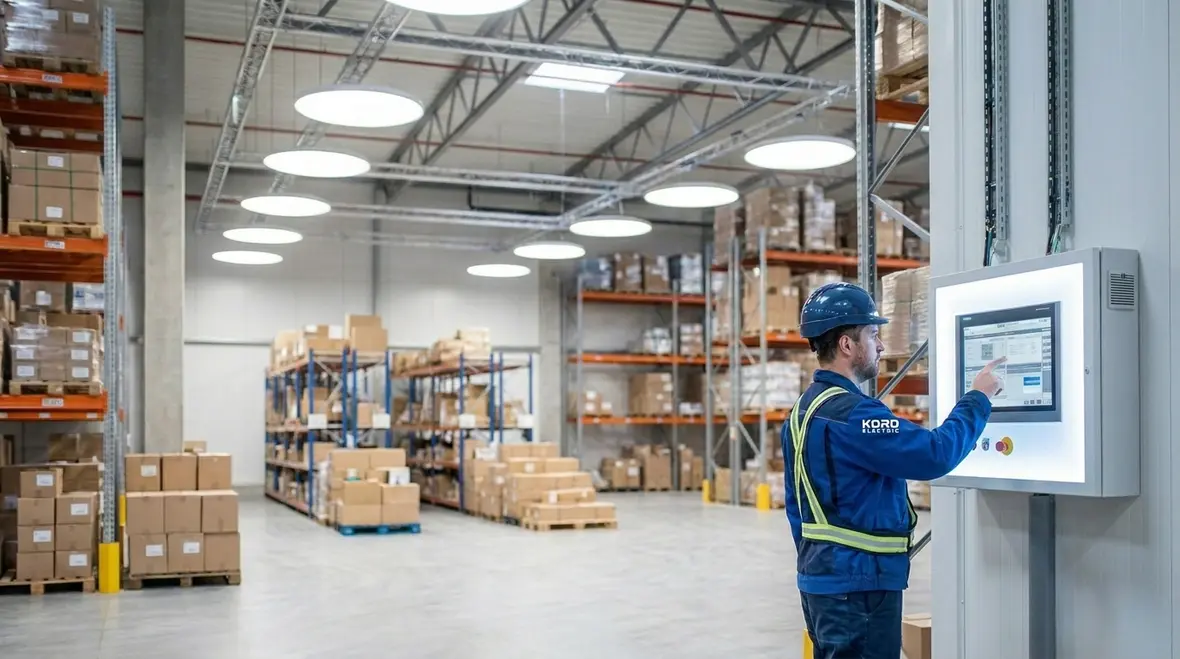
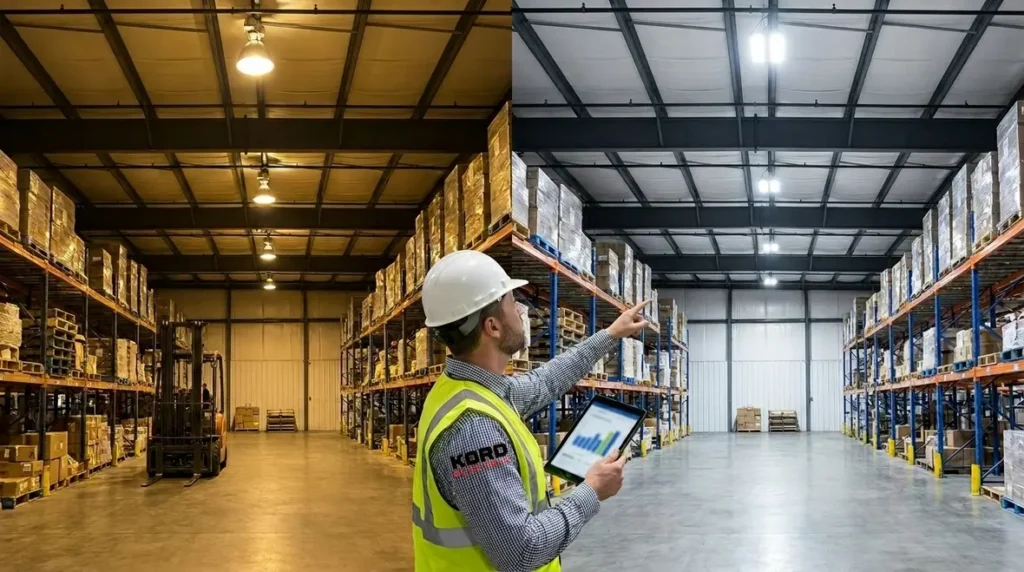
In our experience, the best warehouse lighting control systems benefits show up in day to day behavior. For example, lights can dim during low activity, brighten for picking and packing, and shift again when a supervisor runs a shift change or a maintenance stop. Because the lighting reacts, workers spend less time squinting, walking around glare, or waiting for “someone” to fix a zone.
Just as importantly, facilities teams reduce the ripple effects of poor lighting. When visibility improves, safety steps run smoother and fewer minor incidents stall production. Additionally, controlled light levels support consistent visual quality across the warehouse, so people do not keep re adjusting to hot spots and dark corners.
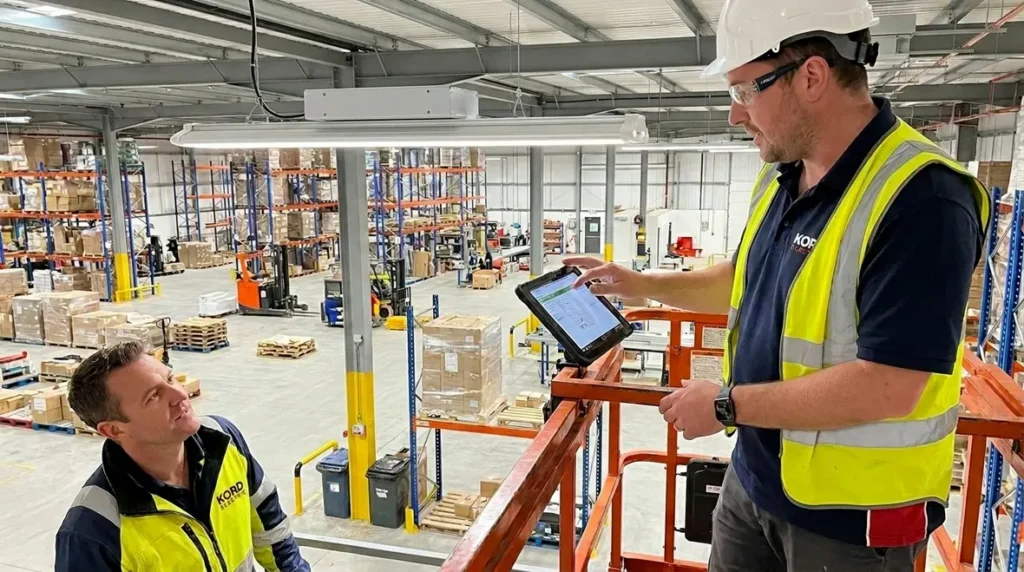
To make this practical, our technicians walk operators through the workflow first. They review traffic patterns, task zones, and hours of operation. Then they map these needs to controls such as occupancy sensing, daylight response where windows exist, and time schedules aligned with shipping and receiving. Instead of a one size plan, we build a system that fits how the building actually works.

How operators map zones to real warehouse movement
To get real results, a team must divide the warehouse into lighting zones that match how people move and how materials flow. Kord Electric recommends starting with high impact areas: receiving bays, forklift routes, packing stations, cold or dry storage aisles, and loading docks. After that, we refine the zone boundaries so the lighting improves where eyes focus, not only where power cables land.
So, what does mapping look like in the field? We typically observe how workers travel, where they pause, and which tasks demand more contrast. Then we build control logic around that movement. For example, an occupancy sensor in a main aisle can keep lights at a baseline level, while motion and door activity trigger a brighter state during active periods. Meanwhile, dock lights might follow dock door open events and shift changes rather than a single schedule.
At this stage, our experts explain the plan in plain terms. We tell operators what the system will do, what it will not do, and how it will behave during edge cases like power cycling or unusual shift patterns. That clarity matters because lighting controls fail when people feel surprised by them. We prefer calm confidence over mystery meat automation.
Choosing the right control features for complex facilities
Commercial and industrial buildings do not all share the same layouts, so we build options that fit the structure, the load types, and the control goals. First, we look at the fixture type and the dimming method, because not every warehouse uses the same hardware. Then we match the control features to the actual operational needs.
Here are common features we help teams implement, and how they matter:
Occupancy and motion control so idle zones dim without creating dark “surprises” for workers.
Scheduling so lighting follows shift patterns, holidays, and planned maintenance windows.
Daylight harvesting near windows or skylights to reduce energy use while keeping task visibility stable.
Multi level scenes so the warehouse can shift from baseline to work modes smoothly.
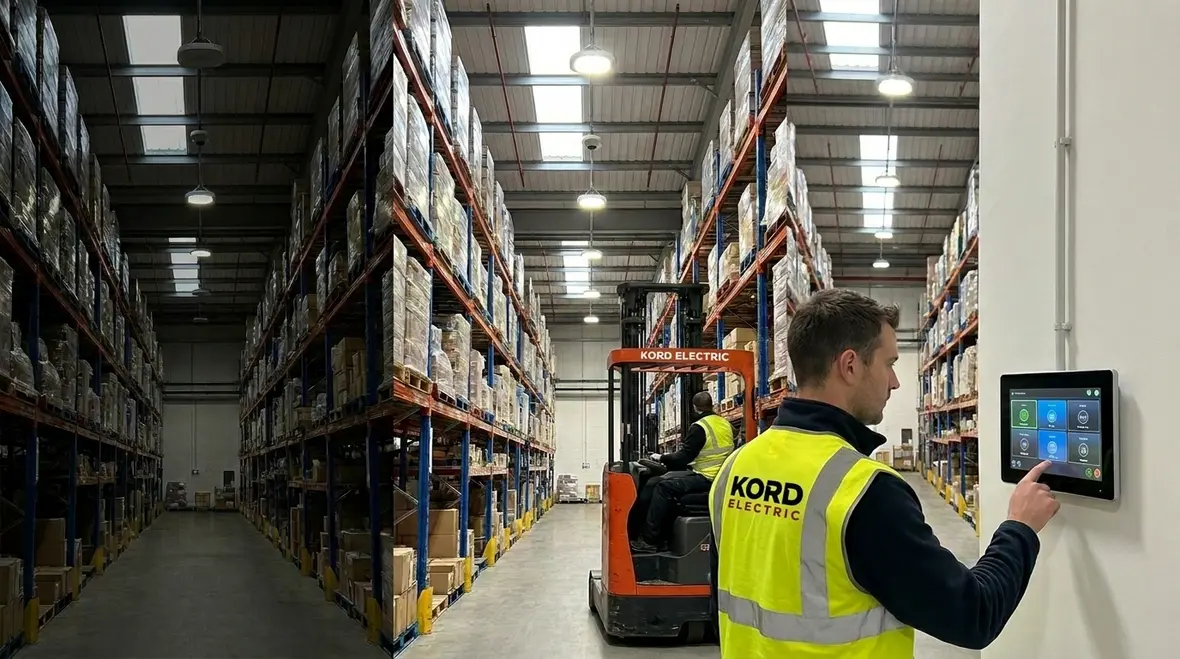
Remote monitoring so managers spot performance issues early instead of guessing after complaints.
Group control so operators manage zones without changing every switch like it is the 1990s.
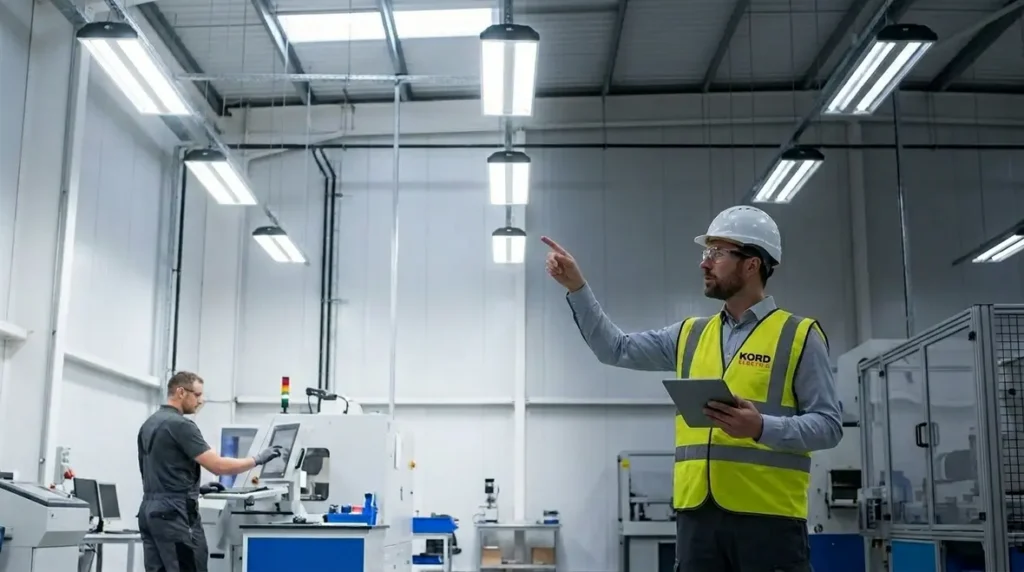
We also ensure the system supports safe transitions. In warehouses, lighting must not flicker unpredictably, and control response should feel immediate without being distracting. Therefore, Kord Electric configures timing and dimming ramps carefully so the warehouse looks steady, not like a nightclub with a broken DJ booth.

Retrofit and rewiring planning for minimal downtime
Many operators ask about upgrading without disrupting schedules. While this article focuses on lighting controls, we also advise on the bigger electrical picture, because controls are not isolated from wiring, panels, and device integration. If the facility needs rewiring, we plan around production windows and traffic flow so teams keep moving.
For a deeper cost planning mindset, you can reference our guide on commercial system rewiring, which breaks down what often drives price in these projects. In practice, operators usually need to consider circuit capacity, panel space, existing control wiring quality, conduit condition, and device compatibility. When we walk a site, our technicians look for the “hidden costs” that show up later if nobody checks upfront. For more detail, you can explore our Rewiring Cost Guide for Commercial Electrical Systems, which goes deeper into how these projects are scoped and budgeted.
Then we build a staged plan. For instance, we may upgrade one dock area at a time, validate performance, and move on. That approach reduces downtime risk and helps the operator feel confident during each step. Additionally, we label circuits and document the control mapping so maintenance staff can troubleshoot without pulling their hair out.
And yes, we still see facilities where control wiring was done in a hurry years ago. It is not a crime, but it does create headaches later. We handle those issues with clean workmanship and clear explanations from our field team.
Maintenance, monitoring, and performance checks that protect savings
Once the system runs, the work does not end. Warehouse lighting control systems support savings when they stay tuned, and our approach includes checks that protect long term performance. When sensors drift, zones misalign, or schedules change due to new production cycles, energy savings can fade. That is why we help teams set up monitoring routines and update control logic as the facility evolves.
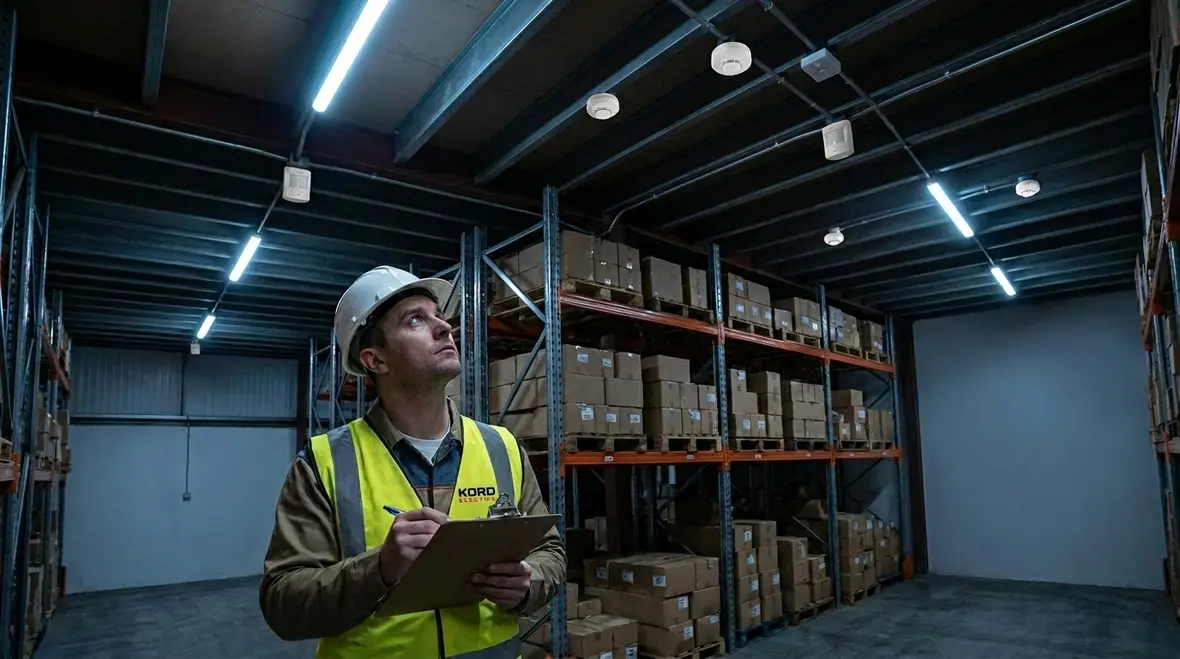
Our experts advise on a simple maintenance rhythm. First, they verify that occupancy sensors cover the right areas and that no new shelving blocks their view. Next, they test scene transitions so dim levels match task needs. Then they review monitoring data to confirm that control events match expected activity.
In addition, we recommend clear staff training for the people who manage day to day operations. Lighting controls should not become a “call the electrician for everything” situation. So, our technicians explain how to adjust schedules, how to interpret alerts, and how to log changes. When the operator understands the system, the system performs better.
Because warehouses run on tight schedules, we prioritize solutions that feel steady. The best compliment we hear is simple: “It just behaves.” That is the goal.
Maximizing safety and visibility without over lighting
Many teams increase brightness to “solve” visibility problems. Yet in a large warehouse, too much light can create glare and waste energy. Instead, Kord Electric helps facilities reach better visibility through managed light levels and smarter distribution. This supports safer movement near docks, reduces visual strain during picking, and helps workers spot hazards sooner.
So, how do we balance comfort and efficiency? We start with the tasks that matter most and then we set target light levels per zone. Then we use controls to maintain these levels while adjusting for activity. In other words, workers get brighter light during work while idle areas dim down. Meanwhile, transitions remain smooth to avoid confusion and maintain a consistent look across the building.
We also pay attention to glare from reflective surfaces and the way light spreads in high bay areas. Control logic alone cannot fix a poor layout, so our electrical planning considers how fixtures work together. That is where expert design makes the difference, and that is where our team earns their reputation.
FAQ
Note: For additional planning about electrical updates and project scope in commercial settings, our team also supports operators with rewiring cost guidance and system evaluation. You can pair your control strategy with broader electrical planning using resources like our Rewiring Cost Guide for Commercial Electrical Systems and our ongoing electrical preventive maintenance services.
Final word from Kord Electric
At Kord Electric, we install intelligent lighting solutions for commercial and industrial facilities that want real warehouse lighting control systems benefits, not empty promises. Our technicians explain every step, from zoning and control logic to phased commissioning and performance checks. If your building wastes electricity, delivers inconsistent visibility, or makes staff guess when lights will change, we can help. Contact us to schedule a site review and get a plan that fits your operation, your safety needs, and your timeline.
If you are planning a broader upgrade, our commercial and industrial lighting installation services can pair your warehouse lighting control systems with high performance fixtures, Title 24 compliance support, and long term maintenance strategies so your investment keeps paying off year after year.