
Industrial Electrical System Harmonic Mitigation
Kord Electric walks into a lot of industrial rooms where the lights “look fine,” the motors “seem happy,” and the power bills still behave like they owe money. Yet under the surface, the industrial electrical system harmonic mitigation story often decides whether equipment lasts 10 years or gets cranky at year three. In our experience, harmonics build up quietly in commercial and industrial facilities, then they show up later as heat, nuisance trips, nuisance failures, and power factor drift. That is why our technicians and expert service staff focus on practical steps that reduce distortion, protect sensitive loads, and keep the whole electrical infrastructure stable. We explain the why as clearly as the how, because nobody should have to guess whether their plant is running on clean power or expensive chaos.
Why harmonics turn steady power into a “mood swing”
Harmonics are distortions in the current waveform that ride on top of the normal sine wave. As a result, equipment downstream receives less than ideal conditions, even if the voltage reads “within tolerance” on a basic meter. Therefore, industrial systems can suffer from hidden stress. For example, variable frequency drives, rectifiers, UPS systems, and certain process equipment draw non linear current. Consequently, the supply system and distribution components take the hit through extra heating, higher losses, and degraded power quality.
Here is the part that usually makes operations teams roll their eyes: harmonics do not just sit there like clutter. Instead, they can cause resonance with capacitors, overload transformers, and increase neutral currents in 3 phase, 4 wire setups. In turn, breakers may trip early, cables run hotter, and motors may produce more audible vibration. So while the facility may appear functional, the electrical infrastructure keeps paying interest on the problem.
We start with measurement, not guesses
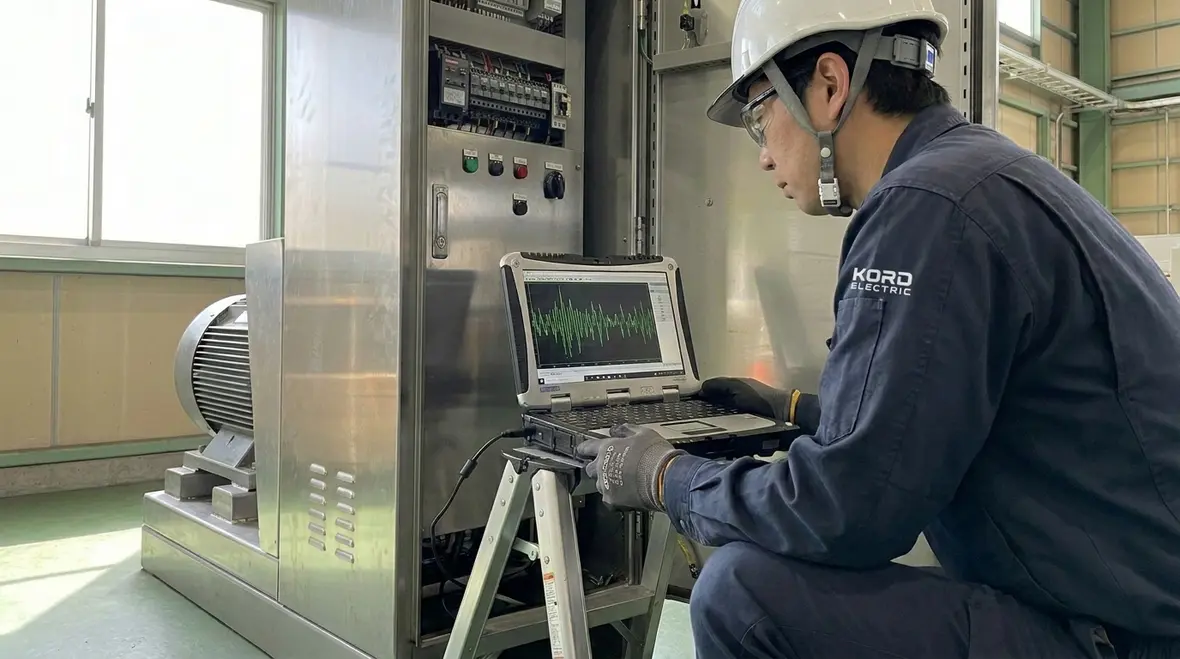
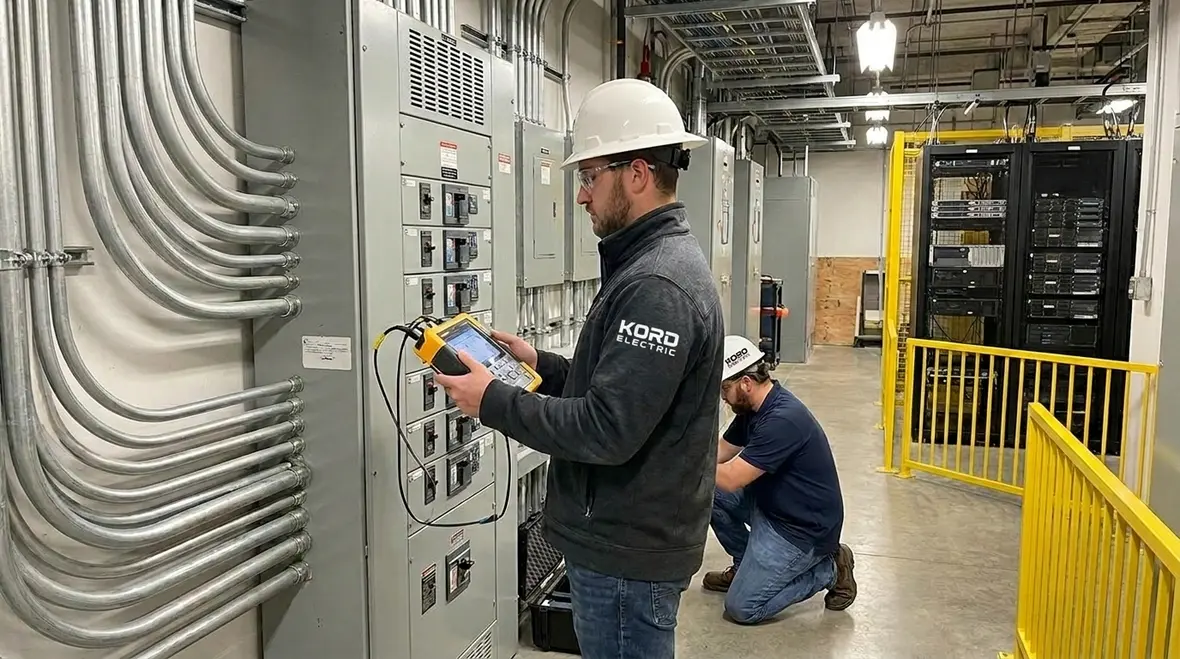
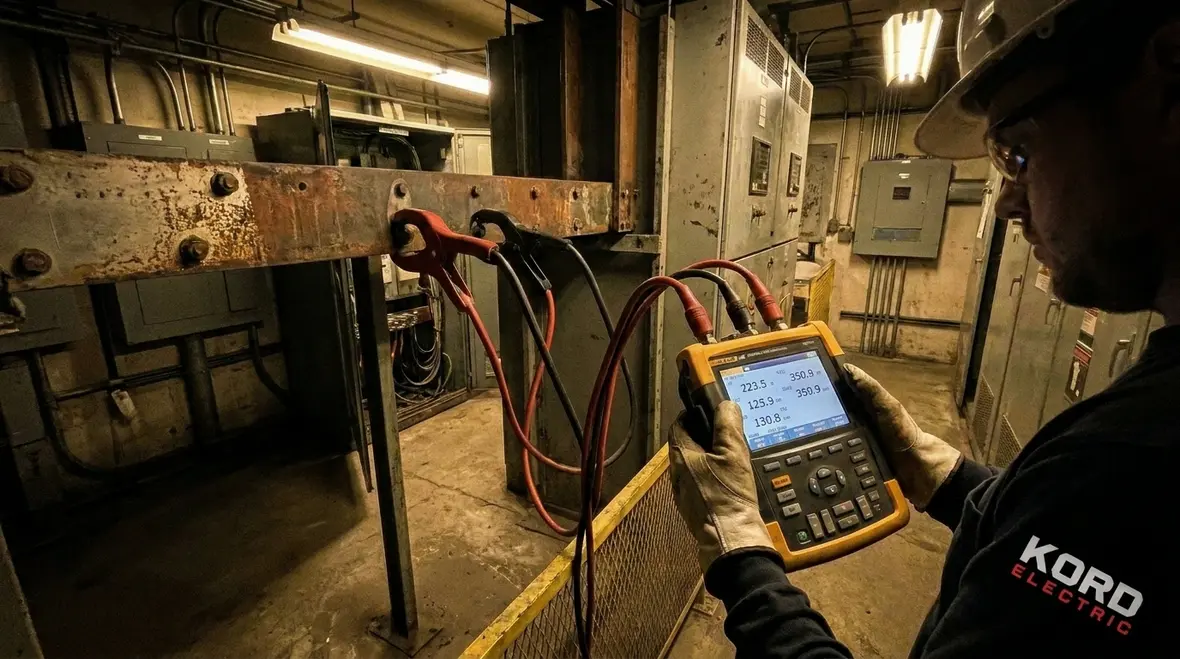
If you ask our technicians, they will tell you the same thing every time: you cannot fix what you do not measure. And yes, it is tempting to rely on a single reading because it feels efficient. However, harmonics require a look at waveform behavior across time, loads, and operating modes. For that reason, we begin with power quality testing at key points in the industrial electrical system, often at the service entrance, switchgear, and near major harmonic producing loads.
During these checks, our expert service staff capture total harmonic distortion, dominant harmonic orders, voltage versus current distortion, and trends that show when the issue spikes. Then we compare the data to typical equipment expectations and the facility’s electrical design. From there, we build a mitigation plan that fits how the building actually runs, not how a textbook thinks it runs.
We also verify the health of grounding and bonding because poor system connections can make harmonic effects worse. Likewise, we review existing capacitor banks and filtering hardware, since older designs might interact with today’s modern loads.
For facilities that depend on rock solid reliability, this testing work pairs naturally with long term service strategies. If you are already planning structured inspections, load studies, and preventive checks, harmonic analysis plugs in neatly alongside those tasks. Many clients bundle harmonic review with broader electrical preventive maintenance so the entire system is tuned, documented, and ready for future growth.
If you want a deeper dive into how disciplined planning supports uptime, our team also breaks down long term strategies for large properties in resources like the Kord Electric blog on commercial and industrial electrical maintenance plans. That same mindset—measure, plan, execute, verify—sits at the core of effective industrial electrical system harmonic mitigation as well.
Common harmonic sources in commercial and industrial loads
Most facilities do not “choose” harmonics, but their equipment does create them. For commercial and industrial buildings, the usual suspects include:
- Variable frequency drives used for HVAC, pumps, and conveyor systems
- UPS and rectifier based power systems that convert and regulate power
- Arc furnaces and other process equipment that draws spiky currents
- Large LED lighting drivers at scale
- Uninterruptible power supplies that operate differently under load swings
Moreover, expansion projects often add load without revisiting the electrical model. So, over time, the harmonics can rise as more drives, controls, and power electronics come online. It is like adding extra playlists to your smart speaker and then acting surprised when the house starts remixing itself. Harmony disappears, and someone pays for it.
Some of these harmonic sources overlap with other power quality issues that facility teams already recognize, like voltage swings or flicker. When voltage fluctuations join forces with distorted current, sensitive equipment feels the impact twice. That is why diagnosing harmonics often goes hand in hand with solving problems like voltage fluctuations in commercial and industrial facilities, where the goal is to bring the whole profile—not just the voltage reading—back into a stable range.
How to reduce harmonics with practical industrial electrical system harmonic mitigation steps
Once we confirm the harmonic pattern, we move toward industrial electrical system harmonic mitigation with methods that match the facility’s needs and budget. In most cases, we use a layered approach, because one tool rarely handles every scenario.
1) Improve the design and operating settings
Where it makes sense, we tune or configure existing devices so they operate more smoothly. For drives, this can involve reducing unnecessary hunting, adjusting carrier and switching settings, and aligning how speed commands ramp. While this does not replace filtering, it can lower distortion at the source.
2) Add harmonic filters
Filters provide a direct path for harmonic currents, and they can be engineered for the specific harmonic orders we find in testing. Then they protect transformers, cables, and power factor correction systems from excess stress. Active filters can adapt to changing loads, while passive filters can target known harmonic frequencies.
3) Use properly rated capacitors and detuning
Capacitor banks improve power factor, but they can also amplify harmonics through resonance if not designed correctly. Therefore, we recommend detuned reactors or tuned solutions based on the facility’s measured harmonic profile. This approach helps the capacitor banks do their job without turning the system into a harmonic amplifier.
4) Balance loading and manage neutral currents
In facilities with nonlinear loads, neutral currents can rise dramatically. Consequently, we check phase balance, verify conductor sizing, and apply design practices that reduce neutral overheating risk. We also look at wiring routes and connection quality because small installation issues can create big electrical headaches.
5) Consider transformer and distribution upgrades
When harmonics have already stressed equipment, a filter plus hardware upgrade may be the safest option. For example, replacing undersized transformers or improving distribution capacity can reduce heat and losses. Our team evaluates loading history, thermal limits, and the facility’s future expansion plans.
To keep it clear, we do not push a “one size fits all” package. Instead, we recommend what matches the test results, the operating profile, and the critical loads that cannot afford downtime.
Many of these mitigation tactics tie directly into the broader electrical infrastructure story. When facilities plan system upgrades, panel changes, or new feeder runs, that is often the perfect moment to fold harmonic mitigation into the project. Coordinating design in this way keeps the industrial electrical system harmonic mitigation work aligned with long term capacity, redundancy, and safety goals.
Power quality goals for data centers, switchgear, and critical loads
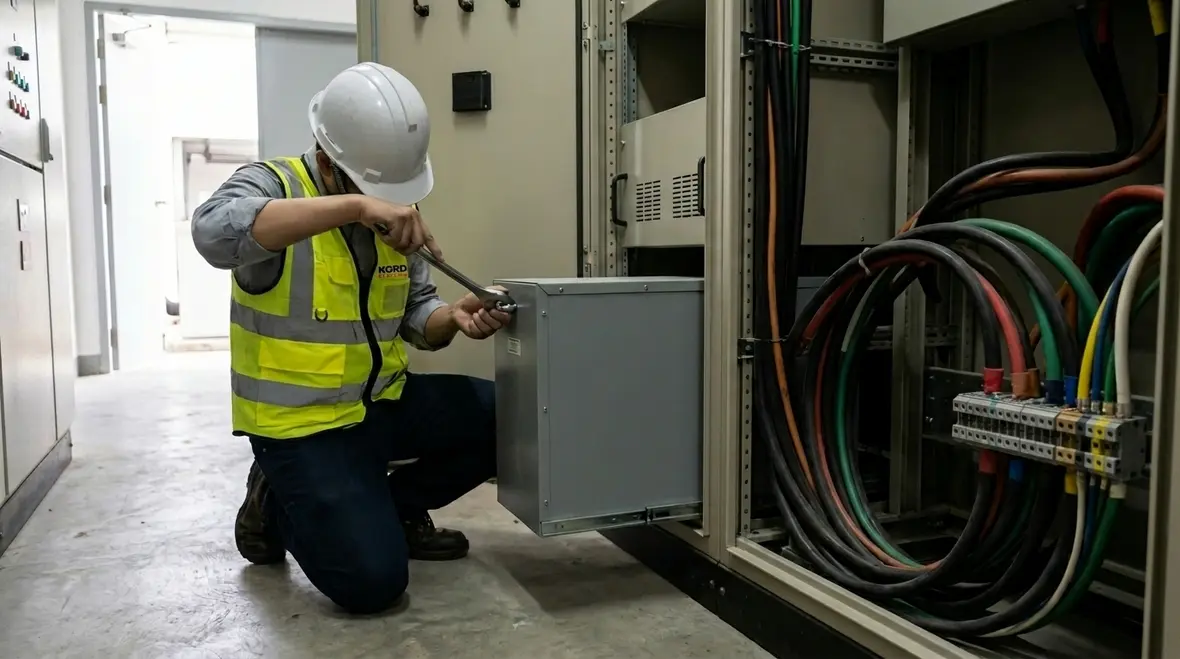
For major property buildings, including data center electrical infrastructure, the bar gets higher. That is where stability matters more than ever. We reference the same kind of infrastructure thinking we outline in our Kord Electric blog on data center electrical infrastructure essentials, because the logic carries over to industrial spaces. In those environments, critical loads must ride through disturbances, and power quality must stay predictable.
Therefore, we set measurable targets such as keeping distortion at safe levels, protecting capacitor banks from resonance, and reducing nuisance trips. We also consider how harmonics affect UPS systems, distribution transformers, and busbar heating. Then we plan mitigation so that it does not introduce new risks, like poor selectivity or mismatched components.
And yes, we include practical guidance on where to place monitoring, because you cannot manage what you cannot see. In turn, facilities gain early warning when new equipment or production changes alter the harmonic signature.
When plants, distribution centers, or data environments want a unified strategy, we fold harmonic targets into broader reliability and redundancy planning. Clean power, selective coordination, short circuit ratings, and emergency response all share the same big picture: keeping critical operations online when the unexpected shows up.
What our technicians do during installation and commissioning
Mitigation does not end at purchase orders. Our technicians stay involved through installation, commissioning, and documentation, because the last mile matters. Poor connections, incorrect settings, or a filter installed on the wrong bus can undo the benefits fast. So we follow a disciplined process that keeps the work clean and the results verifiable.
First, we confirm panel schedules, identify the correct feeders, and validate the electrical model. Next, we install filters, detuned solutions, or upgrades based on the test data and design. Then we commission the system, which includes re testing to confirm distortion levels improved and power factor correction operates correctly without resonance effects.
Finally, our expert service staff provide a clear report, plus operational notes so your team understands what changed and what to watch. In most facilities, this is where confidence improves. It is hard to argue with measured results, and it is even harder to “feel” a harmonic problem away.
For critical environments or sites that have already experienced emergency failures, we can align this commissioning work with structured response planning. When a facility knows who to call, what to check, and how the protective devices are set up, response time shrinks and clarity improves the moment something looks off.
Operational habits that prevent harmonics from returning
After we implement industrial electrical system harmonic mitigation, the facility still needs a maintenance rhythm. Otherwise, harmonics can creep back when new loads appear, settings drift, or capacitor banks age. Therefore, we help clients establish service practices that keep power quality steady.
- Schedule periodic power quality checks, especially after major equipment changes
- Track drive and UPS firmware or configuration updates, since they can shift current behavior
- Inspect thermal performance at critical panels, transformers, and bus connections
- Monitor capacitor bank health, including temperature and switching cycles
- Review load growth so electrical design stays aligned with production reality
When people treat harmonics like a one time event, the system usually reminds them it is ongoing. But when teams treat power quality as part of operational discipline, the electrical infrastructure stays dependable.
These habits line up naturally with structured service programs. Facilities that already have documented inspection schedules, reporting templates, and escalation paths can fold harmonic checkpoints into the same workflow. That way, power quality is not an extra chore—it is part of how the plant operates every week, month, and year.
FAQ: Industrial harmonic mitigation for commercial and industrial facilities
Call Kord Electric for a power quality plan that holds up under real load
When harmonics quietly threaten reliability, we help commercial and industrial facilities respond with a plan that starts with measurement and ends with verified results. Kord Electric brings technicians and expert service staff who install and commission solutions, then retest to confirm improvement. If your switchgear runs hotter than it should or your protection trips feel random, reach out. We will evaluate your system, identify the dominant harmonic sources, and recommend industrial electrical system harmonic mitigation that protects your critical loads.
If you are already planning larger projects—such as lighting upgrades, new process lines, or expanded production—we can align harmonic mitigation with those efforts so you get more value from every dollar you invest in electrical work. And when you need structured, long term support, our team can connect mitigation efforts with broader electrical preventive maintenance programs that keep power quality, safety, and reliability moving in the same direction.
From first measurement to final report, the goal is simple: power that behaves, equipment that lasts, and operations teams that can trust what is happening behind every panel door.


