Commercial Outdoor Lighting Installation Guide
At Kord Electric, we approach outdoor lighting installation the way a conductor approaches a symphony. Every fixture has a role. Every wire has a purpose. And every beam of light should land exactly where it is needed. For commercial and industrial properties, exterior lighting is not decoration. It is safety, performance, brand presence, and liability control all rolled into one. Our technicians and expert service staff guide facility managers through every step, explaining the process in plain language while handling the heavy lifting with precision. What follows is a practical, field tested guide designed for commercial and industrial facilities that want their exterior lighting done right the first time.
1. Why Exterior Lighting Matters for Commercial and Industrial Facilities
First impressions happen long before someone steps inside a building. A well designed exterior lighting system tells tenants, employees, and clients that the property is secure and professionally managed. More importantly, it reduces risk.
Proper site illumination lowers slip and fall incidents. It deters theft and vandalism. It helps security cameras perform better. In addition, it supports compliance with local codes and insurance requirements. When parking lots, loading docks, pathways, and entry points are clearly visible, operations run smoother.
However, commercial lighting design is not about flooding every inch with brightness. In fact, too much glare can create shadows and blind spots. Therefore, balance becomes critical. Our service staff often explains it this way: light should guide people, not interrogate them like a spotlight in a crime drama.
Because each facility operates differently, lighting must match usage patterns. Warehouses with overnight shipping schedules need consistent perimeter lighting. Corporate campuses may require architectural accents. Industrial yards demand durable fixtures that can withstand weather and vibration. Every site has its own rhythm, and the lighting must move with it.
2. How to Plan Outdoor Lighting Installation for Large Properties
Planning sets the tone for the entire project. Before a single trench is dug or pole is raised, our technicians walk the site with facility managers. They ask direct questions. Where are the high traffic zones. When does the property see peak activity. Are there areas with recurring safety issues.
Then, we assess existing electrical infrastructure. Panel capacity, conduit routing, load distribution, and emergency backup systems all matter. Consequently, skipping this step can lead to costly rework later.
During planning, we focus on five core elements:
Coverage and uniformity
Ensure even light levels across parking lots, walkways, and staging areas so people, vehicles, and equipment can move safely without dark gaps or hot spots.
Fixture selection
Match luminaires to mounting heights, environmental exposure, and desired output. High mast fixtures for wide open yards, wall packs for building perimeters, and bollards for pedestrian paths each play a different role.
Energy performance
Choose LED systems with smart controls to reduce operating costs. Strategic zoning, dimming, and scheduling can slash wasted runtime without compromising safety.
Compliance
Meet local building codes, dark sky requirements, and industry standards while aligning with evolving California commercial lighting regulations. Property managers who want a deeper dive into code considerations often review resources like the California Commercial Lighting Code Guide for 2026 before finalizing designs.
Maintenance access
Design layouts that allow safe servicing without disrupting operations. Clear truck access, lift access, and logical grouping of circuits make future repairs faster and safer.
Moreover, we use photometric layouts to model light distribution before installation begins. This eliminates guesswork. It also allows property managers to visualize how the site will look at night. In many cases, clients tell us that seeing the plan on paper gives them more peace of mind than a dozen promises ever could.
3. Choosing the Right Fixtures and Controls
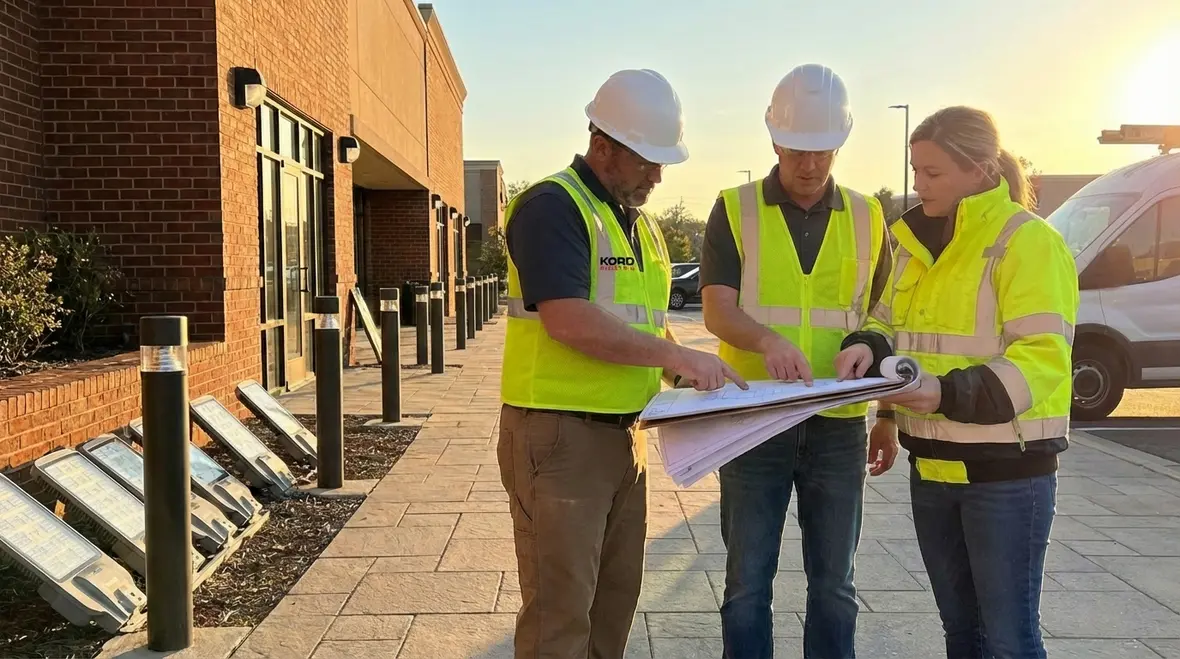
Lighting technology has evolved quickly. Thankfully, it has also become more efficient and reliable. For commercial and industrial properties, LED fixtures dominate the conversation. They last longer, consume less power, and provide consistent output over time.
However, not all LEDs are equal. Industrial facilities often require high lumen output and impact resistant housings. Coastal properties need corrosion resistant materials. Large campuses benefit from pole mounted luminaires with advanced optics to direct light precisely.
Controls are equally important. Motion sensors, photocells, and timed systems reduce energy waste. Additionally, networked lighting controls allow facility teams to monitor performance remotely. When a fixture fails, the system flags it. No more late night flashlight patrols trying to figure out which pole went dark.
Our expert service staff walks clients through these options carefully. We avoid jargon. Instead, we translate specs into real world benefits. For example, a higher IP rating means better protection from dust and water. It is not magic. It is just smart engineering.

4. The Step by Step Process of Outdoor Lighting Installation
Once planning and selection are complete, execution begins. This phase demands coordination, especially on active commercial sites.
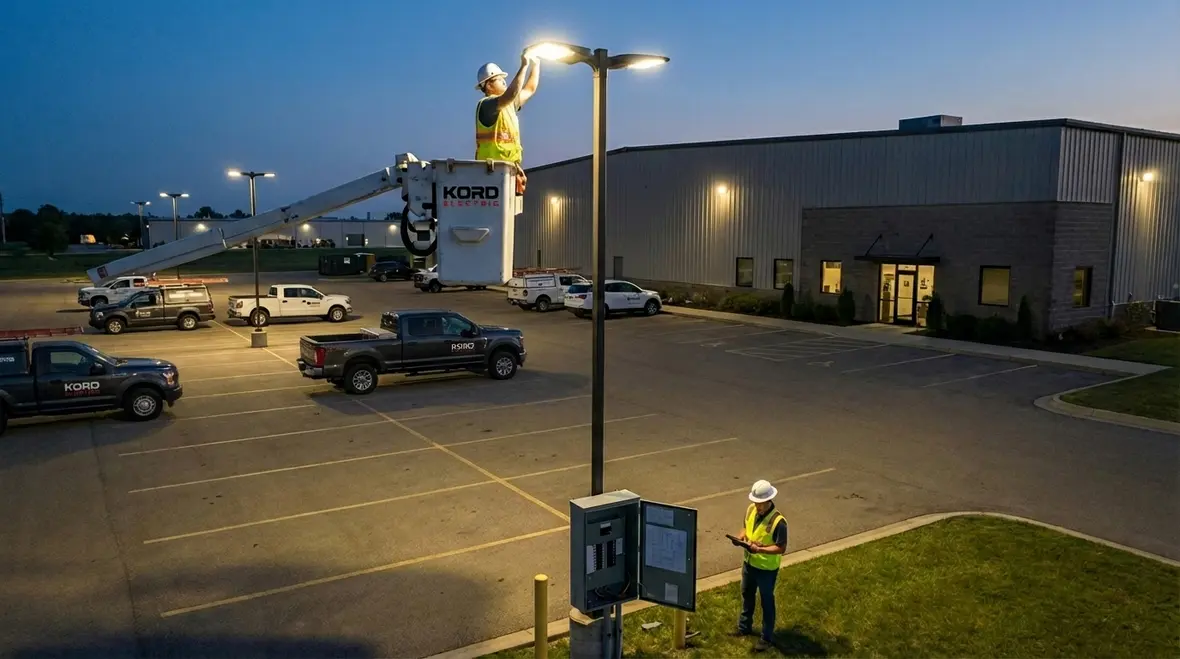
First, we secure permits and confirm code requirements. Next, we mark underground utilities. Safety is non negotiable. After that, trenching and conduit placement begin where required. For pole installations, foundations are poured and cured before mounting.
Then, our electricians install wiring, connect fixtures, and integrate controls. Every connection is tested. Voltage levels are verified. Grounding is inspected. We do not assume anything works. We prove it.
Finally, we conduct nighttime aiming and adjustment. This step often surprises clients. During the day, everything looks aligned. At night, however, light tells the truth. Therefore, we fine tune angles to eliminate glare and shadow pockets.
Throughout the project, our technicians communicate clearly with facility managers. If a schedule shift is needed, we explain why. If we identify an opportunity to improve performance, we present it. Transparency builds trust. And trust keeps projects moving smoothly.

5. Common Mistakes Property Managers Should Avoid
Even experienced property teams can overlook critical details. Fortunately, most mistakes are preventable.
One common error is underestimating illumination needs in loading zones. Trucks move. Workers move. Shadows move. Therefore, consistent lighting in these areas is essential.
Another issue is ignoring maintenance access. Fixtures mounted too high without proper lift access become service headaches. Over time, that increases costs.
Some properties rely on outdated high pressure sodium systems. While nostalgic in a retro sort of way, they waste energy and provide poor color visibility. Upgrading improves safety and reduces utility bills.
Finally, failing to integrate lighting with security systems can limit effectiveness. When lighting and surveillance work together, coverage improves dramatically.
Our service staff often says that good lighting is like a good stage crew. If it does its job well, no one notices. If it fails, everyone does.
6. Energy Efficiency and Long Term Savings
Energy costs continue to rise. Consequently, efficient exterior lighting is not just a sustainability move. It is a financial strategy.
LED retrofits and new installations reduce wattage significantly compared to legacy systems. In addition, smart controls cut unnecessary runtime. For large commercial properties, these savings add up quickly.
Many utility providers offer rebates for energy efficient upgrades. Our team helps identify qualifying products and assists with documentation. That support often shortens payback periods.
Moreover, reduced maintenance costs contribute to long term value. LEDs last longer. Fewer replacements mean less labor and fewer disruptions. When facilities operate around the clock, that reliability matters.
7. Comparing In House Maintenance vs Professional Installation
Some facilities consider handling exterior lighting upgrades internally. While in house teams bring valuable knowledge, large scale lighting projects require specialized expertise and equipment.
Below is a practical comparison to clarify the differences.
In House Approach
Familiar with property layout
Limited access to advanced photometric tools
May lack specialized lifts or trenching equipment
Higher risk of code compliance gaps
Extended timelines due to competing priorities
Professional Installation by Kord Electric
Detailed lighting analysis and modeling
Certified electricians and trained technicians
Proper equipment for safe pole and fixture installation
Full code compliance and permit handling
Coordinated scheduling to minimize operational disruption
While internal teams play an important role in ongoing maintenance, partnering with experienced professionals ensures that the foundation is solid. After all, lighting infrastructure is not something anyone wants to redo in a year.
8. How to Maintain Exterior Lighting Systems After Installation
Installation marks the beginning, not the end. A proactive maintenance plan protects the investment.
Regular inspections identify damaged fixtures, loose wiring, or shifting pole alignment. Cleaning lenses improves light output. Control systems should be tested periodically to confirm proper operation.
Furthermore, documenting maintenance activities helps track performance trends. If a specific area experiences repeated issues, the root cause can be addressed quickly.
Our technicians provide service plans tailored to commercial and industrial properties. We explain what to watch for and when to schedule inspections. Because prevention costs less than emergency repair, structured maintenance keeps budgets predictable.
For large facilities that depend on uninterrupted operations, pairing planned lighting maintenance with broader electrical support, such as lighting installation services and emergency response capabilities, gives property managers a single, reliable point of contact.
Frequently Asked Questions
Conclusion
At Kord Electric, we believe commercial and industrial properties deserve lighting that works as hard as they do. Our team delivers precise planning, expert execution, and dependable service from start to finish. When facilities invest in professional exterior lighting solutions, they gain safety, efficiency, and confidence. Whether your next project is a new build, a retrofit, or a full scale outdoor lighting installation across multiple sites, our technicians are ready to guide the process with clarity, skill, and the steady hand that experience brings.
If you are evaluating broader upgrades across your facility, from interior systems to site wide illumination, exploring dedicated services like Kord Electric’s Lighting Installation Services is a practical next step. Aligning your exterior lighting strategy with a full commercial and industrial lighting plan helps keep projects efficient, code compliant, and future ready.