

Commercial Power Outage Protection Plans
Kord Electric helps commercial and industrial facilities keep moving, even when the grid acts unpredictable. With commercial power outage protection, we plan for the moments when a lights go out, systems drift, or operations slow down. However, protection is only one piece of business continuity. Therefore, our team builds electrical plans that stay steady during storms, equipment failures, and utility events. In other words, we help our clients avoid the “panic and pray” approach, which is popular in movies but a terrible strategy in real life.
Electrical business continuity for commercial power reliability
When a company faces an outage, the biggest risk often is not the darkness. Instead, the risk is what happens next: data loss, stalled production, delayed shipments, and unsafe conditions. So, we implement Business Continuity Plans for Electrical Systems by mapping critical loads first, then designing how power will keep them stable.
Our technicians and expert service staff review how the facility runs today and how it must run during an emergency. Next, they identify areas like life safety circuits, process equipment, refrigeration, pumps, controls, and building management systems. After that, we rank these loads by impact. As a result, the plan focuses on what matters most, not everything at once. And yes, that is usually where “every breaker is important” stops being funny.
In practice, continuity planning often aligns with step-by-step electrical sequences: what should transfer first, what can ride through, and what must shut down safely. Then, we test the plan so it works under real conditions. A good plan does not just live in a binder. It performs when someone calls and says, “We need this yesterday.”
How we build a continuity plan step by step
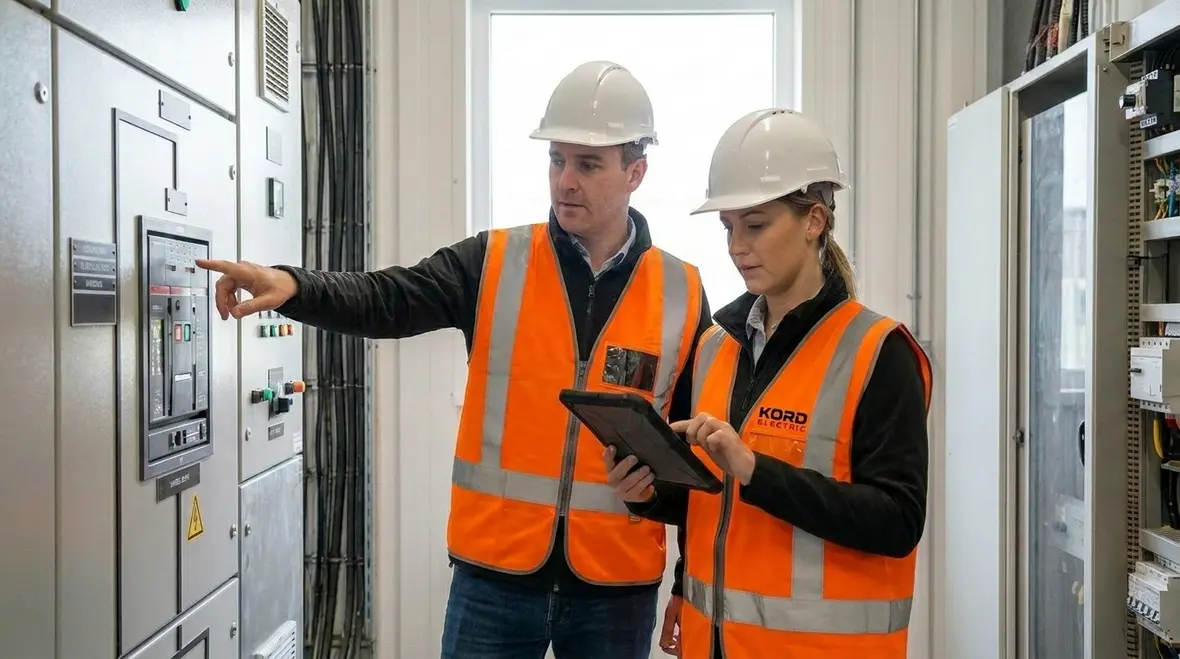
Others may rush to equipment lists. We do it differently. First, we gather system details and operating requirements, including run times, start-up surges, and any sensitive controls. Then, we evaluate the existing electrical one line, protective device settings, and switchgear behavior.
Next, we develop a continuity flow that fits the facility’s risk profile. For example, a distribution center may need fast recovery for warehouse automation, while a manufacturing plant may need stable power to keep processes from failing mid cycle. Therefore, our planning includes:
- Critical load mapping to define what must stay on
- Transfer method selection such as utility standby, generator backup, or UPS for control and communications
- Power quality checks for voltage stability, harmonics, and sensitive loads
- Safe shutdown paths so the facility can fail without making things worse
- Spare parts and access planning to reduce repair delays
After that, we align maintenance and testing schedules with the plan. Then we document everything clearly so facility managers and operators can follow it under stress. Finally, we make sure the plan fits the real world of vendors, access hours, and site constraints. Because even the best design becomes useless if the transfer gear is blocked by a storage cage.
Why generator and UPS strategy matters most
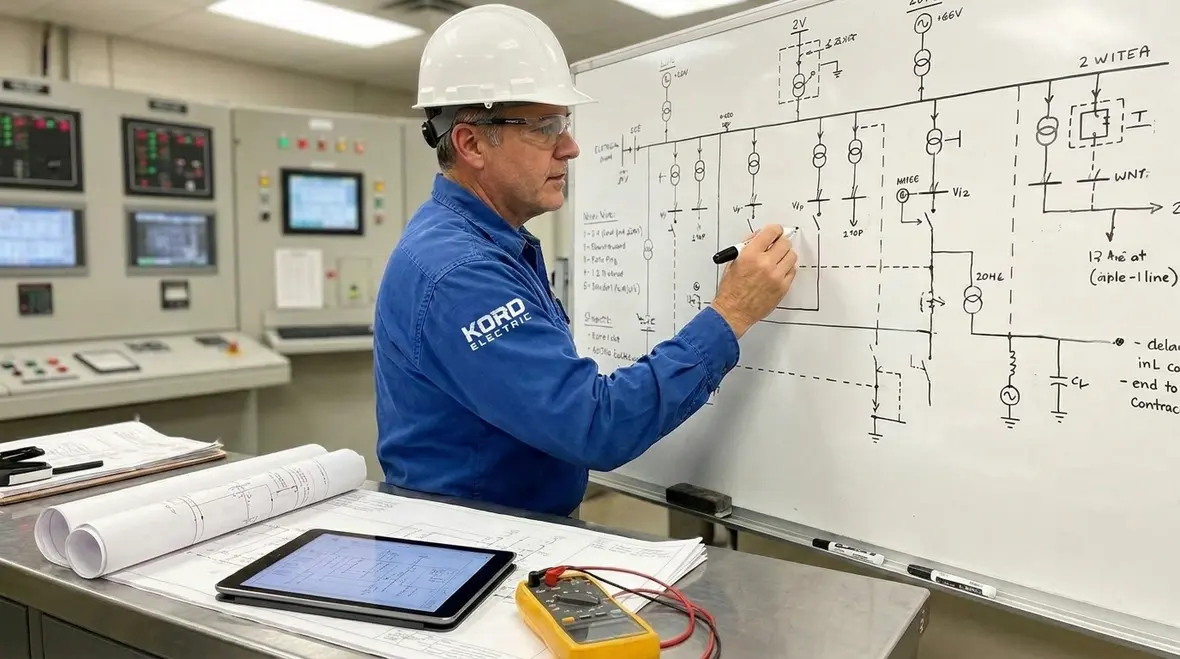
In many commercial and industrial buildings, the continuity gap happens when equipment is sized right, but configured wrong for the actual load behavior. So, we treat generator and UPS strategy as a system, not a shopping list.
Generators often handle longer ride times, but they must support start-up inrush and voltage recovery. UPS systems typically handle short interruptions and protect control circuits, networks, and automation. Therefore, we coordinate how long each system covers, what it powers, and how it transfers.
Also, we consider operational reality. Some facilities cannot tolerate even brief control drops. Others can tolerate short delays if the process stays safe. As a result, our engineers and technicians design sequences with practical priorities: keep the controls alive first, then stabilize critical production loads, then restore wider building functions.
To keep planning grounded, we often reference cost realities and design choices. For example, our internal approach also reflects how rewiring decisions impact commercial electrical systems. When wiring changes are needed, we help clients weigh disruption and timelines, not just materials. You can see our rewiring cost guide for commercial electrical systems for how we think about downtime and scope, because the cheapest option is the one that works without shutting down operations longer than necessary.
Testing, training, and the human side of outage recovery

Plans fail when people do not know what to do. So, Kord Electric trains the right groups at the right time. We meet facility managers, electricians, and operations teams. Then we explain the emergency steps in plain language, so the plan feels like it belongs to the building, not a separate document on a shelf.
Our expert service staff shows operators how transfers should behave, what alarms mean, and which panels or controls are linked to continuity functions. Moreover, we guide teams on how to verify readiness without taking the system out of service. Then, we run structured tests that match real conditions, such as simulated transfer, load checks, and post-test inspections.
We also encourage simple “what if” discussions. For instance: what if a breaker trips during a transfer? What if a sensor fails? What if a key access door is blocked during an emergency? Those questions sound basic, but they prevent chaos. And yes, chaos is always in fashion, but not the good kind.
When the team understands the system, response times improve. Additionally, operators avoid mistakes like resetting protective devices without checking the cause. That is how continuity becomes dependable, not just hopeful.
Maintenance schedules that prevent failure before it happens

Business continuity is not a one-time project. It is a living program. Consequently, our continuity approach includes preventive maintenance tied to how electrical systems actually age in commercial and industrial settings.
We review conditions that raise risk: heat buildup, dust, water intrusion, loose connections, degraded insulation, corrosion, and wear on moving parts. Then, we schedule inspections that match site conditions such as operating hours, environmental factors, and load stress.
Instead of generic calendars, we set maintenance for key parts like switchgear components, transfer switches, protective relays, and battery systems. We also verify that settings remain correct after any upstream changes. If a facility adds equipment, we reassess capacity and coordination. This avoids the slow drift that makes systems “work” until they do not.
Furthermore, we track trends from inspections so we can predict issues. That means fewer surprises, fewer emergency callouts, and fewer moments where everyone looks at the same panel like it will confess the truth. In the continuity world, preparation wins.
Planning for utilities, switchgear, and safe coordination
Most outages start outside the building, but the impact plays out inside it. Utility disturbances can cause voltage dips, frequency drift, or brief interruptions. Therefore, we design coordination between utility interfaces and on-site gear so the facility responds correctly and safely.
Kord Electric focuses on relay coordination, transfer behavior, and fault response. We also verify interlocks and control wiring so the system does not transfer at the wrong time. As a result, equipment stays protected and operators avoid dangerous backfeed or misoperation.
We also consider operational boundaries. For example, some loads should not run when the facility operates on backup power because they could overload the system or create unsafe conditions. So, our continuity plans include load shedding logic where needed. Then, we label the system clearly so staff understands what stays and what leaves the circuit during an emergency.
Finally, we align our recommendations with how the facility must comply with code and safety expectations. We aim for solutions that reduce risk today and remain practical tomorrow, even after small changes to the building’s electrical network.
Featured FAQ
Quick FAQ
- What triggers a continuity plan update? Changes to equipment, major electrical upgrades, increased load demand, or repeated nuisance trips.
- Will continuity planning work for large properties? Yes. We design for commercial and industrial sites, including multi-load and multi-tenant major building setups.
- Do our technicians document the plan? Yes. We provide clear steps, key panel references, and testing notes so staff can act fast.
Commercial electrical continuity starts with Kord Electric
If you run a commercial or industrial facility, outages are not a “someday” problem. They show up during storms, during peak demand, and during the shift when everyone is tired. Kord Electric builds Business Continuity Plans for Electrical Systems around your critical loads, and we support the practical side with testing and training. Contact us for an electrical continuity review and a clear path to stronger commercial power outage protection that keeps operations steady. Let’s turn uncertainty into a plan you can trust.
For facilities that want continuity to stay strong year after year, pairing your outage planning with a structured electrical preventive maintenance program helps keep switchgear, transfer equipment, and protective devices in ready-to-run condition.
When you are ready to move from “we should plan for this” to “we have a plan in place,” Kord Electric’s commercial and industrial team is ready to help you map critical loads, coordinate with utilities, and design practical commercial power outage protection that fits your facility’s real-world operations.


