Commercial Subpanel Capacity Planning Guide
Business Guide to Scaling Commercial subpanel capacity planning for growing facilities
When a commercial building grows, its electrical system must keep up. In our experience at Kord Electric, scaling Commercial subpanel capacity planning early helps property managers avoid costly shutdowns, stop last minute panel swaps, and keep operations steady. Others wait until lights flicker, breakers trip, or a new tenant arrives like a surprise sequel. Then the electrical work becomes urgent, expensive, and a little stressful for everyone involved. So we guide teams with a clear, practical approach to expand capacity without guesswork.
Our technicians and expert service staff explain the “why” behind each decision, in plain terms, so the business side and the electrical side align. And yes, we tell people to plan before the building starts acting like it has a mind of its own.
Assess demand now, not later

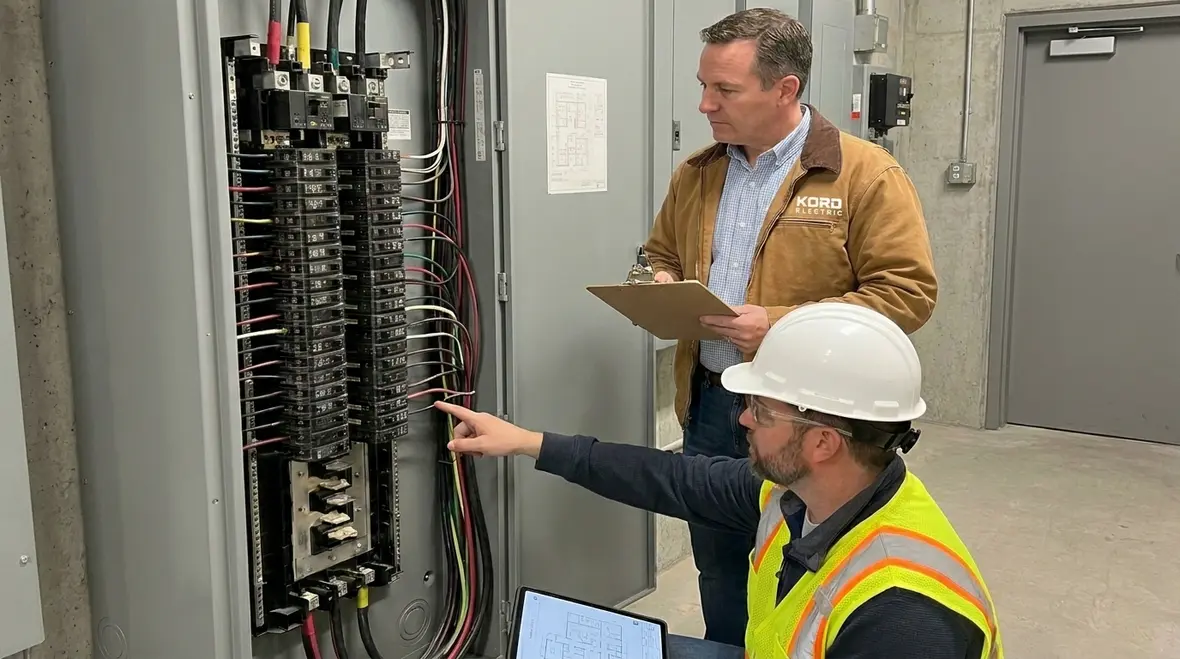
A business guide starts with accurate load thinking. First, we review current equipment, historical usage, and planned changes. Then we map the real-world demand: HVAC cycling, motors, kitchen loads, elevators, lighting controls, data rooms, and any process equipment common in industrial and major property buildings.
Our team works with facility leaders to identify growth drivers such as new tenants, more shifts, renovations, expanded parking structures with EV charging, and increased building automation. After that, we verify electrical ratings and protective device settings. We also confirm conductor size, panel schedules, and busbar condition, because “it fits” does not always mean “it will last.”
Next comes the forecasting step. We project capacity for the next three to seven years, not just the next few months. That longer view supports smarter Commercial subpanel capacity planning, especially when demand rises in phases instead of all at once.

Plan feeder paths and panel locations like a building project
After demand is clear, we design the path electricity will travel. Many scaling problems happen in the routing, not the math. Therefore, we evaluate how feeders move through the building, where panels sit, and what the space can handle during future expansions.
Our technicians look at panel clearances, ventilation, access routes, and cable fill. They also check whether adding new breakers forces awkward bends, heat traps, or tight service loops. And when upgrades require demolition, we coordinate with the property team so schedules stay realistic.
We also plan for future expansions that may involve adding circuits, swapping incomers, or increasing main service capacity. In other words, we do not treat panels like furniture you move once and forget. They sit at the center of power distribution, and that central role only grows over time.

Use maintenance plans to keep capacity reliable
Equipment ages, connections loosen, and dust builds up. If a panel runs hot or a breaker ages beyond its useful life, future scaling becomes harder, not easier. That is why we align upgrades with electrical maintenance plans. Kord Electric’s approach includes routine checks and clear documentation so property teams can act before problems turn into emergencies.
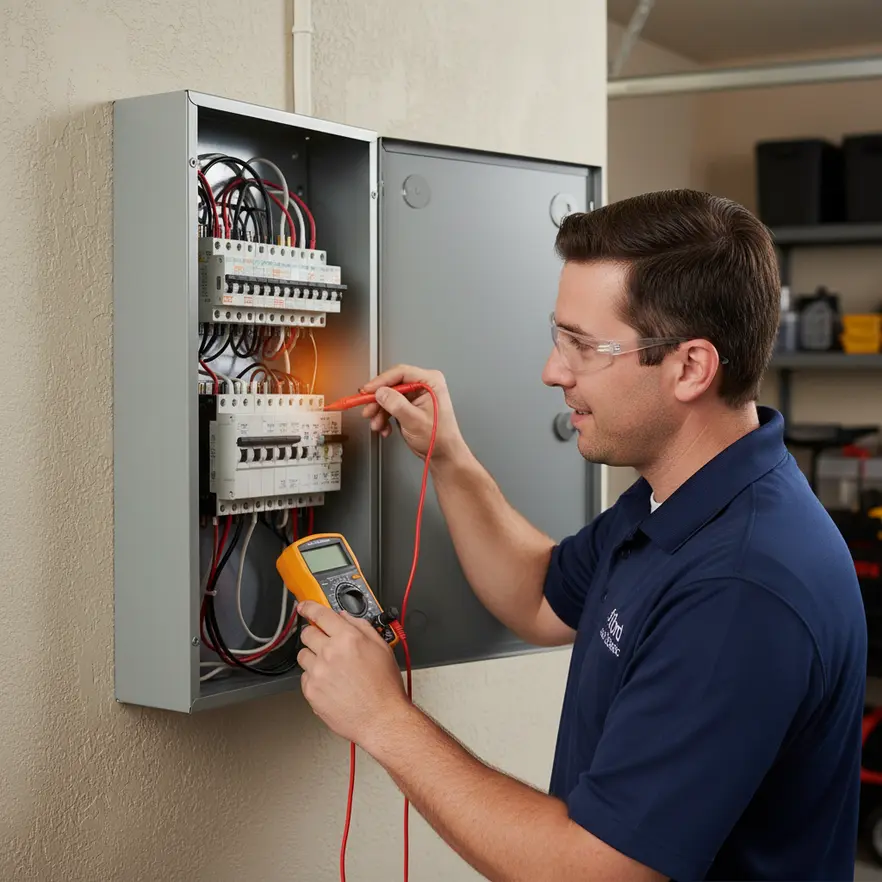
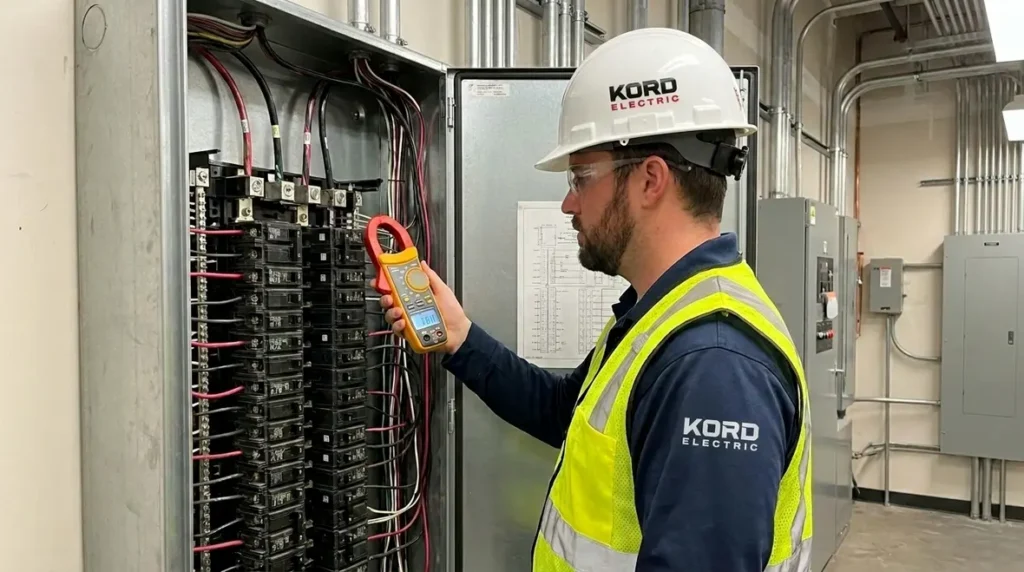
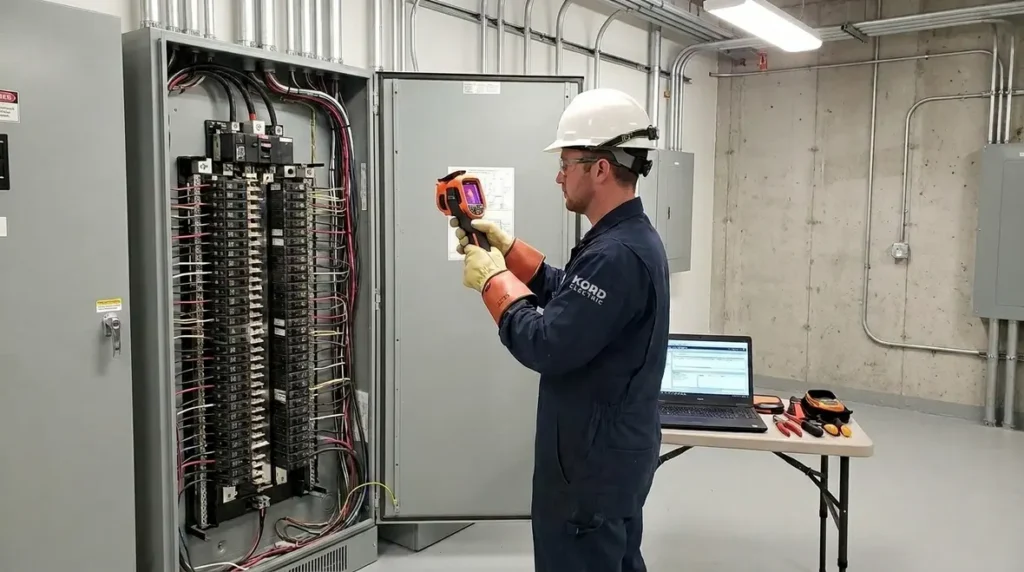
In our Commercial and Industrial Electrical Maintenance Plans, our expert service staff focuses on what matters in the real world: visual inspections, thermal imaging where appropriate, torque verification, breaker condition review, and preventive testing for grounded systems. Then we document what we find so the next upgrade decision uses facts, not guesses.
Transitioning from reactive repairs to planned service also supports Commercial subpanel capacity planning by protecting the investment. When a panel already runs well, scaling becomes a planned project instead of a fire drill.

Choose expansion options that match the building’s rules
Scaling is not one-size-fits-all. The right option depends on the building’s electrical architecture, available space, utility limits, and how the facility operates during construction. We help teams select strategies that minimize downtime and keep systems safe and compliant.
Common options include adding subpanel sections, increasing breaker quantity by selecting higher capacity equipment where code allows, upgrading incomers, and balancing loads across phases. Sometimes we recommend a new distribution panel instead of forcing more circuits into an overloaded board. Other times, a selective feeder reroute makes more sense than a full replacement.
When a building uses automation, we also consider control power and communication pathways. That part is easy to overlook, because people focus on the big feeders. Yet many operational hiccups start with the small stuff that supports safe, stable control logic.
Our staff explains these tradeoffs in plain language, so the property team understands not just what we plan, but what each choice prevents. We keep it business casual, but the standard of work stays firm.
Balance capacity across tenants, floors, and future expansions
Commercial and industrial sites rarely grow evenly. One tenant might expand while another stays stable. Floors may get remodeled on different timelines, and equipment replacements may happen in bursts. Therefore, scaling needs a structured load allocation method.
We recommend that property managers define a circuit strategy early. That strategy includes how to assign loads to subpanels, how to label circuits so future work stays smooth, and how to reserve capacity for predictable growth categories. Examples include lighting upgrades, additional HVAC zones, temporary power during renovations, and future data and server growth in business critical areas.
Next, we help teams avoid “capacity squatting,” where a subpanel fills up with short term projects and leaves no room for planned upgrades. It sounds dramatic, but it happens. Like ordering one more coffee and accidentally creating a whole new habit.
When the facility uses phased construction, we align upgrades with that sequence. As a result, Commercial subpanel capacity planning becomes a living plan that updates with each renovation cycle instead of a one-time spreadsheet.
Document capacity and update the plan as changes happen
Once the system gets upgraded, documentation must stay current. Otherwise the building loses the value of the plan. We update circuit directories, panel schedules, and as-built records so future electricians and facility teams understand what was done.
Then we track capacity utilization and leave clear notes about margins and reserved circuits. In practice, we also coordinate with facility leadership on how new work requests should flow. For example, a tenant improvement request should trigger a quick review of available breaker spaces and feeder capacity. That step prevents surprises and reduces costly change orders.
Our expert service staff also teaches teams how to spot early signals of stress, like repeated nuisance trips, inconsistent voltage behavior, or unusual heat. And when those signals appear, we respond with testing and targeted corrective work rather than broad guesswork.
FAQ
Conclusion: get a capacity plan that protects your budget and uptime
If your building plans to grow, electrical capacity should grow with it. Kord Electric helps commercial and industrial facilities build a clear, documented path for expansion, so you avoid rushed upgrades and keep power steady. We bring technicians and expert service staff who explain each step in plain terms, and we align improvements with maintenance best practices. Reach out to us to review your current panels, forecast demand, and map safe scaling options. Your next renovation should feel organized, not like a plot twist.
To complement your Commercial subpanel capacity planning strategy with broader preventive support, explore our dedicated Electrical Preventive Maintenance services and keep panels, feeders, and distribution equipment performing reliably year after year.
For facilities adding high demand loads like EV charging, pair your capacity plan with a focused upgrade path using our Commercial & Industrial EV Charger Installation services. That way, new infrastructure arrives with the right feeders, protection, and headroom already in place.