Electrical Preventive Maintenance Checklist Guide
When commercial and industrial facilities think about electrical reliability, they often picture dramatic failures: sparks, alarms, or a whole wing of the building suddenly going dark. In practice, most electrical problems arrive quietly. A connection loosens. A breaker starts to run warm. A label goes missing. Over time, those small details build into downtime, safety risk, and costly repairs.
A disciplined Electrical preventive maintenance checklist gives facility managers a calm, practical way to stay ahead of that curve. Instead of hoping things keep working, you build a repeatable routine: inspect, test, document, and act. This guide walks through how that checklist works in real commercial and industrial environments, how technicians use it, and how the results turn into decisions leadership can trust.
Electrical Preventive Maintenance Checklist for Facility Managers: the calm, practical path
When we support commercial and industrial facilities, we start with a simple reality: breakdowns rarely announce themselves with fireworks. They usually show up quietly, then escalate like a bad action movie sequel. Our Electrical preventive maintenance checklist guides facility managers through a steady routine that catches issues early, protects people, and reduces downtime. In the first pass, we document equipment condition, inspect for heat and wear, test protective devices, check grounding, verify labeling, and confirm that panels and feeders behave as expected under load. Then we schedule the right follow up, because “we’ll watch it” is not a maintenance plan, it is a hope strategy.
Below, we outline what facility teams should look at, how we train and work with our technicians, and how we deliver clear, written results that others can act on. And yes, we keep it thorough, even when the office lights are already “working just fine.”
First step: set up the Electrical preventive maintenance checklist
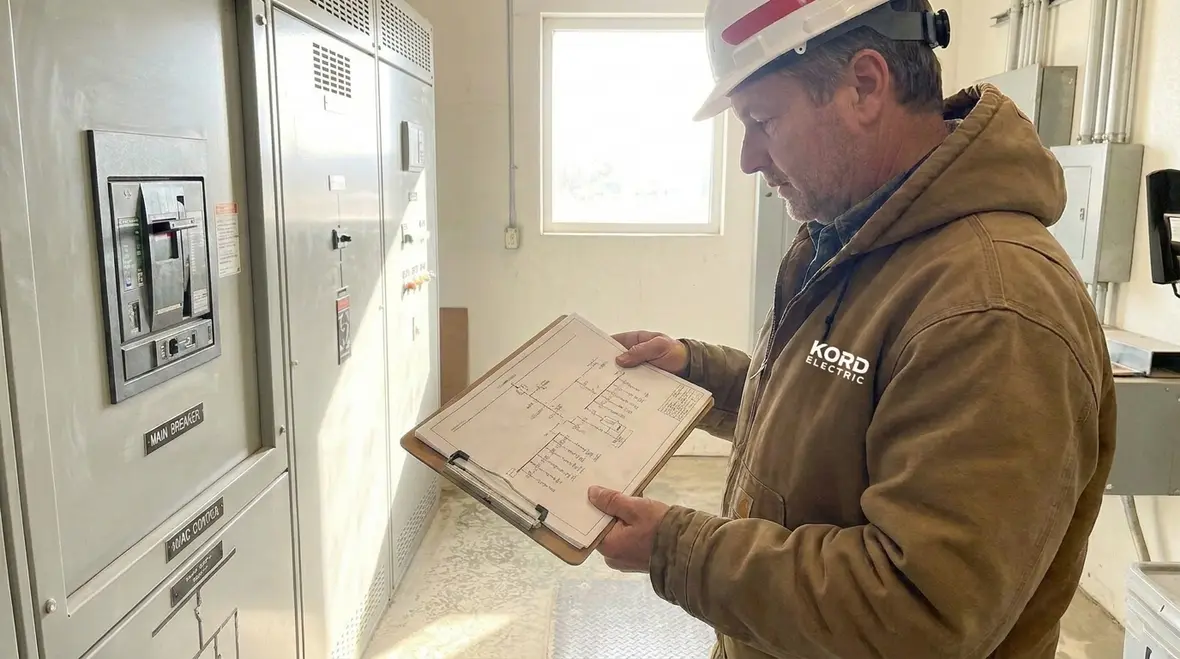
Facility managers often feel pressure to move fast. So we slow things down on purpose at the beginning. A solid Electrical preventive maintenance checklist starts by matching the building as it exists today, not as it looked five renovations ago. That means connecting three pieces of information:
- The current electrical one line diagram
- Accurate panel schedules and breaker assignments
- A living equipment list that reflects what is actually installed
First, we align the checklist with the site’s electrical one line diagram, panel schedule, and equipment list. Then we confirm what the building actually uses, not what the paperwork says it uses. Finally, we define inspection and testing intervals by criticality. A medical-grade server room in a major property building gets a different schedule than a seldom used equipment closet. That difference matters when you are trying to prevent outages instead of reacting to them.
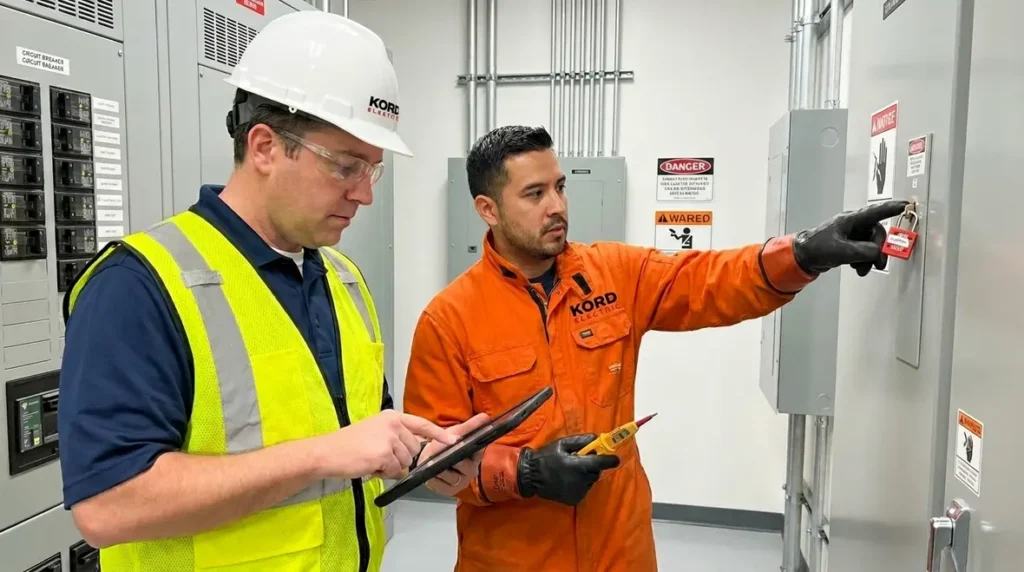
Our expert service staff explains this during kickoff, using plain language and real examples from commercial sites. In other words, we do not just hand over a document and disappear. We walk through what gets inspected, what gets measured, and what gets documented so leadership can understand risk without needing an engineering degree.
To keep the work consistent, we also define acceptance ranges. We want technicians to record “what they saw” and “what it means,” not just numbers. From there, we create a maintenance trail that helps during audits and keeps decisions grounded. Over time, that trail becomes a living record of the facility’s electrical health, not just a stack of disconnected reports.
If your team is formalizing its first program, it can be helpful to review how structured plans are built across multiple sites. For example, Kord Electric’s overview of commercial and industrial electrical maintenance plans shows how routine inspections, thermal scanning, and breaker testing combine into a single, long term strategy that supports system longevity and predictable uptime.
What we inspect inside electrical rooms and panels

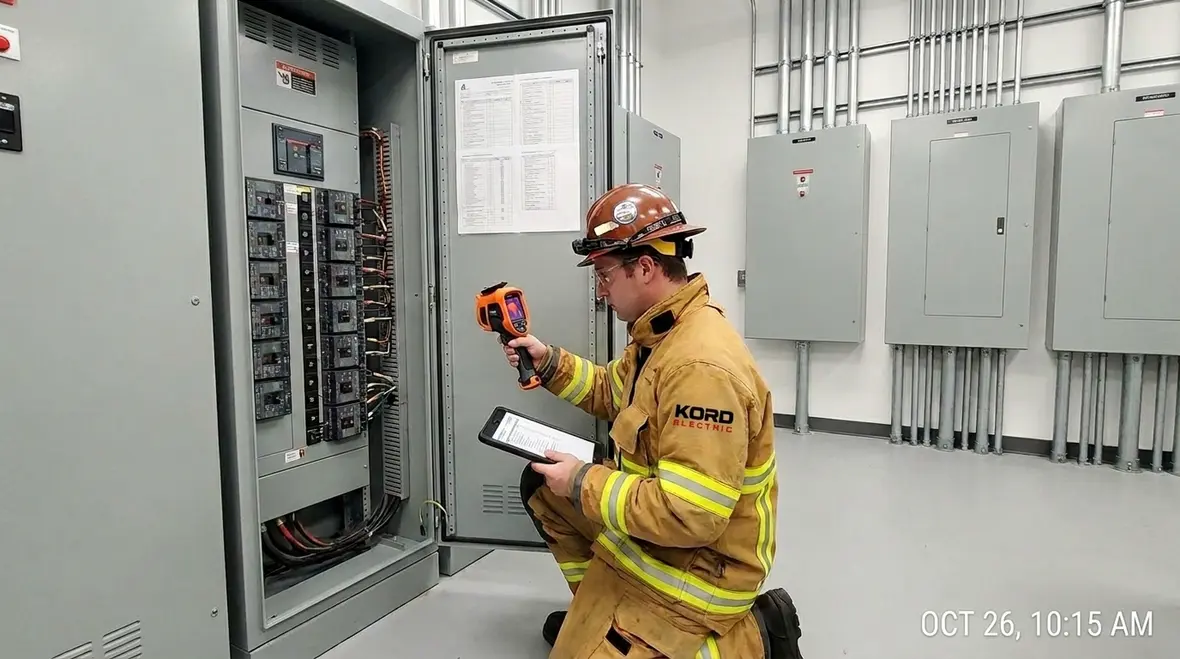
Electrical rooms look sturdy, yet they carry the evidence of neglect. So we inspect them like we expect a story to be hiding behind the cover. The Electrical preventive maintenance checklist breaks that story into repeatable steps so nothing gets skipped when the day gets busy.
Panel interiors and connections
During panel inspections, we look at the basics that cause the biggest problems over time. We verify torque on bus connections where applicable, check for discoloration that suggests heat, confirm that deadfronts and barriers stay intact, and we check for moisture intrusion. We also examine wire insulation, lugs, and terminations for signs of oxidation or loosening.
Cleanliness, airflow, and monitoring
Next, we validate cleanliness and airflow. Dust and debris can trap heat, and fans can fail quietly. Therefore, we check cooling paths, ventilation openings, and any related components. If a panel has indication lights or alarms, we confirm they match the actual status. A light that says “normal” while a breaker runs hot is not doing anyone any favors.
Labeling that actually helps in an outage
We also confirm labeling. In commercial and industrial environments, bad labeling is the slow burn that leads to wrong breakers, longer outages, and the kind of troubleshooting that makes everyone stare at the ceiling like it will confess. Our technicians correct labeling during service visits when allowed, and we document recommendations for any deeper updates. Clear labels turn a stressful outage into a controlled response instead of a guessing game.
For a deeper dive into how those small issues turn into big disruptions, Kord Electric’s article on hidden electrical risks in commercial buildings explains how dust, loose connections, and poor labeling quietly increase failure risk long before anything looks dramatic.
Testing and verification that keeps protective devices honest
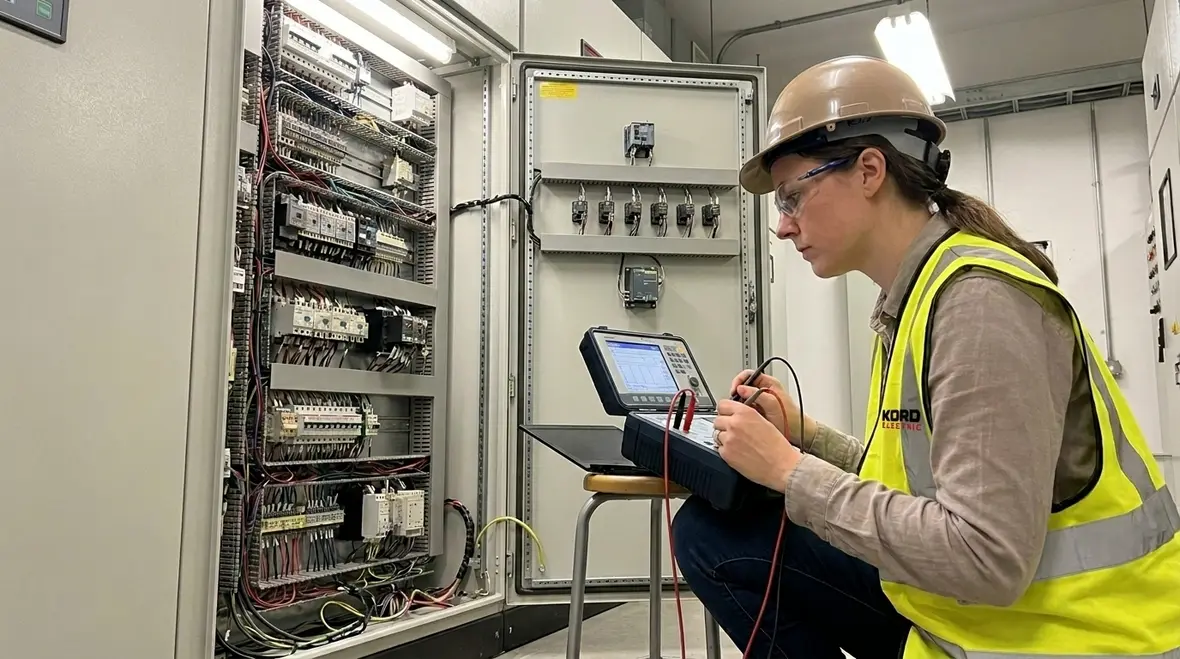
If a facility runs on “it trips sometimes,” we treat that as a red flag, not a personality trait of the equipment. Protective devices must behave predictably. So we test them in a way that supports real-world operation and matches the design intent of the electrical system.
Breaker and relay condition
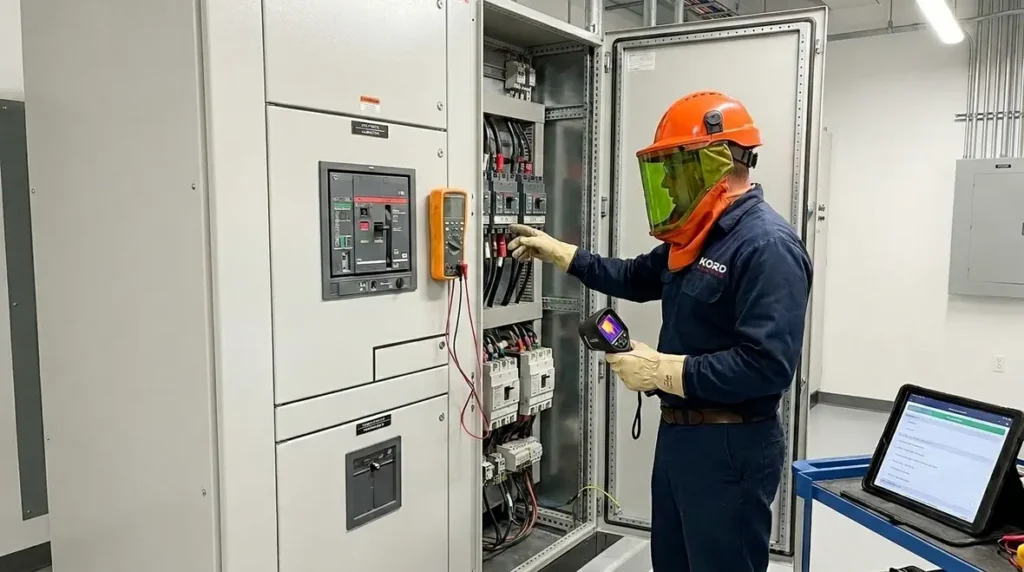
We typically verify breaker condition, inspect trip mechanisms, and check operation of protective relays where those systems exist. Where applicable, we perform insulation resistance testing and evaluate results against historical records. Then we cross-check that protective settings match the system design intent and the real loads the building carries today.
Coordination and fault response
After that, we review coordination risk. In other words, we ask: if a fault happens, which device clears it and how quickly? We do not want upstream equipment to become the sacrificial lamb. Our expert service staff explains the findings in practical terms, so a facility manager understands whether the site needs adjustments, more frequent testing, or an upgrade path.
Honest conversations about end-of-life equipment
And we do not sugarcoat. If data suggests a device is nearing end of life, we say so. We are in the business of preventing outages, not writing mystery novels. When facilities pair this testing with a structured Electrical preventive maintenance checklist, they gain a clearer picture of which components can keep running and which ones should be budgeted for replacement.
Grounding, bonding, and surge protection checks
Many facilities focus on visible components, but electricity does not care what looks dramatic. It cares about grounding, bonding, and surge paths. Therefore, our Electrical preventive maintenance checklist emphasizes these foundations.
Verifying grounding and bonding integrity
We verify grounding connections and inspect bonding points for corrosion, looseness, and continuity issues where required. We check the integrity of grounding electrode connections when access allows, and we confirm that metal components are properly bonded. In surge protection systems, we inspect device condition and verify that indicator status aligns with the expected state.
Accounting for changes between visits
Then we review any changes that happened since the last visit. Building renovations, new racks, replacement motors, or added racks of IT gear can shift the electrical behavior. As a result, a facility that “did fine last year” can face new stress without realizing it. Grounding paths that worked well before can become less effective as equipment moves and circuits are reconfigured.
We document what we found and what we recommend. In most cases, we provide straightforward next steps rather than vague notes that vanish into an inbox like a forgotten warranty email. When needed, we connect teams with related services, such as targeted support for voltage fluctuations in commercial and industrial facilities, to keep sensitive equipment protected from unstable conditions.
Thermal imaging, load behavior, and infrared insights
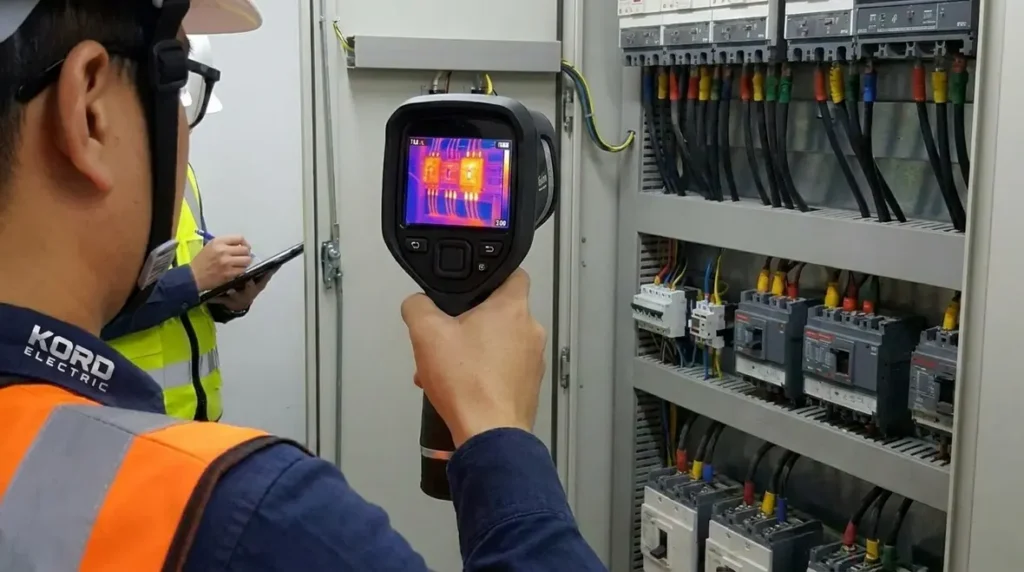
Heat tells the truth, even when the equipment sounds calm. So we use thermal imaging as part of a strong Electrical preventive maintenance checklist approach. We scan terminations, bus bars, connections, and other hotspots that tend to loosen or degrade under load. When the readings show unusual heat patterns, we investigate and recommend targeted corrections.
Coordinating scans with real operating conditions
Thermal work works best when we coordinate it with building load conditions. Therefore, we plan visits and timing so the scan captures meaningful behavior. We also connect the results to the system layout and the equipment’s role in the facility. In a major property building, that may mean verifying feeders serving life safety areas, critical mechanical systems, and IT loads.
Turning thermal findings into action
As our technicians explain during the walkthrough, thermal findings do not always mean replacement is immediate. Often they signal connection torque needs attention, cleaning should happen, or a component should be scheduled before it fails. That is how preventive maintenance stays preventive, not reactive.
And yes, we know thermal images can look like a sci-fi map. But we keep the talk grounded. The goal is not to impress anyone. The goal is to reduce risk, support uptime, and give facility managers data they can use to justify work orders and capital planning.
Electrical room documentation and compliance that leadership can use
A checklist is only as strong as the paperwork behind it. Therefore, we build service documentation around decisions, not just observations. Leadership needs to know what changed, why it matters, and what will happen next—not just whether a breaker was tightened or a panel was cleaned.
Clear, structured maintenance records
After each maintenance cycle, we provide clear records that include what we inspected, what we measured, the test results, and the actions taken on site. We also list recommended follow ups, prioritized by impact and urgency. Then we help facility teams connect findings to downtime planning, capital planning, and vendor coordination.
Simple layouts that speed up decisions
To make this easier, we sometimes use dual columns in our site summaries: one side for confirmed actions completed during the visit, and the other side for recommendations and timelines. That simple layout helps teams move faster without hunting through a long report like it is hidden treasure.
Throughout the process, our expert service staff explains the “why” behind each item, especially when something sits outside normal maintenance expectations. We do not talk down to facility leaders. We talk with them, because they manage people, budgets, and safety all at once. That collaboration is also why many organizations connect their Electrical preventive maintenance checklist directly to structured programs like Kord Electric’s electrical preventive maintenance services so reporting, scheduling, and follow-through stay aligned.
How often should a commercial facility run electrical preventive maintenance
Frequency depends on load, criticality, environment, and history. Still, we guide teams toward realistic intervals that protect operations without disrupting business. For many commercial and industrial facilities, a structured schedule includes regular inspections at planned intervals, with deeper testing for critical systems and components based on results.
Matching intervals to risk and operating conditions
We also consider operating patterns. Facilities that run near full load for long hours experience higher thermal stress. Sites in dusty or humid environments face faster corrosion and insulation wear. Additionally, equipment that has frequent process changes or renovations may need more frequent verification after major updates.
When we review the plan with the facility team, we also plan around outages and access limitations. Therefore, we coordinate with maintenance supervisors so work happens when it causes the least disruption. That coordination matters, because even the best preventive work fails if it conflicts with production. For many sites, an annual comprehensive review with interim inspections for critical areas creates a strong baseline, then the schedule is refined as real-world data comes in.
If you operate data centers or other mission-critical spaces, it may also be helpful to align preventive maintenance frequency with broader reliability goals. Kord Electric’s articles on data center electrical distribution design and electrical requirements for uptime show how maintenance, design, and testing schedules work together to protect high-value operations.
FAQ
Conclusion: let us protect uptime with disciplined maintenance
Facility teams do not need more noise. They need dependable electrical service that reduces risk and keeps operations steady. At Kord Electric, we build a clear Electrical preventive maintenance checklist workflow for commercial and industrial facilities, and we back it with technician level work, real documentation, and practical recommendations. If you want fewer surprises and better planning, contact us to review your site needs and schedule the next maintenance cycle. We will bring the calm, and your electrical system will do the talking.
For facilities that want a structured program rather than one-off visits, Kord Electric also offers dedicated electrical preventive maintenance services that align inspection routes, thermal imaging, breaker testing, and documentation into a single, long term plan. That plan can stand alongside other focused offerings, such as support for voltage fluctuations in commercial and industrial facilities, to keep power quality, safety, and uptime moving in the same direction.
If your buildings, campuses, or major property portfolios need an Electrical preventive maintenance checklist that is more than a formality, our team is ready to help you turn it into a practical tool. From NFPA 70B-informed panel and switchgear work to data-driven reporting that leadership can trust, we design preventive maintenance programs that fit how your facilities actually run day to day.