Commercial Subpanel Installation for Facilities
Kord Electric approaches commercial subpanel installation with the kind of calm, methodical attention you want on a live facility, not a science fair. In the first phase, we follow subpanel installation best practices: we verify load needs, confirm conductor sizing, plan routing, and keep bonding and grounding correct before any breaker goes in. Next, we stage the work to reduce downtime and coordinate with facility operations. Then, our technicians label clearly, torque connections properly, and test the system so it performs as designed. And yes, we do explain the process to facility managers, because nothing says “mystery meat wiring” like refusing to answer a straightforward question.
Why facility managers rely on subpanel upgrades
In commercial and industrial spaces, electrical demands change faster than tenant move in dates. New HVAC loads, upgraded lighting, server rooms, and motor controls all add real strain to aging distribution. As a result, facility managers often need subpanel installation support to organize circuits, reduce overload risk, and keep maintenance predictable.
We see the same pattern across major property buildings. Over time, a main panel becomes a crowded apartment. Everything works, until it doesn’t. With a properly planned subpanel, others can isolate loads, troubleshoot faster, and maintain power without shutting down entire areas. Moreover, this structure helps operations stay steady during renovations, because contractors can connect new equipment to the right circuit space.
Our expert service staff also helps teams plan timing. We coordinate with the building schedule, and we keep interruption windows short. In other words, we help you manage the work like a business process, not a last minute fire drill with a borrowed ladder.
Commercial subpanel installation: step by step planning
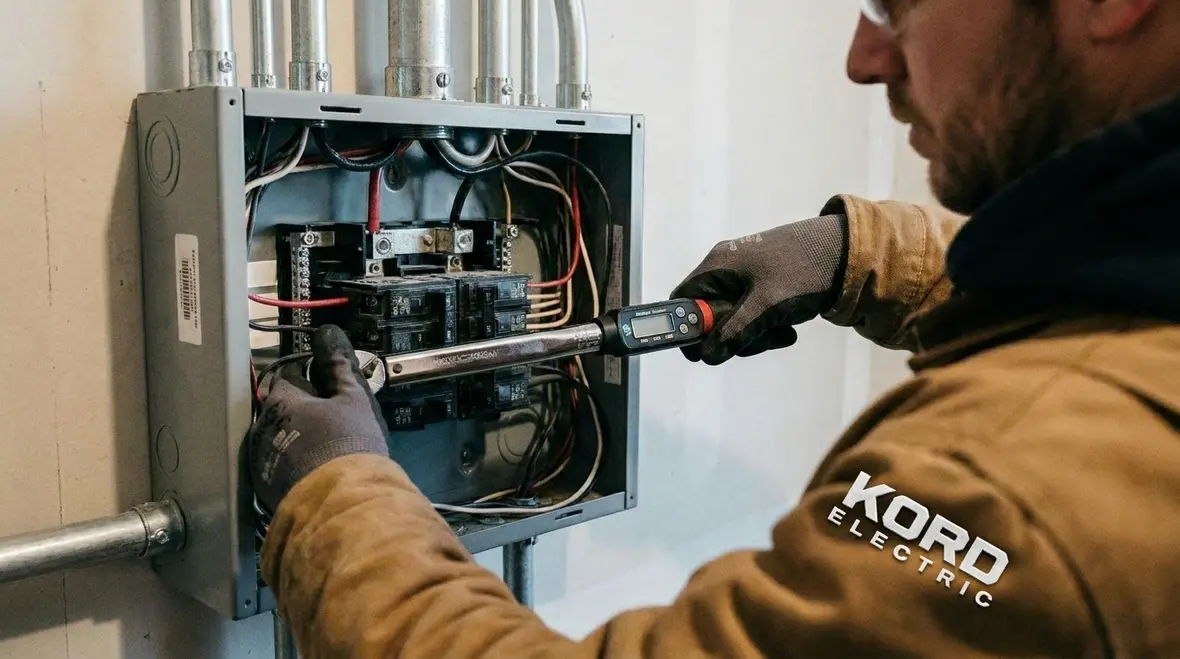
When Kord Electric manages a project, we run the process like a checklist that actually has teeth. First, we collect site data. Then we confirm drawings, panel schedules, and equipment ratings. After that, we verify the service capacity and available breaker positions. Finally, we map circuit assignments based on actual loads and future growth.
Here is how we typically plan a safe, efficient install for commercial and industrial facilities:
- Load analysis and circuit grouping: We separate critical loads from general loads, and we plan for spare capacity so future additions do not force unsafe overcrowding.
- Conductor and breaker selection: We match wire size, insulation type, and breaker ratings to the application. This matters because the “close enough” approach usually shows up later as heat, noise, or nuisance trips.
- Space and mounting review: We verify the physical space, ventilation needs, and safe clearance distances. A subpanel that fits on paper still must fit in real life.
- Routing strategy: We route conductors to reduce stress, avoid sharp bends, and maintain clean pathways for future service.
- Labeling and documentation: We label circuits clearly and update the panel schedule. Facility teams need reliable info when they troubleshoot at 2 a m, not a treasure map.
And because facility operations do not pause for our schedule, we stage materials, confirm access, and coordinate shutdowns. Transitioning between phases is where projects succeed, so we plan those moves in advance.

Electrical safety checks that prevent expensive surprises
Safety is not a “nice to have” feature in major property buildings. It is the difference between a clean inspection and a costly redo. Before we energize anything, our technicians perform verification steps that protect people, equipment, and productivity.
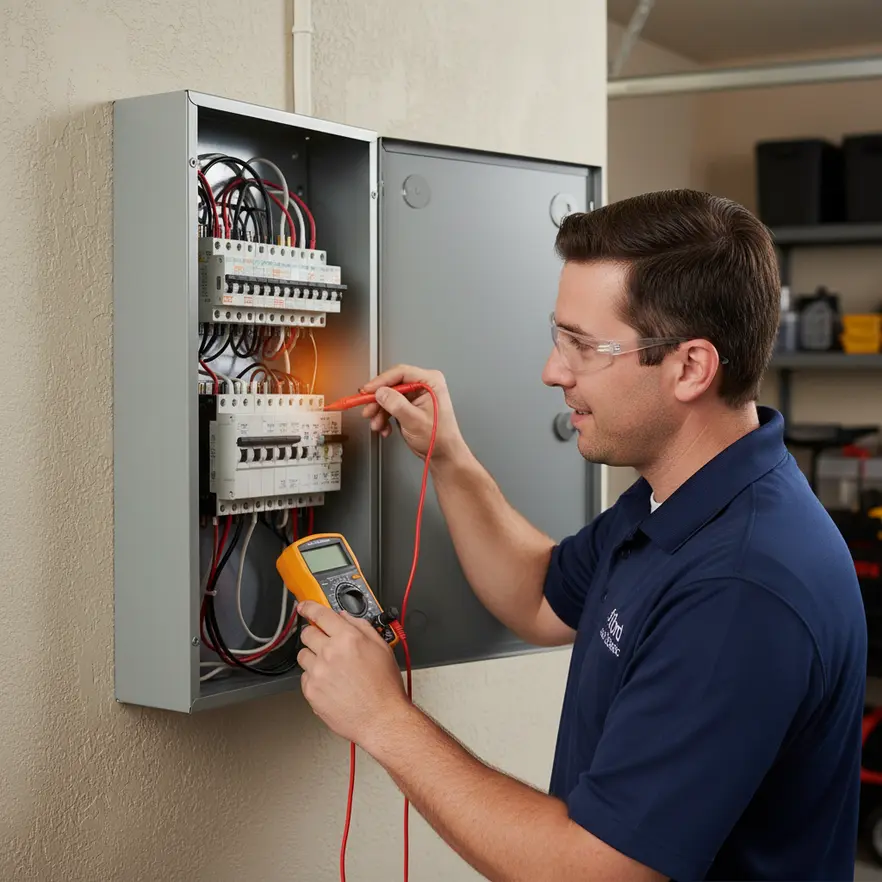
First, we verify bonding and grounding. Then we inspect terminations, torque settings, and conductor insulation. Afterward, we confirm correct polarity and breaker pairing. Finally, we test for proper operation under load conditions where appropriate.
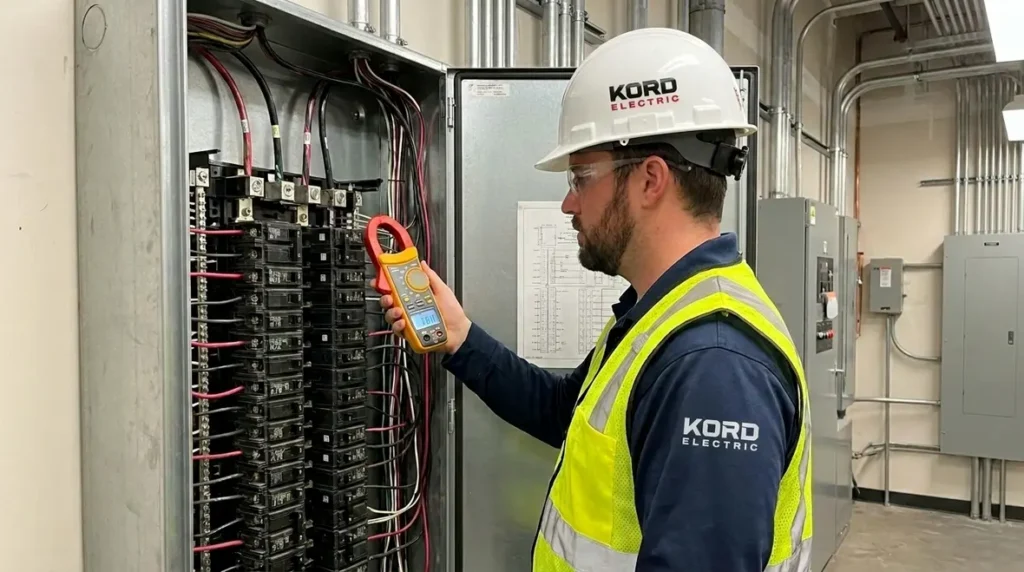
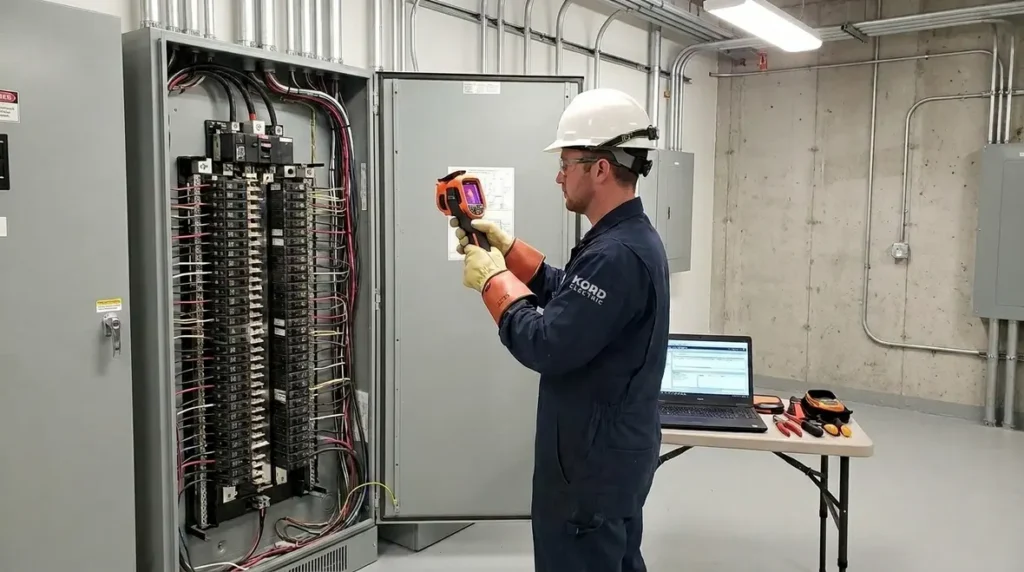
We also pay attention to install details that inspectors look for every day. For example, we ensure proper enclosure ratings, confirm conductor fill and separation where required, and maintain neat workmanship. In addition, we check for thermal risk points and correct any mismatches before the system sees real current.
Now, if you are thinking, “Sure, sure, you checked it,” remember this: most failures do not announce themselves with a dramatic movie soundtrack. They creep in quietly. So we handle the quiet problems early.
Coordinating work with facility operations and inspections
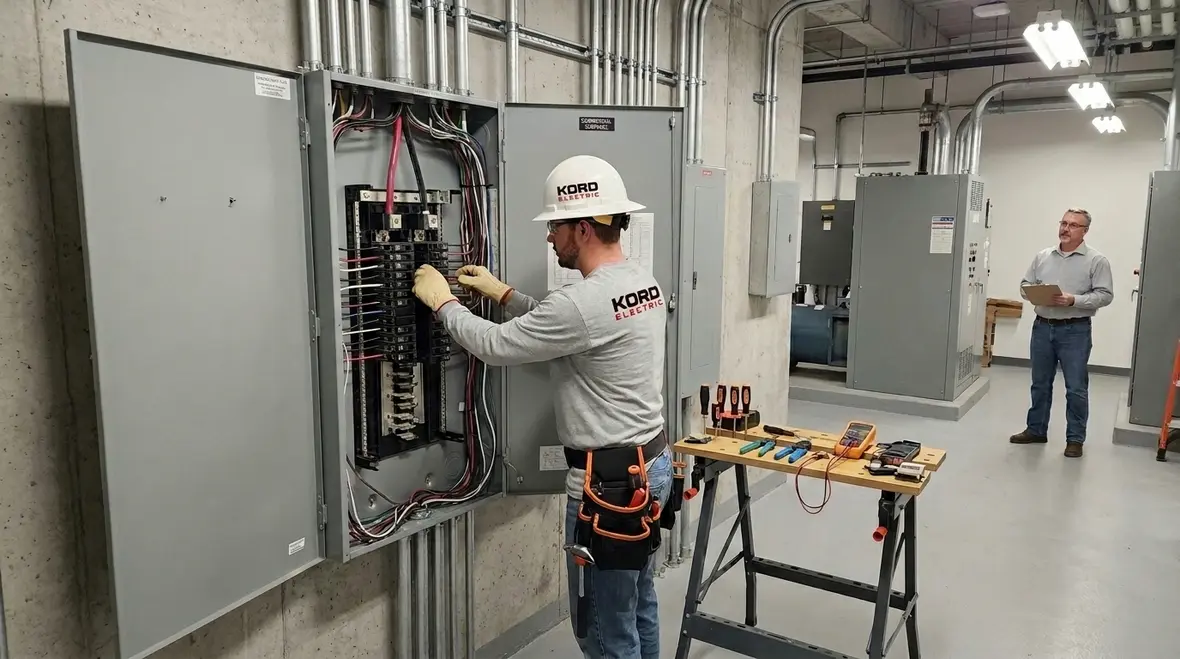
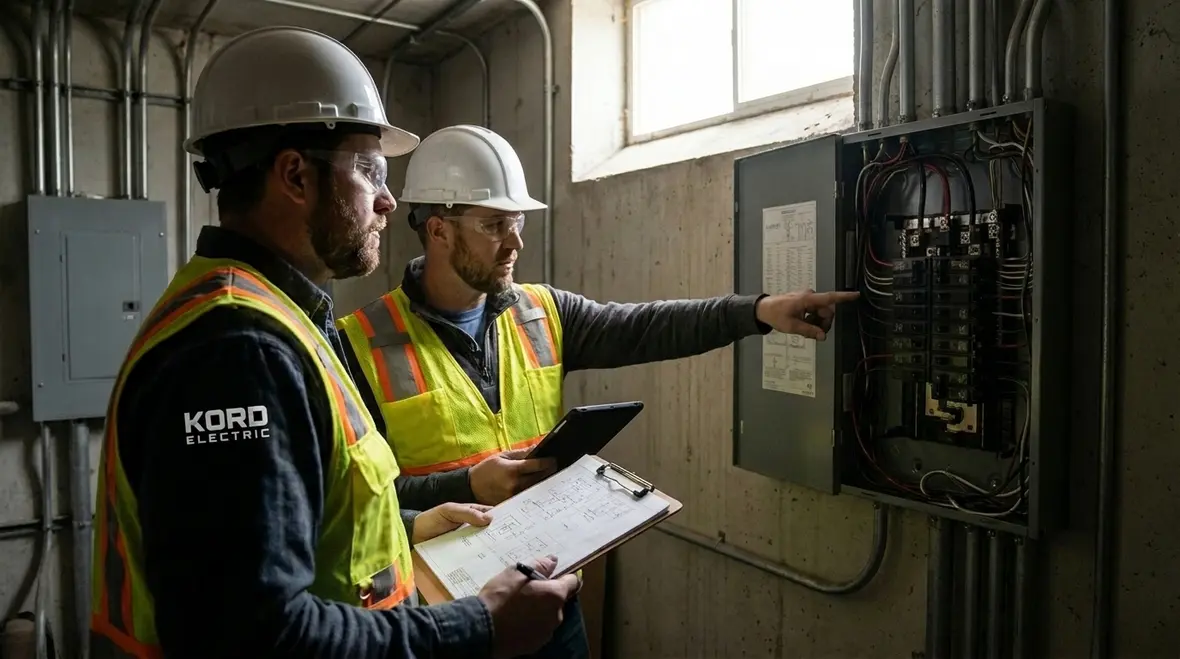
A good installation only counts if the building keeps running. Therefore, Kord Electric coordinates with facility managers, electrical contractors, and inspection schedules. We plan the downtime, define responsibilities, and confirm access to equipment rooms. That way, others do not scramble for parts, and nobody improvises with the wrong circuit at the wrong time.
In larger buildings, one area can affect others. So we set a sequence that minimizes disruption. We verify existing panel labeling, confirm which circuits feed which spaces, and document changes immediately. As a result, future service calls stay fast and accurate.
When timelines matter, we also coordinate with related electrical work. For example, our experience installing EV chargers shows how we manage power planning, routing, and commissioning under real site constraints. That same discipline carries into subpanel projects, because both require careful load assessment, routing control, and clean documentation for long term reliability. Facility managers appreciate that continuity, because it reduces “unknowns” across multiple electrical upgrades. To see how we handle commercial-grade charging infrastructure, explore our EV charger installation services.
And yes, our technicians do explain what we find and what we change. We keep explanations clear, so others in the building can understand the electrical story without needing a degree in breaker archaeology.
Common commercial subpanel layout mistakes to avoid
Subpanel installation best practices do not just add value during a build. They also prevent recurring issues after the install is complete. Facility teams often encounter patterns that lead to nuisance trips, maintenance headaches, and failed inspections.
Here are common mistakes our team sees, and how we avoid them:
- Overcrowding breakers: When spare space disappears, future upgrades become stressful and sometimes unsafe.
- Ignoring load growth: A system sized only for today’s equipment struggles tomorrow.
- Weak labeling: Unclear circuit identification slows troubleshooting and increases the risk of incorrect service actions.
- Poor routing choices: Conductors routed without care can face abrasion, bending stress, or messy maintenance access.
- Skipping key verification: Moving too quickly past bonding, grounding, or torque checks creates avoidable problems.
We also focus on build quality. Our technicians keep work neat, because clean work makes future maintenance easier. Moreover, consistent documentation reduces downtime when others need to identify circuits quickly.
To keep the vibe professional but honest, think of electrical work like an office filing system. If the labels are wrong, you can still “find the folder” for a while. Then one day, the whole office runs in circles. Nobody wants that, especially not on a utility schedule.
FAQ for commercial subpanel installation and facility managers
Conclusion
Kord Electric helps facility managers install subpanels with safe planning, clean workmanship, and clear documentation, so the building stays reliable and service stays fast. Our technicians explain the work as we go, coordinate the schedule with operations, and verify the details that prevent costly surprises. If your panel space is tight, loads are growing, or inspections are becoming a recurring event, call us. We will review your site, recommend a practical approach, and get the upgrade done with business focused precision.
Contact Kord Electric today to schedule a site assessment for your commercial and industrial electrical upgrade. For facilities looking to proactively protect uptime and equipment health, you can also explore our structured electrical preventive maintenance services as a follow up to subpanel improvements.