Proactive Facility Lighting Maintenance Strategy
At Kord Electric, we build a facility lighting maintenance strategy that stays ahead of failures instead of chasing them after the lights go out. First, we help others understand the site by mapping fixtures, controls, and power paths, then we set a proactive schedule that matches real usage, not guesswork. Next, our expert service staff plans inspections, cleaning, lamp or driver checks, and controls verification in clear phases, so the work lands when it matters and downtime stays low. Finally, we track results, adjust intervals, and document findings so leadership gets answers, not mystery. In other words, we manage lighting like a professional keeps time: calmly, consistently, and with fewer surprises than a late season plot twist.
What a proactive lighting plan looks like for commercial buildings
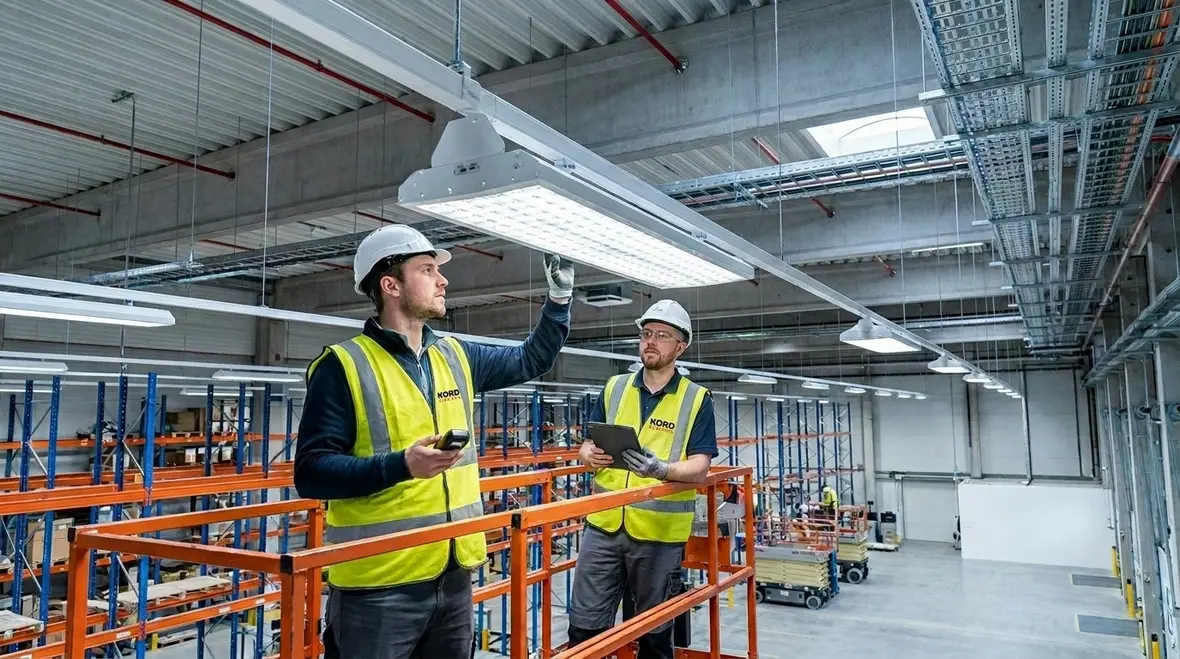
Commercial and industrial facilities do not fail quietly. A single malfunctioning circuit, dirty optics, or a control system drift can ripple through safety, productivity, and energy costs. Therefore, our approach begins with a realistic view of the building. We review drawings, asset lists, and control layouts, then our technicians confirm what is actually installed in the field. From there, we group areas by risk and use patterns, such as production bays, warehouses, corridors, parking structures, and loading zones.
Next, we define maintenance steps that match those risks. For example, high-bay fixtures may need inspection focused on thermal performance and lens condition, while exterior lighting needs attention to weather exposure and water intrusion. Additionally, we factor in seasons, shift schedules, and cleaning cycles. As a result, the plan behaves like a well rehearsed team, not like someone pulling a fire drill trigger every week.
Connecting lighting plans to broader facility goals
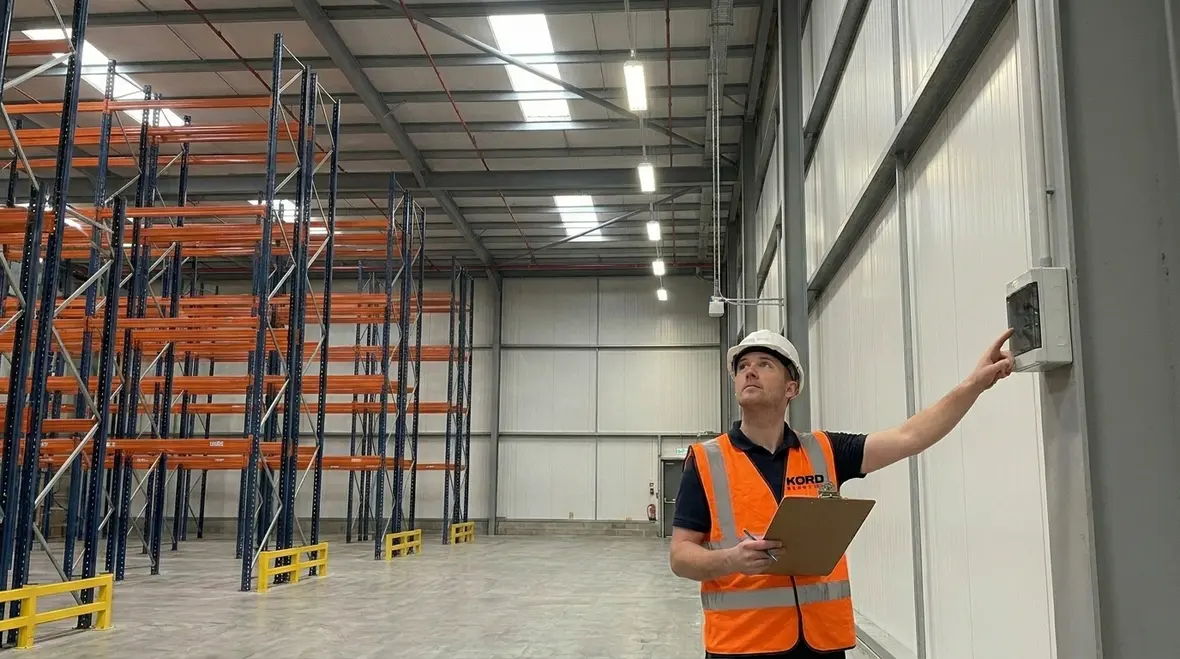
A proactive lighting approach only works if it connects to the bigger picture: uptime, safety, inspections, and long-term capital planning. That is why we align lighting maintenance with broader electrical reliability and compliance goals, including Title 24 and NFPA-driven initiatives where applicable. When lighting is treated as a strategic asset instead of a background utility, the building runs smoother, inspections go faster, and teams spend less time reacting to “mystery” outages in the middle of the workday.
In many cases, a proactive lighting plan pairs naturally with structured electrical preventive maintenance programs already in place, so facility managers can manage documentation, scheduling, and risk reduction through a single, coordinated strategy instead of a pile of disconnected work orders.
For facilities planning new projects or upgrades, our commercial lighting installation services help ensure that new systems are engineered with long-term maintenance and access in mind, not just first-day appearance.
How we design intervals that do not guess
To keep a facility lighting maintenance strategy effective, we avoid one size fits all. We calculate intervals using operating hours, ambient dust, vibration, humidity, and lamp or driver type. Then, we connect those intervals to measurable checks. In practical terms, that means we do not only ask, “Do the lights work?” We also verify output consistency, check for flicker, and assess whether controls respond as expected.
Also, we set a calendar that balances labor and access. If a zone is difficult to reach during production, we schedule work during planned outages or low traffic windows. We then coordinate with facility teams so inspections, cleaning, and repairs do not clash with operations. And yes, our technicians explain the “why” behind each step, because nobody enjoys being told, “Trust us,” like it is a magic trick.
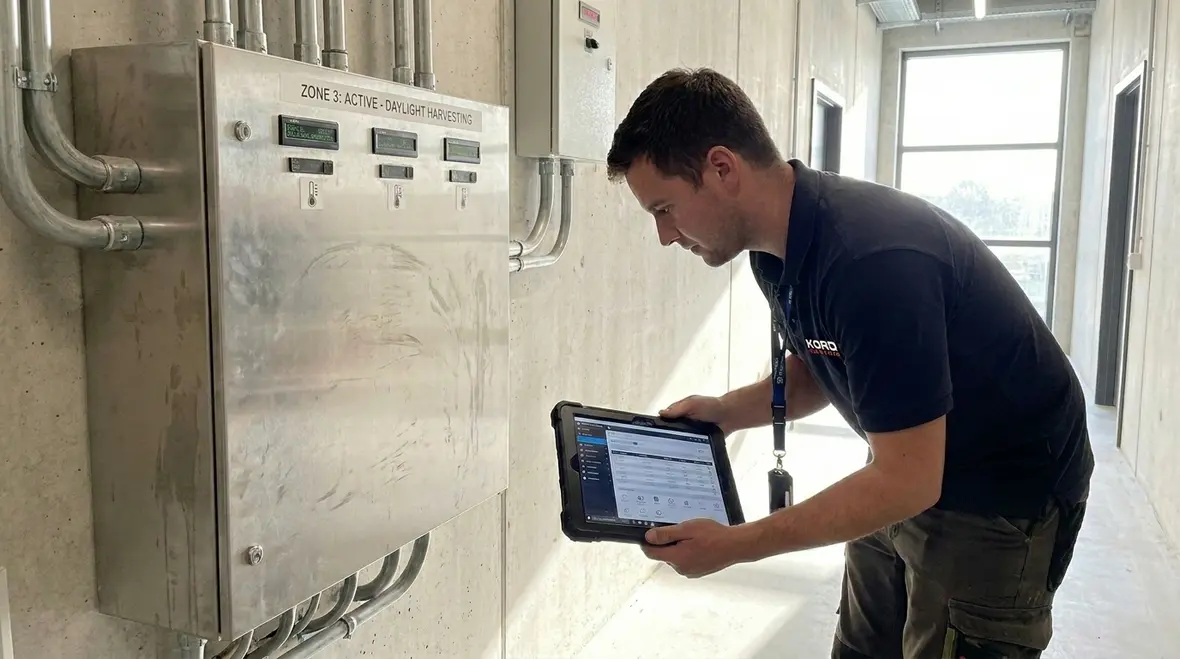
Using data to refine lighting maintenance intervals
Over time, the best interval plans come from real-world feedback. We track where fixtures fail early, which zones collect the most dust, and where control issues tend to stack up. That information lets us tighten or extend schedules with confidence instead of guessing. When leadership asks why a certain area gets quarterly checks and another sits on a longer cycle, we can point to patterns, not hunches.
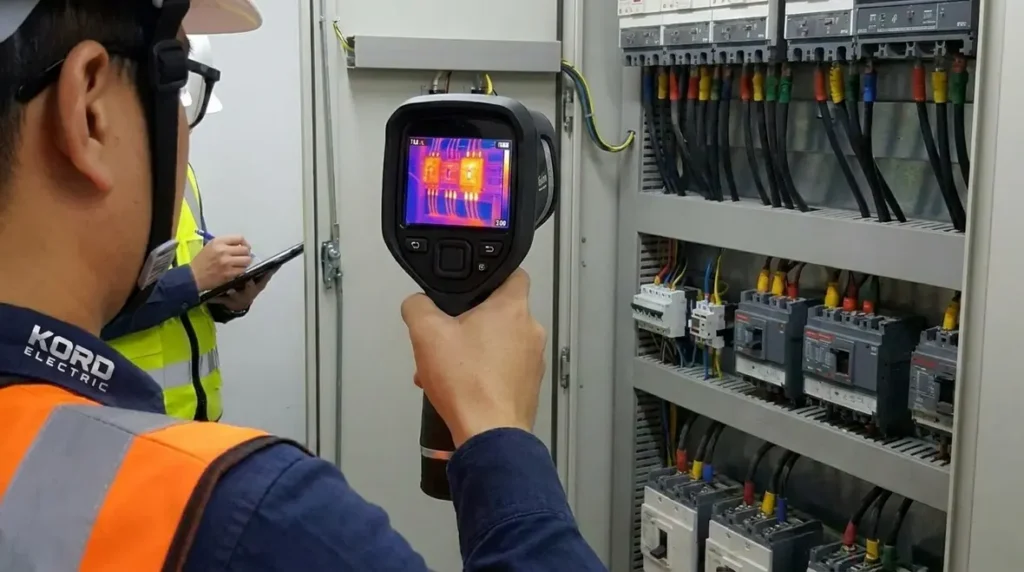
In some portfolios, facility managers pair this approach with broader electrical preventive maintenance programs so that breaker testing, infrared scans, and lighting inspections support one another, rather than living in separate silos.
Our inspection routine: what technicians check first
When the schedule starts, our expert service staff follows a clear order. First, we inspect controls and drivers at the system level. That matters because many lighting problems originate from sensors, relays, dimming modules, or wiring issues rather than the fixture itself. Then, we move to visual checks such as lens condition, signs of moisture, discoloration, and physical damage.
After that, we evaluate performance indicators. Where appropriate, we measure output, look for consistent brightness across zones, and confirm that occupancy or daylight sensors trigger correctly. Furthermore, we review previous service notes so the team can look for recurring patterns. If a corridor keeps showing failures, we treat it as a signal, not bad luck.
Finally, we document findings in a way that leadership can use. Instead of vague reports, we provide clear observations, recommended repairs, and expected outcomes. In other words, our process turns lighting maintenance into a readable story, not a pile of pages no one wants to interpret.
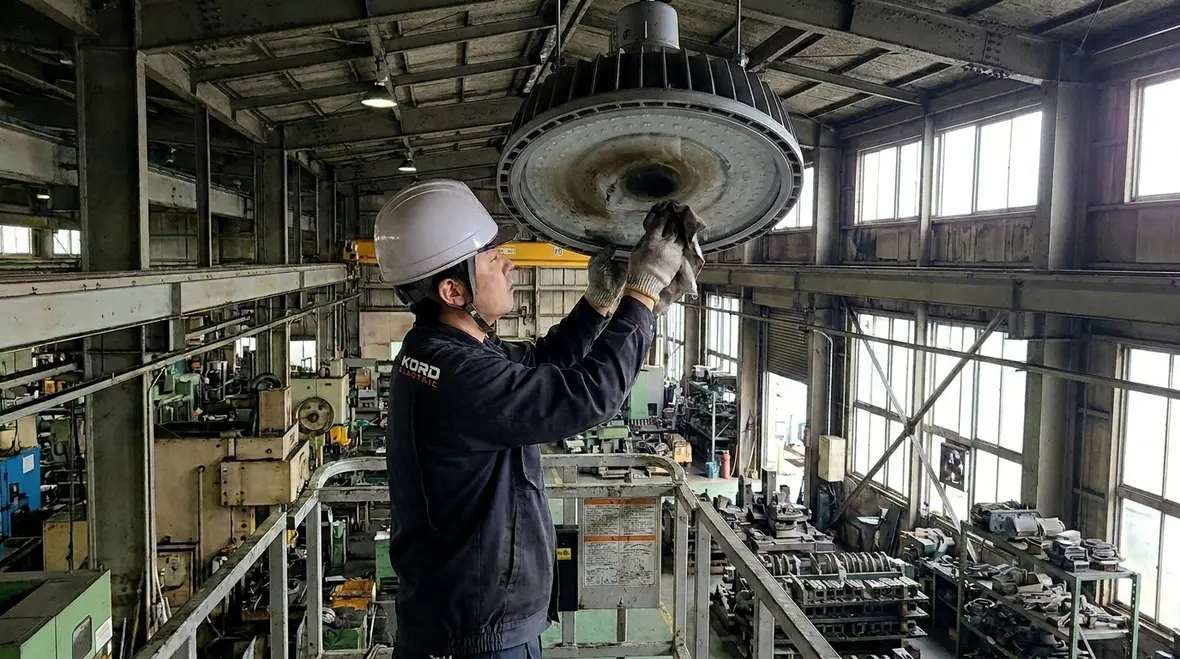
Bringing clarity to reports and recommendations
Most facility teams do not want a novel; they want clarity. Our inspection summaries cut through the noise with prioritized actions, estimated impact, and logical next steps. That lets maintenance leaders decide whether to bundle repairs, schedule a shutdown, or coordinate with a concurrent project. It also helps justify budget requests by showing the connection between proactive lighting work and real outcomes like reduced unplanned outages or better inspection results.
Cleaning, optics, and lumen loss in real industrial environments
Lighting performance drops even when fixtures still “turn on.” Dust, grease, smoke residue, and grime coat optics and housings, which reduces light levels and forces higher electrical demand. Therefore, cleaning is not an optional step in a proactive schedule for industrial sites. We plan cleaning frequency based on contaminant conditions and fixture design, and we use proper methods that match the optics and materials.
For high dust areas, we schedule more frequent cleaning of lenses and reflectors. For wet or washdown zones, we verify gasket integrity and inspect seals during service visits. Additionally, we consider safety. Our technicians follow site rules for PPE and access control, because lighting work should never become a new risk.
Also, cleaning improves more than brightness. When optics remain clear, controls perform more predictably. Sensors see light levels accurately, and dimming stays stable. So while some people think cleaning is the “extra,” we treat it like the foundation. If you have ever watched a kitchen light shine through a greasy microwave door, you understand the problem. Now imagine that effect across a warehouse.

Designing cleaning into your facility lighting maintenance strategy
We fold cleaning into the facility lighting maintenance strategy from the start instead of bolting it on later. That includes selecting fixtures with appropriate ingress protection ratings, planning safe access for lifts or platforms, and sequencing cleaning with other work like driver checks or control testing. The result: less disruption, fewer surprise outages, and optics that keep delivering the light levels you actually paid for.
Controls testing, scheduling, and the hidden failure points
Modern commercial buildings rely on schedules, occupancy inputs, daylight harvesting, and networked control systems. However, controls drift over time. A sensor might become misaligned, firmware versions can change behavior, or a wiring connection can degrade. As a result, a building can waste energy while also delivering inconsistent illumination.
For that reason, our maintenance schedule includes periodic controls verification. We test automatic functions, confirm time schedules match occupancy needs, and check that sensor coverage areas still trigger as intended. Then we review any energy management reports the facility already uses, so we can spot trends before they turn into complaints.
Next, we check emergency pathways and critical circuits. We verify that emergency lighting operates correctly, and we assess whether test logs align with expected standards. Meanwhile, our technicians keep the process calm and organized, because nobody wants a control panel turning into a live drama. We handle it like grown ups, with labels, checks, and safe procedures.
Why controls deserve a dedicated maintenance spotlight
Controls are often the quiet troublemakers behind complaints like “the lights feel weird” or “why is this area always too bright or too dim?” By scheduling focused controls testing and tuning, we catch those hidden failure points before they frustrate teams or inflate utility bills. In many buildings, dialing in controls properly delivers energy savings without touching a single fixture, especially when combined with code-driven strategies outlined in resources like the Kord Electric lighting installation code compliance guide.
Work order planning, parts readiness, and minimizing downtime
A proactive plan succeeds only when execution stays practical. That means Kord Electric coordinates work orders, parts availability, and access schedules. We help facilities reduce downtime by planning repairs in batches by zone and by component type. When possible, we align parts staging with planned visits, so a technician does not need to stop mid job while someone else hunts for a driver at the speed of a slow elevator.
Moreover, we manage documentation for accountability. After each visit, we record fixture counts, conditions, and recommended next actions. That gives others a clear audit trail and helps decision makers plan budgets. It also helps our team refine the facility lighting maintenance strategy over time, by learning where failures cluster and which components need earlier attention.
Additionally, we recommend standardization where it makes sense. If a facility uses too many fixture variations, maintenance becomes harder and slower. By aligning fixture and control types, the schedule becomes more efficient and predictable.
Coordinating lighting work with other electrical maintenance
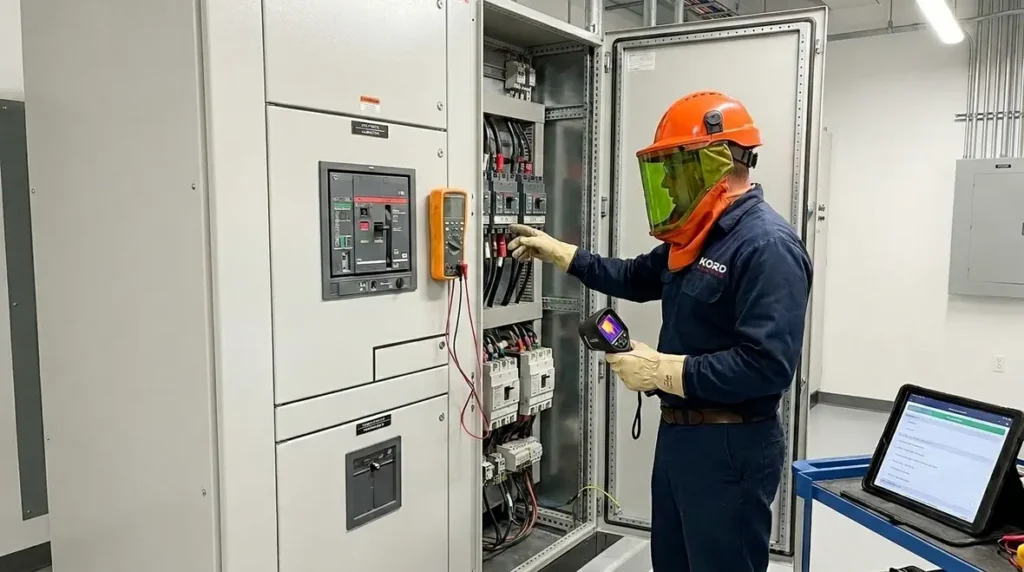
Lighting rarely exists alone. Panels, feeders, and switchgear sit behind every circuit. When possible, we coordinate lighting repairs and upgrades with broader electrical maintenance work, such as panel inspections, infrared scans, or NFPA 70B-driven tasks. That way, shutdowns are used efficiently, documentation ties together, and facilities move closer to a genuinely integrated maintenance plan instead of a collection of one-off projects.
How we measure success and improve the schedule
To keep our proactive facility lighting work honest, we measure results. We track recurring failures, response times, energy impact indicators where available, and changes in reported light quality. Then we compare the outcomes to the planned intervals. If a certain area shows faster degradation, we adjust the inspection and cleaning frequency.
We also use findings to improve future planning. For example, if we spot recurring moisture intrusion around specific fixture models, we can recommend corrective steps such as seal checks or hardware upgrades. If a control zone consistently underperforms, we evaluate sensor placement and wiring conditions. In this way, the schedule evolves rather than stagnates.
Just like a good playlist, the best results come from testing and tuning. Our expert service staff makes those adjustments with care, then communicates changes clearly so others understand what is happening and why.
Linking lighting results to business outcomes
At the end of the month or the end of the year, leadership cares about more than lumens. They want safer walkways, smoother inspections, fewer production interruptions, and energy bills that make sense. By tying our lighting maintenance metrics to those outcomes, we help facility teams show the value of staying proactive instead of waiting for the next “all hands, the lights are down again” email.
FAQ
Ready to stop reactive lighting surprises?
Kord Electric builds a proactive plan that keeps commercial and industrial buildings lit, safe, and efficient. If others want fewer outages and clearer reporting, we can map your fixtures, controls, and usage, then schedule inspections, cleaning, and testing in a way that fits your operations. Our technicians explain what they find and why it matters, so leadership gets straightforward guidance. Contact Kord Electric today to schedule an assessment and build your next facility lighting maintenance strategy with confidence.
For facilities planning upgrades or new projects, our dedicated Lighting Installation Services support commercial and industrial lighting systems from design through commissioning, so your proactive maintenance plan starts with a solid foundation on day one.