Commercial Circuit Breaker Troubleshooting Guide
Commercial Circuit Breaker Troubleshooting Starts With Calm, Not Chaos

When a commercial circuit breaker starts acting up, the lights can flicker, outlets can go quiet, and a whole day can feel like it is being held hostage. In this guide, we walk through common commercial circuit breaker issues and how we handle them step by step. Our team at Kord Electric supports commercial and industrial facilities and major property buildings, and we focus on practical diagnostics that keep your operation moving. And yes, we have seen every version of the same moment: someone flips the handle like it is a stubborn TV remote, then swears the building is “cursed.” We do not blame them. We just fix the cause.
Quick Signs That Point to the Real Problem
Before anyone swaps parts, we make sure the symptom actually tells a story. For example, a breaker that trips repeatedly usually points to overload, a short, or a fault path in wiring or equipment. Meanwhile, a breaker that will not reset may suggest internal damage, a failing trip mechanism, or a control problem in the trip unit. Even if staff insists it only happens “when the coffee machine runs,” we still test the circuit, because Murphy’s Law loves commercial buildings.
Next, we confirm what changed. Recently installed equipment, shifted loads, or temporary jobsite power can overload a circuit that previously behaved. Also, water intrusion, corrosion, and loose terminations often create heat that worsens over time. Therefore, we treat breaker trouble like an investigation, not a guessing game.
Safe Steps Before Any Hands Go Near the Panel
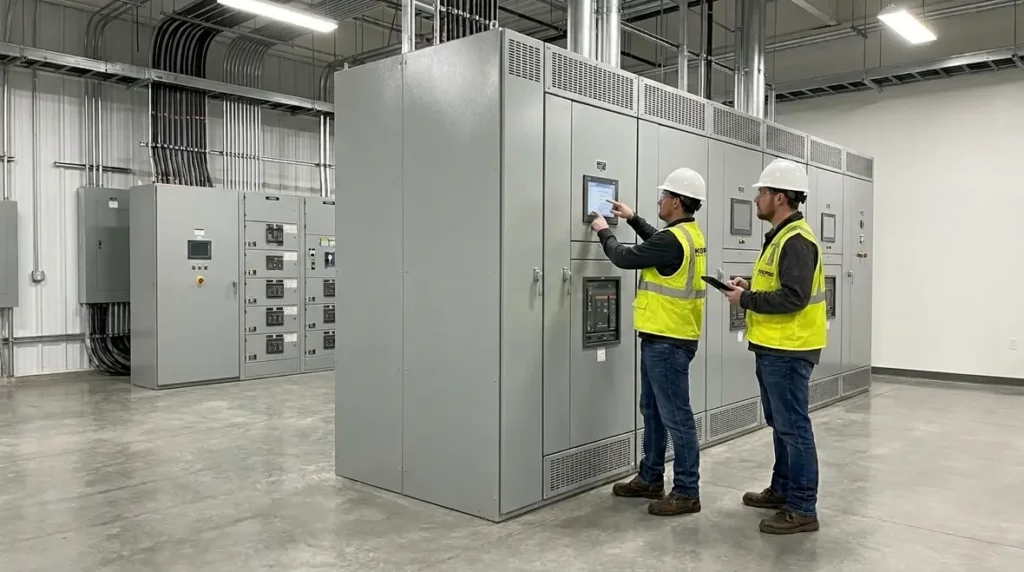
We tell our customers the same thing every time, slowly and clearly: safety comes first, and rushing costs money. Our technicians begin by verifying which circuits are affected, using existing panel schedules and load notes when they are available. Then we isolate the area if needed and follow lockout and tagout procedures where required. We also check for signs of arcing, burning smell, discoloration, or heat at the breaker and adjacent bus areas. If we see those indicators, we do not “test our luck.” We stop, document, and proceed with controlled diagnostics.
After that, we verify the breaker condition without yanking wires. We look for mechanical binding, inspect the enclosure, and confirm the correct breaker type and rating. In many commercial settings, mismatched breakers or incorrectly installed accessories create problems that look like electrical faults, but are really installation issues.
Overload, Short Circuit, or Ground Fault: What We Identify First
Commercial circuits fail for predictable reasons, and our expert service staff explains them in plain language so building teams can make better decisions. First, we consider overload. This happens when the load exceeds the breaker’s design limits. Often, the breaker trips under sustained use, and the reset works at first, then trips again as the load returns.
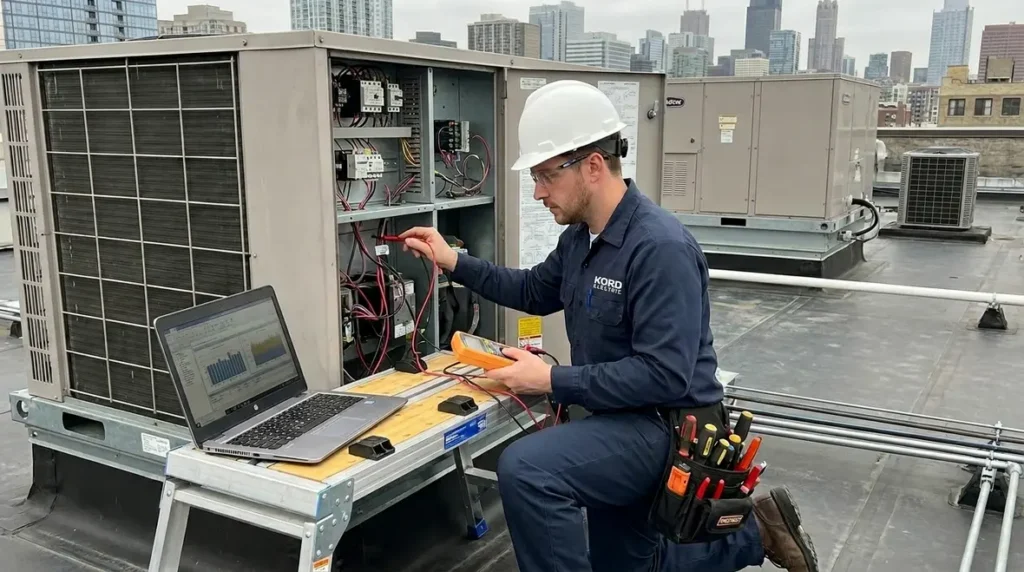
Next, we consider a short circuit. A short usually trips faster, sometimes instantly, and may occur when equipment cycles, when a motor starts, or when a contactor engages. Then we consider ground fault. Ground fault issues can show up as intermittent tripping and can be influenced by moisture, insulation wear, or equipment age. Therefore, we use appropriate testing methods and we interpret test results, not vibes.
At Kord Electric, we also verify whether the breaker’s trip settings match the design. Some trip units use adjustable curves, and if settings drift or get changed during service work, the breaker can trip at the wrong time. That is like tuning a thermostat for someone who lives in a different climate. It technically works, but it will never feel right.
Common Commercial Panel and Wiring Issues We See in Major Buildings
Once we narrow the fault type, we then inspect the surroundings. Many “breaker problems” are actually wiring and termination problems near the breaker. Loose lugs and improper torque can cause heat, which damages insulation and eventually leads to faults. In addition, damaged conductors from vibrations, construction activity, or rodent intrusion can create intermittent contact issues. Because commercial corridors do not pause for building maintenance, these problems often show up after changes on site.
We also check for signs of dust and moisture in the enclosure. When contaminants settle, they can affect insulation resistance and surface leakage. In industrial and large property buildings, HVAC systems and humidity can add strain. Meanwhile, shared neutrals or miswired neutrals can cause unexpected trips, especially when non linear loads like variable frequency drives and large rectifiers operate.
Furthermore, we confirm that the breaker is rated correctly for the system voltage, interrupting rating, and application. A breaker that looks compatible on paper can still fail when short circuit currents exceed its design. So, we validate both the equipment and its role in the electrical system.
For building teams that want to get ahead of problems instead of chasing them, pairing this type of commercial circuit breaker troubleshooting with structured electrical preventive maintenance makes a real difference. Programs like electrical preventive maintenance for commercial and industrial facilities help catch loose terminations, aging breakers, and insulation issues before they show up as nuisance trips or downtime.
How Resetting, Replacement, and Maintenance Should Work
A breaker that trips again and again pushes people toward shortcuts. We do not judge that urge, because we all want the fastest path back to normal operations. However, repeatedly resetting a breaker without fixing the cause can damage the trip mechanism and can also increase risk of component failure. Therefore, we treat repeated trips as a signal to diagnose, not a routine to repeat.
When we replace a breaker, we use the correct part for the specific panel and trip unit requirements. In commercial and industrial settings, we confirm compatibility with existing accessories and protection coordination. Then we clean and inspect connections, because a new breaker cannot overcome a weak termination. We tighten terminations to proper specifications and verify that conductors are in good condition.
Maintenance matters too. We recommend periodic inspection of breaker enclosures, torque checks where appropriate, and thermal imaging when a site has recurring issues. Also, we review load history with the property team so we can spot growth patterns. For example, an office wing that adds servers and EV charging might exceed design assumptions sooner than expected.
Commercial Circuit Breaker Troubleshooting for Intermittent Tripping
Intermittent tripping feels like the building is playing a prank, and honestly, it can resemble a sitcom plot. The breaker works fine for hours, then trips during a specific time window. When that happens in our work at Kord Electric, our technicians shift from basic checks to deeper cause finding. We verify if the trip occurs during motor starts, HVAC switching, elevator cycles, or a specific production step. Then we check for loose connections that expand with heat and contract with cooling.
We also look at harmonics and power quality issues. Some commercial loads create harmonic currents, which can cause heating and stress certain components. In addition, control circuits and shunt trip devices can cause unexpected operation if wiring is damaged. Therefore, we inspect related components and any protective devices tied into the same system logic.
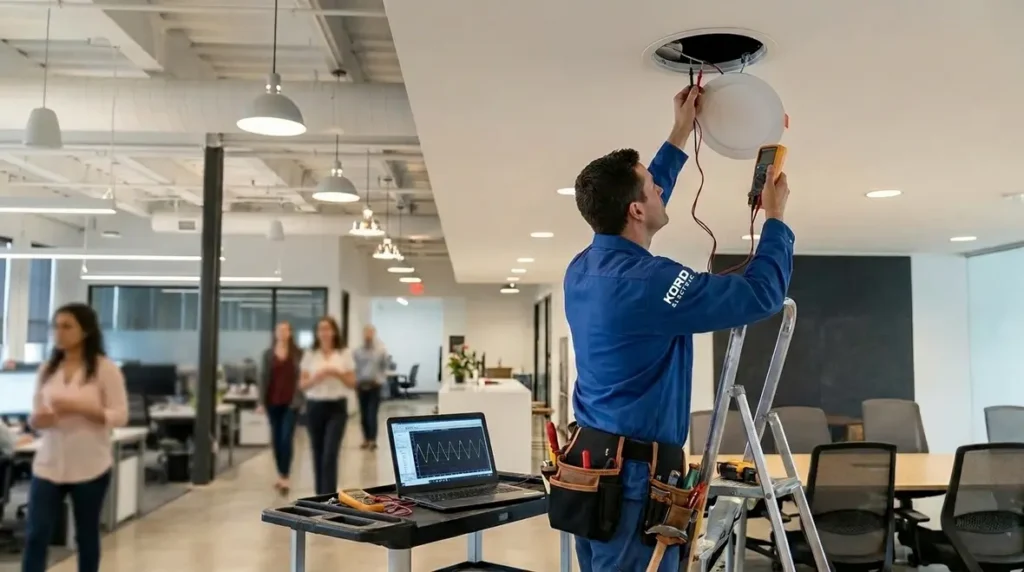
If the site has monitoring equipment, we review logs. If not, we may add temporary monitoring during diagnosis. This helps us confirm whether the breaker sees an overload condition, a fault current profile, or a ground fault signature. Once we match the event pattern to the equipment and wiring, we stop guessing and we start correcting.
Sometimes intermittent trips point to deeper system instability rather than a single component failure. In those cases, we may recommend broader diagnostics similar to the work we provide when resolving voltage fluctuations in commercial and industrial facilities, where power quality, utility feed issues, and internal distribution design all matter.
When You Need a Technician, Not Another “Try It Again” Moment
We see a clear line between manageable issues and high risk situations. If there is visible damage, evidence of arcing, a burning smell, water inside the enclosure, or a breaker that will not reset safely, we recommend stopping operation and calling for professional support. Similarly, if the breaker trips only after certain staff actions, like switching equipment on or off, we investigate immediately. That timing can indicate a load related fault or a wiring defect that changes with use.
Our expert service staff also steps in when troubleshooting affects critical systems. In major property buildings, power disruptions can disrupt security, refrigeration, elevators, fire alarm monitoring, and communications. So, we plan testing carefully, coordinate with building leadership, and focus on restoring reliable power without cutting corners.
And yes, we know the joke people make: “If it trips, we will just flip it back.” That joke ends fast when the root problem turns into a bigger outage. We keep the humor light and the electrical work solid.
If the situation crosses from inconvenient to urgent, it is time for more than casual troubleshooting. Kord Electric provides dedicated emergency electrical services for commercial and industrial facilities, so when a breaker trip starts to look like a crisis, you have a team ready to respond.
FAQ
Final Word From Kord Electric
If your commercial breaker keeps tripping, we help you get answers fast and keep the power reliable. Our technicians use structured commercial circuit breaker troubleshooting to find the root cause, not just silence the symptom. We inspect the breaker, verify trip behavior, and evaluate wiring, terminations, and connected equipment. Then we recommend the right fix for your facility. If you are ready to reduce downtime and protect your operation, contact Kord Electric today and schedule a diagnostic visit.
For property teams planning long term reliability, you can also explore how hidden electrical risks in commercial buildings often connect back to neglected panels, overloaded circuits, and aging breakers. When those risks are paired with a focused service such as electrical preventive maintenance, your breaker troubleshooting becomes part of a broader reliability strategy instead of a one off repair.
If your facility is facing urgent outages, nuisance trips, or safety concerns right now, do not wait for the next “mystery” shutdown. Reach out to our team through our dedicated emergency electrical services page so we can stabilize your system quickly and bring structure back to your electrical distribution.