Commercial Subpanel Installation for Reliable Power
When a business needs a new commercial subpanel installation, we treat it like we are building a reliable “traffic control center” for power. The big factors are safe wiring, correct capacity, smart load management, and clean coordination with the main service so the whole system stays stable. Even the best equipment can struggle if the subpanel is sized wrong or circuits are arranged like a mystery novel. At Kord Electric, our technicians and experienced service staff explain each step in plain language, so facility managers know what is happening and why it matters. And yes, we also help people avoid the classic mistake of assuming “more breakers” automatically means “more power.” That one never ends well for anyone, including the breaker.
Commercial subpanel installation planning for real facility needs
How we manage loads without overbuilding or underbuilding

Commercial and industrial facilities demand more than a quick upgrade. We start by reviewing the building’s actual use patterns, because day and night loads can look very different. For example, a warehouse may spike during shift changes, while offices may peak in the morning and again in the evening. Therefore, we gather data on existing circuits, equipment schedules, and any planned expansions.
Next, we coordinate space and layout. If a subpanel is cramped, hot, or exposed to contamination, it may age faster and become harder to maintain. At this point, our technicians map the physical routing of feeders and branch circuits so installation stays neat and service access stays practical. As a result, troubleshooting becomes faster later, which keeps downtime from turning into an all day meeting.
Finally, we confirm how the subpanel fits into the overall electrical system. We do not treat it as a standalone box. Instead, we match its design with the main service, grounding method, and switching scheme so loads transfer safely during normal operation and planned events.
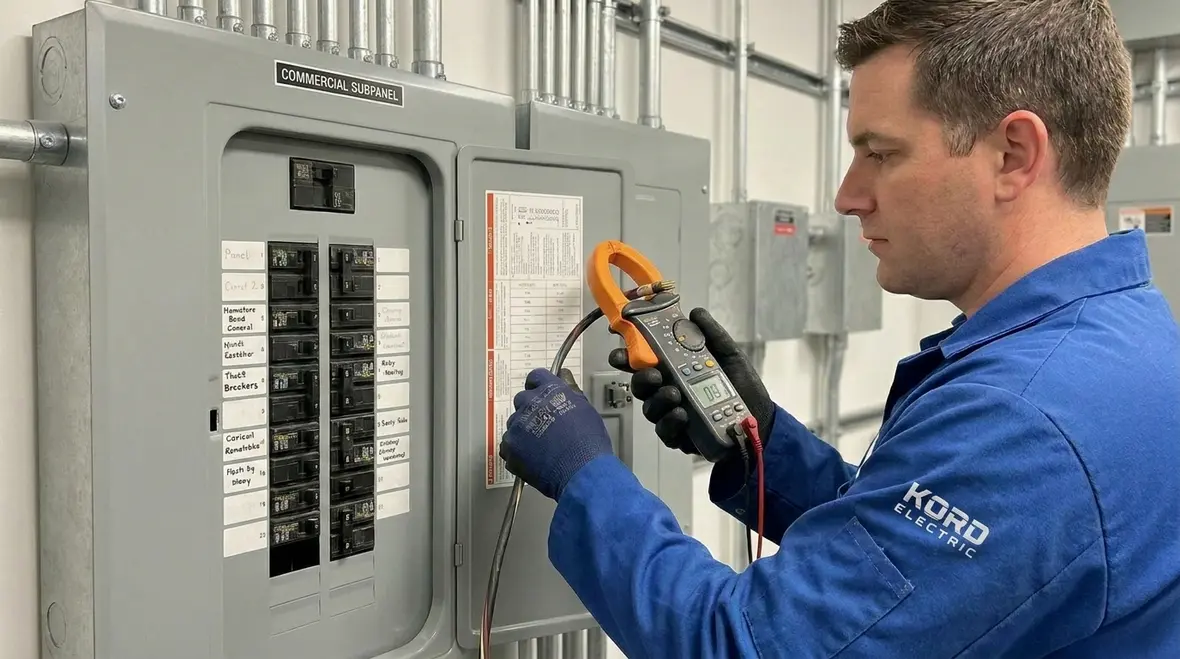
Load management is where good projects separate themselves from “we installed it, so it should work.” We begin with a load calculation that reflects the building’s demand profile, including motors, HVAC components, lighting, receptacles, and any special systems. Then, we apply diversity where it makes sense, but we keep safety margins firm because surprises cost more than planning.
We also pay attention to circuit grouping. When similar loads share circuits, they behave more predictably. Conversely, mixing high inrush equipment with sensitive electronics can cause nuisance trips or voltage dips. Therefore, our service staff often recommends separation strategies so critical equipment stays stable even when other loads ramp up.
Additionally, we plan for future growth. However, we do not just guess. We review the tenant plan, equipment lead times, and likely expansion areas. As a result, the subpanel offers capacity and spare positions that match the facility roadmap, not someone’s vague hope from a site walk. For facilities already dealing with voltage swings or unexplained trips, pairing thoughtful subpanel design with services like our voltage fluctuation diagnostics for commercial and industrial buildings helps stabilize the entire system, not just one new box on the wall.
Feeder sizing, conductor routing, and heat control in commercial buildings
Once the loads are understood, we size feeders and select conductors correctly. This step matters because inadequate conductor sizing can create excessive voltage drop, overheating, and long term wear. Meanwhile, oversized components can drive cost and complicate installation without improving performance.
In addition, we focus on conductor routing. When wiring runs through hot spaces, tight chases, or locations with limited airflow, temperature rises, and thermal performance changes. Therefore, our technicians verify routing paths, insulation ratings, and derating needs when applicable. We also use supports and bends that keep wiring stable and reduce strain on terminations.
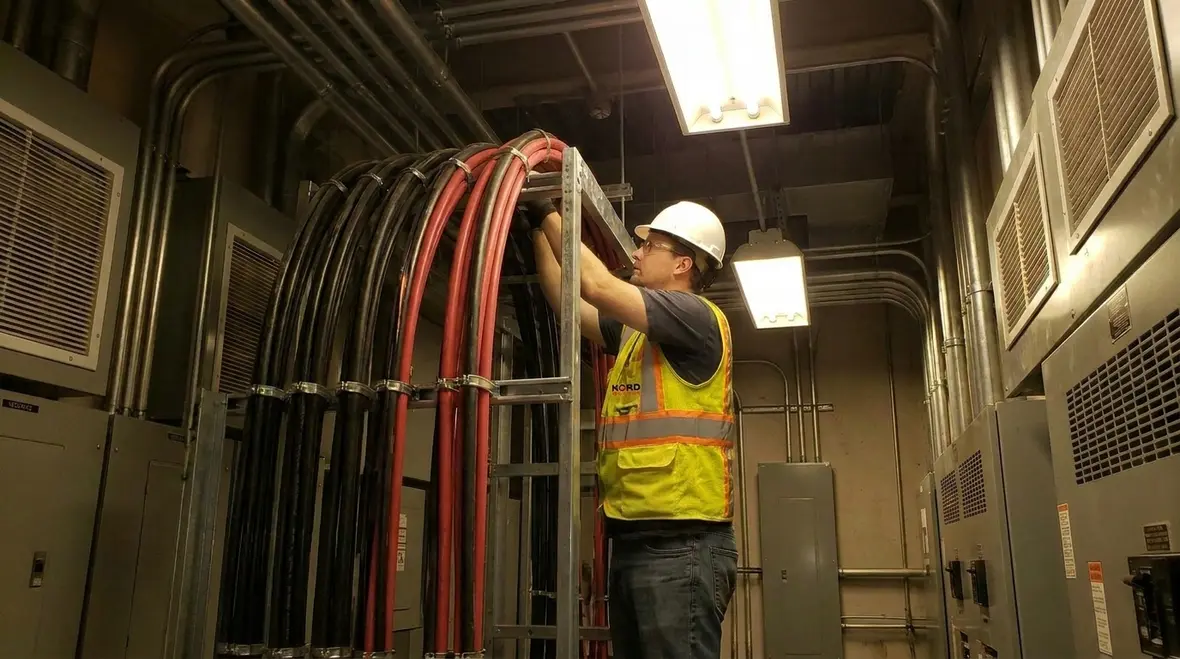
Heat control is not a “nice to have” item. In commercial and industrial systems, heat accumulates under load and during seasonal peaks. Consequently, we ensure that ventilation, clearances, and labeling support safe operation. And if someone tells us they will “just keep the cover open for now,” we politely explain that we like our safety features intact, like a superhero costume that actually covers everything.
Safety, grounding, and coordination for dependable power distribution
A subpanel only earns trust when it protects people and equipment. For that reason, we focus on safety design, including proper grounding and bonding, overcurrent protection, and correct device selection. We verify that the system supports safe fault clearing so breakers trip when they should, not when they feel like it.
Then we handle coordination. Coordination means the protective devices operate in sequence, so the closest device clears the fault with minimal disruption. In practice, this prevents a small issue from shutting down an entire suite, line, or manufacturing area. As a result, maintenance teams can fix problems faster and operations stay closer to normal.

We also check for proper circuit identification. When breakers and loads are labeled clearly, staff avoids guesswork during resets and inspections. Therefore, we encourage a labeling standard that works for electricians, facility managers, and anyone who might need to respond quickly after hours. Those same staff members often benefit from structured support like electrical preventive maintenance programs, which keep panels, subpanels, and distribution equipment in reliable shape year after year.
Circuit design strategies for offices, warehouses, and industrial areas
Different areas behave differently, and our design reflects that reality. In office environments, lighting and outlets often dominate, and they benefit from organized branching and consistent labeling. Warehouses need dependable power for loading equipment, lighting zones, and occasional tool usage, so we prioritize robust circuit protection and practical routing. In many cases, that includes tying subpanel work into broader projects like commercial and industrial lighting installation so power and lighting upgrades move together instead of fighting each other.
Industrial spaces bring additional challenges, such as motors, variable frequency drives, and sensitive control circuits. Therefore, we plan separation between power circuits that cause electrical noise and control circuits that need clean signals. We also consider service access for maintenance, because industrial teams cannot always shut down for long stretches.
Moreover, we think about how staff will operate the system. If a facility uses scheduled shutdowns or has multiple work zones, we can design the subpanel layout to support that approach while maintaining safe operation. In other words, we design for how the building works, not how a diagram looks on a screen.
Inspection readiness, documentation, and technician communication
After installation, documentation becomes just as important as wiring. We provide clear circuit schedules, labeling, and as-built notes that help facility staff and future contractors. This matters because commercial and industrial projects often involve multiple vendors over time, and missing paperwork turns into avoidable delays.
Inspection readiness also plays a major role. Our technicians understand what inspectors look for, and they confirm key items before the final close up. Then, our experienced service staff explains the design choices and the load management logic so the facility team can maintain the system confidently.
We also make sure communication stays simple. Facility managers do not need a lecture, but they do need answers. So we talk through what changed, what to monitor, and what to expect during seasonal peaks or equipment start ups. And if someone asks, “Will this trip if someone plugs in a vacuum?” we respond with calm confidence and the same energy we bring to every project. The answer depends on design, not vibes.
Frequently asked questions about subpanel installation
Choosing Kord Electric for dependable commercial and industrial power
Commercial and industrial facilities need subpanel systems that support real schedules, real loads, and real safety expectations. Kord Electric brings expert design, careful load management, and clear technician communication from planning through inspection. If your building is adding equipment, expanding production, or upgrading electrical distribution, we can help you avoid costly guesswork. For many properties, that plan includes tying commercial subpanel installation considerations to broader reliability work like structured preventive electrical maintenance programs so improvements endure long after the last inspection sticker is applied.
Kord Electric serves commercial and industrial clients across Southern California with services that range from rewiring and whole-building commercial rewiring projects to targeted upgrades like lighting, EV charging, and critical panel work. When we design or retrofit a subpanel, we look beyond today’s load list and consider voltage stability, maintenance access, and long term expansion. That way, when someone adds new equipment or reconfigures a space, the distribution system can keep up without drama.
If your facility is planning new equipment, investigating breaker trips, or preparing for a larger electrical upgrade, Kord Electric can help you map out the right subpanel strategy and connect it to the rest of your system. From the first site walk to final documentation, our technicians explain each decision in straightforward language so facility managers, operations leaders, and ownership teams can make confident choices about their power infrastructure.
When you are ready to talk through your next project, including commercial subpanel installation considerations, panel upgrades, or system-wide improvements, our team is available to help you design a practical, code-compliant path forward. To align your subpanel project with broader reliability goals—such as preventing outages, stabilizing voltage, and supporting future EV charging or lighting upgrades—consider pairing it with a targeted service like Electrical Preventive Maintenance, which keeps distribution equipment healthy long after the new hardware is installed.
Commercial and industrial power systems are never truly “set and forget.” They evolve as tenants change, production grows, and technology advances. Kord Electric is here to make sure your subpanels, feeders, and circuits evolve right alongside them—safely, logically, and with the kind of documentation and communication that keeps everyone on the same page.
Contact Kord Electric today to schedule a site evaluation and get a practical plan for a commercial subpanel installation that performs now and still makes sense later. If your facility is also planning lighting, kitchen, or other upgrades, our team can coordinate those projects under one electrical strategy so you are not juggling multiple contractors and conflicting designs.
Explore Kord Electric’s Electrical Preventive Maintenance services to see how planned inspections, testing, and documentation can support your new subpanel and the rest of your electrical system over the long term.