2026 Title 24 Warehouse Lighting Compliance Guide
Introduction: What the 2026 Title 24 Warehouse Lighting Compliance Changes Mean
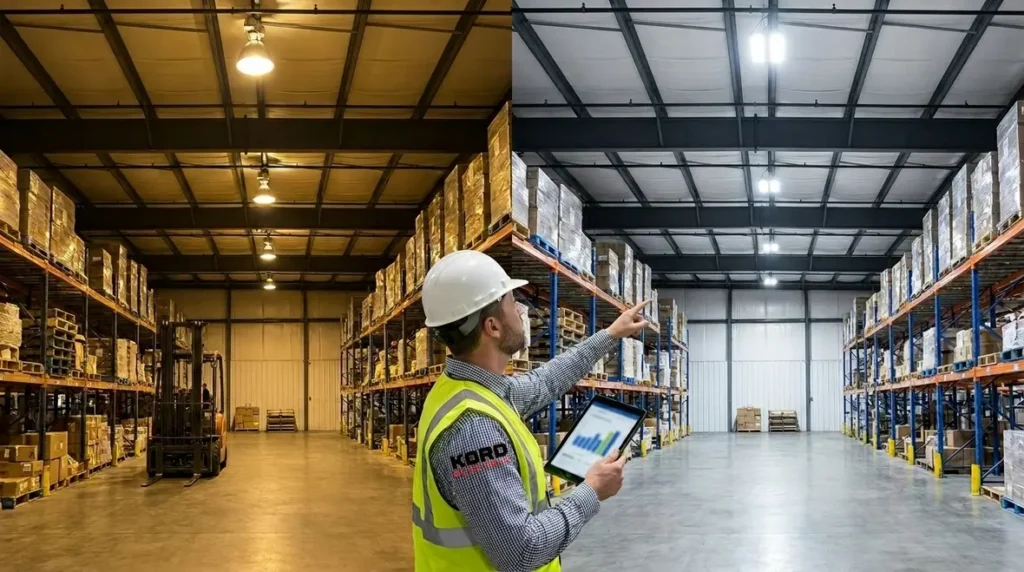
In 2026, the Title 24 warehouse lighting compliance guide 2026 shifts how commercial and industrial spaces like distribution centers, manufacturing buildings, and major propertie facilities plan, install, and document lighting. And yes, the paperwork matters almost as much as the lights. Kord Electric focuses on commercial and industrial facilities, so we help owners and facility managers navigate the standards with a clear plan, not a guessing game.
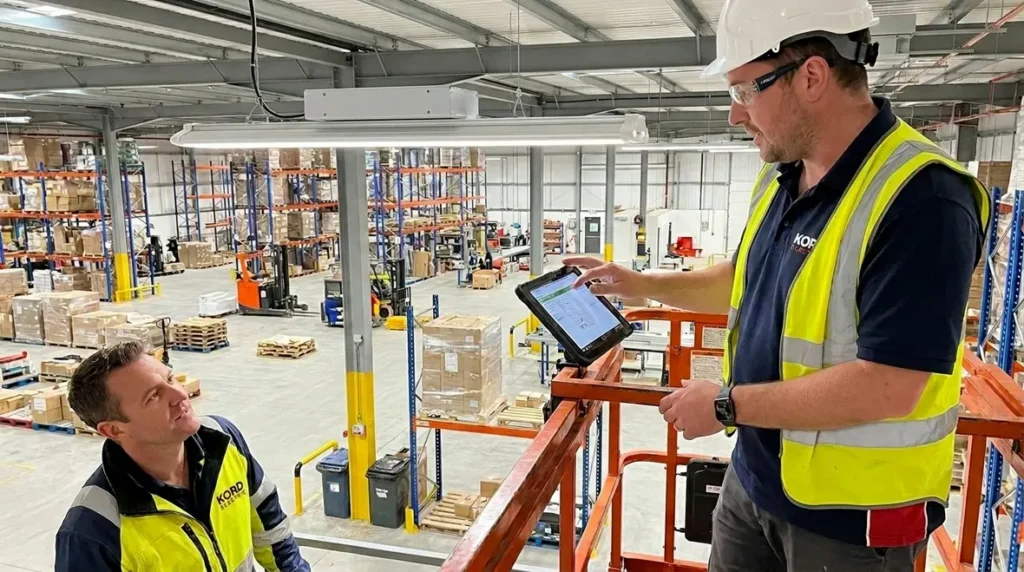
In this article, we explain how our experienced technicians and expert service staff approach compliance, how they spot risk before an inspector does, and how they keep warehouse lighting efficient without turning your space into a dim cave. We also share practical steps you can use right away, and we do it in plain language because compliance should not read like a legal thriller.
How warehouses get evaluated under 2026 rules
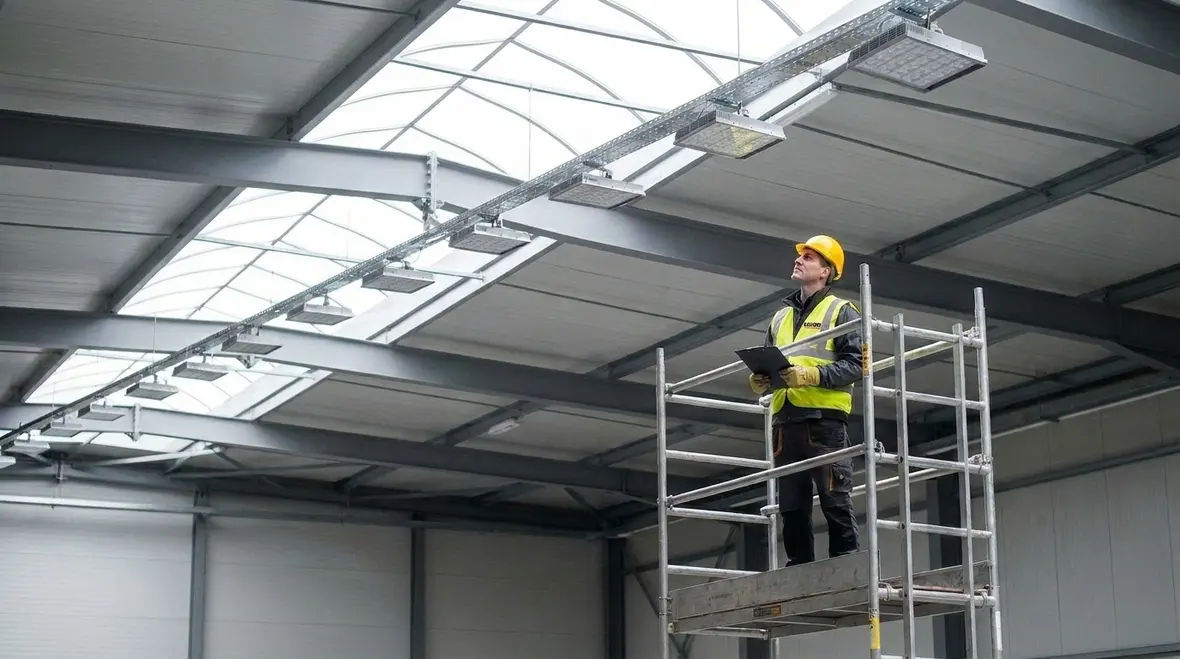
Title 24 compliance does not start in the ceiling. It starts in the way a facility plans zones, controls, mounting, and operating schedules. Therefore, our team at Kord Electric typically begins with how the warehouse behaves day to day, including whether the space runs with full load hours, partial occupancy, forklifts moving, or cold storage sections.
Next, we map the lighting layout to the intended use. For example, the standard treats different areas differently, so we separate dock zones, aisles, work bays, offices, and any special lanes. Then we check how the warehouse uses daylight, reflectance, and fixture placement, because real warehouses do not behave like perfectly lit studio sets.
Finally, we prepare documentation that matches what was built. Many failures happen on the “paper trail” side, so our technicians explain every step while we help collect the right records, including power data, control settings, and the final layout. If you ever wanted compliance to feel like a guided tour instead of a surprise exam, that is the goal.

Lighting power, efficacy, and why “bright” is not the same as compliant
Owners often ask for “brighter lights,” and we get it. Warehouses need visibility, safety, and better productivity. However, 2026 expectations push teams to use more efficient solutions rather than simply adding fixtures.
To meet the standard, we look at lighting power density and fixture performance together. That means we do not just select fixtures based on output numbers. Instead, our expert service staff evaluates wattage, lumens, and efficacy, and we verify that the total installed load stays within the allowable limits for each area type.
Also, we pay attention to distribution and mounting height. A fixture that performs well on a spec sheet can underperform in a high bay if the spacing plan or optics do not fit the actual rack layout. So, we run a practical review of beam spread, target illuminance, and uniformity, then we align the design with the warehouse geometry.
Here is the soothing truth: compliance works best when efficiency and visibility come together. Otherwise, you get the worst of both worlds, like installing a sports car with bicycle brakes. It looks fast until it is time to stop.
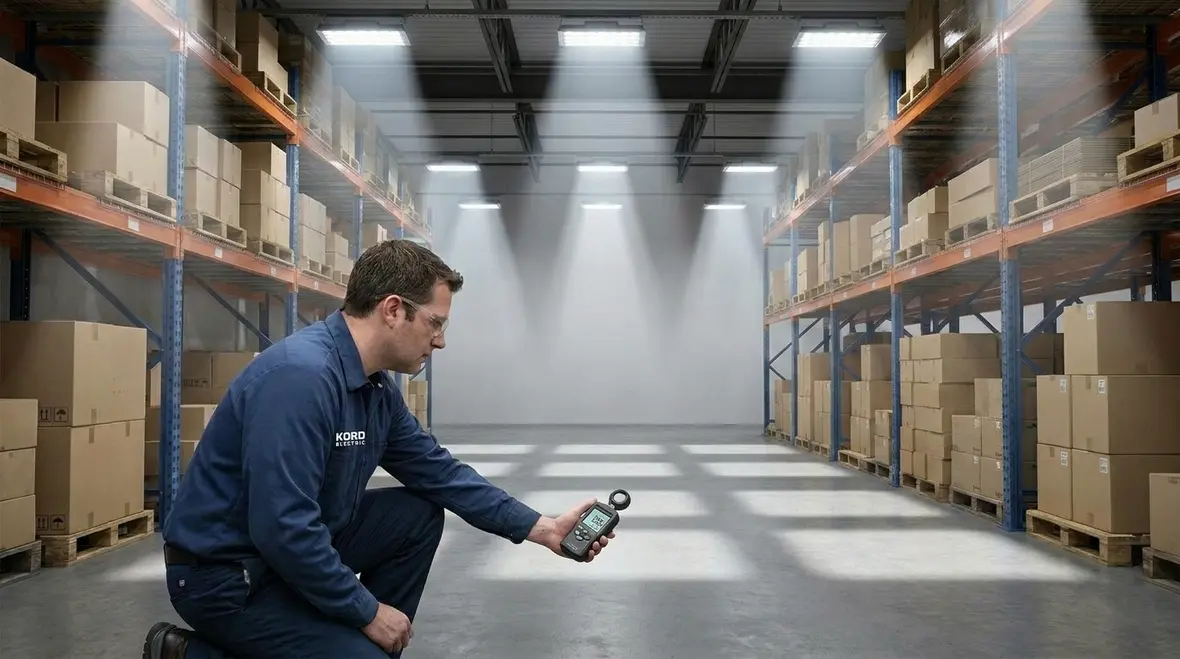
Controls and sensing: the part that inspectors notice first
When the lights run too long, too strong, or without proper scheduling, energy use rises and compliance can fail. Therefore, controls and sensing become the engine of 2026 compliance for warehouse lighting.
Our approach starts with how the space operates. For instance, are lights left on overnight, do teams enter for loading and inspection, or do areas sit empty most of the week? Then we select control strategies that match that reality.
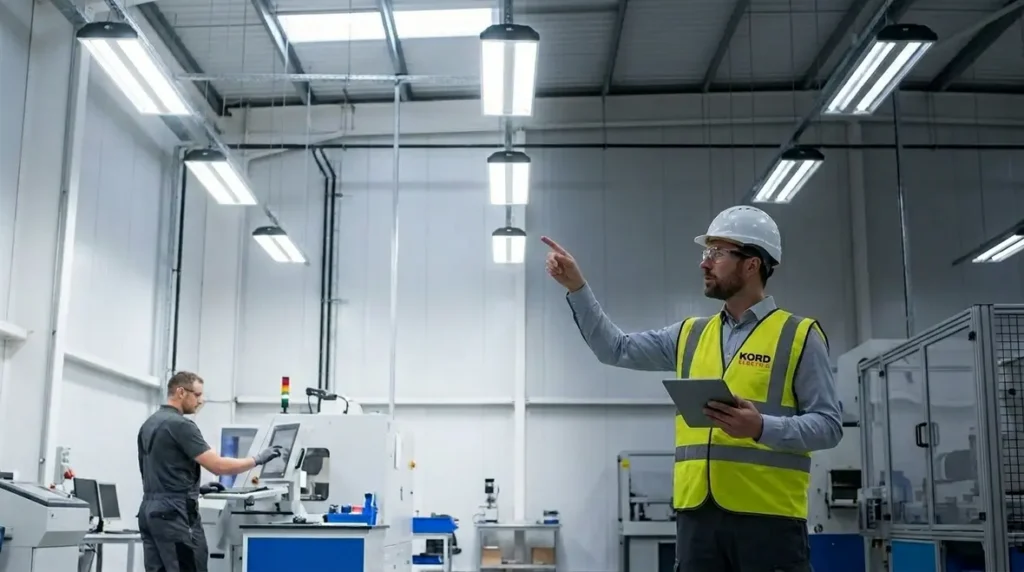
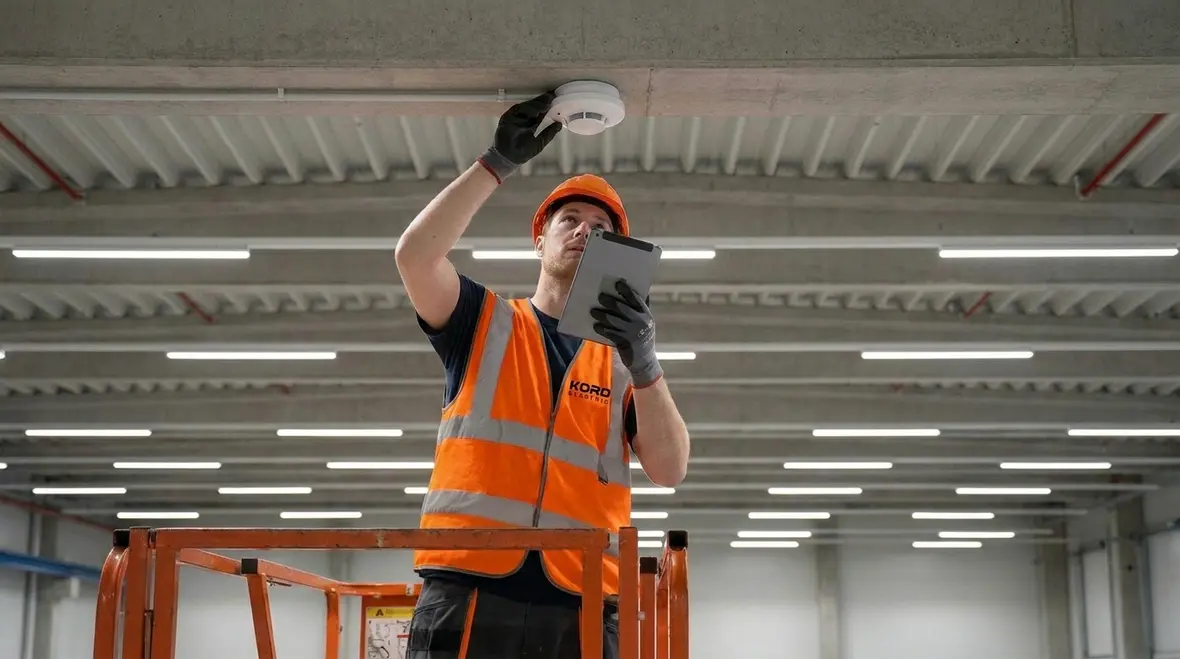
Common control methods include time-based scheduling, occupancy sensing for smaller zones, and daylight-responsive strategies where natural light reaches the space. However, the key detail is how the system performs across zones and how reliably it responds to occupancy. Our technicians explain how each control type behaves in real conditions, including how motion sensors “see” in high-bay environments and how installers should position devices for dependable coverage.
Next, we verify that control settings align with the design intent. That includes ensuring that dimming ranges, minimum light levels, and switch logic meet the standard requirements. In short, we do not treat controls as a box to check. We treat them as a system that must perform like a team of professionals, not like a TV remote with dead batteries.
Distribution, layout, and avoiding the classic warehouse spacing mistakes
Even when fixtures meet power and efficacy requirements, spacing and layout can still break compliance. This is where Kord Electric earns its keep. We build the lighting plan around real warehouse conditions, not just the typical assumptions found in generic layouts.
First, we review rack height and aisle patterns. Warehouses have obstructions that affect reflectance and visual performance. Then we analyze how light lands on floor areas where workers and equipment need it most.
Second, we confirm that fixture spacing supports the intended uniformity. If spacing is too wide, the illumination falls into the gaps, and the project often misses required performance targets. If spacing is too tight, the design may exceed allowed power. So, we aim for the sweet spot, the same way you aim for the right amount of salt, not the “whole shaker for the whole meal” method.
Third, we coordinate mounting height and fixture aiming. High bay installations require consistent aiming so that light reaches intended zones, including work surfaces and aisle lines. Our expert service staff then documents the final layout so that what gets installed matches what gets approved.
Documentation and inspection readiness for commercial and industrial projects
Compliance does not end at the last wire. Therefore, documentation becomes part of the job, and we treat it seriously for commercial and industrial facilities and major propertie buildings.
Our team helps organize the Title 24 warehouse lighting compliance guide 2026 evidence needed to support the design and installation. That typically includes showing fixture selections, control strategies, and the final configuration. We also capture relevant data for the lighting system, so stakeholders do not scramble at the last minute like it is opening night and the stage props are still in the hallway.
Next, we support commissioning steps, including checks that control devices operate as intended and that the system behaves across the planned schedules. We then explain the results in clear terms, so facility managers and owners understand what was done, why it meets requirements, and how to keep it operating correctly.
We also train on what to avoid after installation. A compliant system can drift out of compliance if someone overrides schedules, changes sensor settings, or swaps fixtures without checking compatibility. Our technicians walk clients through the do and do not list, because the best compliance plan includes how you keep it stable over time.
For facility teams that want to connect warehouse lighting with broader energy strategy, resources such as Kord Electric’s Lighting Installation Code Compliance Guide and our overview of commercial lighting compliance in California offer deeper context on how Title 24 shapes real-world projects and inspections.
FAQ: Quick answers for warehouse lighting compliance planning
Conclusion: Let Kord Electric handle the compliance work, start to finish
If you manage a commercial or industrial warehouse, you need a lighting plan that meets 2026 expectations and performs in real operations. At Kord Electric, we coordinate the layout, fixture selection, control strategy, and documentation, then our technicians walk your team through the system so it stays compliant after turnover. Do not gamble with a last minute lighting scramble. Contact us now for a compliance review and a practical roadmap tailored to your facility and major propertie building needs.
For organizations that want to integrate warehouse lighting compliance into a broader reliability strategy, pairing this planning with Kord Electric’s electrical preventive maintenance services or our dedicated commercial and industrial lighting installation services can help keep systems performing safely long after the inspection is over.