

Data Center Electrical Distribution Design Experts
At Kord Electric, we plan the backbone of a data center using a clear data center electrical distribution architecture design so power can move reliably from utility to critical loads. Others may treat electrical design like a box to tick, but we treat it like a living system. In the first stages, our team maps how energy flows, how equipment switches over, and how protection works when things get hot, loud, or simply unexpected. Then we align the design with cooling, uptime targets, and the day a generator needs to carry the load without drama. Because in our world, “drama” belongs on TV, not on a busbar.
What essential electrical infrastructure design looks like for data centers
In commercial and industrial data centers, electrical infrastructure cannot be an afterthought. We start with load reality, not guesswork. Then we build a structure that supports redundancy without causing chaos in the field. Our expert service staff explains this in plain language during site walks, because a good diagram means nothing if it is hard to maintain.
We typically begin with utility service options, then we design incoming protection and metering. Next, we plan distribution at levels that match how the building operates. After that, we select switchgear, transformers, UPS interfaces, and distribution panels that support safe operation during both normal and fault conditions. Finally, we verify the protection settings and coordination so the right device trips first.
And yes, we hear the same joke from people who have never worked inside a switchgear room: “It is just a big electrical cabinet.” That is like saying a server rack is just a tall box. Sure, technically, but the consequences are different when something fails.

In practice, essential electrical infrastructure design for data centers also means aligning with the realities of major property buildings. Existing risers, utility feeds, and space constraints all influence how we route power, place equipment, and coordinate with other systems. We treat those constraints as design inputs, not afterthoughts.
For clients who want a deeper dive into how disciplined maintenance supports that infrastructure over time, we often reference our detailed guide on commercial and industrial electrical maintenance plans so that design and upkeep stay in sync from day one.
Designing reliable power paths without unwanted single points
Reliable power paths come from intentional architecture, not wishful thinking. Therefore, we design redundancy that matches the data center’s risk tolerance. Many facilities aim for N plus one patterns in critical areas, while others push for higher levels of resiliency based on tier goals and uptime needs. We ensure the path for power does not collapse into a single point of failure.
Instead of scattering components randomly, we organize the system into sections with clear isolation boundaries. This helps maintenance teams work on one section while the rest stays energized. Also, it reduces the time required to diagnose issues because the system behaves predictably during switching events.
Our technicians explain the “why” behind the design, especially during walkthroughs. They help the customer understand how bypass options, transfer mechanisms, and isolation practices affect both uptime and safety. When people see the logic, they stop treating the power system like a mysterious black box.

As we refine each data center electrical distribution architecture design, we also consider how operations teams will live with it day to day. Clear labeling, intuitive breaker groupings, and logical sectioning of switchgear matter just as much as the one-line diagram. When it is easy to understand where power comes from and where it is going, it becomes easier to keep it reliable.
In multi-tenant or campus environments, this kind of clarity also avoids cross-contamination of loads between business units or buildings. Each path has a purpose, and each isolation point is deliberate, so expansions and tenant changes do not quietly create new single points of failure over time.
How we plan UPS integration and generator coordination
UPS systems and generators must work together like teammates, not like strangers meeting at the office party. We plan the interfaces so the UPS handles the brief gap while the generator stabilizes. Then we verify that transfer sequences align with protection settings and the load profile of the facility.
At the engineering stage, we review the UPS configuration, including bypass operation and maintenance modes. We also align electrical distribution paths so loads remain supported through transitions. After that, we coordinate with the generator controls, including start timing, voltage regulation, and synchronization if the design requires it.
To prevent surprises later, our team also considers harmonics and inrush current. In data centers, these issues can quietly reduce equipment life. Therefore, we model loads where practical, and we choose solutions that keep power quality within safe ranges.
Our technicians often say, “A generator that starts is not the same thing as a generator that starts clean.” They explain how we validate voltage and frequency behavior, and how we plan protective devices to avoid cascading trips.
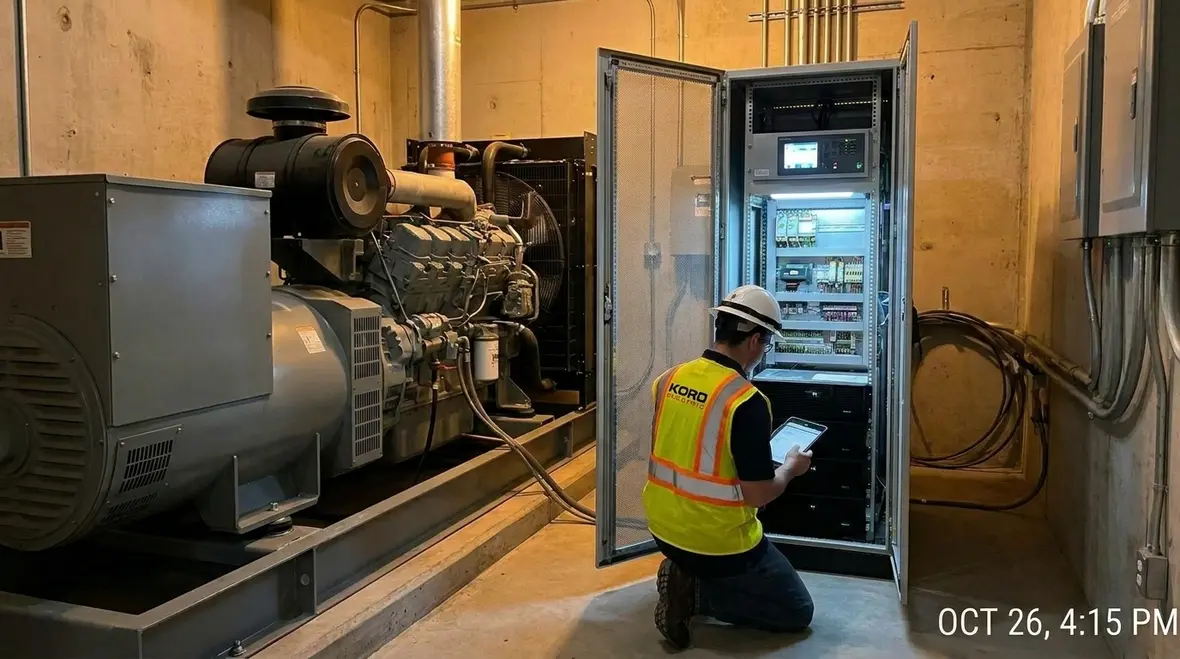
In larger facilities, we often integrate monitoring that shows UPS status, generator readiness, and transfer switch positions on a single pane of glass. When operators can see how the entire chain behaves in real time, they gain confidence in both automatic and manual transfer procedures.
That visibility becomes invaluable during utility disturbances and planned outages. Instead of wondering whether the UPS will cover the ride and whether the generator will stay within voltage and frequency tolerances, teams can see actual performance and trend data. It turns “I hope this works” into “We know how this will behave.”
Protection, grounding, and safety that hold up under fault
When a fault happens, the electrical system must protect people and equipment fast. That means careful coordination of breakers, fuses, relays, and surge protection. We also design grounding and bonding so touch voltages remain safe and reference points stay stable.
We pay close attention to how protective devices work together. For example, we plan selective coordination so a fault isolates the smallest possible section. Then, equipment losses shrink, and the facility recovers faster.
Likewise, we design grounding systems that support both power quality and safety. We consider typical operating modes, maintenance activities, and how technicians will verify energy status. Here, our expert service staff plays an important role by translating code requirements into field-ready practices.
In real life, the best time to understand grounding is before the first emergency call. We help avoid that “panic learning” by walking customers through what they should expect in testing and inspection.
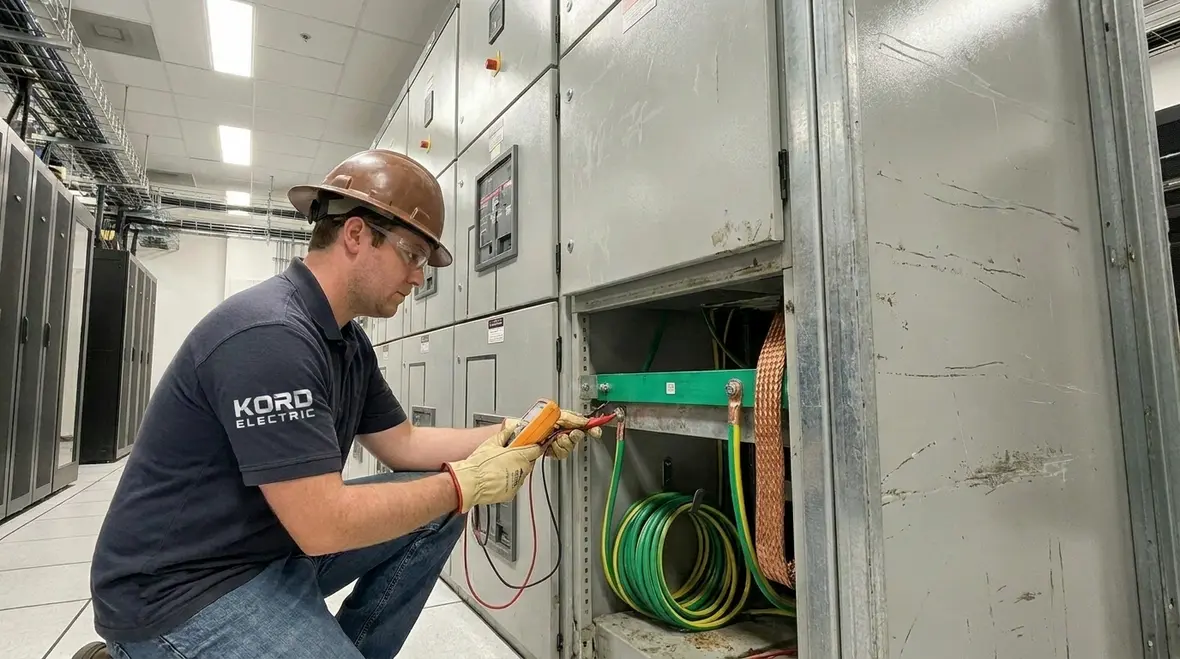
The same logic applies when integrating surge protection, transient voltage suppression, and arc flash mitigation strategies. Rather than bolting these on at the last minute, we weave them into the overall protection scheme so that every layer of defense complements the others.
For facilities that have experienced nuisance trips, unexplained equipment failures, or voltage issues in the past, this coordinated approach can be paired with specialized services such as targeted power quality assessments or structured programs like Kord Electric’s electrical preventive maintenance to keep the protection strategy performing over time.
Commissioning, testing, and maintenance planning that reduce downtime
Installation is not the finish line. Therefore, we commission systems in a way that matches how the data center will actually run. We test for correct phasing, verify protective device operation, and confirm load transfer behavior. We also validate that labeling and documentation support day to day operations.
Next, we connect commissioning results to a maintenance plan that supports long term reliability. If the customer wants a structured approach, we reference our commercial and industrial electrical maintenance plans to guide scope and priorities. These plans help others avoid the common trap of “we will check it when something breaks.” In a data center, that trap can be expensive.
Our teams emphasize inspection rhythms for switchgear, UPS areas, grounding systems, and thermal risk points. We also focus on cleaning, torque checks where appropriate, and monitoring where equipment supports it. When preventive work is scheduled, failures become rare events instead of recurring surprises.
We also help customers prepare for upgrades and expansion. As load grows, the original distribution architecture needs to stay consistent with protection coordination and power quality targets.
For properties that want a turnkey path from initial commissioning to long-term reliability, our team can align the data center electrical distribution architecture design with ongoing programs like electrical preventive maintenance services, making sure testing data, maintenance history, and future upgrades all tell one consistent story.
Measuring performance: power quality, thermal load, and future growth
A data center does not stand still. New racks arrive, workloads shift, and expansion plans change. So we design with measurable performance targets and a path for growth.
We monitor and plan for power quality, including harmonics, voltage stability, and transient events. When power quality slips, systems may still run, but efficiency and equipment life can decline. In addition, we watch thermal load because electrical components age faster when temperatures run hot.
We build designs that support safe scaling. That might mean planned spare capacity, bus segmentation strategies, or distribution layouts that make it easier to add new loads without rewiring the whole facility. Also, we document how future changes should respect the fault clearing logic.
And if someone tells us “we will just add more later,” we respond politely, then we explain why later costs more than planned. It is the same reason you do not repaint a house after you spill paint all over the walls. The money learns faster than the schedule.
Because modern data centers behave more like living organisms than static buildings, we treat performance measurement as part of the original design brief. That way, when it is time to scale, refresh hardware, or introduce new cooling strategies, the electrical backbone already knows how to support the next chapter.
Service collaboration for major property buildings and data center clients
For commercial and industrial facilities, coordination matters. We work with building teams, facility managers, and engineering partners to align timelines, access needs, and testing windows. Because in major property buildings, stakeholders multiply fast, and assumptions multiply faster.
Our expert service staff stays involved beyond the install phase. We support troubleshooting strategies, help interpret test reports, and recommend practical actions that fit the customer’s operating schedule. We also help customers set expectations for how quickly systems should respond during switching events.
In many cases, the biggest win is clarity. When others can read the system documentation and understand the switching and protection logic, the facility runs smoother. And when technicians trust the design, they spend more time maintaining and less time guessing.
For clients managing portfolios of major property buildings, we often align individual data center electrical projects with broader reliability programs and documented standards. That way, lessons learned in one facility can improve performance across the entire portfolio instead of living in one set of switchgear notes.
FAQ
Conclusion: let us design power that stays steady when it matters
Modern data centers demand more than “working power.” They require a clear distribution plan, coordinated protection, and practical maintenance that keeps uptime goals intact. Kord Electric designs essential electrical infrastructure for commercial and industrial facilities and major property buildings, with technicians and expert service staff explaining each step so your team knows what to expect. If you are planning a new build, expansion, or a reliability upgrade, contact us for a site assessment and a plan you can trust.
For facilities that also need structured upkeep and periodic testing to match their design, our dedicated electrical preventive maintenance services for commercial and industrial properties provide a natural next step. Together, thoughtful design and disciplined maintenance keep critical power steady when the stakes are highest.
If your data center or major property building is ready to move beyond “good enough” and toward a fully coordinated electrical strategy, our team is ready to help design, commission, and maintain the systems that keep your operation online.


