Commercial Subpanel Load Management Guide
At Kord Electric, we help commercial and industrial facilities scale capacity without turning an electrical system into a daily “surprise” party. Our approach to commercial subpanel load management starts with understanding how real loads behave in the field, then matching that reality to the capacity your building needs now and later. We also build a plan that reduces nuisance trips, prevents overheated components, and keeps critical equipment running when it matters. In other words, we manage the panel like it is a busy intersection: the goal is smooth flow, not random honking.
In this article, we explain best practices our technicians and expert service staff use when they upgrade subpanels, balance phases, and plan for future growth. We focus on commercial and industrial and major property buildings only, because that is where the stakes are high and the consequences of “good enough” show up fast.
Assess load growth without guessing
Commercial projects rarely grow in a neat, predictable line. Instead, occupancy shifts, tenants change equipment, production schedules evolve, and new HVAC cycles appear like pop culture sequels you did not ask for. Therefore, we start with a structured assessment that turns assumptions into data.
First, our team reviews the existing single line diagram, subpanel schedules, and any prior load calculations. Then we verify field conditions: actual breaker ratings, conductor sizes, panel bus condition, and whether any loads have been moved without proper labeling. After that, we build a load profile for key operating periods such as start up, peak production windows, and after hours cycles.
Next, we match the profile to the building’s growth path. We ask what changes are coming, but we also ask how quickly. As a result, we do not just add capacity, we scale it at the right pace to avoid paying twice. This also helps us identify where the system is constrained, whether that is upstream feed capacity, bus utilization, or a single overburdened circuit group.
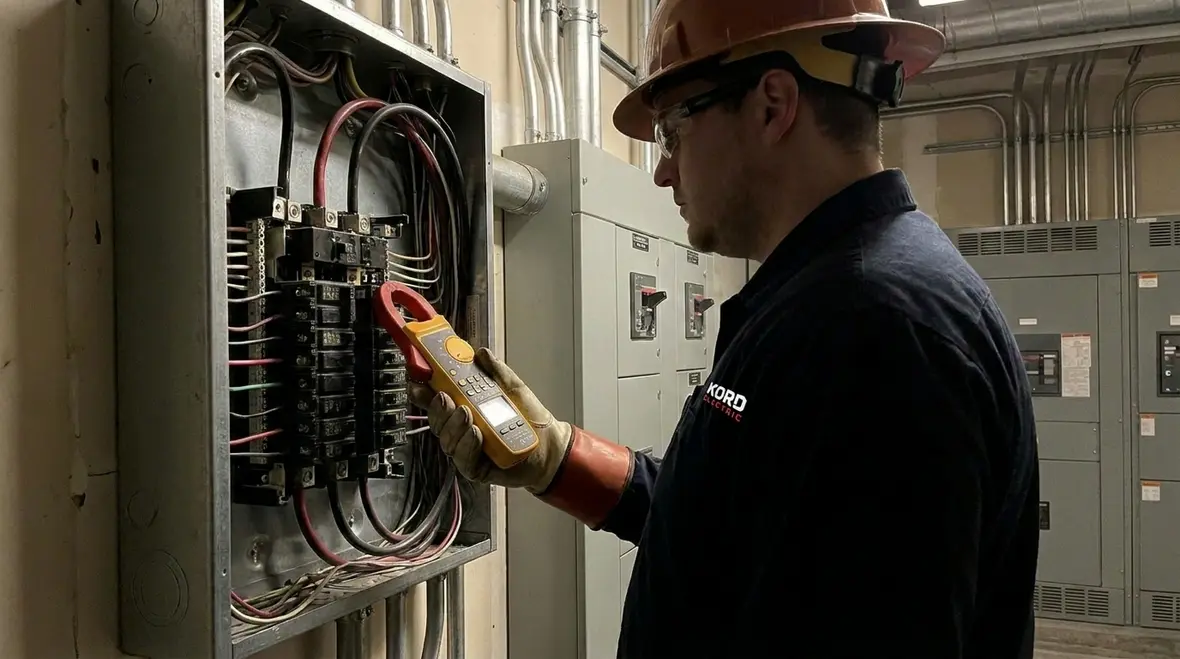
For property teams that want to connect this planning step with broader system upgrades, it often pairs well with whole-building rewiring strategies that align panel capacity, feeders, and downstream circuits around long term operational goals, not just short term fixes. That way, commercial subpanel load management fits neatly into a bigger reliability picture instead of living as an isolated project no one revisits.
This structured, data-driven approach mirrors how comprehensive commercial electrical system upgrades are handled more broadly—careful evaluation first, then targeted improvements that protect uptime, safety, and commercial electrical compliance over the long run.
Balance phases to prevent hidden overloads
Many facilities think the solution is simply “add more breakers.” However, our technicians often find a different issue first: phase imbalance. One phase carries far more load than the others, and the system can overheat even when the total amperage seems fine.
Our expert service staff typically performs a panel phase review using measured current data where possible. Then we compare that data to what the wiring plan should produce. When the loads do not line up, we rebalance circuits across phases and update documentation so the next contractor does not unknowingly undo the improvement.
Just to keep things amusing, imagine a three lane highway where two lanes are empty and one lane is stuck under construction. The road still “exists,” but it struggles. In electrical terms, phase imbalance creates the same kind of bottleneck. Therefore, balancing becomes a core pillar of commercial subpanel load management, because it protects equipment and improves reliability without necessarily adding major hardware.
We also pay attention to how those phase loads behave over time. Startup currents, shift changes, and seasonal equipment cycles can all swing demand in ways that are not obvious from a quick snapshot. By watching trends instead of single readings, it becomes easier to keep panels out of the danger zone where subtle phase imbalance quietly shortens equipment life.
This is where commercial subpanel load management overlaps with broader hidden electrical risk reduction. In many large buildings, imbalanced phases, overloaded conductors, and quietly stressed bus connections sit out of sight until someone schedules a detailed inspection. Rebalancing phases early often prevents those “invisible” problems from turning into shutdowns later on.
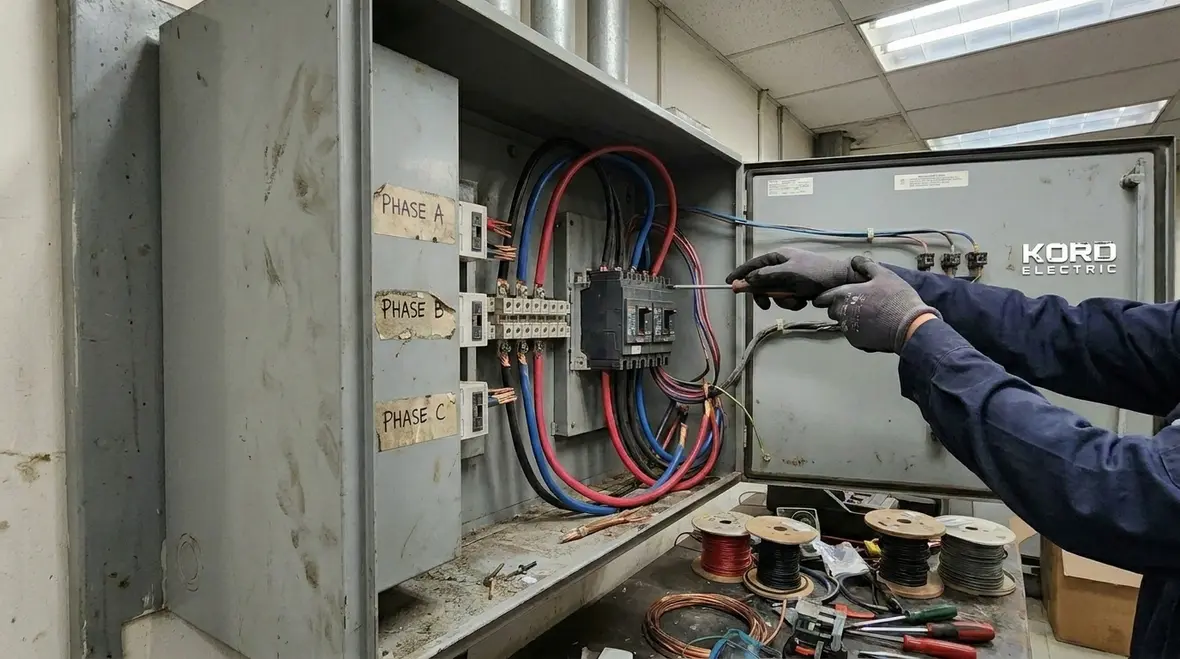
For teams building long term maintenance plans, phase balancing should not be a one time event. It works best when folded into ongoing inspections and testing, so changes in occupancy, machinery, or tenant mix do not gradually tilt the system back out of balance.
Use smart load allocation for commercial and industrial tenants
In multi tenant buildings and major property facilities, load allocation often becomes messy over time. Tenants add equipment, swap refrigeration units, upgrade IT racks, or expand manufacturing lines. Consequently, the subpanel that started as “adequate” can become a patchwork of mismatched circuits.
To fix this, we establish a load allocation approach that aligns circuits with intended use, occupancy patterns, and priority levels. We often recommend grouping by function such as life safety loads, HVAC controls, general receptacles, process equipment, and lighting. Then we assign circuits based on expected demand, not just what is convenient.
We also set rules for how future modifications should happen. For example, when a new tenant wants power for a data room expansion, we guide them to start with a load request that includes equipment nameplate values, operating schedules, and any starting current expectations. In this way, commercial subpanel load management becomes a repeatable process rather than a one time fix.
And yes, we document it. In our world, documentation is the unsung hero. Without it, someone will eventually chase the same problem, like a detective solving the same mystery with a different hat.
Thoughtful load allocation does more than tidy up panel schedules. It also supports accurate cost allocation between tenants, smoother lease negotiations around infrastructure capacity, and cleaner conversations with inspectors who want to see that life safety, critical, and non critical loads are organized with intent instead of improvisation.
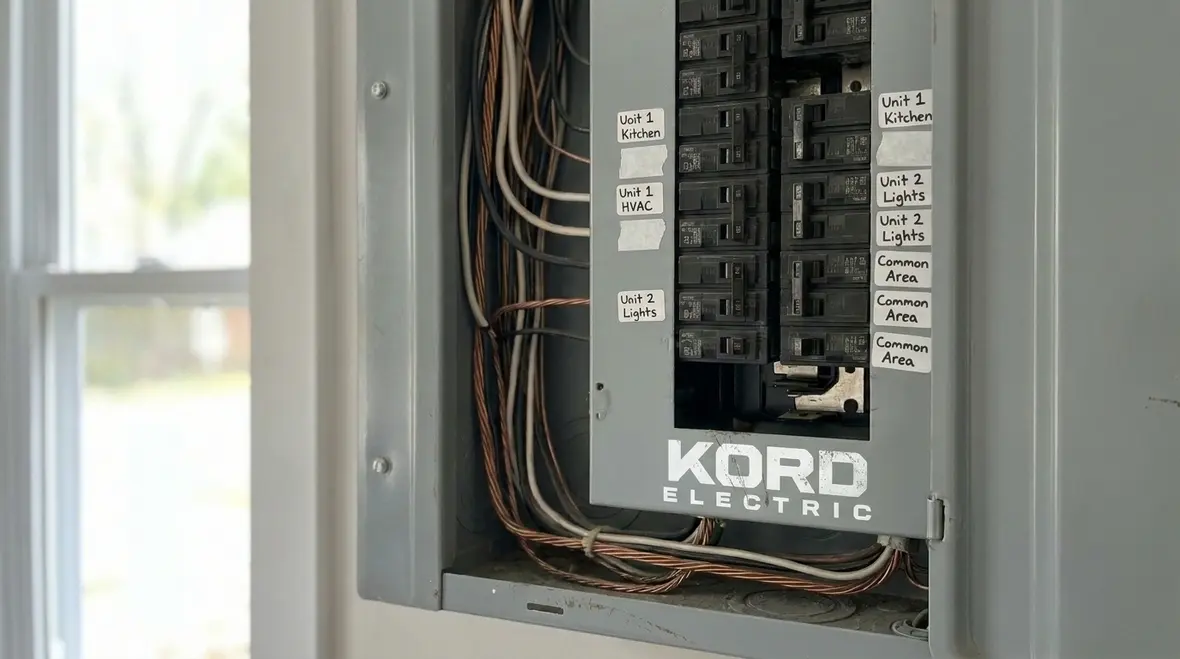
For property managers who manage entire portfolios, aligning subpanel load allocation with broader commercial electrical maintenance plans helps keep everything consistent from site to site. That consistency pays off when you need to compare buildings, budget capital improvements, or respond quickly to changing tenant needs across multiple locations.
Choose conductors, breakers, and buses that match real use
Capacity scaling fails when parts are selected for a spreadsheet instead of a building. So we focus on how conductors, breaker trip characteristics, and bus ratings handle actual operating conditions. First, we verify conductor ampacity and derating factors such as temperature, number of current carrying conductors, insulation type, and installation environment.
Next, we check breaker sizing logic. Certain loads draw higher inrush current, while others behave like steady demand. Therefore, we confirm whether the breakers and protective devices match the load profile. We also review coordination to help avoid nuisance trips and to keep upstream protection from reacting too aggressively.
Bus utilization matters as well. If a subpanel’s bus is near its limits, even a correctly sized downstream breaker can still lead to overheating and long term wear. Our technicians inspect bus condition and verify that any additions maintain proper installation practices, including torque and termination quality.
When upgrades are needed, we also evaluate whether a panel change is the best move or whether the better path involves relocating loads, adding dedicated circuits, or improving upstream capacity. That is how our team prevents wasteful spending and stops “bandaid growth.”
This equipment-focused view of commercial subpanel load management also supports long term compliance. When conductors, breakers, and buses are selected and installed to match real usage, inspections go smoother, documentation stays cleaner, and the odds of surprise findings during audits or insurance reviews drop dramatically.
In many cases, these upgrades are coordinated with broader electrical preventive maintenance programs that use inspections, testing, and infrared scans to confirm that critical panels and switchgear are performing as designed—not just on paper, but under the stress of real daily operation.
Plan for expansion with a clear, phased upgrade path
Scaling capacity works best when it happens in phases rather than one big disruptive event. For major property buildings, outages create schedule conflicts and tenant dissatisfaction, so our planning aims to minimize downtime.
Our team builds a phased upgrade plan that identifies which steps can be completed during low impact windows. We start with the easiest wins, such as correcting phase imbalance, improving labeling, and reorganizing circuit allocations. Then we move to higher effort actions like adding feeder capacity, replacing aging components, or expanding subpanel capacity with appropriate bus structures.
To keep this plan actionable, we define milestones and acceptance steps. For instance, after any redistribution of circuits, we verify that measured currents align with expectations. After device replacement, we inspect terminations and run performance checks. Thus, commercial subpanel load management remains controlled, not chaotic.
We also encourage building owners to create a simple “future load log.” When someone adds equipment later, the log helps the team understand what changed, what margin remains, and what the next phase should be. That small habit can prevent a lot of late night troubleshooting.
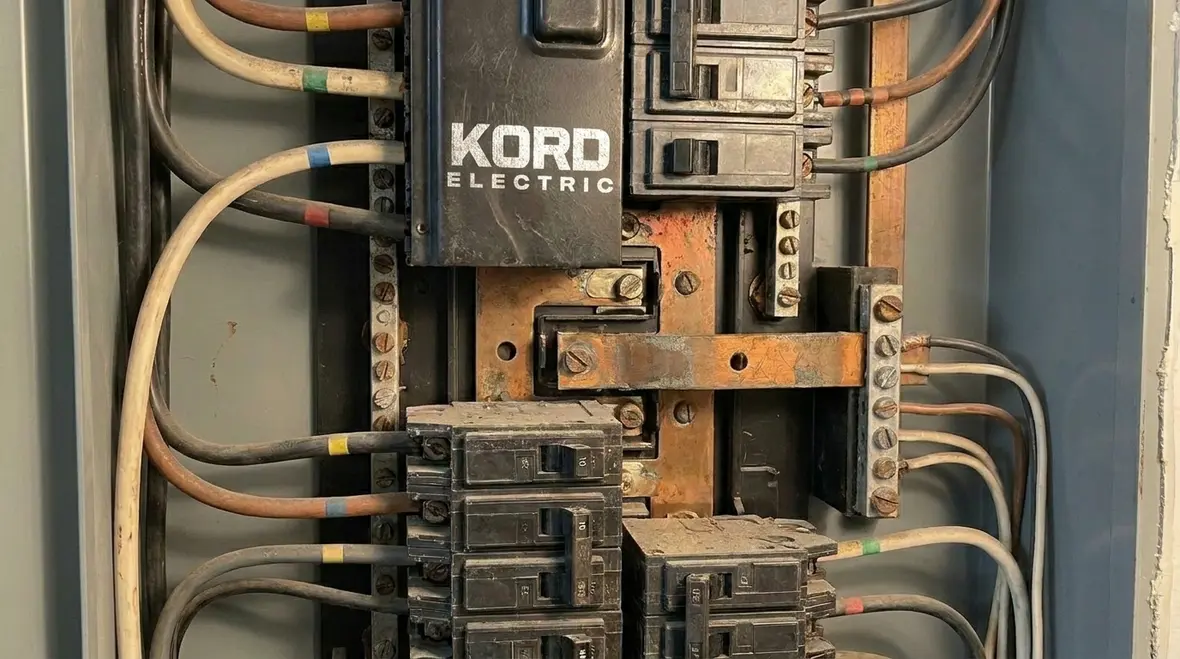
A phased plan also makes budgeting easier. Instead of a single large capital shock, owners can align commercial subpanel load management work with broader projects like commercial electrical system upgrades, lighting retrofits, or targeted rewiring that happen over several fiscal years.
Coordinate upgrades with safety, code, and continuity needs
Electrical improvements in commercial and industrial facilities demand more than calculations. They require safe execution, code alignment, and continuity for critical systems. Therefore, we coordinate with facility operations, maintenance teams, and sometimes site security when access timing affects equipment stability.
Our expert service staff prioritizes safety planning, including lockout and verification steps, proper test procedures, and inspection coordination. We also ensure that any improvements maintain compliance with applicable standards for commercial buildings and industrial environments, including proper protective device selection and conductor installation practices.
Continuity planning matters too. Facilities often need uninterrupted power for life safety systems, certain controls, refrigeration, process equipment, or data infrastructure. As a result, we map which loads require different levels of protection and how the upgrade affects them. When possible, we keep critical circuits on stable paths while we rework non critical areas.
This approach reduces downtime and protects business operations. In the long run, it also improves confidence. After all, a reliable building is like a good soundtrack. Nobody notices it when it is working, but everyone feels it when it fails.
For facilities that want added assurance, integrating commercial subpanel load management with structured electrical preventive maintenance programs keeps panels, feeders, and switchgear on a regular inspection and testing cycle. That means potential issues get identified and resolved before they have a chance to interrupt production, tenant operations, or critical services.
FAQ
Call Kord Electric for capacity scaling that stays steady
When a building grows, the electrical system should grow with it. Kord Electric helps commercial and industrial facilities and major property buildings scale capacity using disciplined planning, phase balancing, and careful device selection. Our technicians and expert service staff explain each step clearly, so owners and operators understand what we change and why. If your subpanels are nearing their limits or tenant upgrades keep pushing new loads, contact us now. We will review your current setup and map a phased plan you can trust.
If you want to tie commercial subpanel load management into a broader reliability strategy, our team can also connect it with services like electrical preventive maintenance, commercial electrical system upgrades, and structured inspection programs. That way, your panels, feeders, and critical equipment all move forward together instead of drifting apart over time.
Whether you manage a single major property or an entire portfolio of commercial buildings, we keep the focus on practical results: fewer surprises, clearer documentation, and electrical capacity that is ready for the next round of tenant improvements, equipment expansions, or modernization projects.
Ready to see where your commercial subpanel load management stands today? Reach out and let our team walk your site, review your documentation, and build a plan that keeps capacity, safety, and uptime pulling in the same direction.