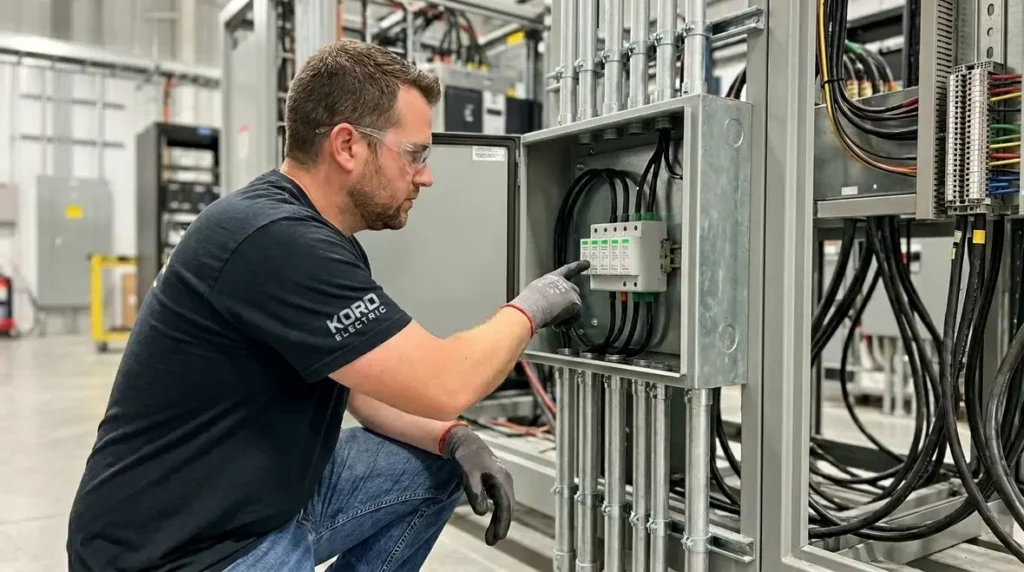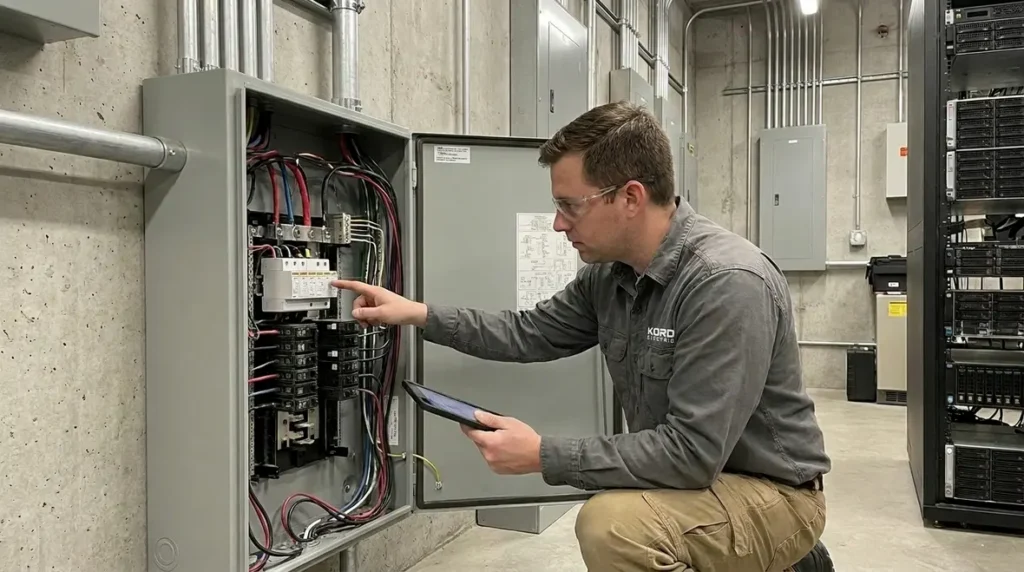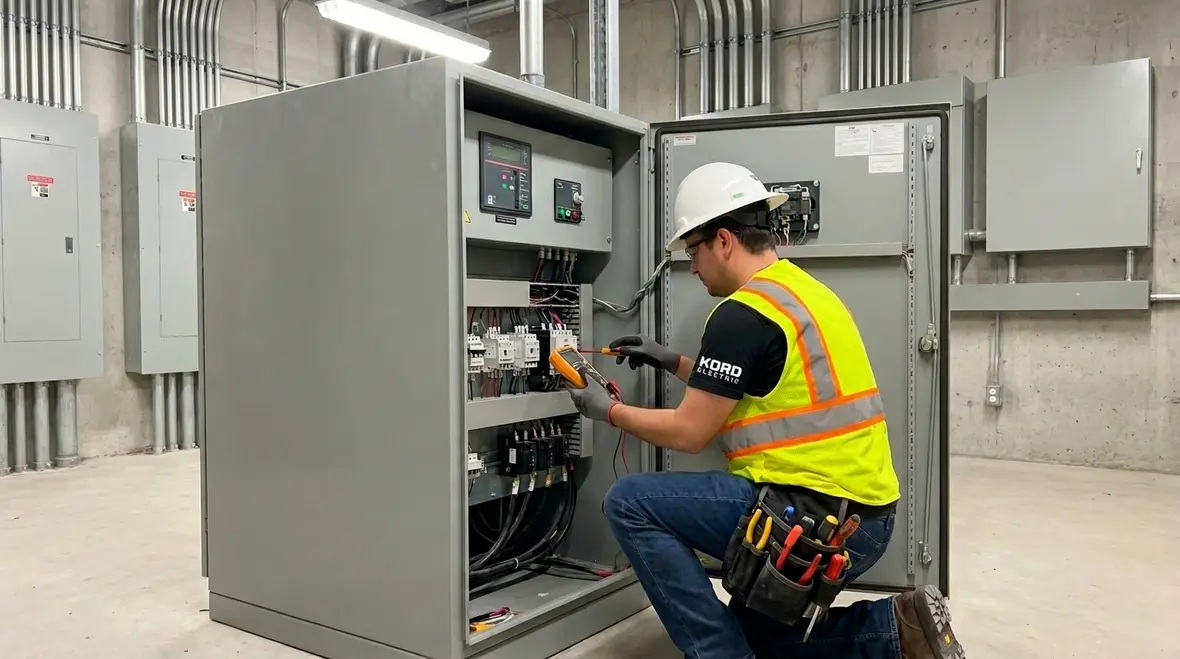
Emergency Generator Transfer Switch Maintenance
When the lights go out, a dependable setup matters more than anyone wants to admit. At Kord Electric, we routinely work with commercial and industrial facilities and major property buildings where an emergency generator transfer switch must sense the situation fast and switch without drama. However, even the best transfer equipment can lose reliability if maintenance turns into a forgotten chore. That is why our technicians and expert service staff treat generator transfer switch care like preventative medicine: we do the work before the problem shows up wearing a fake mustache and pretending to be fine.
In the rest of this guide, we walk through maintenance habits that reduce failure risk, keep switching smooth, and help facilities stay compliant. We also explain what we check, why it matters, and how you can schedule work that does not disrupt critical operations.
Why reliability depends on details in transfer switch service
Reliability does not come from luck. It comes from checking the small things that cause big outcomes later. Our expert service staff starts by confirming the transfer switch design and duty cycle for the site, because a facility that runs critical loads every day needs a different maintenance rhythm than one that relies on backup only during outages.
Then we focus on the mechanisms that actually move power. If contacts wear, coils weaken, or interlocks drift out of tolerance, the switch can delay, chatter, or fail to transfer under real stress. So, we treat each inspection like a story: we do not just read the last page. We examine the setup, the control logic, the sensing, the protection devices, and the wiring paths that carry commands.
- We verify correct operation of sensing signals and control voltages
- We inspect mechanical motion and verify smooth travel
- We check electrical interfaces that affect switching speed
- We confirm protective settings align with the facility load profile
Meanwhile, we often hear the same joke from operators: “It always works until it does not.” That is funny, but also true. Maintenance helps you beat the “until” part.
Routine inspection tasks our technicians prioritize

To keep systems steady, Kord Electric schedules routine tasks that match how the equipment behaves in the field. First, we check visual condition, because heat, corrosion, and loose terminations create early warning signs. Next, we inspect control components and wiring, then we verify that switching sequences match the intended logic.
Our technicians also confirm the load transfer path works the same way each time. That means we observe actual switching behavior, not just the ability to close and open. If the switch produces abnormal timing or inconsistent movement, we find the cause before the next outage stresses the system.
Because many facilities run under strict downtime limits, we document each step and coordinate testing windows. As a result, the work stays controlled and predictable, instead of turning into a long outage drama. No one needs that, and neither do we.
- Inspect enclosure condition, labels, and signs of overheating
- Check terminations, torque, and evidence of arcing or discoloration
- Confirm contact condition and verify wear patterns
- Test interlocks to prevent unsafe parallel states
- Check control board health, alarms, and indication accuracy
- Verify auxiliary contacts and control wiring integrity
How we test switching performance without guessing
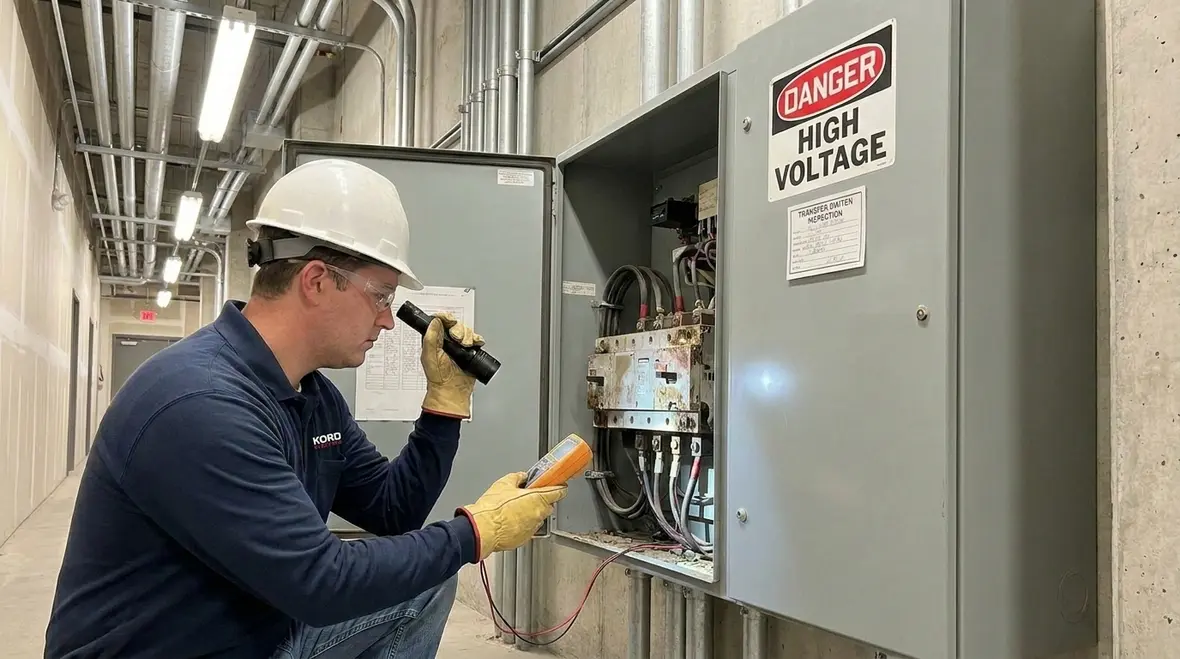
Testing should not feel like flipping a coin. Our team uses a methodical approach that measures behavior and confirms that the transfer switch responds correctly to system conditions. We start by reviewing the site’s operating goals and history, then we select the right test method for the installed system.
During performance checks, we watch for timing consistency and confirm that the system transitions safely and cleanly. For example, if the control circuit senses utility loss or generator readiness, we verify the signals align with the expected sequence. Then we confirm the switch moves with proper delay settings and that it returns to normal service properly.
We also test with attention to the real world. Loads can be sensitive, and control logic can react differently when conductors, protective devices, or upstream settings differ from a generic baseline. Therefore, our technicians document results and compare them to prior data. When changes show up, we address them early.
And yes, we keep a sense of humor while we do it. If a test fails, the equipment is not “being moody.” It is being honest.
If your facility wants a deeper dive into how structured maintenance supports reliable switching, you can explore how NFPA 70B electrical panels and switchgear maintenance ties into broader preventive strategies across commercial and industrial buildings. Kord Electric details that connection in our overview of NFPA 70B electrical panels and switchgear maintenance, helping teams align testing and inspection work with real-world code expectations and system reliability goals.
For facilities that need a broader, multi-system framework beyond the transfer switch alone, our guide on commercial and industrial electrical maintenance plans shows how generators, switchgear, and distribution equipment can be wrapped into one calm, organized maintenance strategy instead of a series of one-off service calls.
Maintenance checklist for the emergency transfer sequence
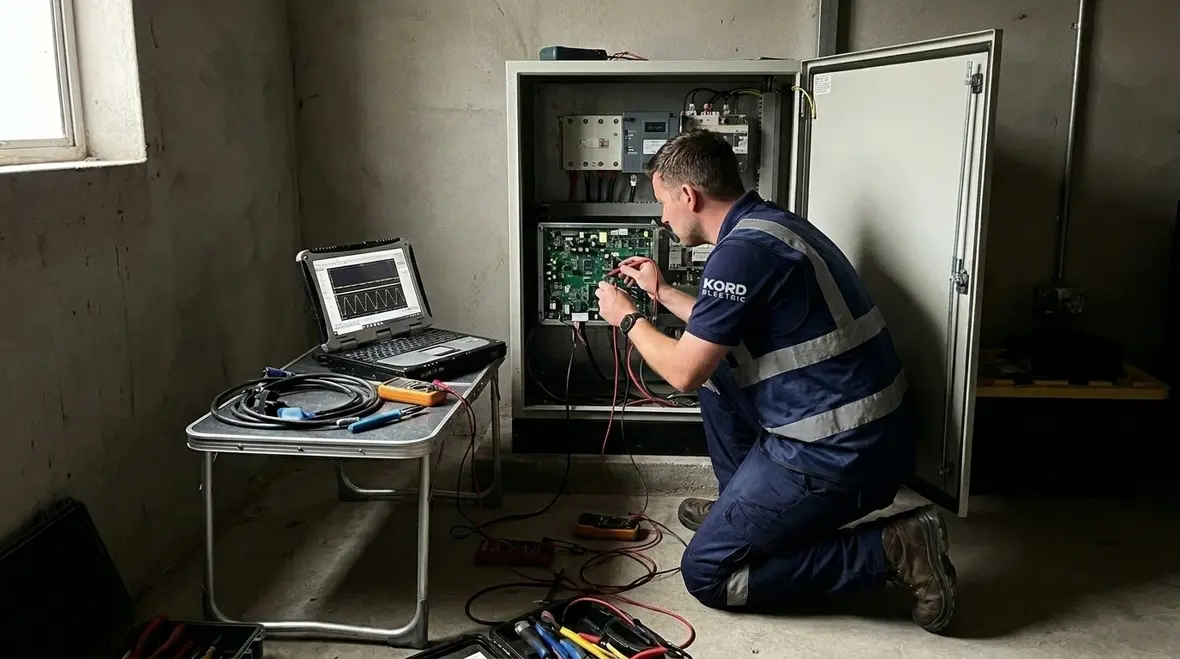
In practice, reliability improves when maintenance focuses on the sequence that matters: detection, decision, transfer, and return. That is where an emergency generator transfer switch earns its keep, and that is where neglect causes the most trouble.
Kord Electric uses a clear checklist framework tailored for commercial and industrial facilities and major property buildings. We adjust the scope based on switch type, control features, and the site’s critical load strategy. Then we validate each step so the system behaves as designed.
- Verify sensing and voltage thresholds for utility and generator conditions
- Inspect control power supply and battery or charger components, where applicable
- Confirm generator start and readiness signaling inputs match the transfer logic
- Inspect and clean contact surfaces if manufacturer guidance allows it
- Check actuator drives and mechanical linkages for smooth movement
- Verify delays on transfer and retransfer remain within tolerance
- Confirm interlocks and safety logic prevent overlap or unsafe states
After that, we check the return sequence. Many failures happen on retransfer, because equipment experiences different conditions when utility stabilizes. So, we test retransfer behavior, not just initial transfer. This simple step can save an operator from a repeat incident that looks “mysterious” but usually has a consistent cause.
For facilities that want to build this checklist into a broader preventive maintenance rhythm, our electrical preventive maintenance service page outlines how generator and ATS inspections fit alongside infrared scans, panel inspections, and other recurring tasks that keep critical systems ready.
Common wear points and what we do when we find them
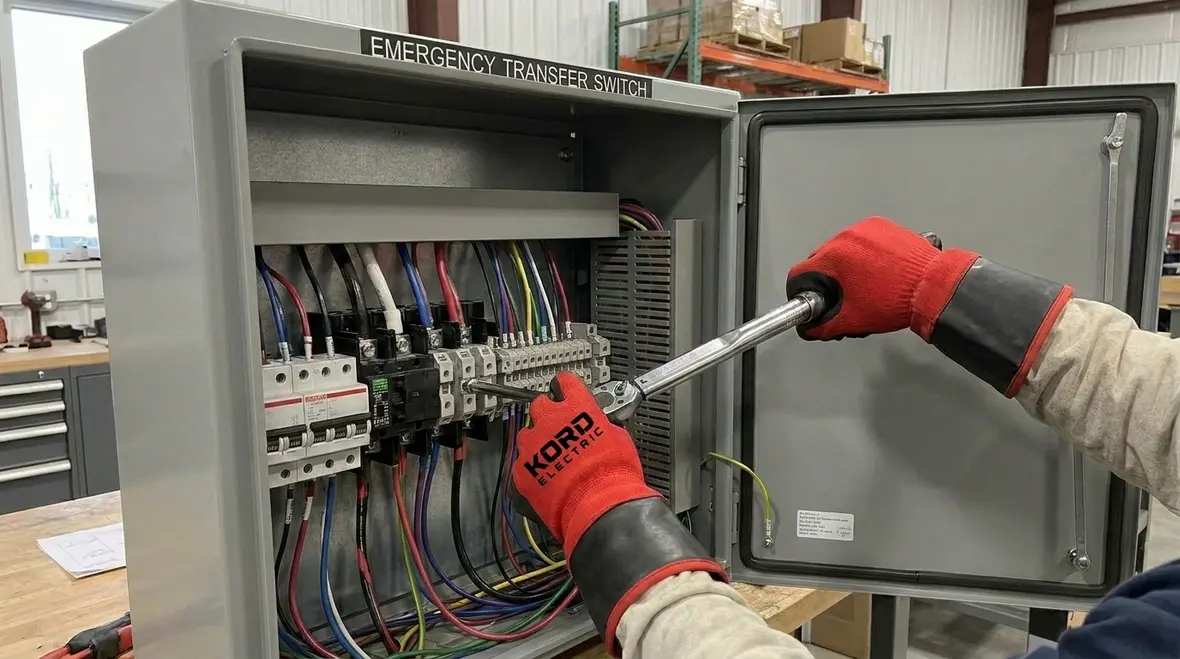
Even with good care, components wear. However, wear becomes a reliability threat only when someone ignores it or treats symptoms instead of causes. Our technicians look for the most common failure sources and handle them with the right level of attention.
For example, contact wear can increase resistance, generate heat, and create unstable switching. Worn mechanical linkages can slow movement or cause inconsistent timing. Loose terminations can build heat over time and lead to arcing. Control circuits can also drift due to contamination, aging components, or vibration.
When our team discovers a concern, we do not just mark it and hope. We explain what we found, what it means for the next outage, and the recommended correction. That communication matters because facility managers and electrical supervisors need clear options, not vague warnings.
Here is how we handle typical findings:
- We address hot spots and torque issues on power terminations to reduce overheating
- We correct contact and actuator issues to keep switching speed consistent
- We repair damaged wiring or connectors to prevent intermittent control faults
- We update or adjust settings when the site load profile or protective coordination changes
- We replace components when replacement prevents repeated corrective visits
So, if a component looks tired, we treat it like an employee who needs training. Fix it now, and it will show up strong later.
How to schedule maintenance for commercial and industrial sites
Maintenance must respect operations. Kord Electric helps facilities plan around production schedules, tenant needs, and critical process downtime. First, we align inspection cadence with the importance of the loads served. Then we set testing windows that limit risk while still verifying real function.
As a rule, we encourage facilities to build a schedule that includes routine visual checks, periodic performance verification, and targeted corrective service when conditions change. Weather extremes, frequent short outages, upgrades to switchgear, or modifications to generator control logic can all change stress levels. When that happens, we adjust the plan.
Also, we coordinate documentation so your team can track what happened and when. That reduces confusion during future troubleshooting and supports decision making when budgets tighten. Nobody likes surprises, especially the electrical kind.
Our approach keeps the work calm and controlled, because reliability work should never feel like a fire drill. If you are doing it right, you barely notice it. If you are doing it wrong, the generator transfer switch will remind you. Loudly.
For organizations that want a more formal, documented approach, Kord Electric’s commercial and industrial electrical maintenance plans show how generator and ATS maintenance work together with panel inspections, voltage stability checks, and electrical preventive maintenance to keep entire facilities ready instead of reactive.
FAQ for generator transfer switch reliability
Final call to keep operations ready when outages happen
Reliability does not start when the outage begins. It starts long before, with planned inspections and performance testing that confirm your emergency power system works as intended. Kord Electric serves commercial and industrial facilities and major property buildings, and our technicians and expert service staff help you protect critical loads with calm, thorough maintenance. If you want a clear plan, scheduling help, or a performance check based on your specific equipment, contact Kord Electric today and let us keep your facility ready for the next switch moment.
If your emergency generator transfer switch is only one part of a larger reliability puzzle, consider pairing this maintenance work with Kord Electric’s dedicated electrical preventive maintenance services. From generator & ATS inspections to infrared scans and voltage fluctuation diagnostics, we help you build a connected, long-term strategy for stable power across your facility.
For facilities facing active outages, unstable power, or urgent switching issues, our 24/7 emergency electrical services team can respond quickly, stabilize conditions, and then help transition into a calmer preventive maintenance plan so every future outage feels less like a crisis and more like a well-rehearsed drill.