Commercial EV Charging Feasibility Planning
Kord Electric begins planning for commercial EV charging feasibility before anyone even picks a charger style. In the first discussions, we evaluate site power, layout realities, and how the fleet or tenant workflow will actually work. Then, once the numbers make sense, our technicians lay out an expansion path that grows without turning the electrical system into a never ending science fair project. After all, nobody wants to “launch” chargers the way people launch group chats: enthusiastic at first, then chaotic. And because we support commercial and industrial facilities and major property buildings only, our process stays focused on real business needs: uptime, safety, and predictable costs.
How we start a commercial EV charging expansion plan
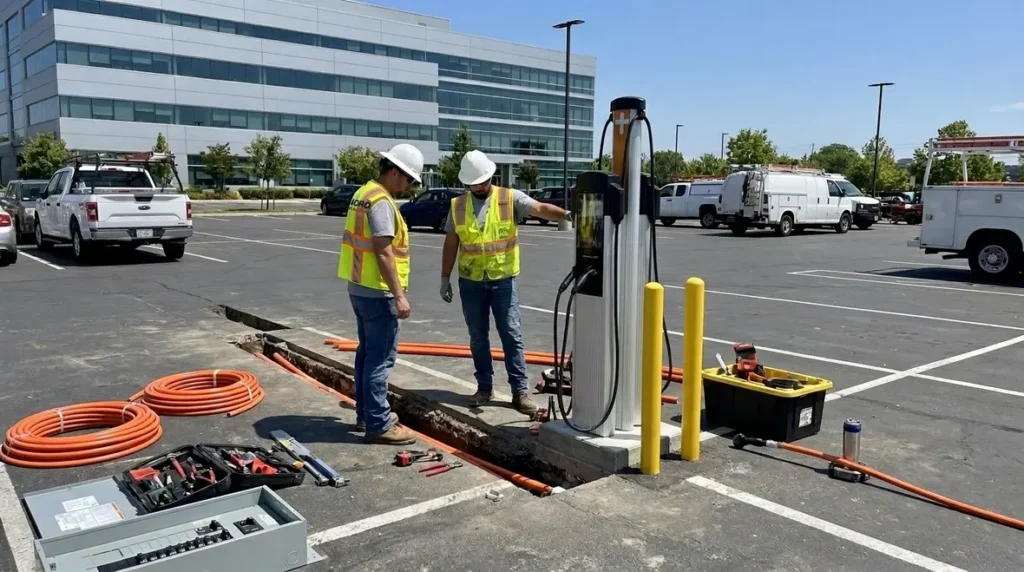
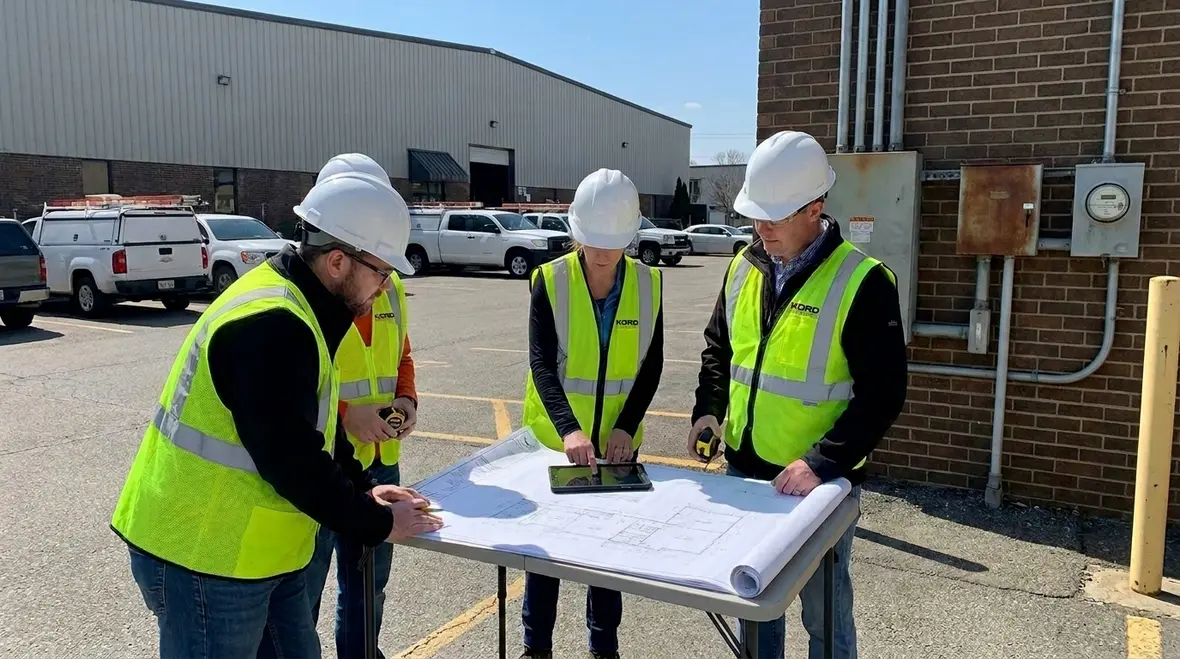
Most expansion efforts fail long before installation, when the planning stage stays vague. At Kord Electric, we start by mapping the site the way an operator thinks: where vehicles park, how people move, and which areas need power first. Next, we review current electrical capacity and meter details, then we forecast how demand will change over time. This is where commercial EV charging feasibility becomes more than a buzz phrase. It becomes a practical checklist: power availability, upgrade requirements, civil constraints, and the timeline.
To keep decisions clean, we assign our expert service staff to explain options in plain language. They guide facility managers through choices like load sharing, charging schedules, and whether to stage upgrades by parking zone. Also, we do not treat a plan like a one size fits all brochure. We build it for the actual operation, from delivery fleets to tenant garages in large buildings.

Site power and load management that protects operations
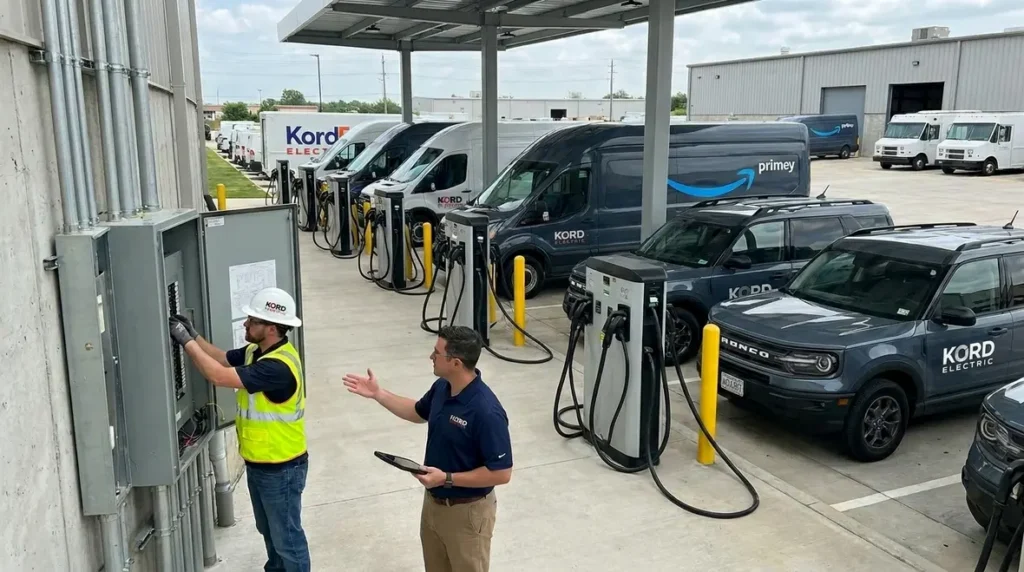
Commercial sites run on clockwork. Therefore, Kord Electric designs charging so it does not disrupt operations. We begin with electrical data and utility limitations, then we model charging load under realistic conditions. After that, we select load management methods that fit the site. For example, we can stagger charging sessions, balance across chargers, and set power caps that align with building demand.
Our technicians take a careful look at panel capacity, transformer size, feeder ratings, and grounding. Then we verify how the building behaves during peak hours. If the facility already has high HVAC loads, kitchens, refrigeration systems, or industrial equipment, we factor that in early. Otherwise, the chargers might work great on a quiet Tuesday and behave like a gremlin during a busy Thursday. And yes, that is how businesses end up troubleshooting at the worst possible moment.
At the same time, we design for future growth. Instead of adding chargers blindly, we plan cabinet placement, conduit routes, and wiring capacity so later expansions stay efficient. As demand increases, the site scales with less disruption and fewer emergency add ons.
Choosing charger types and placement for real driver behavior
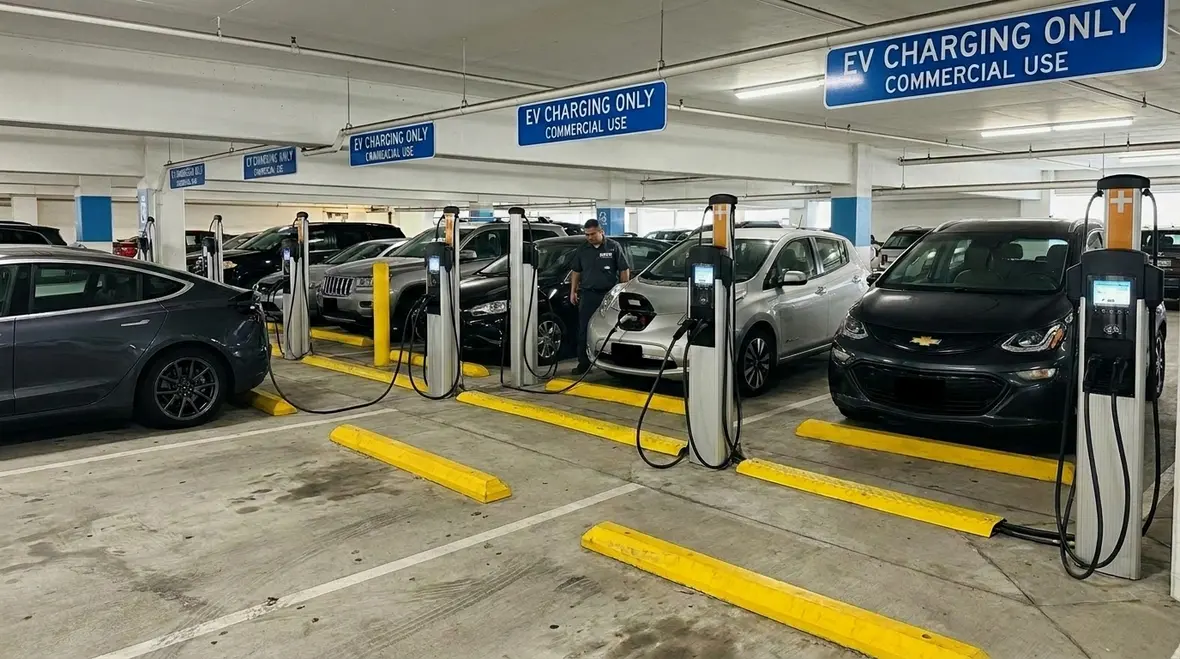
Placement affects usage, and usage affects revenue and satisfaction. Kord Electric helps facilities choose the right charger categories by understanding who uses the chargers and why. For example, fleets often prefer predictable charging windows and controlled power. Property garages may need a smooth experience for tenants and visitors, with clear labeling and easy access.
We also think about traffic flow and curbside constraints. So, we review parking orientation, stall spacing, and how vehicles enter and exit. Next, we consider cable routing and weather protection, since exposed runs tend to age faster. Then we map signage, lighting, and accessibility to reduce driver confusion. People will forgive a lot, but they will not forgive hunting for a charger that is harder to find than a rare cameo in a superhero movie.
Our expert service staff explains these choices step by step. They also clarify how different configurations support expansion, because we build for growth rather than perfection on day one. When placement and charger selection match driver behavior, uptime improves and support tickets drop.

Permits, utility coordination, and timelines that do not drift
Even the best design can stall when approvals get messy. Therefore, we handle permitting and coordination with a clear process. Kord Electric begins by identifying the required permits for commercial and industrial facilities and major property buildings. Then we prepare documentation that matches local requirements, including electrical calculations, one line diagrams, and equipment schedules.
At the same time, we coordinate with the utility early when service upgrades might be needed. Many teams wait until late, but that is risky. Utility lead times can stretch, and waiting often turns a planned roll out into a “maybe next quarter” situation. Our technicians and project team keep schedules realistic by addressing long lead components early.
To keep the work steady, we also plan construction sequencing. We confirm what can happen while the facility stays open, and where temporary power restrictions apply. After all, if the chargers slow down an operation, the project loses value fast. We aim for predictable milestones: design approval, utility steps, rough in, inspections, and commissioning.

Budgeting for expansion without surprise electrical bills
Budgeting should protect the facility, not surprise it. Kord Electric helps teams build a financial view that includes both near term scope and future expansion options. We separate costs into design, electrical upgrades, hardware, civil work, and commissioning. Then we include reasonable contingencies based on site conditions.
Most “surprises” come from unclear power assumptions. So, we confirm electrical capacity and upgrade triggers early. If a transformer or service modification is likely, we model it instead of guessing. This supports commercial EV charging feasibility and helps leaders understand what changes drive costs.
We also advise on the total cost approach. Charging systems often involve ongoing software, maintenance, and occasional component replacements. Therefore, we discuss support plans early, so operations understand the full picture. In addition, we help facilities align charger quantity with utilization goals, so they do not pay for idle capacity. Think of it like buying extra gym equipment: nice to dream about, but not wise if nobody uses it.
Connecting budgeting with long-term electrical reliability
Because EV infrastructure ties directly into core distribution equipment, commercial EV charging feasibility is closely linked to broader electrical reliability. For facilities that want to understand how capital planning and risk reduction work together across panels, feeders, and major equipment, Kord Electric’s guide on hidden electrical risks in commercial buildings shows how unseen issues can affect future projects and budgets over time.
When EV charging upgrades align with the overall electrical strategy, teams avoid piecemeal spending and gain a clearer, calmer roadmap for both expansion and maintenance.
Integration with building systems, reporting, and uptime goals
Charging does not exist in a vacuum. Kord Electric designs systems to fit how commercial properties and industrial sites run day to day. We focus on billing and access controls when needed, and we support reporting that gives operators useful visibility. This includes monitoring performance, tracking utilization, and detecting faults early.
Next, we coordinate with building systems where appropriate. Some facilities want charging to align with building demand management. Others want operational insights for fleet managers. We help define these goals before installation so the chargers do not just sit there looking nice, like decorative plants that never photosynthesize.
Our technicians also prepare for real maintenance needs. We confirm how assets will be accessed, how replacement parts will be handled, and how downtime will be minimized. Since commercial and industrial facilities prioritize uptime, we design commissioning and support around fast troubleshooting and clear procedures.
Tying EV reporting into broader electrical maintenance
When charging data, building management systems, and preventive maintenance plans share information, facilities gain a fuller picture of how power is used across the property. That is why many teams explore structured commercial and industrial electrical maintenance plans alongside EV expansion, so the same playbook supports both daily operations and new infrastructure.
Maintenance, expansion stages, and how we keep the system growing
Expansion is not a one time event. It is a series of steps, and Kord Electric plans for the next step while building the first. After installation, we help facilities set an operations routine: inspections, software checks when applicable, cable and connector reviews, and performance monitoring. Then we document the system so future upgrades make sense.
When a site expands, we keep the original layout in mind. We plan for additional conduits, reserved pathways, and electrical headroom where possible. This approach avoids tearing up areas again later. It also improves turnaround time for new charger drops. In other words, we help the facility scale without the “we forgot something last time” feeling.
Throughout this process, our expert service staff stays engaged. They explain what to watch for and how to prepare for the next phase. Most importantly, they help teams avoid guesswork. Facilities do not need more mystery. They need systems that work, and plans that keep working.
Planning EV expansion alongside ongoing electrical maintenance
Well-planned commercial EV charging feasibility naturally connects to ongoing electrical preventive maintenance. By aligning expansion stages with scheduled inspections and testing, Kord Electric helps facilities keep chargers, panels, and distribution equipment on the same maintenance timeline. That way, each new phase supports the long-term health of the entire electrical system, instead of becoming an isolated project that is hard to track later.
FAQ
Ready to expand with confidence
If your team wants commercial EV charging that actually fits your property and your schedule, Kord Electric is ready to help. We start with commercial EV charging feasibility, then we design a staged expansion plan built around power realities, permitting needs, and uptime goals. Our technicians and expert service staff guide each step so decisions stay clear and costs stay controlled.
For facilities planning larger-scale infrastructure or pairing charging with broader upgrades, Kord Electric’s dedicated EV charger installation services and commercial electrical expertise work together so each project supports long-term capacity, safety, and compliance across the building.
Call Kord Electric today to review your site and map the next phase of charging growth with real, practical numbers and a clear plan that respects both your electrical system and your operations.