
Commercial Surge Protection Guide by Kord Electric
How Kord Electric uses a commercial surge protection guide for real-world protection
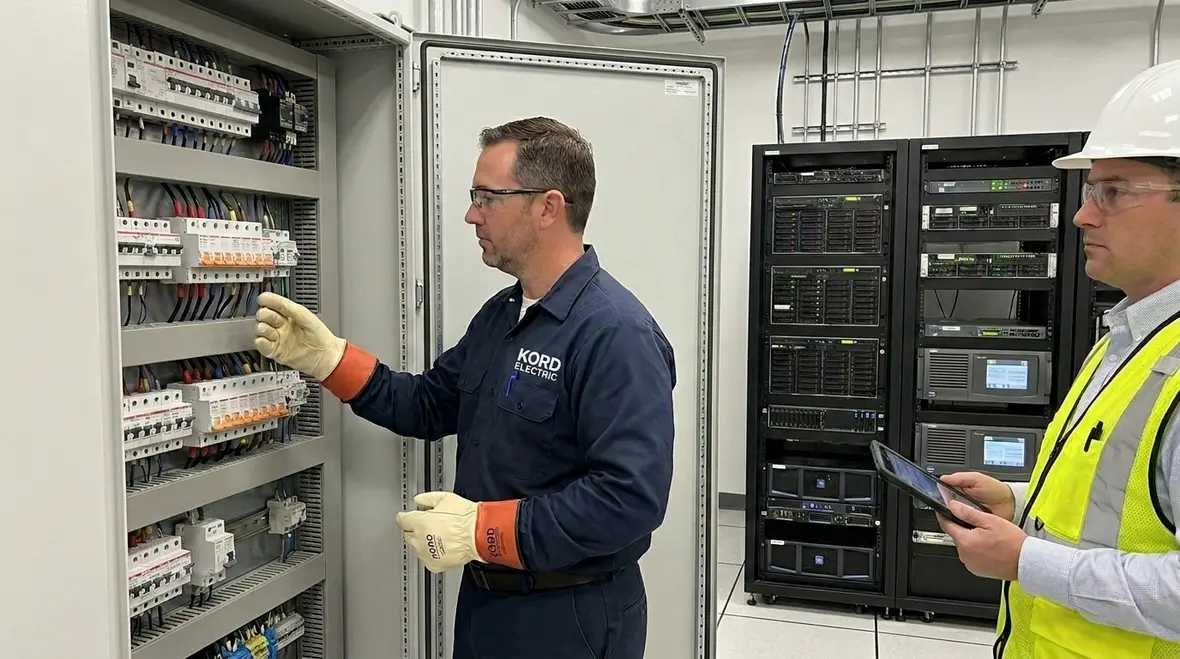
In the real world, power does not politely follow the rules. It spikes, it dips, and sometimes it acts like it never took a business class. That is why we rely on our commercial surge protection guide when we plan for sensitive equipment in commercial and industrial facilities. Using the guide early helps our team spot the weakest points before they become expensive surprises. Therefore, we focus on protecting control systems, communications gear, motors, and critical loads where downtime hurts budgets and schedules. In other words, we do not just install devices and hope. We design protection that fits the building, the loads, and the risks.
When Kord Electric handles preventive maintenance, we also keep the bigger picture in view. So, the next sections explain why surge damage happens, what effective protection looks like, and how our technicians help facilities stay ready.
Why surges damage commercial systems even when the lights stay on
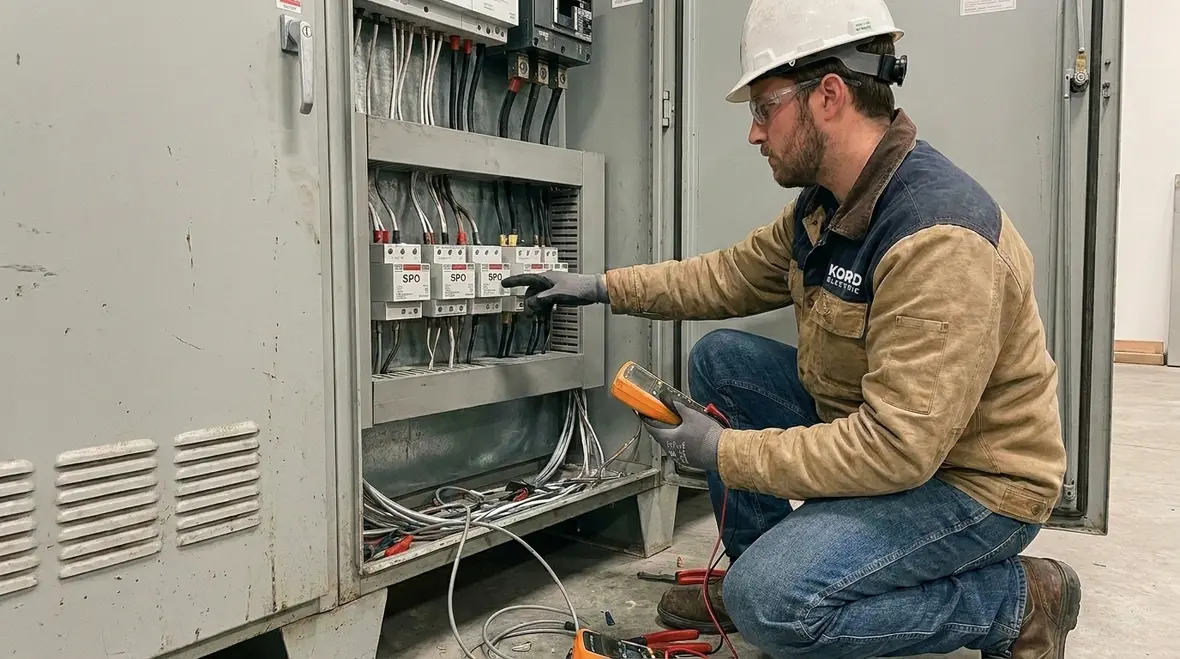
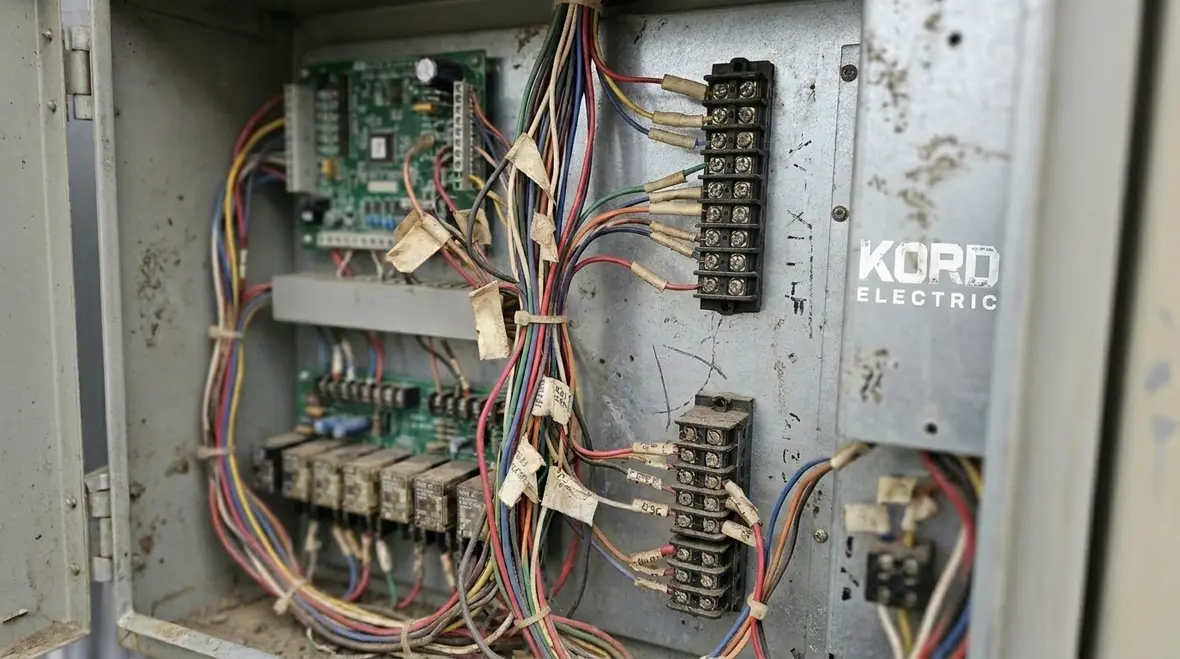
Surges often sneak in quietly. A building may experience a short event that does not fully knock out power. Yet the electronics inside HVAC controllers, PLCs, VFDs, fire alarms, security systems, and networking gear still feel the shock. Because most sensitive components handle normal voltage ranges, even brief overvoltage can degrade parts over time. Then, later, the equipment fails when no one expects it. That is when teams ask, “Why did it die now?” And honestly, the power usually answers, “I warned you. You just did not measure me.”
In commercial and industrial settings, the risk grows as more loads connect to the same electrical system. For example, large motors start and stop, compressors cycle, and welding or machining equipment may create electrical noise. Also, utility switching events can cause transients on the incoming service. Additionally, lightning events can induce surges even without a direct strike. Therefore, surge damage is not a one-time story. It is a pattern that accumulates wear and shortens equipment life.
What commercial surge suppression must cover in major property buildings
We see many facilities with partial protection. They add a device here, another somewhere else, and then the system becomes a patchwork. Instead, we build a protection plan that covers the electrical path where surges travel. That means addressing the service entrance first, then protecting downstream panels, then protecting sensitive circuits and end devices when needed.
Our approach in major property buildings follows a clear order of operations. First, we evaluate the service configuration, grounding, bonding, and the existing panel layout. Next, we identify critical loads and the types of equipment most likely to fail. Then, we apply surge suppression with the right capacity and correct placement so energy can move safely through the system. Finally, we verify the results as part of our broader preventive work.
In plain terms, commercial surge suppression must do more than “block spikes.” It must manage energy the right way, reduce stress on insulation and electronics, and help control the ripple effects that follow. When we plan properly, the building looks calm while the protection system quietly does its job. Like a good security guard, it does not need a spotlight. It just needs the right post.
How preventive maintenance strengthens surge protection over time
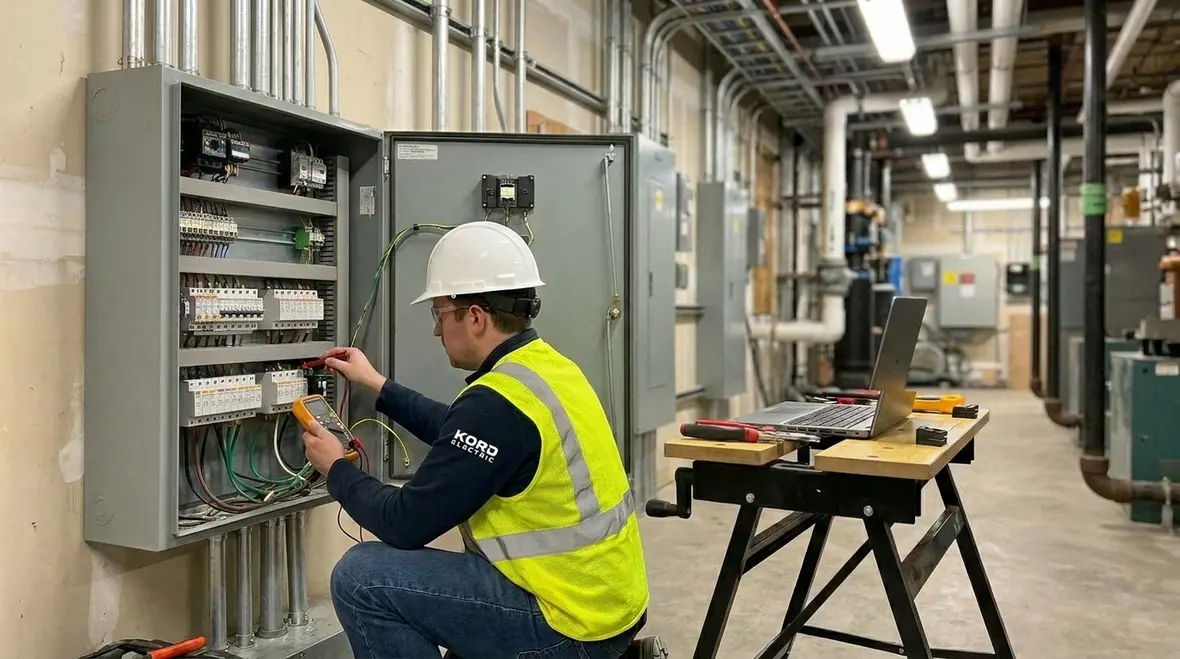
Surge protection does not stay perfect forever. Devices can age, connections can loosen, and electrical systems can change as tenants upgrade equipment. This is where preventive maintenance matters. Our service work supports the plan after installation, and we treat it like a living program, not a one-and-done task.
We review and inspect the components that affect surge performance. That includes looking at connections, checking visible wear, verifying that protective devices match the current load conditions, and confirming that grounding and bonding remain solid. If building changes occur, such as new production lines or renovated offices, we reassess the electrical impact. As a result, commercial and industrial facilities avoid the slow drift that causes failures later.
On the Kord Electric side, our technicians follow a process that aligns with our preventive maintenance mindset described in our maintenance approach at kordelectric.com/electrical-preventive-maintenance. And yes, we explain what we find in clear language. So your team does not have to translate “electrical jargon” like it is a foreign language from a 90s action movie.
Signs your facility needs a surge suppression review
Some issues show up early, and some wait until the bill arrives. However, we have patterns we look for during visits. If you notice repeated nuisance faults on controls, random resets on automation systems, or frequent failures on power supplies, you may already be seeing the effects of surges and transients. Also, if sensitive equipment operates fine for a while and then fails after storms, motor cycles, or heavy equipment use, that points to surge risk.
In addition, we recommend review when the building changes. New servers, added manufacturing lines, upgraded HVAC systems, and changes to electrical distribution can alter the surge stress on equipment. Therefore, even if the original protection worked at the time, it may not match today’s load profile.
At Kord Electric, our expert service staff does not just hand over a checklist. We walk through the signs, we connect them to likely electrical causes, and we propose a path forward that fits commercial and industrial operations. Because our customers do not need theory. They need solutions that hold up during real production days.
Why grounding and bonding decide whether suppression works
When people talk about surge suppression, they often focus on the device itself. Yet in practice, grounding and bonding help decide whether that device can do its job. If the grounding system cannot guide energy safely, the surge energy may find other paths. Then it can stress equipment, increase noise, or trigger faults.
We verify that the building’s grounding and bonding supports the protection design. This work includes checking continuity, connection integrity, and compatibility across panels and system components. Also, we consider how the surge suppression will interact with the electrical system during events. In other words, we treat the whole system like one connected plan, not separate parts.
Here is the soothing truth: when grounding and bonding align with the suppression plan, the equipment experiences less stress and more consistent performance. And when it does not align, the protection becomes like putting a seatbelt on a car with a missing door. The idea is right, but the results fall apart.
How Kord Electric designs protection for commercial and industrial needs
We serve commercial and industrial facilities and major property buildings, and we plan around that reality. Our technicians focus on how your electrical system actually runs, what equipment must stay online, and what type of work happens in the building. Then we set up a protection strategy that fits those conditions.
During our process, we coordinate with your team to reduce disruption. We also explain options in business-friendly terms. For example, we help facility managers understand where suppression placement matters most, which circuits deserve extra attention, and how preventive maintenance supports long-term performance. Therefore, decisions connect to risk, not guesswork.
Finally, we document what we do and what we recommend next. So your team can plan budgets and schedules with confidence. And if someone says, “We already installed something,” we do not argue. We verify. Because protecting sensitive equipment means checking the foundation, the connections, and the ongoing health of the system.
How surge protection connects to broader electrical reliability
A commercial surge protection guide is only as useful as the reliability strategy wrapped around it. In practice, surge suppression should sit next to preventive maintenance, emergency response, and long-term planning for panels, feeders, and distribution. That way, every part of the system works toward the same outcome: fewer surprises and calmer production days.
For many organizations, that means pairing surge suppression with structured electrical preventive maintenance programs that keep equipment, connections, and protection devices in line with how the facility actually operates. As loads grow, processes change, or new wings get built, the surge plan and the maintenance roadmap both adjust. The result is not just fewer failures. It is a system that feels predictable instead of dramatic.
If your operations span multiple buildings or a broad campus, combining surge protection planning with dedicated preventive maintenance services helps keep documentation consistent and priorities clear. Instead of scattered notes and one-off repairs, your team sees a unified picture of how protection, reliability, and code compliance work together across the property.
For facilities throughout the region, Kord Electric supports this kind of unified approach through our commercial and industrial electrical maintenance guidance and our deep experience serving Los Angeles County electrical services needs. When surge protection, maintenance, and planning move together, buildings stay ready for both everyday loads and the occasional bad day on the grid.
FAQ
Conclusion: Protect your operations with a surge plan that lasts
If your facility runs on electronics, you already know downtime costs more than people admit. Kord Electric builds surge suppression strategies for commercial and industrial facilities and major property buildings, then supports them through preventive maintenance. Our technicians explain findings clearly and help you make decisions that fit your equipment, your electrical system, and your schedule. If you want calmer operations and fewer power-related surprises, contact Kord Electric today and we will review your protection plan and recommend next steps.
To go even further, many organizations connect surge protection with structured reliability programs such as electrical preventive maintenance and rapid-response offerings like emergency electrical services. When your facility follows a clear commercial surge protection guide and backs it up with disciplined maintenance and responsive support, your electrical system becomes less of a gamble and more of a steady partner in daily operations.


