Energy Efficient Lighting for Offices Guide
At Kord Electric, we focus on commercial and industrial facilities, and major property buildings, because that is where lighting upgrades actually move the numbers. We install and optimize energy efficient lighting for offices that cut waste, improve comfort, and reduce operating costs. Then we back it up with expert service staff who explain what they are doing and why, in plain language. You know, like turning a tech lecture into something you could calmly watch on a Tuesday night without your eyes glazing over. In this article, third person explains how modern office lighting designs boost performance, with practical steps that property owners and facility managers can use.
How modern office lighting reduces waste
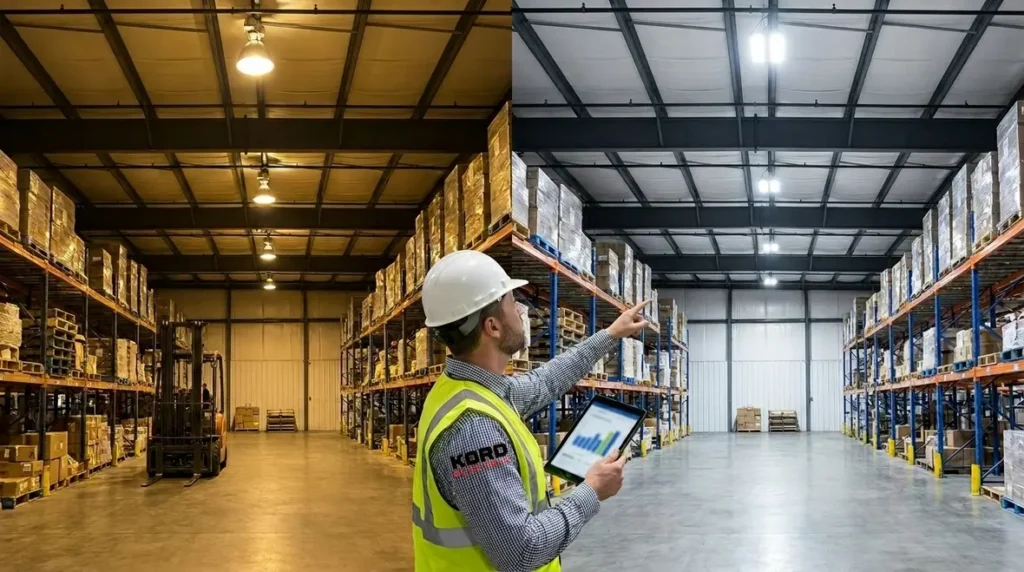
Modern office lighting is not just about “brighter.” It is about giving every work zone the light it needs, only when it needs it, and in the right way. We typically see energy waste come from three places: lights running too long, fixtures delivering more light than the task requires, and systems that do not respond to daylight or occupancy. In other words, the building keeps shining like it is starring in an all night commercial, even when no one is working.
To fix that, we design lighting as a controllable system. We match output to the layout, use optics that aim light where it belongs, and add controls that reduce runtime. Furthermore, we apply commissioning checks so the system behaves as designed, not as it “sort of feels.” Meanwhile, our technicians document settings and performance so your team does not have to guess later.
What to measure before changing fixtures
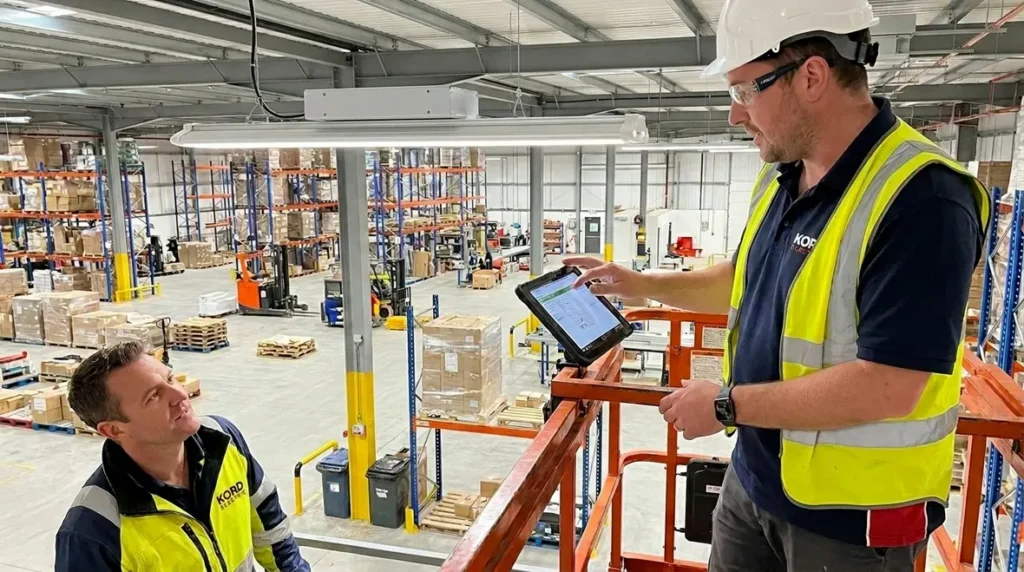
Before we touch a fixture, our expert service staff takes a step back. First, they review your electrical load, lighting plan, and usage schedules. Then they measure current conditions using practical tools and on site checks. Why? Because two offices can look similar, yet one may suffer from glare, while the other just needs better distribution. Therefore, measurement prevents the common mistake of swapping equipment without correcting the problem.
We also evaluate the whole pathway of energy. That includes how power travels through panels, how lighting circuits are grouped, and whether existing dimming or time clocks still match the building. After that, we look at task types. If a floor includes detail work, meeting rooms, and circulation areas, the design must treat them differently. Otherwise, you end up paying for “one size fits none” lighting.
Finally, we confirm code and safety requirements for commercial and industrial environments, since the goal is reliable, compliant performance, not a quick patch job.
Design strategies for energy efficient lighting for offices
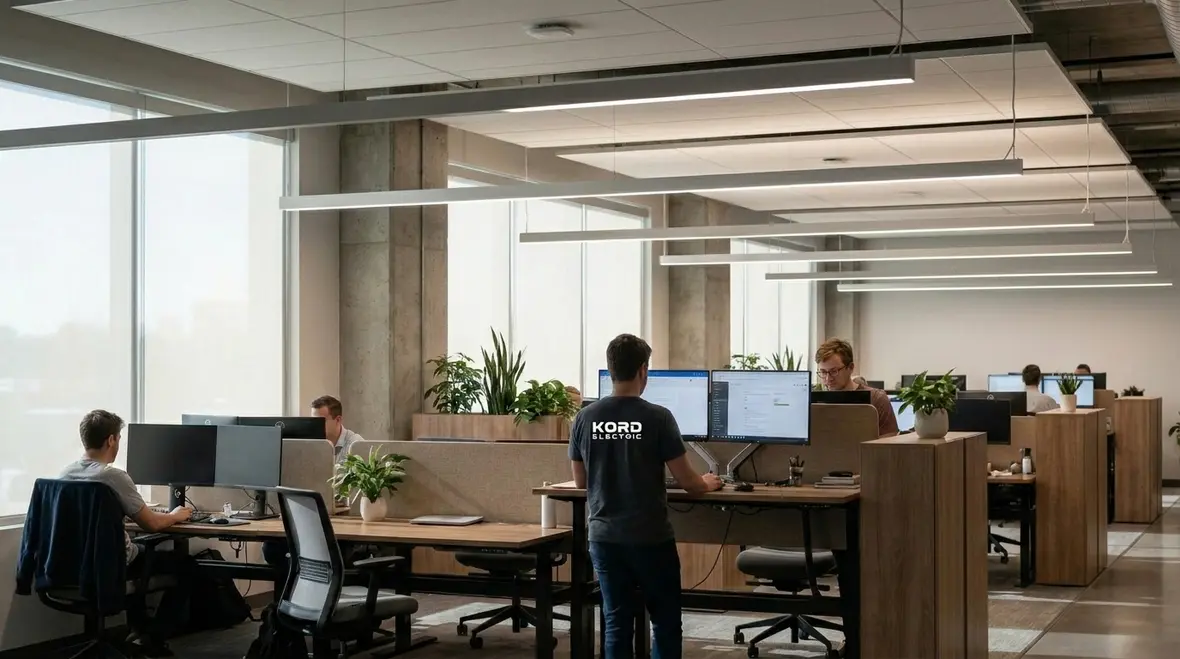
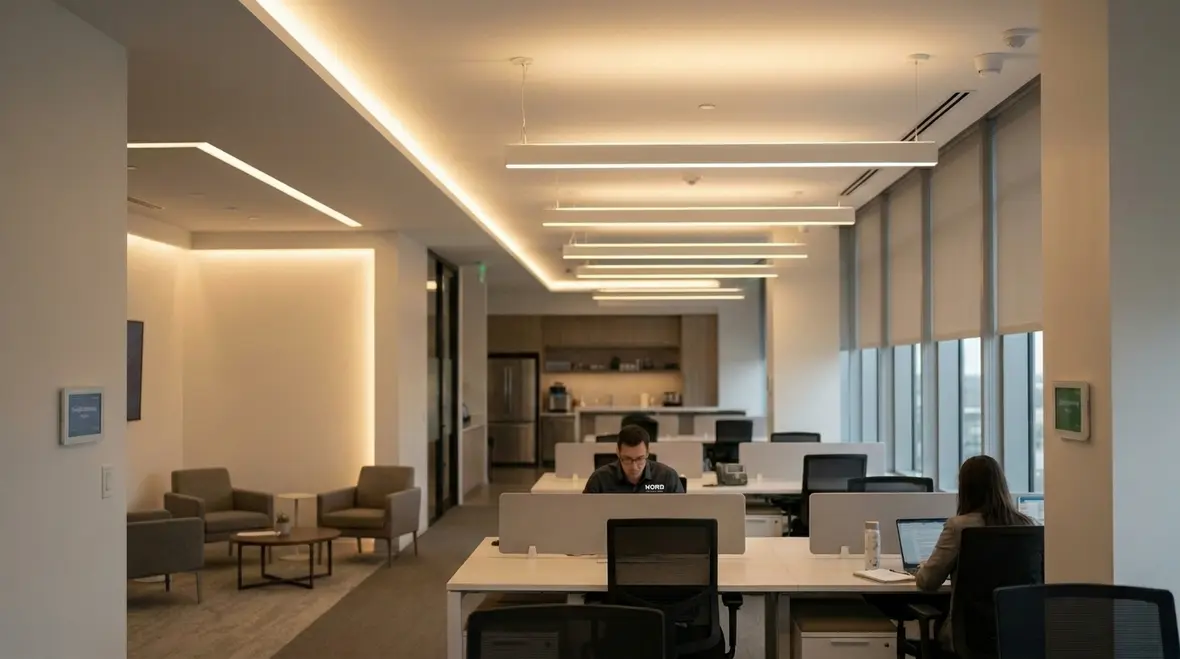
To optimize lighting in major property buildings, we use design strategies that reduce consumption and improve visual comfort at the same time. Many teams think these are separate goals. They are not. When light is distributed correctly and controlled intelligently, it feels better and uses less.
Here are the core strategies we commonly apply:
- Task and ambient zoning: We separate work areas from shared spaces so each zone gets proper light levels.
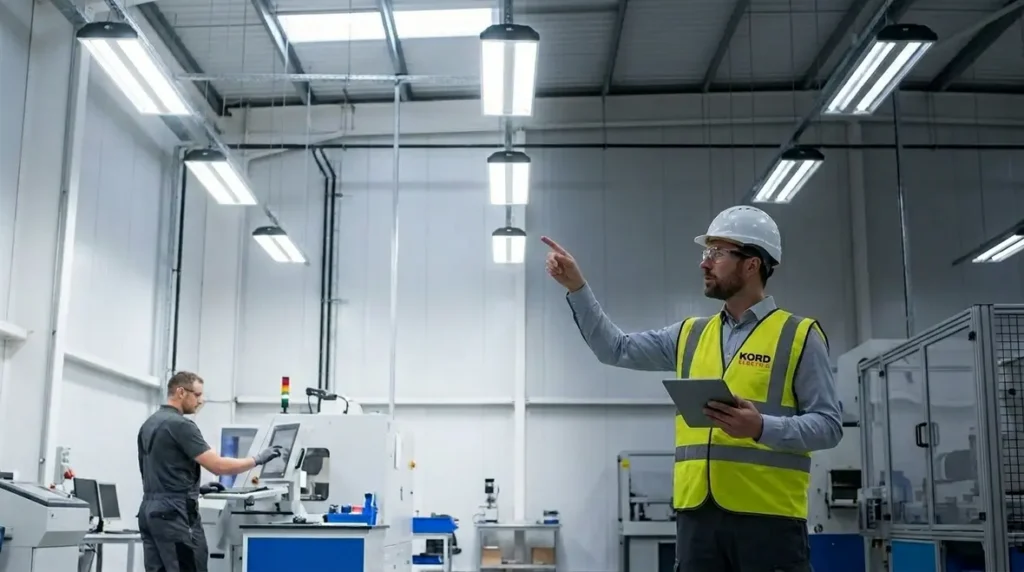
- High efficacy fixtures: We select modern fixtures that deliver more usable light per watt, with optics that reduce spill.
- Targeted dimming: We dim where it makes sense, especially in offices with daylight access.
- Daylight responsive controls: We tune sensors so the building uses sunlight as an energy source, not as a glare problem.
- Occupancy based scheduling: We avoid wasting energy in areas that are empty most of the day.
And yes, sometimes we hear, “People want bright offices.” That can be true, but brightness is not the same as good illumination. Brightness without control can cause glare, fatigue, and more complaints. So we build lighting that stays consistent and comfortable, even as clouds roll in or the sun shifts like it has personal drama.
For property teams who want a deeper dive into modern layouts and fixture types, our recessed lighting guide breaks down how fixture styles, spacing, and beam angles shape real world performance in offices and other commercial spaces.
Controls and sensors that actually work
Controls are where savings become real. Yet controls only deliver results if they are set up for how the building operates. That is where our technicians earn their keep. They verify sensor placement, set time delays properly, and align control logic with your schedule. Then we confirm the system responds as expected across zones. In other words, we do not just install parts and hope for the best. We test, adjust, and document.
For example, occupancy sensors must “see” people without falsely triggering from HVAC drafts or moving shadows. Daylight sensors should match the window orientation and the fixture mounting height. If you mismatch those details, the system may dim at the wrong time, like a DJ who fades the music right when everyone starts dancing.
We also handle networking and integration when the building supports it. That can include linking lighting control schedules with building management systems. However, we keep it practical. A system should be easy for your facility team to manage, especially during maintenance or after tenant changes.
If you want to see how automated controls behave in real facilities, our article on automated lighting control benefits for facilities walks through how schedules, occupancy response, and daylight harvesting combine to keep light levels steady without wasting power.
Dual column view: fixture, controls, and commissioning
Fixture and optics
- We choose distribution that supports the room type
- We reduce glare through appropriate lenses and mounting
- We confirm lumen output matches the lighting targets
Controls and verification
- We apply occupancy and daylight logic
- We set dimming curves and time schedules
- We commission results and fine tune for stability
After installation, we verify performance using on site checks. Then we ensure the building team can operate the system confidently. That is also why we explain the key settings. Our expert service staff tells your team what to expect and how to respond if conditions change.
For larger portfolios or facilities with strict inspection requirements, pairing lighting upgrades with structured electrical preventive maintenance helps keep documentation, testing, and Title 24 lighting compliance aligned over the long term.
Tenant changes and long term maintenance
Commercial buildings rarely stay the same. Over time, floor plans shift, workstations move, and meeting rooms get repurposed. Therefore, the lighting design must tolerate change without losing efficiency.
We plan for growth and reconfiguration by using zoning methods that align to architectural features. Then we document circuit grouping and control zones, so future adjustments do not require guesswork. In addition, we recommend maintenance practices that protect performance. That includes routine cleaning schedules for optics, inspection of sensor locations, and review of control settings when occupancy patterns change.
When facilities treat lighting like a living system instead of a one time installation, energy stays under control. Meanwhile, occupants benefit from consistent comfort, which reduces complaints and helps keep productivity steady. And productivity, as property managers know, is the one metric that never pretends to be optional.
This is also where partnering with a team that understands both design and compliance pays off. Our lighting installation code compliance guide shows how correct fixtures, mounting, and documentation reduce headaches when inspectors walk the site, even years after the original project.
For multi tenant office properties across the region, Kord Electric also supports broader building needs beyond lighting through our Los Angeles County electrical services, which keep power distribution, panels, and critical systems aligned with how people actually use the space.
FAQ: energy efficient office lighting for commercial properties
Ready to optimize your building lighting
If your facility runs lights longer than it needs, wastes power in empty spaces, or struggles with uneven comfort, it is time to act. Kord Electric works with commercial and industrial buildings to design upgrades that cut waste and improve light quality. Our technicians and expert service staff explain each step clearly, then commission the system so it performs day one and stays consistent. Contact us to schedule an on site lighting review and build a plan that makes energy savings feel as calm as it sounds.
When you are ready to move from ideas to implementation, our dedicated lighting installation services team can design, install, and commission energy efficient lighting for offices as part of a broader strategy that keeps your building safe, compliant, and comfortable for the long run.