Electrical Panel Capacity Assessment Guide
Electrical panel capacity assessment: the first step before upgrades
Before any commercial or industrial upgrade gets approved, Kord Electric starts with a clear electrical panel capacity assessment. We review how much power your building can safely handle today, and we estimate how much room it still has for tomorrow. Then we help you plan upgrades that do not trip breakers, overheat conductors, or force costly rework. In other words, we try to prevent the “everything was fine until we added one more thing” situation, which is basically the electrical version of stepping on a Lego in the dark.
Once the baseline is established, our technicians and expert service staff explain findings in plain language, with the why behind every recommendation. And from there, the process becomes practical, calm, and measurable.
Map the electrical load before anyone touches a wire

First, we gather real operating information. Then we turn it into a load picture that is accurate enough to guide decisions. In many commercial and industrial facilities, the biggest mistake is guessing. People assume that nameplate ratings equal actual demand. However, the building does not run like a spreadsheet. It runs like a living system with schedules, peak events, and unusual spikes.
Kord Electric works with site teams to document connected equipment, including HVAC, pumps, compressors, lighting systems, process loads, data rooms, elevators, kitchens, and any special machinery. After that, we compare expected demand against historical utility data where it exists. Next, we identify the likely peak periods, not just the average day. This is where the electrical panel capacity assessment becomes more than a buzz phrase. It becomes the foundation for safe expansion planning.
This mapping step also sets you up for smarter upgrades later. When our team ties your real-world load profile to the rest of your infrastructure, follow-up projects like panel labeling improvements or broader commercial electrical system upgrades become easier to phase, justify, and budget.
Understand your one line diagram like a pro, not like a detective
Next, we review the electrical distribution system using the one line diagram, short circuit ratings, and panel schedules. If these documents are outdated, we do not shrug and move on. Instead, we verify field conditions. Panels get changed, breakers get replaced, and circuits get re-identified over time. So, the paper sometimes tells a different story than the actual gear.
Our technicians trace how power travels from utility service to switchgear, transformers, distribution panels, and final loads. Then we confirm that protective device settings match the real configuration. Also, we check conductor size and termination quality, because small issues can become large problems under higher current. After reviewing the system structure, Kord Electric can explain where capacity exists and where constraints likely appear.
Seeing the whole picture also helps you understand how this assessment connects to other work on your site. Whether you are planning new solar integration, considering a future rewiring project, or evaluating modern building upgrades, the one line diagram becomes a roadmap, not a riddle.
Measure heat, not just numbers
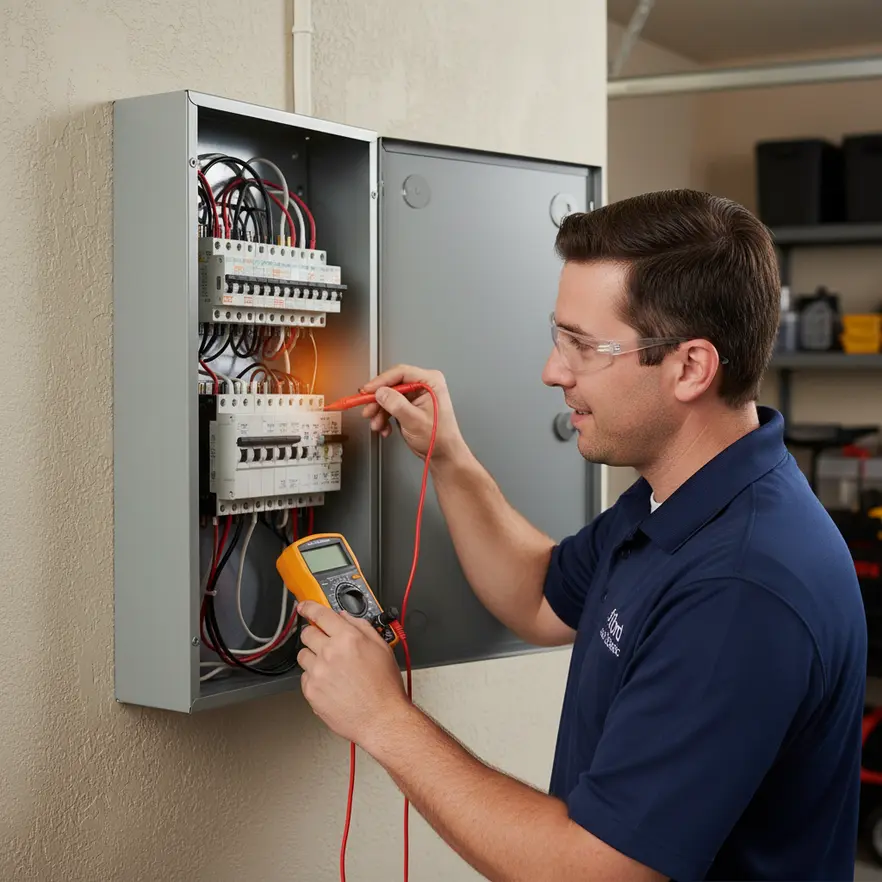
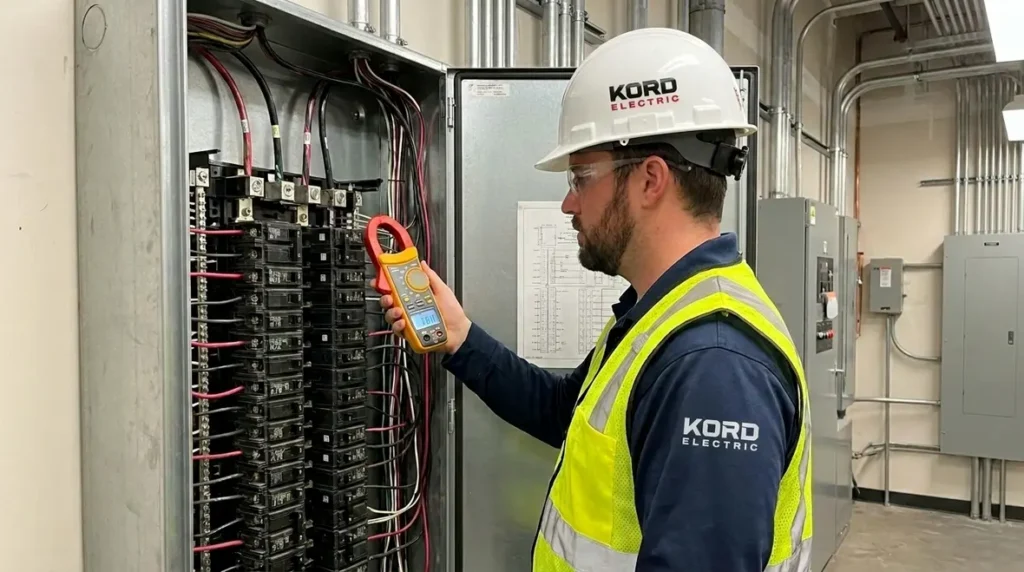
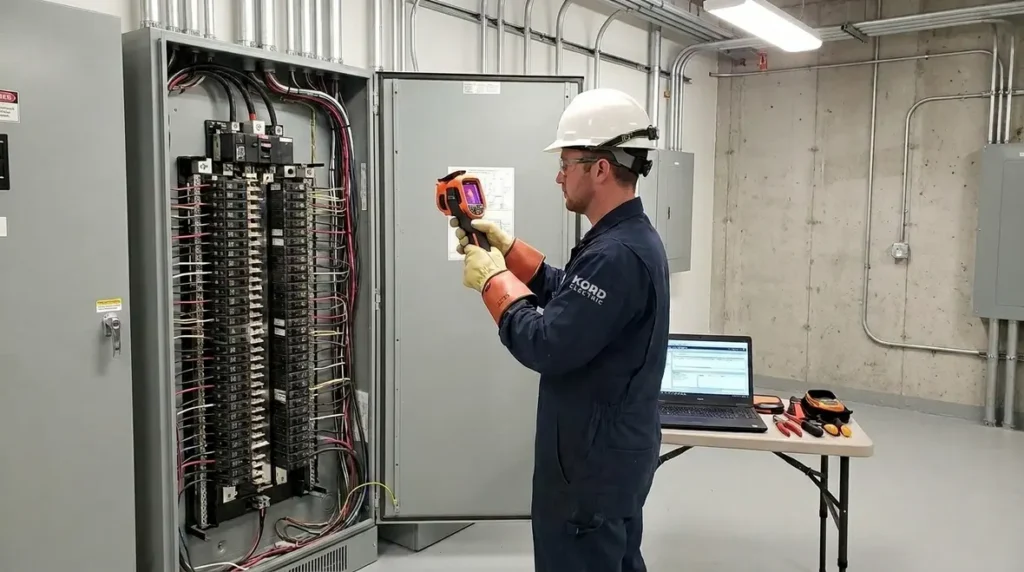
Then we verify the real world. Many facilities perform adequately on paper while showing early signs of stress in practice. Therefore, Kord Electric uses field measurements such as voltage drop checks, current readings, and visual inspections of terminations and bus work. We also look for signs of overheating, discoloration, loose connections, and corrosion.
If the building already runs near limits during peak operations, then an upgrade can push components past their comfort zone. Consequently, the electrical panel capacity assessment must consider not only available breaker space, but also thermal behavior and electrical stress. Our expert service staff explains what we see and what it means for the next phase, so the recommendation feels earned, not guessed.
And yes, we sometimes find things that make even seasoned facility managers say, “How did this last this long?” We respond with facts, test results, and a plan, not panic.
That plan often connects naturally to services like professional electrical panel upgrades and inspections, so issues uncovered during field measurements do not become surprise outages later. Instead, they become scheduled, managed improvements.
Calculate headroom using realistic demand and safety margins
Once we have load details and system verification, we calculate capacity headroom. In simple terms, we compare current demand and prospective demand to the panel’s ratings and the downstream distribution limits. However, we do it carefully, because “available” capacity depends on how the circuit will run, not just how many breaker slots are empty.
Kord Electric accounts for diversity, simultaneous operation, and the difference between installed load and expected draw. Then we evaluate conductor ampacity and the ability of protective devices to operate safely under new conditions. Additionally, we consider future growth so the upgrade does not become a short-term patch.
At this point, our technicians and expert service staff also talk through risk. If the project includes EV charging, new production lines, additional HVAC capacity, or major lighting conversions, then we evaluate how each change affects peak demand. We also discuss how protection coordination may need revision if current levels rise. The goal stays the same: keep operations stable and reduce unplanned downtime.
This is where an electrical panel capacity assessment overlaps with broader planning: thinking about how your panel supports solar, commercial kitchens, data rooms, and other intensive loads without nudging the system into constant “near trip” territory.
Spot capacity limits beyond breaker space
Many people focus only on whether the panel has empty slots. That approach can fail in commercial and industrial environments, because capacity often runs out elsewhere. For example, busbar ratings can limit how much current the panel can carry even when breakers remain available. Also, upstream equipment such as switchgear feeders, transformer capacity, and service entrance gear can become the true bottleneck.
So Kord Electric checks system constraints in a sensible order. First, we review service capacity and available transformer capacity. Next, we inspect feeder and main bus limitations, including thermal and protection constraints. Then we examine downstream panels and sub-distribution boards that may overload when one area gets expanded. In other words, we do not just ask, “Can this panel accept more?” We ask, “Can the whole chain handle it?” That mindset keeps upgrades from turning into an unexpected relay race where the baton is your budget.
When we find limits, we explain them clearly and recommend solutions. Sometimes the right move is a panel upgrade, but often it also includes feeder changes, load rebalancing, or equipment upgrades that align with the true capacity of the system.
By looking beyond breaker count, we help facilities avoid situations where one “simple” addition quietly strains transformers, conductors, or main service gear. That is where headaches like nuisance trips, overheated equipment, and mysterious outages often begin.
Plan upgrades with documentation, testing, and clear ownership
After capacity and constraints are understood, we build an upgrade plan that reduces surprises. Kord Electric prepares scope details based on what the site truly needs. Then our team coordinates design updates such as panel schedules, one line diagram revisions, protective device adjustments, and labeling requirements.
Next, we recommend commissioning steps so the electrical system performs as intended after the upgrade. That includes verification tests for voltage levels, continuity, polarity checks where needed, and inspection of terminations. Also, we confirm that circuit protections operate correctly for the new load profile. Our expert service staff explains the testing outcomes in business casual language, without making you feel like you are trapped inside a technical textbook.
Finally, we provide documentation that building owners and facility teams can use for future projects. When everyone has the same picture, future expansions run smoother. And nobody has to play “guess what changed” during the next tenant improvement, remodel, or production ramp.
A well-documented electrical panel capacity assessment also becomes a reference point if you later pursue major work like rewiring, emergency power improvements, or broader commercial electrical system modernization. Instead of starting from scratch, you start from a shared, accurate baseline.
Frequently asked questions
Choose the right path for power, capacity, and peace of mind
If your facility plans new equipment, expansions, or capacity-heavy upgrades, Kord Electric helps you start with a solid electrical panel capacity assessment that is based on reality, not assumptions. Our technicians validate system conditions, our expert service staff explains the results clearly, and we build an upgrade plan that fits your operations. Schedule an evaluation with us and get a dependable roadmap for safe performance. Let’s prevent expensive surprises and keep your building running smoothly, like it means it.
For commercial properties across the region, this kind of assessment also connects naturally to broader Los Angeles County electrical services. Whether you are dealing with aging infrastructure or planning a multi-phase expansion, starting with a detailed view of your panel capacity puts every other project on firmer ground.
If you are not sure where your current capacity stands, or you suspect your system is one big upgrade away from constant nuisance trips, now is the right time to schedule an evaluation and turn “we think we are fine” into “we know exactly what we can handle.”