
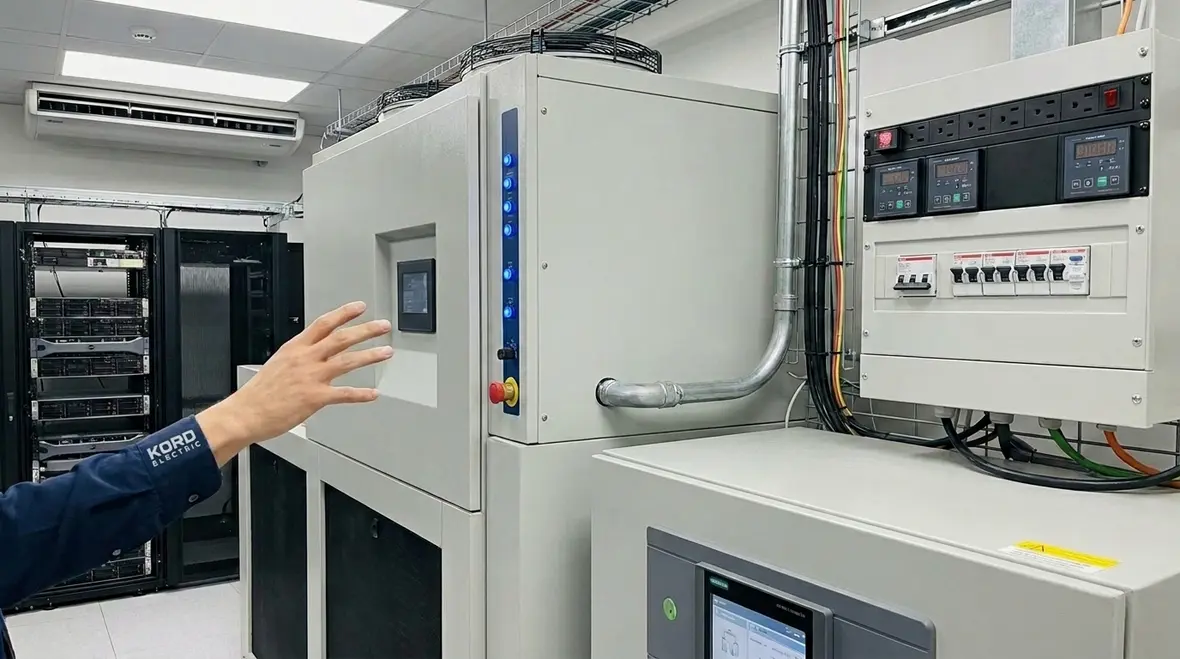
Data Center Cooling Electrical Requirements Guide
Every data center lives or dies by two systems that must work together: cooling and power. In that world, the data center cooling electrical requirements sit at the center of dependable operations, because chillers, CRAC units, pumps, fans, and controls all draw real load. Yet the power story cannot end at “we installed a panel.” Instead, Kord Electric designs an architecture that stays stable when temperatures shift, when equipment cycles, and when demand spikes. And we do it with technicians and expert service staff who explain what matters and why it matters, not just what they installed. Because if power and cooling do not coordinate, the result is downtime. And nobody wants downtime. Not even your most patient IT manager, who already has enough pop culture to worry about.
How reliable power architecture prevents cooling failures
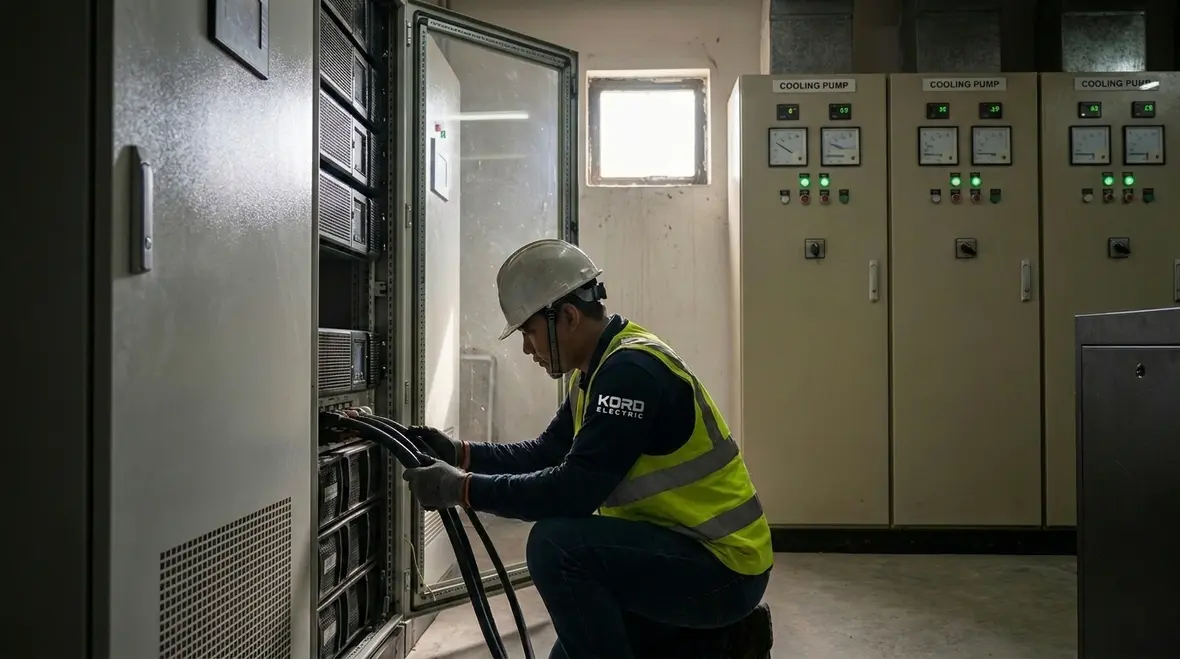
Engineers know cooling failure rarely announces itself with a big red alarm first. Instead, it shows up as gradual instability: rising supply air temperature, slower fan response, or control loops that hunt for equilibrium. Therefore, the power architecture must support sensitive drives, pumps, compressors, and the control electronics that manage them.
Kord Electric approaches this by aligning electrical design with actual cooling behavior. We consider start and stop sequences, expected duty rotation, and the way variable speed drives ramp under load. Then we build power paths that keep voltage within acceptable limits during transients. As a result, cooling systems run without nuisance faults that can feel like haunted house lighting. You flick the switch and everything “almost” works, until it doesn’t.
Third person teams working in these facilities should also plan for load changes that occur after maintenance or during seasonal shifts. Cooling demand can swing, especially when outside air conditions change or when facility teams adjust set points. Consequently, the upstream design must handle those swings without sagging critical loads.
Design for load profiles, not just nameplate ratings
A common mistake in commercial and industrial facilities is treating cooling as static. In reality, cooling load changes fast. Pumps modulate, compressors cycle, and fan speeds vary. Moreover, electrical components like motor starters and variable frequency drives respond dynamically to control commands.
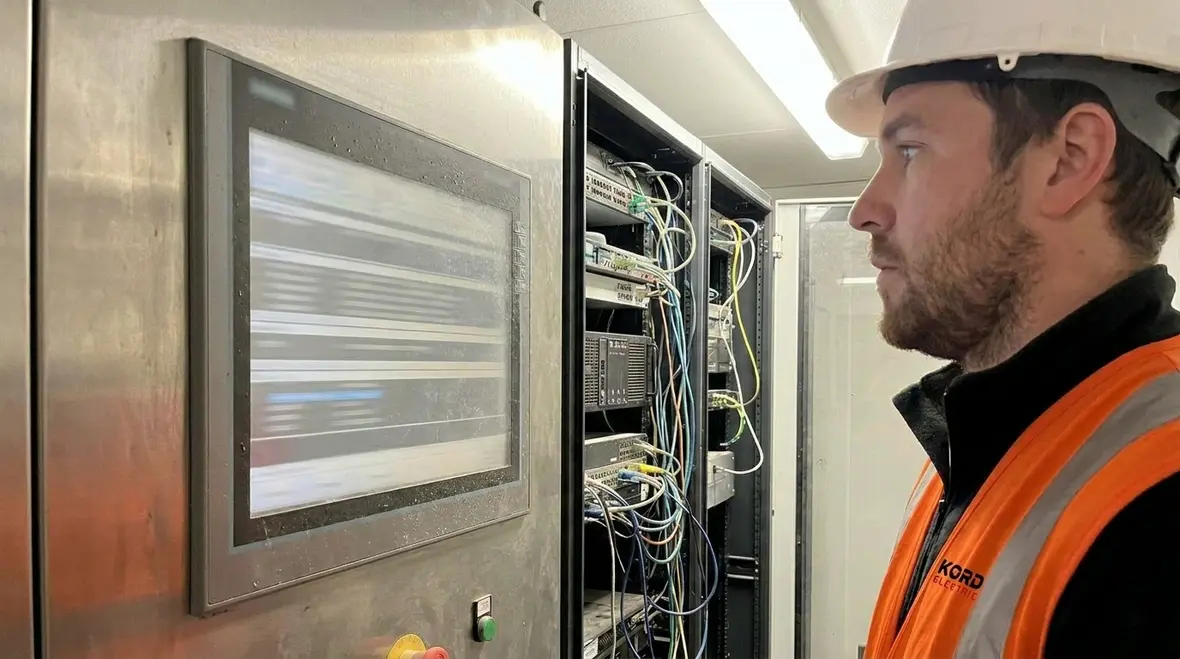
Kord Electric begins with load profiling. We review equipment schedules and operating strategies, then map those patterns to electrical protections, bus sizing, and feeder strategy. We also account for how harmonic distortion can rise when drives operate. Harmonics do not just “exist.” They can heat conductors, interfere with sensing, and stress protective devices. Therefore, a stable power architecture includes electrical discipline around grounding, filtering choices, and panel layout.
In practice, this means we coordinate protections so they open when they should, not when cooling motors simply start. We choose device curves and settings based on the real inrush behavior of the connected equipment. And we verify that the controls and communications networks remain stable during switching events.
UPS coordination for critical cooling components
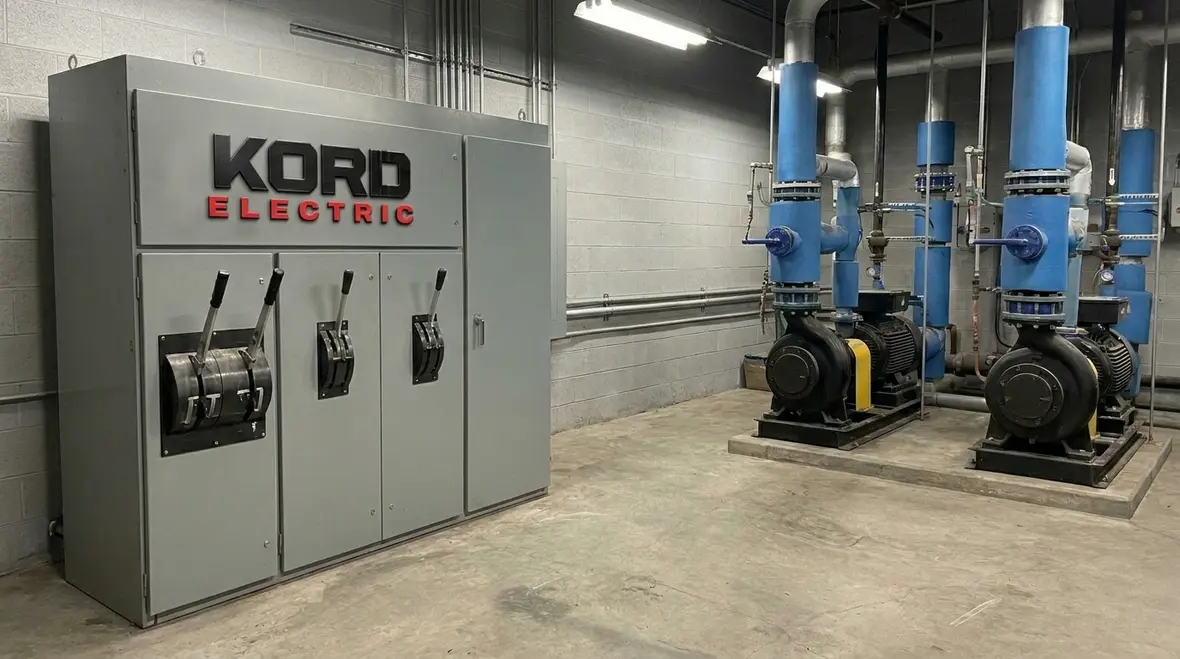
Cooling systems often split into tiers: some loads can tolerate short interruptions, while others cannot. For example, control cabinets, sensors, and certain pump or fan circuits may need continuous power so the system does not lose command logic or feedback signals. That is where UPS coordination becomes decisive.
Kord Electric evaluates which cooling elements require uninterrupted operation and which ones can ride through. Then we align UPS runtime assumptions with the cooling recovery time needed to maintain safe temperatures. This matters because a UPS that covers only “seconds” may not support the full transition to generator power or the restart logic of chillers and pumps.
We also consider how UPS sizing changes when battery efficiency declines over time. So we build margin. We avoid the “install it and hope” approach, because hope is not a protective relay setting. Finally, we ensure distribution switching sequences keep critical cooling paths energized in a controlled way.
Emergency power and transfer switching that actually supports cooling
When generator power takes over, the transfer must align with how cooling controllers behave. A generator sequence that works for IT gear might still cause an issue for compressors or variable speed drives if timing and voltage stability do not match expectations. Therefore, Kord Electric designs transfer switching with cooling in mind.
We plan for selective shutdown and staged restart, so the facility avoids a “rush hour” of simultaneous motor starts. Instead of letting every pump and fan surge at once, we stagger sequences to keep voltage and frequency within tolerance. This reduces stress and improves uptime during events.
Then we verify that transfer logic supports safe states. Cooling equipment must avoid damaging rapid cycling, and controls must handle the momentary transition cleanly. Our expert service staff also walks stakeholders through the operating sequence. That way, facility teams do not get surprised by behavior that looks like a software bug, when it is really a protection and restart strategy doing its job.
Integrate cooling electrical systems with distribution and monitoring
Even when power quality stays steady, distribution design can still create problems. Voltage drops across long runs can reduce motor performance. Under sized feeders can overheat. Poor panel routing can raise risk during maintenance. Meanwhile, lack of monitoring forces teams to detect issues after they become expensive.
Kord Electric integrates cooling electrical systems into a full distribution and monitoring strategy. We design feeders to reduce excessive voltage drop under expected cooling loads. We also coordinate protective devices with conductor ratings and thermal behavior.
To keep operations clear, we implement monitoring points that facility teams can actually use. So instead of burying everything in a dashboard no one watches, we focus on electrical indicators that map to cooling performance: branch load trends, panel alarms, and key power quality readings. In turn, teams can forecast maintenance needs before a compressor fault becomes an emergency.
As for workflows, our technicians explain what the monitoring data means in plain language. And yes, we also tell them what to ignore. If a trend looks scary but does not impact cooling capacity, we say so. That saves everyone from panic scrolling through meter pages like it is social media.
EV charging lessons we apply to power planning for buildings
Many facilities struggle when they add new electrical loads because their original design did not leave room for growth. Kord Electric helps commercial and industrial clients plan for that growth, and we apply similar thinking across major building power projects. For example, our approach in EV charger installation often starts with load assessment, site power constraints, and safe integration into existing electrical systems. The same mindset supports data center cooling upgrades.
First, we evaluate how new loads change total demand and how they interact with existing critical loads. Then we plan the path forward so the facility can expand without destabilizing the rest of the site. For data center cooling electrical requirements, expansion could include new chillers, additional pumps, upgraded fan walls, or higher efficiency systems that introduce different drive behavior. These changes need coordination with distribution and protections.
Second, EV charger planning teaches us to think about user behavior and real-world usage patterns. In data centers, usage patterns show up as shifts in load profiles, set points, and equipment duty cycles. Therefore, we model those patterns rather than relying on a single “average day” assumption.
Finally, we stress commissioning and documentation. That helps maintenance teams operate with confidence. Our expert service staff explains the integration steps so the facility does not end up with a system that works fine on day one and mysteriously “forgets” how to behave later.
For organizations planning new infrastructure, pairing cooling design with a forward-looking electrical roadmap matters. That same roadmap can also support adjacent projects like dedicated EV charging, where power planning, load management, and safe integration under real operating conditions are just as critical. Teams exploring future-ready charging infrastructure can review Kord Electric’s dedicated EV charger installation services to see how strategic load planning and commissioning approach carry over into other mission critical systems.
Area we verify Load profiles, protections, and UPS transfer behavior Voltage drop and conductor thermal capacity Monitoring points that map to cooling outcomes | What we prevent Nuisance faults during cooling start and cycling Overheating, stress, and degraded motor performance Slow detection that turns a small issue into downtime |
Testing, commissioning, and operational handoff
For Kord Electric, the job does not finish when the breakers land. We stress test systems in the same way facility teams actually operate them, including transitions and cycling. We verify that cooling controllers respond correctly to electrical events, and we confirm that protective devices behave as designed.
Then we commission with a clear operational plan. That plan includes restart strategies, alarm interpretations, and maintenance workflows that reduce risk. Our technicians and expert service staff spend time explaining outcomes, not just procedures. They also highlight what to watch for during early operation, because the first weeks after commissioning often reveal real-world tuning needs.
Finally, we ensure documentation supports the facility. In commercial and industrial environments, uptime depends on fast troubleshooting. Therefore, we provide clear circuit mapping, labeling guidance, and notes about coordination logic. Teams should not have to guess during the moments that count.
Because data center cooling electrical requirements connect directly to overall power reliability, many facilities pair these projects with broader electrical work. That can include targeted power quality improvements, electrical maintenance programs, or even upgrades that prepare the site for additional infrastructure like dedicated charging or new distribution equipment. When planning those wider efforts, Kord Electric’s commercial services and specialized offerings such as EV charger installation show how a single, coordinated strategy can support both today’s loads and tomorrow’s expansions.
FAQ
Conclusion: secure cooling with a power plan built to last
Cooling may move the air and chill the water, but dependable operations start with reliable power. Kord Electric helps commercial and industrial facilities integrate cooling systems into a stable electrical architecture, including protections, UPS and generator coordination, and monitoring that teams can use. Our technicians and expert service staff explain the plan step by step, so your staff knows what to expect during transitions and maintenance. If your facility is planning an expansion or cooling upgrade, contact Kord Electric today to assess power and cooling integration before downtime shows up uninvited.
For many organizations, the next phase also includes broader reliability projects: refining distribution design, implementing proactive maintenance, or integrating new infrastructure such as commercial EV charging. When you review Kord Electric’s service offerings, including dedicated solutions like EV charger installation, you can align data center cooling electrical requirements with a complete electrical strategy that supports uptime across the entire property, not just in the server room.


