Commercial Lighting Control System ROI Guide
Maximizing ROI with Intelligent Commercial Lighting Control Systems
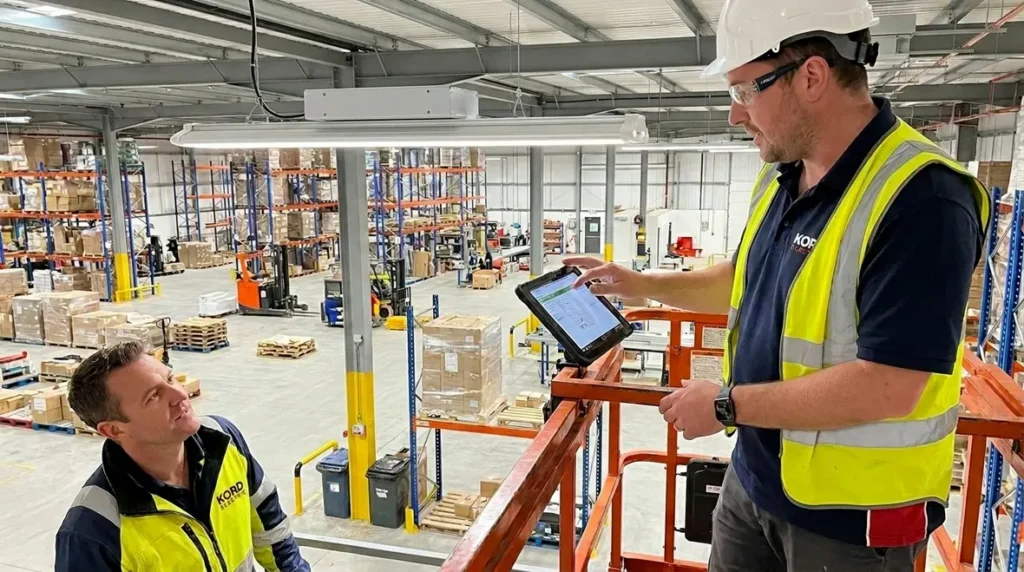
At Kord Electric, we see ROI as something you can measure, not a slogan you stick on a brochure. Our teams help commercial and industrial facilities capture commercial lighting control system benefits that show up in utility bills, maintenance time, and tenant comfort. Even better, we install solutions designed to fit how real buildings behave, not how spreadsheets wish they behaved. And yes, we also explain the why behind every decision, because the best system in the world still fails if the people operating it do not trust it.
To move from cost to clarity, we combine smart controls, practical commissioning, and expert service staff who talk in plain language. That means fewer surprises later, and more predictable performance today.
Why smart lighting controls usually pay back faster in commercial spaces

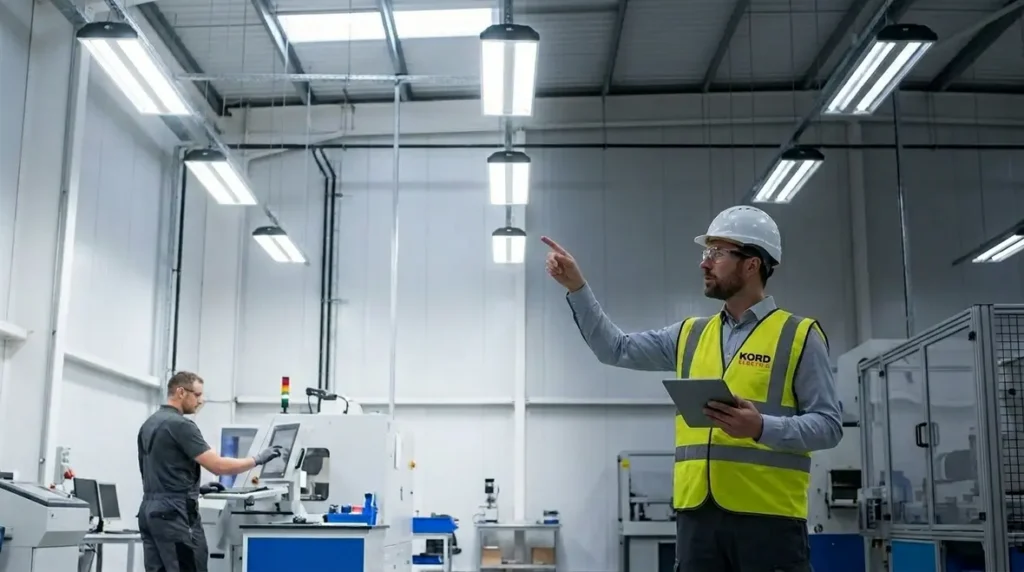
Commercial and industrial buildings tend to run on schedules that vary by zone, department, and even season. Therefore, fixed lighting rules often waste energy when spaces sit empty, and they under deliver when conditions change. Intelligent controls solve this by adjusting light use based on real time conditions.
First, occupancy sensing and scheduling reduce lighting when areas are not active. Next, daylight harvesting uses sun contributions to dim electric lights instead of turning everything on at full output. Then, tunable strategies can support comfort and productivity in areas where people actually work.
Now for the part that looks boring but prints money. When lighting stays optimized, maintenance frequency drops because lamps and drivers run less hard. In addition, fewer override actions means fewer staff calls and fewer “why is it doing that” moments that lead to downtime. If people think the system is trying to win an argument, they stop cooperating. We keep the experience calm and predictable.
How ROI is built: energy, controls, and lifecycle costs
In practice, ROI comes from more than kWh. At Kord Electric, our technicians look at lifecycle cost and operating behavior from day one.
Energy savings land first, because dimming and shutoff cut waste. Even if a facility already uses efficient fixtures, controls still improve how those fixtures perform across time and space.
Demand reduction matters for many sites. When lighting loads decline during peak periods, some facilities reduce how much capacity they need from the grid. That can support demand charges and capacity planning.
Labor and maintenance savings follow. Intelligent strategies reduce the number of times lights run at full output for long stretches. Consequently, relamping and driver replacement can shift farther out.
Risk control also plays a role. When the system logs events and provides clear status, facility teams troubleshoot faster. Instead of waiting for guesswork, they see what happened, where it happened, and when it started.
Meanwhile, we talk through the math with the building owner and the facility manager. We show how the commercial lighting control system benefits map to your real utility structure, your operating hours, and your expected occupancy patterns.
Planning for reliability: distribution design meets lighting control

Lighting controls do not live in isolation. They depend on stable power, smart distribution, and coordination with the rest of electrical systems. That is why Kord Electric treats lighting control projects like part of a full electrical plan for commercial and industrial facilities, not a standalone upgrade.
When a site experiences voltage dips, poor grounding, or inconsistent panel behavior, controls can misread conditions. Therefore, we align lighting strategies with the reliability thinking covered in our blog on data center electrical distribution design for reliability. Even though a data center and a warehouse look different, the core idea stays the same: dependable distribution makes everything downstream work better.
In a similar way, we coordinate lighting control power pathways with electrical distribution design goals. We consider the performance needs of controls, sensors, and communication devices. We also plan proper labeling, access, and separation so service teams can reach components quickly.
And here is the calming truth: when the electrical foundation is solid, the lighting system behaves the way it was designed to behave. When it is not solid, the controls become like a radio with bad reception. Everyone hears something, but nobody hears the same thing twice.
Design steps our expert service staff follow on real projects
To maximize ROI, we do not just “install and move on.” Our expert service staff uses a clear process that keeps the system aligned with how people use the building. That saves time, prevents rework, and protects the payback timeline.
Step 1: Zone the building for how it gets used
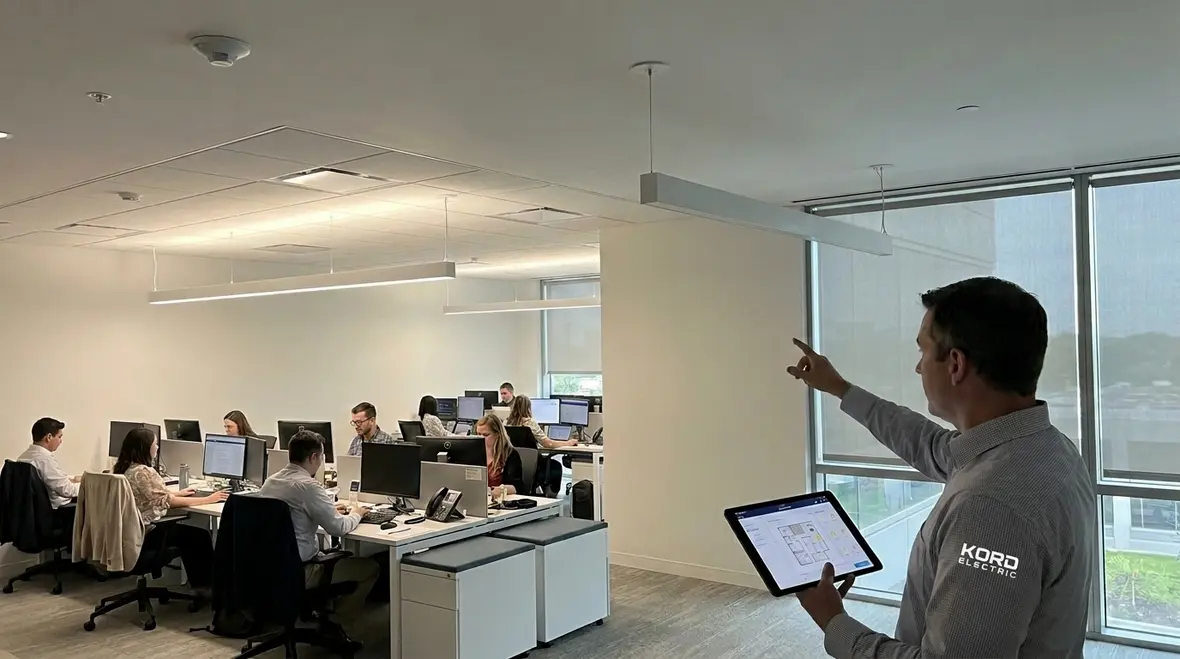
We review floor plans and traffic patterns. Then we define zones that match occupancy behavior. Open office areas get different logic than storage rooms, and corridors do not run like conference spaces.
Step 2: Set control sequences that operators can live with
We tune schedules, occupancy timeouts, and daylight response curves. Next, we configure overrides so staff can adjust without breaking the strategy. We also make sure controls support after hours needs without creating energy waste.
Step 3: Commission the system, then verify it
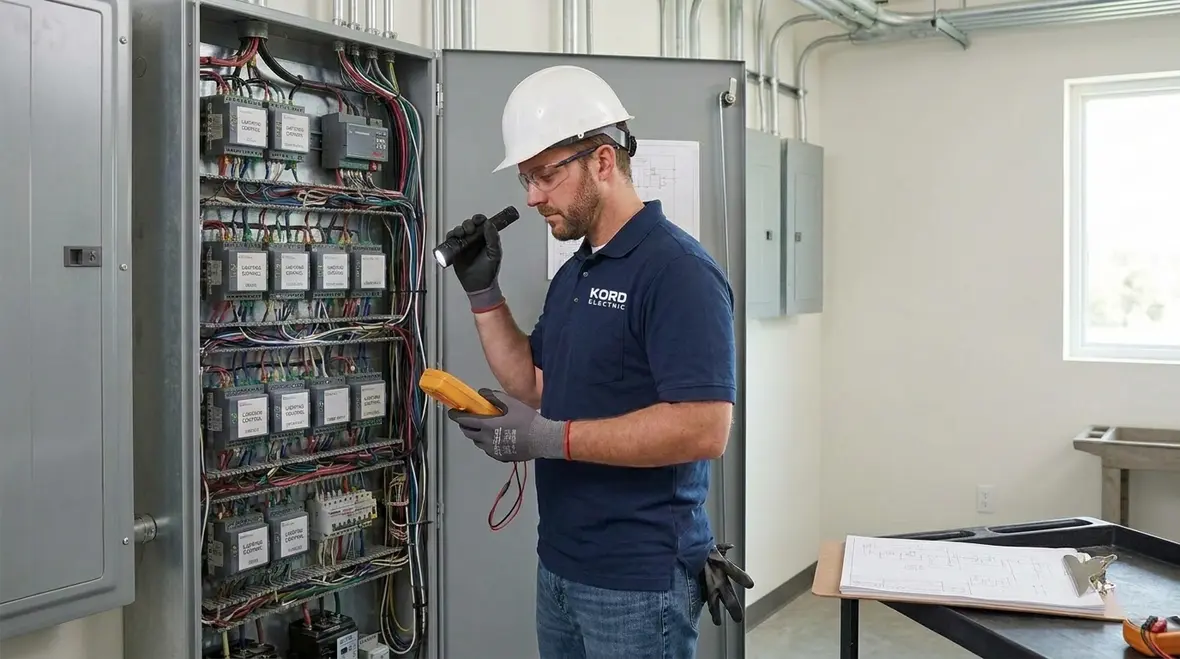
During commissioning, we verify sensor placement, calibrate setpoints, and confirm communication reliability. After that, we test under different conditions and document results. Facility teams deserve more than “it should work.” They should get proof.
Step 4: Train the people who manage the building
We explain changes in plain language. When operators understand what controls do and why, they stop treating the system like it is haunted. Think of it like turning down the drama in a sitcom. Less confusion, more uptime.
Communication, sensors, and integration for smarter energy control
Many facilities want lighting control to work with other systems, and that is where good design shows itself. Therefore, Kord Electric plans for integration early, not as an afterthought.
First, we choose sensor types that match the space. Motion sensing works well in many areas, but we also consider ambient light levels and the way people move. Next, we manage placement so sensors read the area they are meant to protect, not the corner where sunlight disappears like a plot twist.
Then we integrate controls with building systems when appropriate. That might include HVAC scheduling coordination, building automation signals, or maintenance workflows. When systems align, lighting saves energy without creating comfort issues or operational conflicts.
Finally, we focus on the practical side. We make sure devices remain accessible, we plan for future expansion, and we document how the system is configured. This approach supports long term performance and helps our team maintain the system efficiently.
FAQ: Lighting control ROI and commercial system performance
What Kord Electric recommends to secure payback
To secure payback, we recommend three things in sequence. First, start with accurate zoning so controls respond to real occupancy and real daylight. Second, prioritize reliability by aligning control design with electrical distribution practices that support dependable performance across a facility. Third, commission thoroughly and train operators so the system runs as intended.
Next, we suggest a maintenance plan that treats lighting controls as a living system. When sensors age and spaces change, small adjustments keep performance steady. That is how ROI stays strong, long after the installation day.
And if you are wondering whether this is worth it, we will say it plainly. In commercial and industrial settings, lighting controls are one of the few upgrades that reliably reduce costs while improving day to day comfort. Like turning down a volume knob, they make the building sound better.
If you are still exploring budget and scope, you can also review our Commercial Lighting Upgrade Cost Guide to see how controls, fixtures, and infrastructure investments work together in real projects.
Conclusion: Schedule a lighting controls evaluation with Kord Electric
Kord Electric helps commercial and industrial facilities maximize ROI through intelligent lighting control design, commissioning, and expert support from our technicians and service staff. We align controls with how your building actually operates, and we focus on reliability so performance stays consistent. If you want fewer waste hours, easier maintenance, and better comfort, we are ready to review your facility and map out a practical plan. Contact us today to schedule an evaluation and move from guesswork to measurable results.
For facility teams planning broader electrical improvements alongside controls, our commercial and industrial electrical services can be structured to support distribution upgrades, code compliance, and lighting modernization in one coordinated effort.
Explore Kord Electric’s Commercial & Industrial Electrical Services to see how lighting control projects fit into a larger reliability and safety plan for your property portfolio.